1 257 kr
Skickas inom 5-8 vardagar
1 257 kr
Skickas inom 5-8 vardagar
1 188 kr
Skickas inom 5-8 vardagar
409 kr
Kommande
1 657 kr
Läs direkt efter köp
1 657 kr
Läs direkt efter köp
1 415 kr
Skickas inom 7-10 vardagar
4 296 kr
Skickas inom 5-8 vardagar
855 kr
Läs direkt efter köp
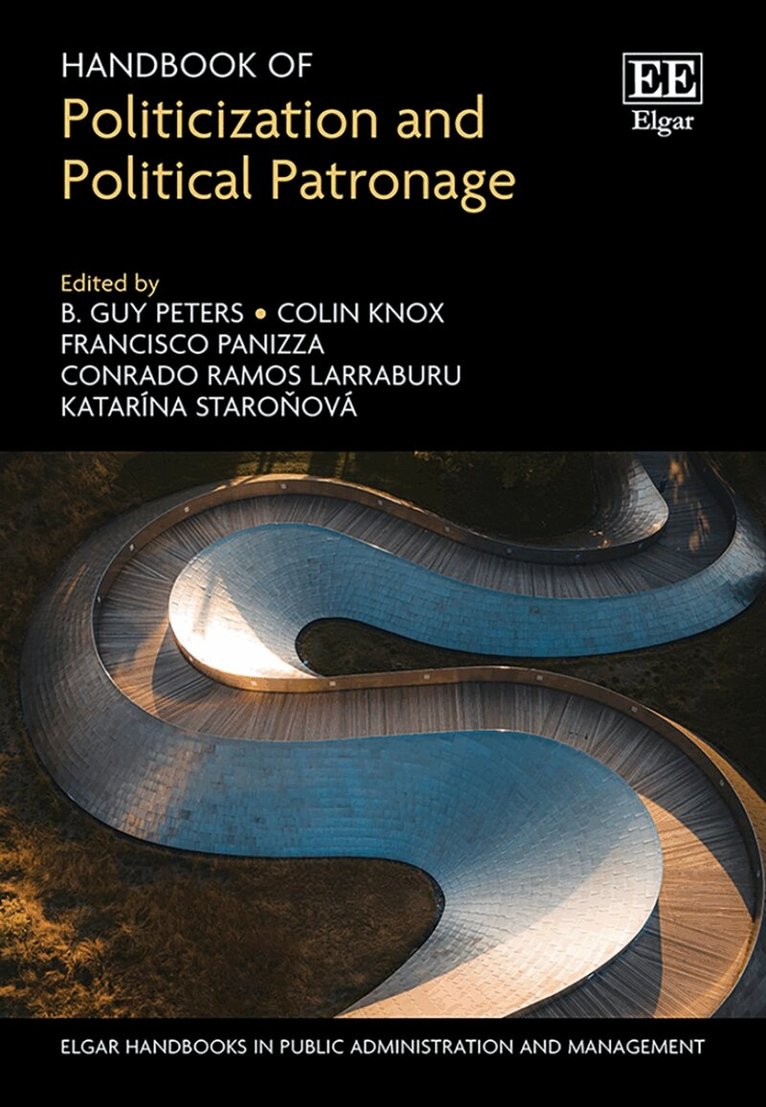
Chapters analyze detailed case studies from a range of countries, regime types and levels of governance, providing critical insights into the variations of politicization and patronage practices and advocating for a clear differentiation between the two terms. Expert authors examine the methodologies involved in the study of these concepts, including prosopography, experimental methods and the difficulties of conducting research within authoritarian regimes. The Handbook emphasizes the recent increase in both patronage and politicization, particularly within democratic regimes, and makes timely suggestions for future research.
This comprehensive Handbook is vital for students and scholars of public administration and management, public policy, political science and regulation and governance. It is also a valuable resource for government officials and public policymakers.
852 kr
Läs direkt efter köp
546 kr
Skickas inom 10-15 vardagar
755 kr
Läs direkt efter köp
This book examines the role played by one important external stakeholder, Atlantic Philanthropies, a limited-life foundation, in helping to build peace and promote reconciliation in Northern Ireland. Northern Ireland is now referred to as a post-conflict society largely due to the absence of political violence and relatively stable political institutions. These are necessary but insufficient conditions for what Galtung has described as ‘positive peace’, which requires a more fundamental review of the structural inequalities that contributed to the conflict in the first place. Using detailed case studies the authors illustrate the role played by voluntary and community sector groups, funded by Atlantic Philanthropies, in influencing the public policy agenda and securing long term systemic changes. They also critique the work of Atlantic as a ‘pay to play’ organization whose original mission moved from funding the higher education sector on the island of Ireland to become a key foundation with a significant role in the peace process.