Collin McKinney – författare
Visar alla böcker från författaren Collin McKinney. Handla med fri frakt och snabb leverans.
4 produkter
4 produkter
Häftad, Engelska, 2010
373 kr
Skickas inom 10-15 vardagar
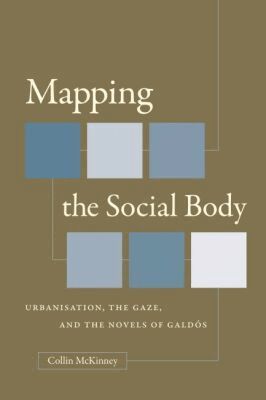
Influenced by trends in medicine, town planning and social etiquette, Madrid's middle class viewed urban growth with apprehension in the second half of the nineteenth century. In Mapping the Social Body, Collin McKinney examines manifestations and critiques of that reaction in the work of Benito Perez Galdos, Spain's greatest modern novelist. Drawing on a wide range of recent cultural theory as well as contemporary non-literary texts, this book provides modern readers with a metatextual map of Galdos's Madrid and Spanish society as they experienced urbanisation. In a century obsessed with all things visual, the map became a useful model with which the recently formed middle class hoped to reform a social body ravaged by disease, crime, prostitution, and class conflict. This study finds that Galdos's attitude toward the middle class and its mapping enterprise changes over time. Whereas his early novels depict dividing practices as reliable and perhaps necessary, his later works show Spain's social maps to be subjective and discriminatory. In La desheredada, Tormento, and La de Bringas the social body is mapped according to class, genealogy, gender and physical difference. Physically and morally ambiguous, the characters in Fortunata y Jacinta, Nazarin, and Misericordia are unmappable and thus resistant to the bourgeois categorising gaze.
Inbunden, Engelska, 2020
1 549 kr
Skickas inom 10-15 vardagar
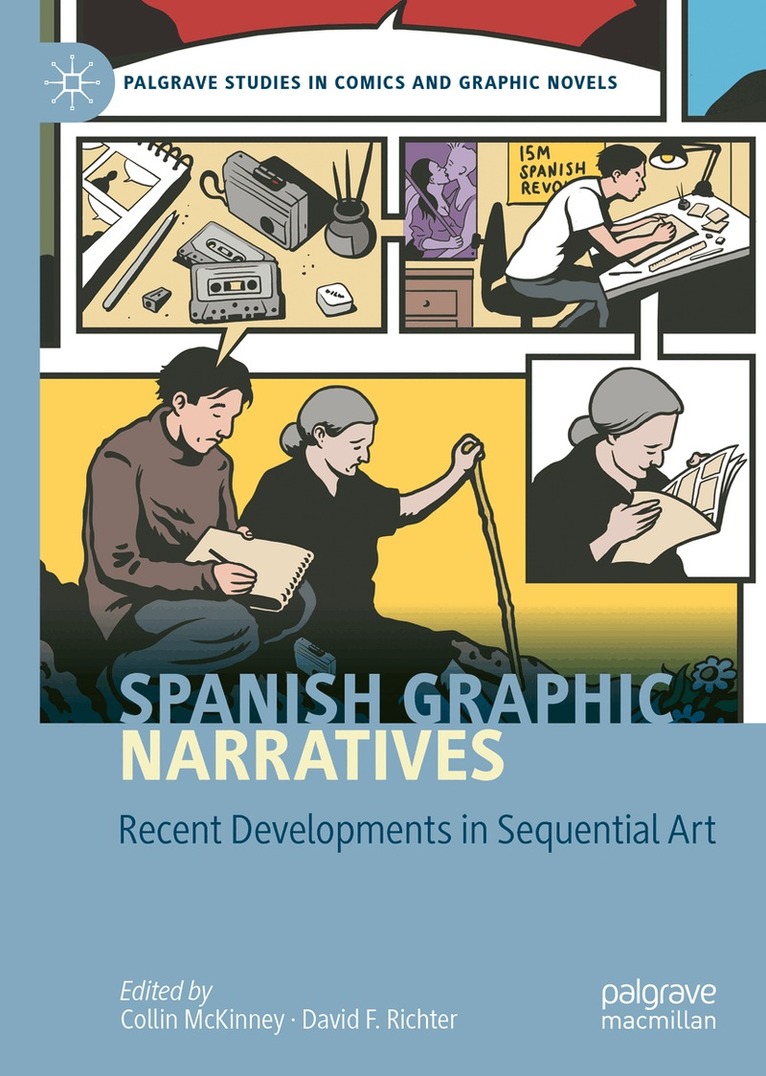
Spanish Graphic Narratives examines the most recent thematic and critical developments in Spanish sequential art, with essays focusing on comics published in Spain since 2007. Considering Spain’s rich literary history, contentious Civil War (1936–39), oppressive Francisco Franco regime (1939–75), and progressive contemporary politics, both the recent graphic novel production in Spain and the thematic focal points of the essays here are greatly varied. Topics of particular interest include studies on the subject of historical and personal memory; representations of gender, race, and identity; and texts dealing with Spanish customs, traditions, and the current political situation in Spain. These overarching topics share many points of contact one with another, and this interrelationship (as well as the many points of divergence) is illustrative of the uniqueness, diversity, and paradoxes of literary and cultural production in modern-day Spain, thus illuminating our understanding of Spanish national consciousness in the present day.
E-bok
Engelska, 20201 831 kr
Läs direkt efter köp
Spanish Graphic Narratives examines the most recent thematic and critical developments in Spanish sequential art, with essays focusing on comics published in Spain since 2007. Considering Spain’s rich literary history, contentious Civil War (1936–39), oppressive Francisco Franco regime (1939–75), and progressive contemporary politics, both the recent graphic novel production in Spain and the thematic focal points of the essays here are greatly varied. Topics of particular interest include studies on the subject of historical and personal memory; representations of gender, race, and identity; and texts dealing with Spanish customs, traditions, and the current political situation in Spain. These overarching topics share many points of contact one with another, and this interrelationship (as well as the many points of divergence) is illustrative of the uniqueness, diversity, and paradoxes of literary and cultural production in modern-day Spain, thus illuminating our understanding of Spanish national consciousness in the present day.
Häftad, Engelska, 2021
1 549 kr
Skickas inom 10-15 vardagar
Spanish Graphic Narratives examines the most recent thematic and critical developments in Spanish sequential art, with essays focusing on comics published in Spain since 2007. Considering Spain’s rich literary history, contentious Civil War (1936–39), oppressive Francisco Franco regime (1939–75), and progressive contemporary politics, both the recent graphic novel production in Spain and the thematic focal points of the essays here are greatly varied. Topics of particular interest include studies on the subject of historical and personal memory; representations of gender, race, and identity; and texts dealing with Spanish customs, traditions, and the current political situation in Spain. These overarching topics share many points of contact one with another, and this interrelationship (as well as the many points of divergence) is illustrative of the uniqueness, diversity, and paradoxes of literary and cultural production in modern-day Spain, thus illuminating our understanding of Spanish national consciousness in the present day.