Committee on Defeating Improvised Explosive Devices: Basic Research to Interrupt the IED Delivery Chain – författare
Visar alla böcker från författaren Committee on Defeating Improvised Explosive Devices: Basic Research to Interrupt the IED Delivery Chain. Handla med fri frakt och snabb leverans.
5 produkter
5 produkter
E-bok
PDF, Engelska, 2007268 kr
Läs direkt efter köp
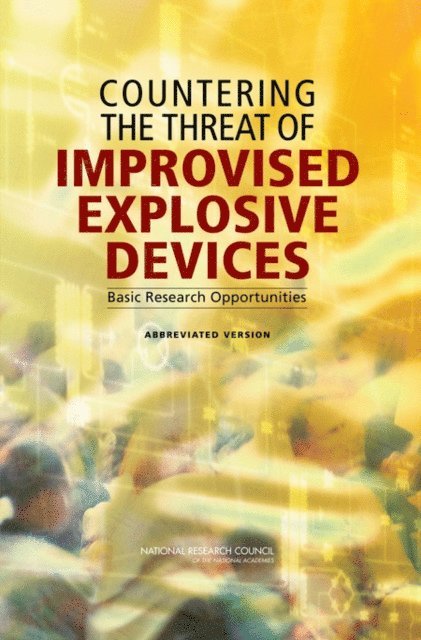
Attacks in London, Madrid, Bali, Oklahoma City and other places indicate that improvised explosive devices (IEDs) are among the weapons of choice of terrorists throughout the world. Scientists and engineers have developed various technologies that have been used to counter individual IED attacks, but events in Iraq and elsewhere indicate that the effectiveness of IEDs as weapons of asymmetric warfare remains. The Office of Naval Research has asked The National Research Council to examine the current state of knowledge and practice in the prevention, detection, and mitigation of the effects of IEDs and make recommendations for avenues of research toward the goal of making these devices an ineffective tool of asymmetric warfare. The book includes recommendations such as identifying the most important and most vulnerable elements in the chain of events leading up to an IED attack, determining how resources can be controlled in order to prevent the construction of IEDs, new analytical methods and data modeling to predict the ever-changing behavior of insurgents/terrorists, a deeper understanding of social divisions in societies, enhanced capabilities for persistent surveillance, and improved IED detection capabilities.
Häftad, Engelska, 2008
451 kr
Skickas inom 3-6 vardagar
Countering the threat of improvised explosive devices (IED)s is a challenging, multilayered problem. The IED itself is just the most publicly visible part of an underlying campaign of violence, the IED threat chain. Improving the technical ability to detect the device is a primary objective, but understanding of the goals of the adversary; its sources of materiel, personnel, and money; the sociopolitical environment in which it operates; and other factors, such as the cultural mores that it must observe or override for support, may also be critical for impeding or halting the effective use of IEDs. Disrupting Improvised Explosive Device Terror Campaigns focuses on the human dimension of terror campaigns and also on improving the ability to predict these activities using collected and interpreted data from a variety of sources. A follow-up to the 2007 book, Countering the Threat of Improvised Explosive Devices: Basic Research Opportunities, this book summarizes two workshops held in 2008.
E-bok
Engelska, 2008390 kr
Läs direkt efter köp
Countering the threat of improvised explosive devices (IED)s is a challenging, multilayered problem. The IED itself is just the most publicly visible part of an underlying campaign of violence, the IED threat chain. Improving the technical ability to detect the device is a primary objective, but understanding of the goals of the adversary; its sources of materiel, personnel, and money; the sociopolitical environment in which it operates; and other factors, such as the cultural mores that it must observe or override for support, may also be critical for impeding or halting the effective use of IEDs.
Disrupting Improvised Explosive Device Terror Campaigns focuses on the human dimension of terror campaigns and also on improving the ability to predict these activities using collected and interpreted data from a variety of sources.
A follow-up to the 2007 book, Countering the Threat of Improvised Explosive Devices: Basic Research Opportunities, this book summarizes two workshops held in 2008.
E-bok
Engelska, 2007390 kr
Läs direkt efter köp
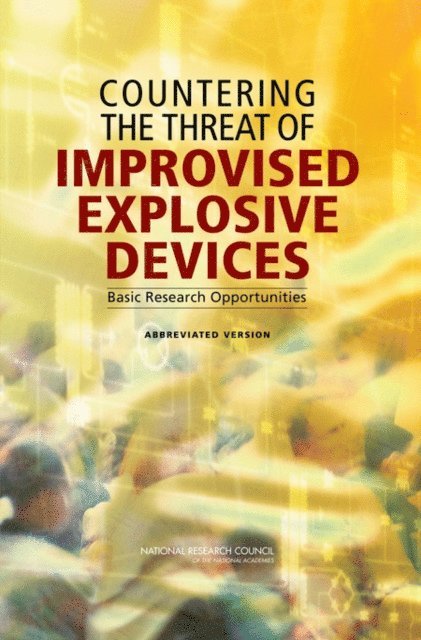
Attacks in London, Madrid, Bali, Oklahoma City and other places indicate that improvised explosive devices (IEDs) are among the weapons of choice of terrorists throughout the world. Scientists and engineers have developed various technologies that have been used to counter individual IED attacks, but events in Iraq and elsewhere indicate that the effectiveness of IEDs as weapons of asymmetric warfare remains. The Office of Naval Research has asked The National Research Council to examine the current state of knowledge and practice in the prevention, detection, and mitigation of the effects of IEDs and make recommendations for avenues of research toward the goal of making these devices an ineffective tool of asymmetric warfare. The book includes recommendations such as identifying the most important and most vulnerable elements in the chain of events leading up to an IED attack, determining how resources can be controlled in order to prevent the construction of IEDs, new analytical methods and data modeling to predict the ever-changing behavior of insurgents/terrorists, a deeper understanding of social divisions in societies, enhanced capabilities for persistent surveillance, and improved IED detection capabilities.
Häftad, Engelska, 2007
477 kr
Tillfälligt slut
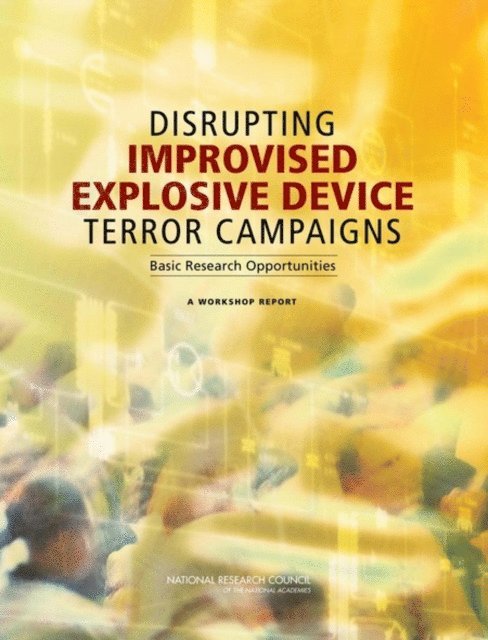
Attacks in London, Madrid, Bali, Oklahoma City and other places indicate that improvised explosive devices (IEDs) are among the weapons of choice of terrorists throughout the world. Scientists and engineers have developed various technologies that have been used to counter individual IED attacks, but events in Iraq and elsewhere indicate that the effectiveness of IEDs as weapons of asymmetric warfare remains. The Office of Naval Research has asked The National Research Council to examine the current state of knowledge and practice in the prevention, detection, and mitigation of the effects of IEDs and make recommendations for avenues of research toward the goal of making these devices an ineffective tool of asymmetric warfare.The book includes recommendations such as identifying the most important and most vulnerable elements in the chain of events leading up to an IED attack, determining how resources can be controlled in order to prevent the construction of IEDs, new analytical methods and data modeling to predict the ever-changing behavior of insurgents/terrorists, a deeper understanding of social divisions in societies, enhanced capabilities for persistent surveillance, and improved IED detection capabilities.