Committee on Geological and Geotechnical Engineering – författare
795 kr
Läs direkt efter köp
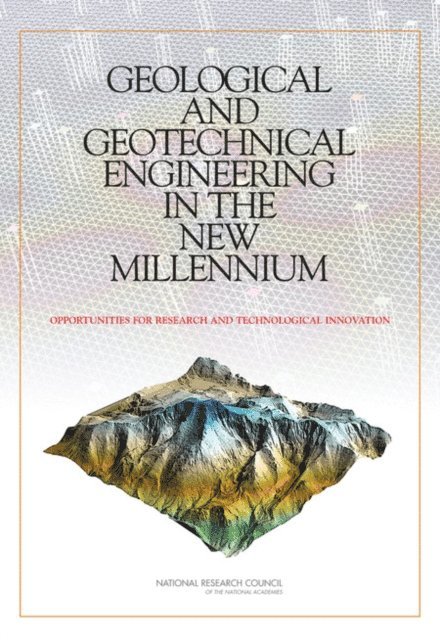
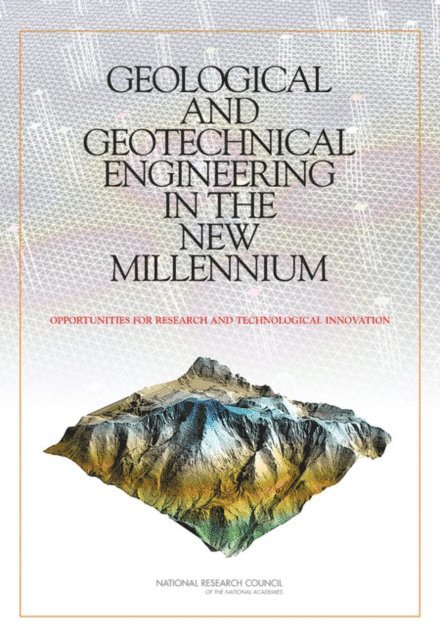
The field of geoengineering is at a crossroads where the path to high-tech solutions meets the path to expanding applications of geotechnology. In this report, the term "geoengineering" includes all types of engineering that deal with Earth materials, such as geotechnical engineering, geological engineering, hydrological engineering, and Earth-related parts of petroleum engineering and mining engineering. The rapid expansion of nanotechnology, biotechnology, and information technology begs the question of how these new approaches might come to play in developing better solutions for geotechnological problems.This report presents a vision for the future of geotechnology aimed at National Science Foundation (NSF) program managers, the geological and geotechnical engineering community as a whole, and other interested parties, including Congress, federal and state agencies, industry, academia, and other stakeholders in geoengineering research. Some of the ideas may be close to reality whereas others may turn out to be elusive, but they all present possibilities to strive for and potential goals for the future. Geoengineers are poised to expand their roles and lead in finding solutions for modern Earth systems problems, such as global change, emissions-free energy supply, global water supply, and urban systems.
836 kr
Läs direkt efter köp
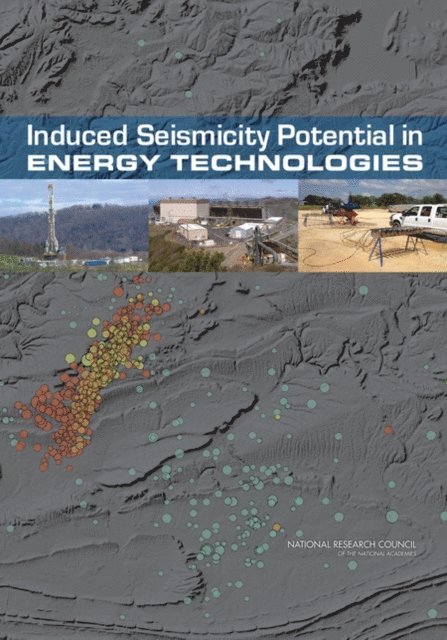
In the past several years, some energy technologies that inject or extract fluid from the Earth, such as oil and gas development and geothermal energy development, have been found or suspected to cause seismic events, drawing heightened public attention.
Although only a very small fraction of injection and extraction activities among the hundreds of thousands of energy development sites in the United States have induced seismicity at levels noticeable to the public, understanding the potential for inducing felt seismic events and for limiting their occurrence and impacts is desirable for state and federal agencies, industry, and the public at large. To better understand, limit, and respond to induced seismic events, work is needed to build robust prediction models, to assess potential hazards, and to help relevant agencies coordinate to address them.
Induced Seismicity Potential in Energy Technologies identifies gaps in knowledge and research needed to advance the understanding of induced seismicity; identify gaps in induced seismic hazard assessment methodologies and the research to close those gaps; and assess options for steps toward best practices with regard to energy development and induced seismicity potential.
649 kr
Läs direkt efter köp
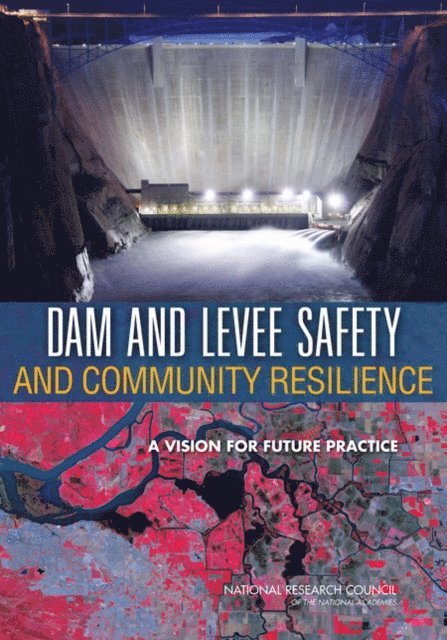
Although advances in engineering can reduce the risk of dam and levee failure, some failures will still occur. Such events cause impacts on social and physical infrastructure that extend far beyond the flood zone. Broadening dam and levee safety programs to consider community- and regional-level priorities in decision making can help reduce the risk of, and increase community resilience to, potential dam and levee failures.
Collaboration between dam and levee safety professionals at all levels, persons and property owners at direct risk, members of the wider economy, and the social and environmental networks in a community would allow all stakeholders to understand risks, shared needs, and opportunities, and make more informed decisions related to dam and levee infrastructure and community resilience. Dam and Levee Safety and Community Resilience: A Vision for Future Practice explains that fundamental shifts in safety culture will be necessary to integrate the concepts of resilience into dam and levee safety programs.
522 kr
Skickas
779 kr
Läs direkt efter köp
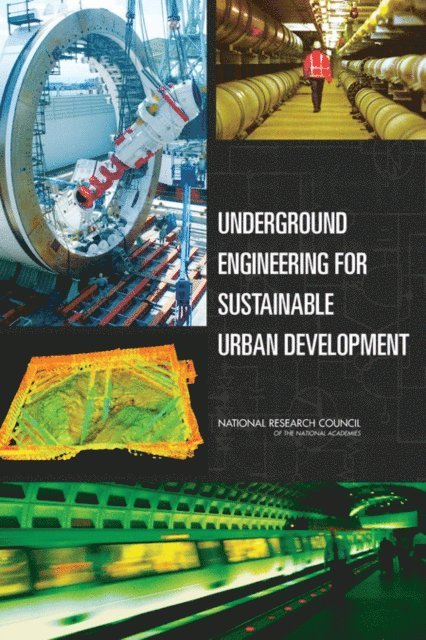
For thousands of years, the underground has provided humans refuge, useful resources, physical support for surface structures, and a place for spiritual or artistic expression. More recently, many urban services have been placed underground. Over this time, humans have rarely considered how underground space can contribute to or be engineered to maximize its contribution to the sustainability of society. As human activities begin to change the planet and population struggle to maintain satisfactory standards of living, placing new infrastructure and related facilities underground may be the most successful way to encourage or support the redirection of urban development into sustainable patterns. Well maintained, resilient, and adequately performing underground infrastructure, therefore, becomes an essential part of sustainability, but much remains to be learned about improving the sustainability of underground infrastructure itself.
At the request of the National Science Foundation (NSF), the National Research Council (NRC) conducted a study to consider sustainable underground development in the urban environment, to identify research needed to maximize opportunities for using underground space, and to enhance understanding among the public and technical communities of the role of underground engineering in urban sustainability.
Underground Engineering for Sustainable Urban Development explains the findings of researchers and practitioners with expertise in geotechnical engineering, underground design and construction, trenchless technologies, risk assessment, visualization techniques for geotechnical applications, sustainable infrastructure development, life cycle assessment, infrastructure policy and planning, and fire prevention, safety and ventilation in the underground. This report is intended to inform a future research track and will be of interest to a broad audience including those in the private and public sectors engaged in urban and facility planning and design, underground construction, and safety and security.
892 kr
Läs direkt efter köp
Fractured rock is the host or foundation for innumerable engineered structures related to energy, water, waste, and transportation. Characterizing, modeling, and monitoring fractured rock sites is critical to the functioning of those infrastructure, as well as to optimizing resource recovery and contaminant management. Characterization, Modeling, Monitoring, and Remediation of Fractured Rock examines the state of practice and state of art in the characterization of fractured rock and the chemical and biological processes related to subsurface contaminant fate and transport. This report examines new developments, knowledge, and approaches to engineering at fractured rock sites since the publication of the 1996 National Research Council report Rock Fractures and Fluid Flow: Contemporary Understanding and Fluid Flow. Fundamental understanding of the physical nature of fractured rock has changed little since 1996, but many new characterization tools have been developed, and there is now greater appreciation for the importance of chemical and biological processes that can occur in the fractured rock environment.
The findings of Characterization, Modeling, Monitoring, and Remediation of Fractured Rock can be applied to all types of engineered infrastructure, but especially to engineered repositories for buried or stored waste and to fractured rock sites that have been contaminated as a result of past disposal or other practices. The recommendations of this report are intended to help the practitioner, researcher, and decision maker take a more interdisciplinary approach to engineering in the fractured rock environment. This report describes how existing tools—some only recently developed—can be used to increase the accuracy and reliability of engineering design and management given the interacting forces of nature. With an interdisciplinary approach, it is possible to conceptualize and model the fractured rock environment with acceptable levels of uncertainty and reliability, and to design systems that maximize remediation and long-term performance. Better scientific understanding could inform regulations, policies, and implementation guidelines related to infrastructure development and operations. The recommendations for research and applications to enhance practice of this book make it a valuable resource for students and practitioners in this field.
974 kr
Läs direkt efter köp
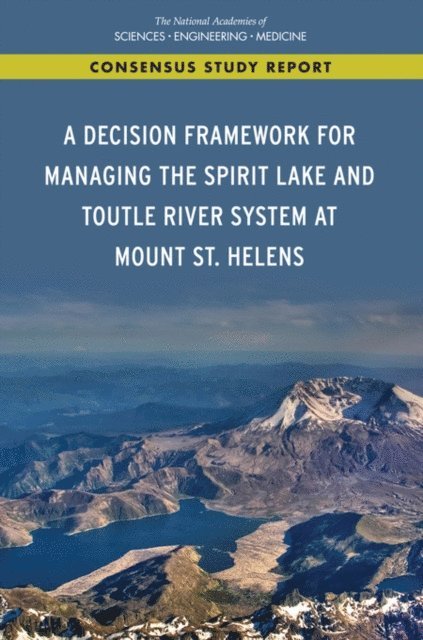
The 1980 eruption of Mount St. Helens in southwest Washington State radically changed the physical and socio-economic landscapes of the region. The eruption destroyed the summit of the volcano, sending large amounts of debris into the North Fork Toutle River, and blocking the sole means of drainage from Spirit Lake 4 miles north of Mount St. Helens. As a result of the blockage, rising lake levels could cause failure of the debris blockage, putting the downstream population of approximately 50,000 at risk of catastrophic flooding and mud flows. Further, continued transport of sediment to the river from volcanic debris deposits surrounding the mountain reduces the flood carrying capacity of downstream river channels and leaves the population vulnerable to chronic flooding.
The legacy of the 1980 eruption and the prospect of future volcanic, seismic, and flood events mean that risk management in the Spirit Lake Toutle River system will be challenging for decades to come. This report offers a decision framework to support the long-term management of risks related to the Spirit Lake and Toutle River system in light of the different regional economic, cultural, and social priorities, and the respective roles of federal, tribal, state, and local authorities, as well as other entities and groups in the region. It also considers the history and adequacy of characterization, monitoring, and management associated with the Spirit Lake debris blockage and outflow tunnel, other efforts to control transport of water and sediment from the 1980 and later eruptions, and suggests additional information needed to support implementation of the recommended decision framework.
747 kr
Läs direkt efter köp
The field of geoengineering is at a crossroads where the path to high-tech solutions meets the path to expanding applications of geotechnology. In this report, the term "geoengineering" includes all types of engineering that deal with Earth materials, such as geotechnical engineering, geological engineering, hydrological engineering, and Earth-related parts of petroleum engineering and mining engineering. The rapid expansion of nanotechnology, biotechnology, and information technology begs the question of how these new approaches might come to play in developing better solutions for geotechnological problems.This report presents a vision for the future of geotechnology aimed at National Science Foundation (NSF) program managers, the geological and geotechnical engineering community as a whole, and other interested parties, including Congress, federal and state agencies, industry, academia, and other stakeholders in geoengineering research. Some of the ideas may be close to reality whereas others may turn out to be elusive, but they all present possibilities to strive for and potential goals for the future. Geoengineers are poised to expand their roles and lead in finding solutions for modern Earth systems problems, such as global change, emissions-free energy supply, global water supply, and urban systems.
341 kr
Läs direkt efter köp
Steel is a common component of U.S. infrastructure, but that steel can corrode when buried in soil, rock, or fill. Steel corrosion is estimated to cost the United States 3-4 percent of its gross domestic product every year, and it can lead to infrastructure failure, loss of lives, property, disruption of energy and transportation systems, and damage to the environment. Although the mechanisms of steel corrosion are well understood, limited data on subsurface corrosion and the inability to measure corrosivity directly make accurate corrosion prediction through modeling a challenge. When hazardous levels of corrosion does occur, it is difficult to determine whether the cause was related to site selection, engineering decisions, changes in subsurface conditions, or a combination of these factors.
This report explores the state of knowledge and technical issues regarding the corrosion of steel used for earth applications (e.g., for ground stabilization, pipelines, and infrastructure foundations) in unconsolidated earth or rock in different geologic settings. The report summarizes mechanisms of steel corrosion, assesses the state of practice for characterizing factors in the subsurface environment that influence corrosion and corrosion rates, and assesses the efficacy and uncertainties associated with quantitative, field, and laboratory methods for predicting corrosion.
The industries and experts most involved with managing buried steel should collaborate to improve multidisciplinary understanding of the processes that drive buried steel corrosion. Developing a common lexicon related to buried steel corrosion, generating new data on corrosion through collaborative long-term experiments, sharing and managing data, and developing new data analytical techniques to inform infrastructure design, construction, and management decisions are key. Industries, experts, and regulators should collaboratively develop decision support systems that guide site characterization and help manage risk. These systems and new data should undergird a common clearinghouse for data on corrosion of buried steel, which will ultimately inform better and more efficient management of buried steel infrastructure, and protect safety and the environment.
751 kr
Tillfälligt slut
550 kr
Tillfälligt slut
431 kr
Tillfälligt slut
614 kr
Tillfälligt slut
660 kr
Tillfälligt slut
225 kr
Tillfälligt slut