Committee on Military Nutrition Research – författare
Visar alla böcker från författaren Committee on Military Nutrition Research. Handla med fri frakt och snabb leverans.
37 produkter
Body Composition and Physical Performance
Applications for the Military Services
Av Institute of Medicine, Committee on Military Nutrition Research m. fl.
Häftad, 1992
2298 kr
Lägg i varukorg
This book surveys the entire field of body composition as it relates to performance. It includes a clear definition of terminology and a discussion of the various methods for measuring body composition.The authored papers represent a state-of-the-art review of this controversial field and address …
Nutritional Needs in Hot Environments
Applications for Military Personnel in Field Operations
Av Institute of Medicine, Committee on Military Nutrition Research m. fl.
Häftad, 1993
1920 kr
Lägg i varukorg
This volume examines the current state of knowledge concerning the influence of a hot environment on nutrient requirements of military personnel. A parallel concern is ensuring that performance does not decline as a result of inadequate nutrition. The committee provides a thorough review of the …
Role of Protein and Amino Acids in Sustaining and Enhancing Performance
Av Institute of Medicine, Committee on Military Nutrition Research
Häftad, 1999
2034 kr
Lägg i varukorg
It is a commonly held belief that athletes, particularly body builders, have greater requirements for dietary protein than sedentary individuals. However, the evidence in support of this contention is controversial. This book is the latest in a series of publications designed to inform both …
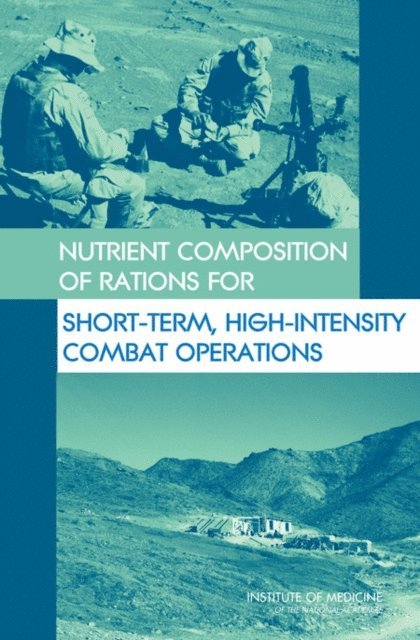
Nutrient Composition of Rations for Short-Term, High-Intensity Combat Operations
Av High-Stress Situations Committee on Optimization of Nutrient Composition of Military Rations for Short-Term, Committee on Military Nutrition Research m. fl.
E-bok, 2005
1070 kr
Lägg i varukorg
Recognizing the importance of good nutrition for physical and mental status, theDepartment of Defense asked the Institute of Medicine to guide the design of thenutritional composition of a ration for soldiers on short-term, high-stress missions. Nutrient Composition of Rations for Short-Term, …
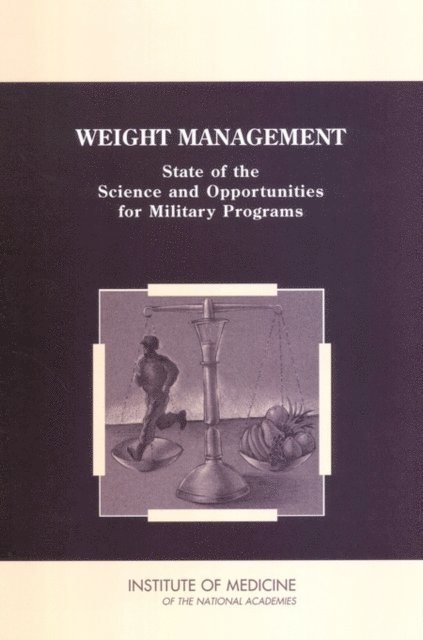
Weight Management
State of the Science and Opportunities for Military Programs
Av Subcommittee on Military Weight Management, Committee on Military Nutrition Research m. fl.
E-bok, 2003
745 kr
Lägg i varukorg
The primary purpose of fitness and body composition standards in the U.S. ArmedForces has always been to select individuals best suited to the physical demands of military service, based on the assumption that proper body weight and composition supports good health, physical fitness, and …
High-Energy, Nutrient-Dense Emergency Relief Food Product
Av Subcommittee on Technical Specifications for a High-Energy Emergency Relief Ration, Committee on Military Nutrition Research m. fl.
E-bok, 2002
716 kr
Lägg i varukorg
The present study was conducted by an ad hoc subcommittee of the Committee on Military Nutrition Research. The Subcommittee on Technical Specifications for a High-Energy Emergency Relief Ration was established by the Food and Nutrition Board of the Institute of Medicine in response to a request …
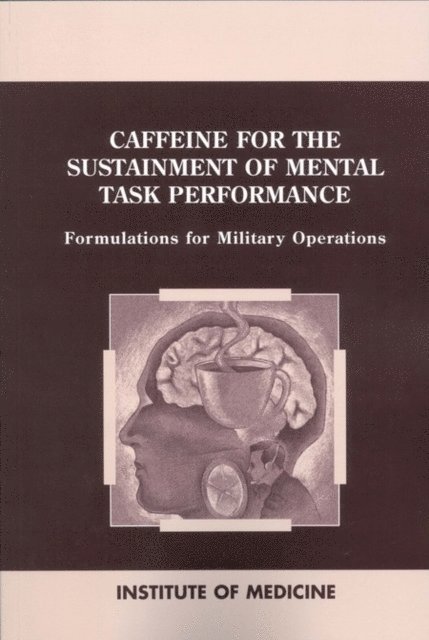
Caffeine for the Sustainment of Mental Task Performance
Formulations for Military Operations
Av Committee on Military Nutrition Research, Food and Nutrition Board m. fl.
E-bok, 2001
646 kr
Lägg i varukorg
This report from the Committee on Military Nutrition Research reviews the history of caffeine usage, the metabolism of caffeine, and its physiological effects. The effects of caffeine on physical performance, cognitive function and alertness, and alleviation of sleep deprivation impairments are …
Committee on Military Nutrition Research
Activity Report 1994-1999
Av Committee on Military Nutrition Research, Food and Nutrition Board m. fl.
E-bok, 1999
981 kr
Lägg i varukorg
The activities of the Food and Nutrition Board''s Committee on Military Nutrition Research (CMNR, the committee) have been supported since 1994 by grant DAMD17-94-J-4046 from the U.S. Army Medical Research and Materiel Command (USAMRMC). This report fulfills the final reporting requirement of the …
Role of Protein and Amino Acids in Sustaining and Enhancing Performance
Av Committee on Military Nutrition Research, Institute of Medicine
E-bok, 1999
1605 kr
Lägg i varukorg
It is a commonly held belief that athletes, particularly body builders, have greater requirements for dietary protein than sedentary individuals. However, the evidence in support of this contention is controversial. This book is the latest in a series of publications designed to inform both …
Military Strategies for Sustainment of Nutrition and Immune Function in the Field
Av Committee on Military Nutrition Research, Institute of Medicine
E-bok, 1999
2424 kr
Lägg i varukorg
Every aspect of immune function and host defense is dependent upon a proper supply and balance of nutrients. Severe malnutrition can cause significant alteration in immune response, but even subclinical deficits may be associated with an impaired immune response, and an increased risk of infection. …
Reducing Stress Fracture in Physically Active Military Women
Av and Health of Military Women Subcommittee on Body Composition, Nutrition, Committee on Military Nutrition Research m. fl.
E-bok, 1998
572 kr
Lägg i varukorg
The incidence of stress fractures of the lower extremities during U.S. military basic training is significantly higher among female military recruits than among male recruits. The prevalence of this injury has a marked impact on the health of service personnel and imposes a significant financial …
Emerging Technologies for Nutrition Research
Potential for Assessing Military Performance Capability
Av Committee on Military Nutrition Research, Institute of Medicine
E-bok, 1997
1338 kr
Lägg i varukorg
The latest of a series of publications based on workshops sponsored by the Committee on Military Nutrition Research, this book''s focus on emerging technologies for nutrition research arose from a concern among scientists at the U.S. Army Research Institute of Environmental Medicine that …
Nutritional Needs in Cold and High-Altitude Environments
Applications for Military Personnel in Field Operations
Av Committee on Military Nutrition Research, Institute of Medicine m. fl.
E-bok, 1996
749 kr
Lägg i varukorg
This book reviews the research pertaining to nutrient requirements for working in cold or in high-altitude environments and states recommendations regarding the application of this information to military operational rations. It addresses whether, aside from increased energy demands, cold or …
Not Eating Enough
Overcoming Underconsumption of Military Operational Rations
Av Committee on Military Nutrition Research, Institute of Medicine m. fl.
E-bok, 1995
981 kr
Lägg i varukorg
Eating enough food to meet nutritional needs and maintain good health and good performance in all aspects of life—both at home and on the job—is important for all of us throughout our lives. For military personnel, however, this presents a special challenge. Although soldiers typically have a …
Mineral Requirements for Military Personnel
Levels Needed for Cognitive and Physical Performance During Garrison Training
Av Committee on Mineral Requirements for Cognitive and Physical Performance of Military Personnel, Committee on Military Nutrition Research m. fl.
E-bok, 2006
1427 kr
Lägg i varukorg
The U.S. Army Health Risk Appraisal group surveyed 400,000 active duty U.S. Army personnel in the late 1990s to determine whether or not those personnel met the dietary objectives of Healthy People 2000 (HP2000), a national agenda for health promotion and disease prevention. As reported by Yore et …
High-Energy, Nutrient-Dense Emergency Relief Food Product
Av Subcommittee on Technical Specifications for a High-Energy Emergency Relief Ration, Committee on Military Nutrition Research m. fl.
E-bok, 2002
498 kr
Lägg i varukorg
The present study was conducted by an ad hoc subcommittee of the Committee on Military Nutrition Research. The Subcommittee on Technical Specifications for a High-Energy Emergency Relief Ration was established by the Food and Nutrition Board of the Institute of Medicine in response to a request …
Weight Management
State of the Science and Opportunities for Military Programs
Av Subcommittee on Military Weight Management, Committee on Military Nutrition Research m. fl.
E-bok, 2003
520 kr
Lägg i varukorg
The primary purpose of fitness and body composition standards in the U.S. ArmedForces has always been to select individuals best suited to the physical demands of military service, based on the assumption that proper body weight and composition supports good health, physical fitness, and …
Nutrient Composition of Rations for Short-Term, High-Intensity Combat Operations
Av High-Stress Situations Committee on Optimization of Nutrient Composition of Military Rations for Short-Term, Committee on Military Nutrition Research m. fl.
E-bok, 2005
892 kr
Lägg i varukorg
Recognizing the importance of good nutrition for physical and mental status, theDepartment of Defense asked the Institute of Medicine to guide the design of thenutritional composition of a ration for soldiers on short-term, high-stress missions. Nutrient Composition of Rations for Short-Term, …
Emerging Technologies for Nutrition Research
Potential for Assessing Military Performance Capability
Av Committee on Military Nutrition Research, Institute of Medicine
E-bok, 1997
794 kr
Lägg i varukorg
The latest of a series of publications based on workshops sponsored by the Committee on Military Nutrition Research, this book''s focus on emerging technologies for nutrition research arose from a concern among scientists at the U.S. Army Research Institute of Environmental Medicine that …
Not Eating Enough
Overcoming Underconsumption of Military Operational Rations
Av Committee on Military Nutrition Research, Institute of Medicine m. fl.
E-bok, 1995
616 kr
Lägg i varukorg
Eating enough food to meet nutritional needs and maintain good health and good performance in all aspects of life—both at home and on the job—is important for all of us throughout our lives. For military personnel, however, this presents a special challenge. Although soldiers typically have a …
Nutritional Needs in Cold and High-Altitude Environments
Applications for Military Personnel in Field Operations
Av Committee on Military Nutrition Research, Institute of Medicine m. fl.
E-bok, 1996
580 kr
Lägg i varukorg
This book reviews the research pertaining to nutrient requirements for working in cold or in high-altitude environments and states recommendations regarding the application of this information to military operational rations. It addresses whether, aside from increased energy demands, cold or …
Military Strategies for Sustainment of Nutrition and Immune Function in the Field
Av Committee on Military Nutrition Research, Institute of Medicine
E-bok, 1999
2372 kr
Lägg i varukorg
Every aspect of immune function and host defense is dependent upon a proper supply and balance of nutrients. Severe malnutrition can cause significant alteration in immune response, but even subclinical deficits may be associated with an impaired immune response, and an increased risk of infection. …
Committee on Military Nutrition Research
Activity Report 1994-1999
Av Committee on Military Nutrition Research, Food and Nutrition Board m. fl.
E-bok, 1999
856 kr
Lägg i varukorg
The activities of the Food and Nutrition Board''s Committee on Military Nutrition Research (CMNR, the committee) have been supported since 1994 by grant DAMD17-94-J-4046 from the U.S. Army Medical Research and Materiel Command (USAMRMC). This report fulfills the final reporting requirement of the …
Body Composition and Physical Performance
Applications for the Military Services
Av Committee on Military Nutrition Research, Institute of Medicine m. fl.
E-bok, 1992
951 kr
Lägg i varukorg
This book surveys the entire field of body composition as it relates to performance. It includes a clear definition of terminology and a discussion of the various methods for measuring body composition. The authored papers represent a state-of-the-art review of this controversial field and address …
Caffeine for the Sustainment of Mental Task Performance
Formulations for Military Operations
Av Committee on Military Nutrition Research, Food and Nutrition Board m. fl.
E-bok, 2001
535 kr
Lägg i varukorg
This report from the Committee on Military Nutrition Research reviews the history of caffeine usage, the metabolism of caffeine, and its physiological effects. The effects of caffeine on physical performance, cognitive function and alertness, and alleviation of sleep deprivation impairments are …
Food Components to Enhance Performance
An Evaluation of Potential Performance-Enhancing Food Components for Operational Rations
Av Committee on Military Nutrition Research, Food and Nutrition Board m. fl.
E-bok, 1994
1832 kr
Lägg i varukorg
The physiological or psychological stresses that employees bring to their workplace affect not only their own performance but that of their co-workers and others. These stresses are often compounded by those of the job itself. Medical personnel, firefighters, police, and military personnel in …
Role of Protein and Amino Acids in Sustaining and Enhancing Performance
Av Committee on Military Nutrition Research, Institute of Medicine
E-bok, 1999
1481 kr
Lägg i varukorg
It is a commonly held belief that athletes, particularly body builders, have greater requirements for dietary protein than sedentary individuals. However, the evidence in support of this contention is controversial. This book is the latest in a series of publications designed to inform both …
Reducing Stress Fracture in Physically Active Military Women
Av and Health of Military Women Subcommittee on Body Composition, Nutrition, Committee on Military Nutrition Research m. fl.
E-bok, 1998
402 kr
Lägg i varukorg
The incidence of stress fractures of the lower extremities during U.S. military basic training is significantly higher among female military recruits than among male recruits. The prevalence of this injury has a marked impact on the health of service personnel and imposes a significant financial …
Nutritional Needs in Hot Environments
Applications for Military Personnel in Field Operations
Av Committee on Military Nutrition Research, Institute of Medicine m. fl.
E-bok, 1993
1326 kr
Lägg i varukorg
This volume examines the current state of knowledge concerning the influence of a hot environment on nutrient requirements of military personnel. A parallel concern is ensuring that performance does not decline as a result of inadequate nutrition. The committee provides a thorough review of the …
Mineral Requirements for Military Personnel
Levels Needed for Cognitive and Physical Performance During Garrison Training
Av Committee on Mineral Requirements for Cognitive and Physical Performance of Military Personnel, Committee on Military Nutrition Research m. fl.
E-bok, 2006
1309 kr
Lägg i varukorg
The U.S. Army Health Risk Appraisal group surveyed 400,000 active duty U.S. Army personnel in the late 1990s to determine whether or not those personnel met the dietary objectives of Healthy People 2000 (HP2000), a national agenda for health promotion and disease prevention. As reported by Yore et …