
Committee On Standards And Policies For Decontaminating Public Facilities Affected By Exposure To Harmful Biological Agents How Clean Is Safe – författare & böcker | Bokus
Committee on Standards and Policies for Decontaminating Public Facilities Affected by Exposure to Harmful Biological Agents: How Clean Is Safe? – författare
Visar alla böcker från författaren Committee on Standards and Policies for Decontaminating Public Facilities Affected by Exposure to Harmful Biological Agents: How Clean Is Safe?. Handla med fri frakt och snabb leverans.
3 produkter
Information om vår produktsortering
Lär dig mer om vår produktsortering och varför vissa produkter visas och prioriteras framför andra.
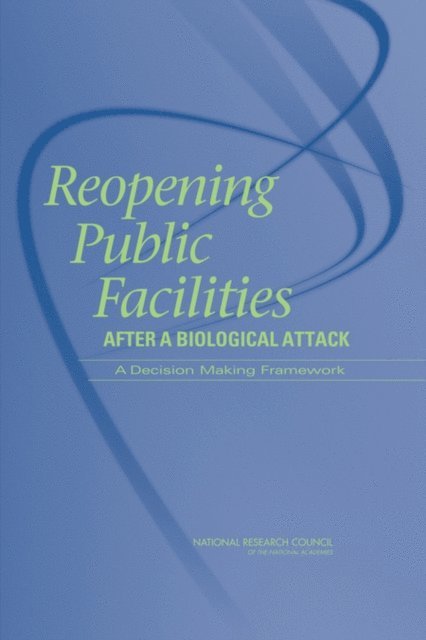
The anthrax attacks in fall 2001 spurred an extensive and costly decontamination effort where many decisions had to be made about which sites required cleanup, what method to use, how to determine the effectiveness of the cleanup, and how "clean" the building had to be for reoccupation. As part of a project funded by the U.S. Department of Homeland Security (DHS), and managed by Lawrence Livermore National Laboratory, the National Research Council was asked to consider the criteria that must be met for a cleanup to be declared successful, allowing the reoccupation of a facility. The report finds that efficiently sampling and characterizing a pathogen is critical for choosing the best remediation strategy. However, there should be no universal standard for deciding when a building is safe to re-enter because varying pathogen amounts and characteristics could require different strategies. The report offers a flowchart for decision-makers that includes questions about the characteristics of the pathogen; how far it has spread; whether it is transmissible between humans; and how long it will survive to pose a threat. The report also recommends that a risk-assessment approach be adopted as part of a strategy for achieving a "socially acceptable" standard for cleanup.
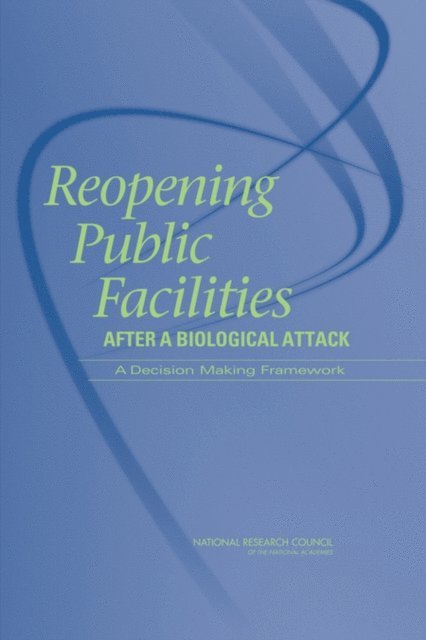
The anthrax attacks in fall 2001 spurred an extensive and costly decontamination effort where many decisions had to be made about which sites required cleanup, what method to use, how to determine the effectiveness of the cleanup, and how "clean" the building had to be for reoccupation. As part of a project funded by the U.S. Department of Homeland Security (DHS), and managed by Lawrence Livermore National Laboratory, the National Research Council was asked to consider the criteria that must be met for a cleanup to be declared successful, allowing the reoccupation of a facility. The report finds that efficiently sampling and characterizing a pathogen is critical for choosing the best remediation strategy. However, there should be no universal standard for deciding when a building is safe to re-enter because varying pathogen amounts and characteristics could require different strategies. The report offers a flowchart for decision-makers that includes questions about the characteristics of the pathogen; how far it has spread; whether it is transmissible between humans; and how long it will survive to pose a threat.The report also recommends that a risk-assessment approach be adopted as part of a strategy for achieving a "socially acceptable" standard for cleanup.