Committee on Techniques for the Enhancement of Human Performance – författare
700 kr
Skickas inom 3-6 vardagar
700 kr
Skickas inom 3-6 vardagar
714 kr
Läs direkt efter köp
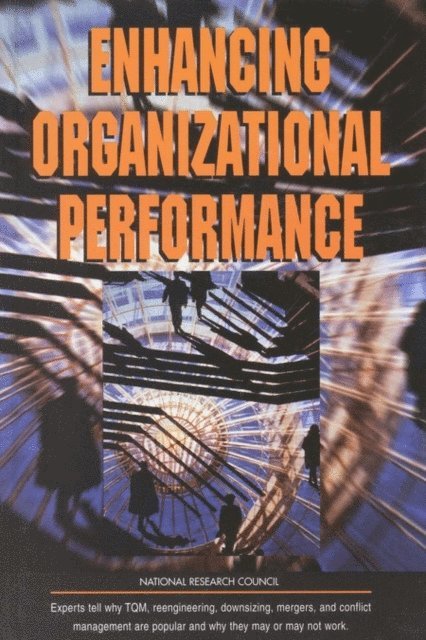
Total quality management (TQM), reengineering, the workplace of the twenty-first century—the 1990s have brought a sense of urgency to organizations to change or face stagnation and decline, according to Enhancing Organizational Performance. Organizations are adopting popular management techniques, some scientific, some faddish, often without introducing them properly or adequately measuring the outcome.
Enhancing Organizational Performance reviews the most popular current approaches to organizational change—total quality management, reengineering, and downsizing—in terms of how they affect organizations and people, how performance improvements can be measured, and what questions remain to be answered by researchers.
The committee explores how theory, doctrine, accepted wisdom, and personal experience have all served as sources for organization design. Alternative organization structures such as teams, specialist networks, associations, and virtual organizations are examined.
Enhancing Organizational Performance looks at the influence of the organization''s norms, values, and beliefs—its culture—on people and their performance, identifying cultural "levers" available to organization leaders. And what is leadership? The committee sorts through a wealth of research to identify behaviors and skills related to leadership effectiveness. The volume examines techniques for developing these skills and suggests new competencies that will become required with globalization and other trends.
Mergers, networks, alliances, coalitions—organizations are increasingly turning to new intra- and inter-organizational structures. Enhancing Organizational Performance discusses how organizations cooperate to maximize outcomes.
The committee explores the changing missions of the U.S. Army as a case study that has relevance to any organization. Noting that a musical greeting card contains more computing power than existed in the entire world before 1950, the committee addresses the impact of new technologies on performance.
With examples, insights, and practical criteria, Enhancing Organizational Performance clarifies the nature of organizations and the prospects for performance improvement.
This book will be important to corporate leaders, executives, and managers; faculty and students in organizational performance and the social sciences; business journalists; researchers; and interested individuals.
503 kr
Läs direkt efter köp
Total quality management (TQM), reengineering, the workplace of the twenty-first century—the 1990s have brought a sense of urgency to organizations to change or face stagnation and decline, according to Enhancing Organizational Performance. Organizations are adopting popular management techniques, some scientific, some faddish, often without introducing them properly or adequately measuring the outcome.
Enhancing Organizational Performance reviews the most popular current approaches to organizational change—total quality management, reengineering, and downsizing—in terms of how they affect organizations and people, how performance improvements can be measured, and what questions remain to be answered by researchers.
The committee explores how theory, doctrine, accepted wisdom, and personal experience have all served as sources for organization design. Alternative organization structures such as teams, specialist networks, associations, and virtual organizations are examined.
Enhancing Organizational Performance looks at the influence of the organization''s norms, values, and beliefs—its culture—on people and their performance, identifying cultural "levers" available to organization leaders. And what is leadership? The committee sorts through a wealth of research to identify behaviors and skills related to leadership effectiveness. The volume examines techniques for developing these skills and suggests new competencies that will become required with globalization and other trends.
Mergers, networks, alliances, coalitions—organizations are increasingly turning to new intra- and inter-organizational structures. Enhancing Organizational Performance discusses how organizations cooperate to maximize outcomes.
The committee explores the changing missions of the U.S. Army as a case study that has relevance to any organization. Noting that a musical greeting card contains more computing power than existed in the entire world before 1950, the committee addresses the impact of new technologies on performance.
With examples, insights, and practical criteria, Enhancing Organizational Performance clarifies the nature of organizations and the prospects for performance improvement.
This book will be important to corporate leaders, executives, and managers; faculty and students in organizational performance and the social sciences; business journalists; researchers; and interested individuals.
560 kr
Läs direkt efter köp
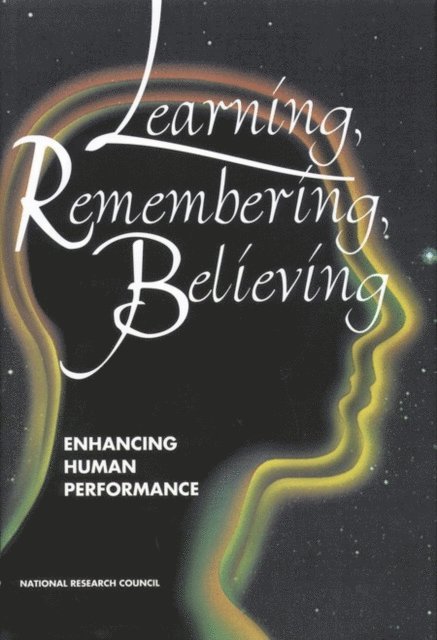
Can such techniques as sleep learning and hypnosis improve performance? Do we sometimes confuse familiarity with mastery? Can we learn without making mistakes? These questions apply in the classroom, in the military, and on the assembly line.
Learning, Remembering, Believing addresses these and other key issues in learning and performance. The volume presents leading-edge theories and findings from a wide range of research settings: from pilots learning to fly to children learning about physics by throwing beanbags. Common folklore is explored, and promising research directions are identified. The authors also continue themes from their first two volumes: Enhancing Human Performance (1988) and In the Mind''s Eye (1991).
The result is a thorough and readable review of:
Learning and remembering. The volume evaluates the effects of subjective experience on learning—why we often overestimate what we know, why we may not need a close match between training settings and real-world tasks, and why we experience such phenomena as illusory remembering and unconscious plagiarism. Learning and performing in teams. The authors discuss cooperative learning in different age groups and contexts. Current views on team performance are presented, including how team-learning processes can be improved and whether team-building interventions are effective. Mental and emotional states. This is a critical review of the evidence that learning is affected by state of mind. Topics include hypnosis, meditation, sleep learning, restricted environmental stimulation, and self-confidence and the self-efficacy theory of learning. New directions. The volume looks at two new ideas for improving performance: emotions induced by another person—socially induced affect—and strategies for controlling one''s thoughts. The committee also considers factors inherent in organizations—workplaces, educational facilities, and the military—that affect whether and how they implement training programs.Learning, Remembering, Believing offers an understanding of human learning that will be useful to training specialists, psychologists, educators, managers, and individuals interested in all dimensions of human performance.
954 kr
Läs direkt efter köp
978 kr
Läs direkt efter köp
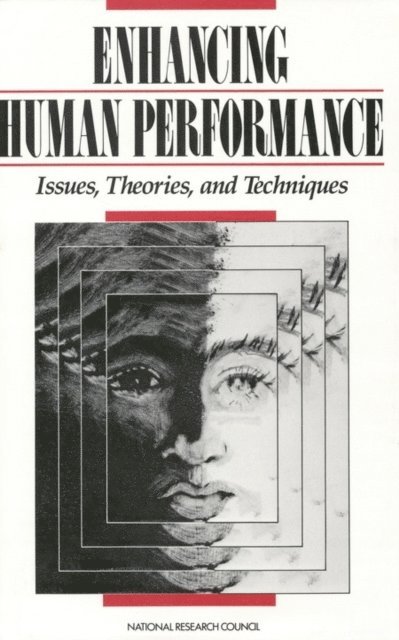
In its evaluation, Enhancing Human Performance reviews the relevant materials, describes each technique, makes recommendations in some cases for further scientific research and investigation, and notes applications in military and industrial settings. The techniques address a wide range of goals, from enhancing classroom learning to improving creativity and motor skills.
379 kr
Läs direkt efter köp
Is it possible for people to register and retain what is said in their presence while they sleep? If it is possible, is the learning that takes place during sleep efficient enough to be of practical as well as theoretical significance? These are the questions of chief concern in this paper. To address these issues, the second section of the paper summarizes research dealing with a number of variables that may have an important influence on sleep learning. In the third section, some tentative conclusions concerning the possibility and practicality of learning during sleep are outlined.
1 531 kr
Tillfälligt slut
1 398 kr
Tillfälligt slut
1 576 kr
Tillfälligt slut
1 609 kr
Tillfälligt slut
1 609 kr
Tillfälligt slut
1 698 kr
Tillfälligt slut
2 711 kr
Tillfälligt slut
1 411 kr
Tillfälligt slut