Committee to Study Tools and Strategies for Protecting Kids from Pornography and Their Applicability to Other Inappropriate Internet Content – författare
589 kr
Skickas
764 kr
Skickas
675 kr
Läs direkt efter köp
In response to a mandate from Congress in conjunction with the Protection of Children from Sexual Predators Act of 1998, the Computer Science and Telecommunications Board (CSTB) and the Board on Children, Youth, and Families of the National Research Council (NRC) and the Institute of Medicine established the Committee to Study Tools and Strategies for Protecting Kids from Pornography and Their Applicability to Other Inappropriate Internet Content.
To collect input and to disseminate useful information to the nation on this question, the committee held two public workshops. On December 13, 2000, in Washington, D.C., the committee convened a workshop to focus on nontechnical strategies that could be effective in a broad range of settings (e.g., home, school, libraries) in which young people might be online. This workshop brought together researchers, educators, policy makers, and other key stakeholders to consider and discuss these approaches and to identify some of the benefits and limitations of various nontechnical strategies. The December workshop is summarized in Nontechnical Strategies to Reduce Children''s Exposure to Inappropriate Material on the Internet: Summary of a Workshop. The second workshop was held on March 7, 2001, in Redwood City, California. This second workshop focused on some of the technical, business, and legal factors that affect how one might choose to protect kids from pornography on the Internet. The present report provides, in the form of edited transcripts, the presentations at that workshop.
952 kr
Läs direkt efter köp
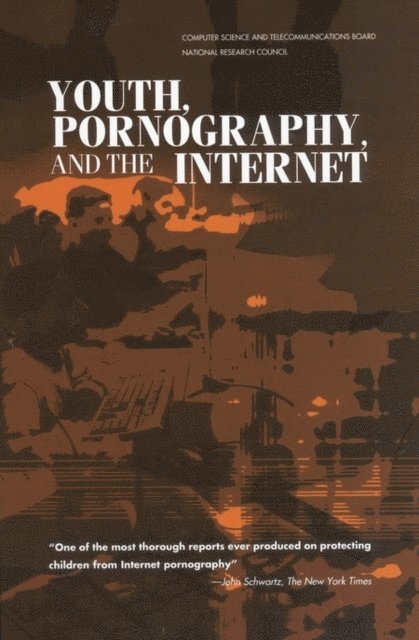
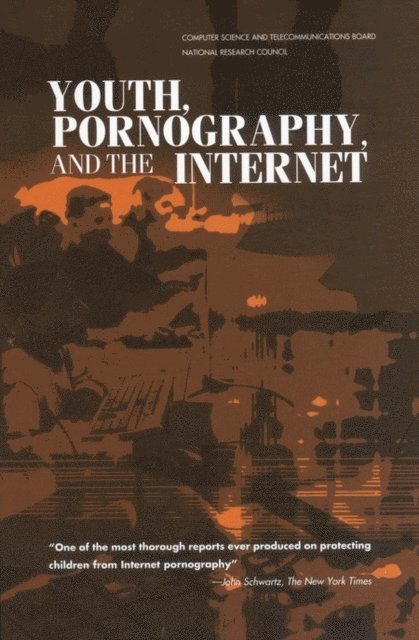
Youth, Pornography, and the Internet examines approaches to protecting children and teens from Internet pornography, threats from sexual predators operating on-line, and other inappropriate material on the Internet. The National Research Council''s Computer Science and Telecommunications Board explores a number of fundamental questions: Who defines what is inappropriate material? Do we control Internet access by a 17-year-old in the same manner as for a 7-year-old? What is the role of technology and policy in solving such a problem in the context of family, community, and society?
The book discusses social and educational strategies, technological tools, and policy options for how to teach children to make safe and appropriate decisions about what they see and experience on the Internet. It includes lessons learned from case studies of community efforts to intervene in kids'' exposure to Internet porn.
Providing a foundation for informed debate, this very timely and relevant book will be a must-read for a variety of audiences.
538 kr
Läs direkt efter köp
In response to a mandate from Congress in conjunction with the Protection of Children from Sexual Predators Act of 1998, the Computer Science and Telecommunications Board and the Board on Children, Youth, and Families of the National Research Council and the Institute of Medicine established a committee of experts to explore options to protect children from pornography and other inappropriate Internet content. In June 2000, the Committee to Study Tools and Strategies for Protecting Kids from Pornography on the Internet and Their Applicability to Other Inappropriate Internet Content was established. Support for the committee''s work came from the U.S. Department of Education, the U.S. Department of Justice, Microsoft Corporation, IBM, the W.K. Kellogg Foundation, and the National Research Council. The committee has been charged with exploring the pros and cons of different technology options and operational policies as well as nontechnical strategies that can help to provide young people with positive and safe online experiences.
On December 13, 2000, the committee convened a workshop to provide public input to its work and focus on nontechnical strategies that could be effective in a broad range of settings (e.g., home, school, libraries) in which young people might be online. The overarching goal of this activity was to provide a forum for discussing the implications of this research with regard to policy and practice and identifying research needed to advance and inform policy and practice.
370 kr
Läs direkt efter köp
In response to a mandate from Congress in conjunction with the Protection of Children from Sexual Predators Act of 1998, the Computer Science and Telecommunications Board and the Board on Children, Youth, and Families of the National Research Council and the Institute of Medicine established a committee of experts to explore options to protect children from pornography and other inappropriate Internet content. In June 2000, the Committee to Study Tools and Strategies for Protecting Kids from Pornography on the Internet and Their Applicability to Other Inappropriate Internet Content was established. Support for the committee''s work came from the U.S. Department of Education, the U.S. Department of Justice, Microsoft Corporation, IBM, the W.K. Kellogg Foundation, and the National Research Council. The committee has been charged with exploring the pros and cons of different technology options and operational policies as well as nontechnical strategies that can help to provide young people with positive and safe online experiences.
On December 13, 2000, the committee convened a workshop to provide public input to its work and focus on nontechnical strategies that could be effective in a broad range of settings (e.g., home, school, libraries) in which young people might be online. The overarching goal of this activity was to provide a forum for discussing the implications of this research with regard to policy and practice and identifying research needed to advance and inform policy and practice.
452 kr
Läs direkt efter köp
In response to a mandate from Congress in conjunction with the Protection of Children from Sexual Predators Act of 1998, the Computer Science and Telecommunications Board (CSTB) and the Board on Children, Youth, and Families of the National Research Council (NRC) and the Institute of Medicine established the Committee to Study Tools and Strategies for Protecting Kids from Pornography and Their Applicability to Other Inappropriate Internet Content.
To collect input and to disseminate useful information to the nation on this question, the committee held two public workshops. On December 13, 2000, in Washington, D.C., the committee convened a workshop to focus on nontechnical strategies that could be effective in a broad range of settings (e.g., home, school, libraries) in which young people might be online. This workshop brought together researchers, educators, policy makers, and other key stakeholders to consider and discuss these approaches and to identify some of the benefits and limitations of various nontechnical strategies. The December workshop is summarized in Nontechnical Strategies to Reduce Children''s Exposure to Inappropriate Material on the Internet: Summary of a Workshop. The second workshop was held on March 7, 2001, in Redwood City, California. This second workshop focused on some of the technical, business, and legal factors that affect how one might choose to protect kids from pornography on the Internet. The present report provides, in the form of edited transcripts, the presentations at that workshop.
641 kr
Läs direkt efter köp
Youth, Pornography, and the Internet examines approaches to protecting children and teens from Internet pornography, threats from sexual predators operating on-line, and other inappropriate material on the Internet. The National Research Council''s Computer Science and Telecommunications Board explores a number of fundamental questions: Who defines what is inappropriate material? Do we control Internet access by a 17-year-old in the same manner as for a 7-year-old? What is the role of technology and policy in solving such a problem in the context of family, community, and society?
The book discusses social and educational strategies, technological tools, and policy options for how to teach children to make safe and appropriate decisions about what they see and experience on the Internet. It includes lessons learned from case studies of community efforts to intervene in kids'' exposure to Internet porn.
Providing a foundation for informed debate, this very timely and relevant book will be a must-read for a variety of audiences.
679 kr
Tillfälligt slut