Constance F. Citro – författare
702 kr
Skickas inom 3-6 vardagar
765 kr
Läs direkt efter köp
This book also recommends priority areas for continued research and development by the U.S. Census Bureau to guide the evolution of the ACS, and provides detailed, comprehensive analysis and guidance for users in federal, state, and local government agencies, academia, and media.
429 kr
Läs direkt efter köp
Since 1992, the Committee on National Statistics (CNSTAT) has produced a book on principles and practices for a federal statistical agency, updating the document every 4 years to provide a current edition to newly appointed cabinet secretaries at the beginning of each presidential administration. This fourth edition presents and comments on four basic principles that statistical agencies must embody in order to carry out their mission fully: (1) They must produce objective data that are relevant to policy issues, (2) they must achieve and maintain credibility among data users, (3) they must achieve and maintain trust among data providers, and (4) they must achieve and maintain a strong position of independence from the appearance and reality of political control. The book also discusses 11 important practices that are means for statistical agencies to live up to the four principles. These practices include a commitment to quality and professional practice and an active program of methodological and substantive research. This fourth edition adds the principle that statistical agencies must operate from a strong position of independence and the practice that agencies must have ongoing internal and external evaluations of their programs.
740 kr
Läs direkt efter köp
Many racial and ethnic groups in the United States, including blacks, Hispanics, Asians, American Indians, and others, have historically faced severe discrimination—pervasive and open denial of civil, social, political, educational, and economic opportunities. Today, large differences among racial and ethnic groups continue to exist in employment, income and wealth, housing, education, criminal justice, health, and other areas. While many factors may contribute to such differences, their size and extent suggest that various forms of discriminatory treatment persist in U.S. society and serve to undercut the achievement of equal opportunity.
Measuring Racial Discrimination considers the definition of race and racial discrimination, reviews the existing techniques used to measure racial discrimination, and identifies new tools and areas for future research. The book conducts a thorough evaluation of current methodologies for a wide range of circumstances in which racial discrimination may occur, and makes recommendations on how to better assess the presence and effects of discrimination.
755 kr
Skickas
554 kr
Läs direkt efter köp
Beginning in 2006, the Census Bureau embarked on a program to reengineer the Survey of Income and Program Participation (SIPP) to reduce its costs and improve data quality and timeliness. The Bureau also requested the National Academies to consider the advantages and disadvantages of strategies for linking administrative records and survey data, taking account of the accessibility of relevant administrative records, the operational feasibility of linking, the quality and usefulness of the linked data, and the ability to provide access to the linked data while protecting the confidentiality of individual respondents. In response, this volume first examines the history of SIPP and reviews the survey''s purpose, value, strengths, and weaknesses. The book examines alternative uses of administrative records in a reengineered SIPP and, finally, considers innovations in SIPP design and data collection, including the proposed use of annual interviews with an event history calendar.
790 kr
Läs direkt efter köp
Beginning in 2006, the Census Bureau embarked on a program to reengineer the Survey of Income and Program Participation (SIPP) to reduce its costs and improve data quality and timeliness. The Bureau also requested the National Academies to consider the advantages and disadvantages of strategies for linking administrative records and survey data, taking account of the accessibility of relevant administrative records, the operational feasibility of linking, the quality and usefulness of the linked data, and the ability to provide access to the linked data while protecting the confidentiality of individual respondents. In response, this volume first examines the history of SIPP and reviews the survey''s purpose, value, strengths, and weaknesses. The book examines alternative uses of administrative records in a reengineered SIPP and, finally, considers innovations in SIPP design and data collection, including the proposed use of annual interviews with an event history calendar.
931 kr
Läs direkt efter köp
Planning for the 2020 census is already beginning. This book from the National Research Council examines several aspects of census planning, including questionnaire design, address updating, non-response follow-up, coverage follow-up, de-duplication of housing units and residents, editing and imputation procedures, and several other census operations. This book recommends that the Census Bureau overhaul its approach to research and development. The report urges the Bureau to set cost and quality goals for the 2020 and future censuses, improving efficiency by taking advantage of new technologies.
1 345 kr
Läs direkt efter köp
Planning for the 2020 census is already beginning. This book from the National Research Council examines several aspects of census planning, including questionnaire design, address updating, non-response follow-up, coverage follow-up, de-duplication of housing units and residents, editing and imputation procedures, and several other census operations. This book recommends that the Census Bureau overhaul its approach to research and development. The report urges the Bureau to set cost and quality goals for the 2020 and future censuses, improving efficiency by taking advantage of new technologies.
604 kr
Läs direkt efter köp
Since 1992, the Committee on National Statistics (CNSTAT) has produced a book on principles and practices for a federal statistical agency, updating the document every 4 years to provide a current edition to newly appointed cabinet secretaries at the beginning of each presidential administration. This fourth edition presents and comments on four basic principles that statistical agencies must embody in order to carry out their mission fully: (1) They must produce objective data that are relevant to policy issues, (2) they must achieve and maintain credibility among data users, (3) they must achieve and maintain trust among data providers, and (4) they must achieve and maintain a strong position of independence from the appearance and reality of political control. The book also discusses 11 important practices that are means for statistical agencies to live up to the four principles. These practices include a commitment to quality and professional practice and an active program of methodological and substantive research. This fourth edition adds the principle that statistical agencies must operate from a strong position of independence and the practice that agencies must have ongoing internal and external evaluations of their programs.
1 090 kr
Läs direkt efter köp
The decennial census was the federal government''s largest and most complexpeacetime operation. This report of a panel of the National Research Council''sCommittee on National Statistics comprehensively reviews the conduct of the 2000census and the quality of the resulting data. The panel''s findings cover the planningprocess for 2000, which was marked by an atmosphere of intense controversy aboutthe proposed role of statistical techniques in the census enumeration and possibleadjustment for errors in counting the population. The report addresses the successand problems of major innovations in census operations, the completeness of populationcoverage in 2000, and the quality of both the basic demographic data collectedfrom all census respondents and the detailed socioeconomic data collected fromthe census long-form sample (about one-sixth of the population). The panel drawscomparisons with the 1990 experience and recommends improvements in the planningprocess and design for 2010. The 2000 Census: Counting Under Adversity will bean invaluable resource for users of the 2000 data and for policymakers and censusplanners. It provides a trove of information about the issues that have fueled debateabout the census process and about the operations and quality of the nation''stwenty-second decennial enumeration.
841 kr
Läs direkt efter köp
This volume contains the full text of two reports: one is an interim review of major census operations, which also assesses the U.S. Census bureau''s recommendation in March 2001 regarding statistical adjustment of census data for redistricting. It does not address the decision on adjustment for non-redistricting purposes. The second report consists of a letter sent to William Barron, acting director of the Census Bureau. It reviews the new set of evaluations prepared by the Census Bureau in support of its October decision. The two reports are packaged together to provide a unified discussion of statistical adjustment and other aspects of the 2000 census that the authoring panel has considered to date.
1 009 kr
Läs direkt efter köp
1 039 kr
Läs direkt efter köp
The Panel on Estimates of Poverty for Small Geographic Areas was established by the Committee on National Statistics at the National Research Council in response to the Improving America''s Schools Act of 1994. That act charged the U.S. Census Bureau to produce updated estimates of poor school-age children every two years for the nation''s more than 3,000 counties and 14,000 school districts. The act also charged the panel with determining the appropriateness and reliability of the Bureau''s estimates for use in the allocation of more than $7 billion of Title I funds each year for educationally disadvantaged children.
The panel''s charge was both a major one and one with immovable deadlines. The panel had to evaluate the Census Bureau''s work on a very tight schedule in order to meet legal requirements for allocation of Title I funds. As it turned out, the panel produced three interim reports: the first one evaluated county-level estimates of poor school-age children in 1993, the second one assessed a revised set of 1993 county estimates; and the third one covered both county- and school district-level estimates of poor school-age children in 1995. This volume combines and updates these three reports into a single reference volume.
654 kr
Läs direkt efter köp
Recent trends in federal policies for social and economic programs have increased the demand for timely, accurate estimates of income and poverty for states, counties, and even smaller areas. Every year more than $130 billion in federal funds is allocated to states and localities through formulas that use such estimates. These funds support a wide range of programs that include child care, community development, education, job training, nutrition, and public health.
A new program of the U.S. Census Bureau is now providing more timely estimates for these programs than those from the decennial census, which have been used for many years. These new estimates are being used to allocate more than $7 billion annually to school districts, through the Title I program that supports educationally disadvantaged children.
But are these estimates as accurate as possible given the available data? How can the statistical models and data that are used to develop the estimates be improved? What should policy makers consider in selecting particular estimates? This new book from the National Research Council provides guidance for improving the Census Bureau''s program and for policy makers who use such estimates for allocating funds.
762 kr
Läs direkt efter köp
The retirement income security of older Americans and the cost of providing that security are increasingly the subject of major debate. This volume assesses what we know and recommends what we need to know to estimate the short- and long-term effects of policy alternatives. It details gaps in data and research and evaluates possible models to estimate the impact of policy changes that could affect retirement income from Social Security, pensions, personal savings, and other sources.
1 039 kr
Läs direkt efter köp
Each year''s poverty figures are anxiously awaited by policymakers, analysts, and the media. Yet questions are increasing about the 30-year-old measure as social and economic conditions change.
In Measuring Poverty a distinguished panel provides policymakers with an up-to-date evaluation of:
Concepts and procedures for deriving the poverty threshold, including adjustments for different family circumstances. Definitions of family resources. Procedures for annual updates of poverty measures.The volume explores specific issues underlying the poverty measure, analyzes the likely effects of any changes on poverty rates, and discusses the impact on eligibility for public benefits. In supporting its recommendations the panel provides insightful recognition of the political and social dimensions of this key economic indicator.
Measuring Poverty will be important to government officials, policy analysts, statisticians, economists, researchers, and others involved in virtually all poverty and social welfare issues.
622 kr
Läs direkt efter köp
The U.S. Department of Education uses estimates of school-age children in poverty to allocate federal funds under Title I of the Elementary and Secondary Education Act for education programs to aid disadvantaged children. Historically, the allocations have been made by a two-stage process: the department''s role has been to allocate Title I funds to counties; the states have then distributed these funds to school districts. Until recently, the department has based the county allocations on the numbers and proportions of poor school-age children in each county from the most recent decennial census. States have used several different data sources, such as the decennial census and the National School Lunch Program, to distribute the department''s county allocations to districts. In 1994 Congress authorized the Bureau of the Census to provide updated estimates of poor school-age children every 2 years, to begin in 1996 with estimates for counties and in 1998 with estimates for school districts. The Department of Education is to use the school district estimates to allocate Title I basic and concentration grants directly to districts for the 1999-2000 and later school years, unless the Secretaries of Education and Commerce determine that they are "inappropriate or unreliable" on the basis of a study by the National Research Council. That study is being carried out by the Committee on National Statistics'' Panel on Estimates of Poverty for Small Geographic Areas.
353 kr
Läs direkt efter köp
In recent decades, production processes of intermediate and final products have been increasingly fragmented across countries in what are called global value chains (GVCs). GVCs may involve companies in one country outsourcing stages of production to unrelated entities in other countries, multinational enterprises (MNEs) offshoring stages of production to units of the MNE overseas, or both. GVCs can also involve completely independent companies merely sourcing their parts from whichever upstream company may be the most competitive, with no control arrangement necessarily involved. The changing global trade environment and the changes in firms'' behavior have raised new and more complicated issues for policy makers and have made it difficult for them to understand the extent and operations of GVCs and their spillover effects on national and local economies.
To improve the understanding, measurement, and valuation of GVCs, the Innovation Policy Forum at the National Academies of Sciences, Engineering, and Medicine convened a workshop, "Innovation, Global Value Chains, and Globalization Measurement" May 5-7, 2021. This proceedings has been prepared by the workshop rapporteurs as a factual summary of what occurred at the workshop.
605 kr
Läs direkt efter köp
Publicly available statistics from government agencies that are credible, relevant, accurate, and timely are essential for policy makers, individuals, households, businesses, academic institutions, and other organizations to make informed decisions. Even more, the effective operation of a democratic system of government depends on the unhindered flow of statistical information to its citizens.
In the United States, federal statistical agencies in cabinet departments and independent agencies are the governmental units whose principal function is to compile, analyze, and disseminate information for such statistical purposes as describing population characteristics and trends, planning and monitoring programs, and conducting research and evaluation. The work of these agencies is coordinated by the U.S. Office of Management and Budget. Statistical agencies may acquire information not only from surveys or censuses of people and organizations, but also from such sources as government administrative records, private-sector datasets, and Internet sources that are judged of suitable quality and relevance for statistical use. They may conduct analyses, but they do not advocate policies or take partisan positions. Statistical purposes for which they provide information relate to descriptions of groups and exclude any interest in or identification of an individual person, institution, or economic unit.
Four principles are fundamental for a federal statistical agency: relevance to policy issues, credibility among data users, trust among data providers, and independence from political and other undue external influence. Principles and Practices for a Federal Statistical Agency: Fifth Edition explains these four principles in detail.
696 kr
Skickas inom 3-6 vardagar
622 kr
Läs direkt efter köp
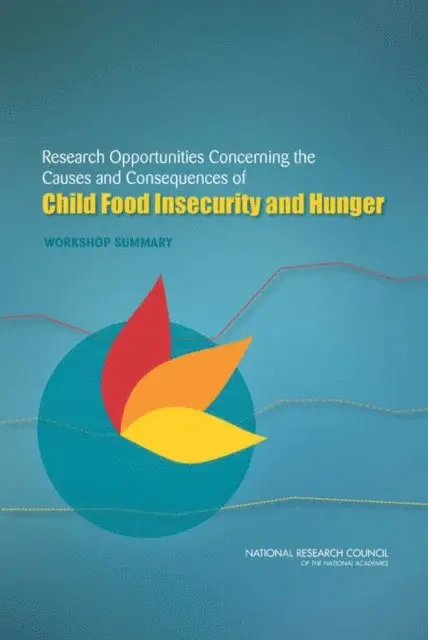
Section 141 of The Healthy, Hunger-Free Kids Act of 20101 provides funding for a research program on the causes and consequences of childhood hunger and food insecurity, and the characteristics of households with childhood hunger and food insecurity, with a particular focus on efforts to improve the knowledge base regarding contributing factors, geographic distribution, programmatic effectiveness, public health and medical costs, and consequences for child development, well-being, and educational attainment. The Economic Research Service and Food and Nutrition Service of the US Department of Agriculture conducted two outreach efforts to obtain input from the research community and other stakeholders to help focus on areas and methods with the greatest research potential. First, Food and Nutrition Service sought written comments to selected questions through publication of a Federal Register Notice. The second option was to convene a workshop under the auspices of the Committee on National Statistics of the National Research Council and the Food and Nutrition Board of the Institute of Medicine.
Research Opportunities Concerning the Causes and Consequences of Child Food Insecurity and Hunger is the summary of that workshop, convened in Fall 2012 to examine research gaps and opportunities to advance understanding of the causes and consequences of child hunger in the United States. This report reviews the adequacy of current knowledge, identifies substantial research gaps, and considers data availability of economic, health, social, cultural, demographic, and other factors that contribute to childhood hunger or food insecurity. It also considers the geographic distribution of childhood hunger and food insecurity; the extent to which existing federal assistance programs reduce childhood hunger and food insecurity; childhood hunger and food insecurity persistence, and the extent to which it is due to gaps in program coverage; and the inability of potential participants to access programs, or the insufficiency of program benefits or services.
Research Opportunities Concerning the Causes and Consequences of Child Food Insecurity and Hunger will be a resource to inform discussions about the public health and medical costs of childhood hunger and food insecurity through its focus on determinants of child food insecurity and hunger, individual, community, and policy responses to hunger, impacts of child food insecurity and hunger, and measurement and surveillance issues.
636 kr
Skickas inom 3-6 vardagar
570 kr
Läs direkt efter köp
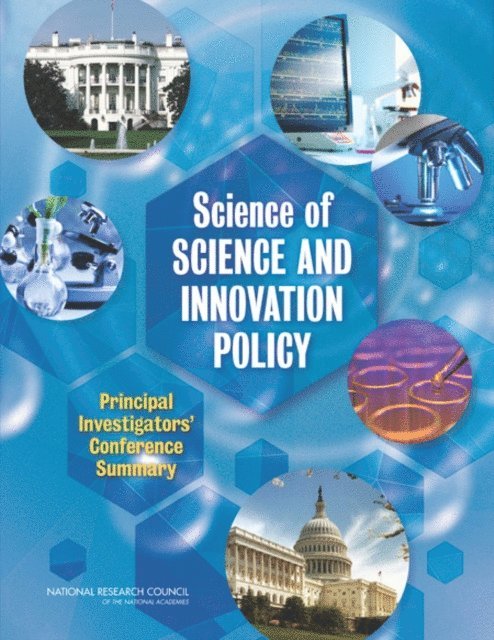
The National Science Foundation developed the Science of Science and Innovation Policy program (SciSIP) in 2006 to fund basic and applied research that bears on and can help guide public- and private-sector policy making for science and innovation. By design, SciSIP has engaged researchers from many domains in the development of a community of practice who work together to continually develop frameworks, tools, and datasets for implementing science and innovation policy. Since its inception, the SciSIP program has funded more than 150 researchers and their graduate students. The program also contributed to the initiation of the STAR METRICS (Science and Technology for America''s Reinvestment: Measuring the Effect of Research on Innovation, Competitiveness and Science) program, a collaborative effort between the National Science Foundation and the National Institutes of Health. The STAR METRICS program develops tools and mechanisms for measuring federal expenditures on scientific activities, with particular focus on quantifying productivity and employment outcomes.
Science of Science and Innovation Policy summarizes a public conference convened by the Committee on National Statistics of the National Academy of Sciences/National Research Council to present research funded by SciSIP and foster intellectual exchange among funded researchers, science, technology, and innovation policy practitioners, and other members of the science community. The conference highlighted advances in the emerging field of the science of science and innovation policy, in particular, models, frameworks, tools, and datasets comprising the evidentiary basis for science and innovation policy. This report focuses on return on investment models; organizational structures that foster accelerated scientific productivity; linkages between commercialized scientific knowledge and job creation; the roles of universities and government in technology transfer and innovation; technology diffusion and economic growth; non-economic impacts of science and innovation expenditures; regional and global networks of knowledge generation and innovation; mechanisms for encouraging creativity and measuring outputs and outcomes from transformative research; and development, manipulation and visualization of data representing scientific activities.
702 kr
Skickas inom 3-6 vardagar
656 kr
Läs direkt efter köp
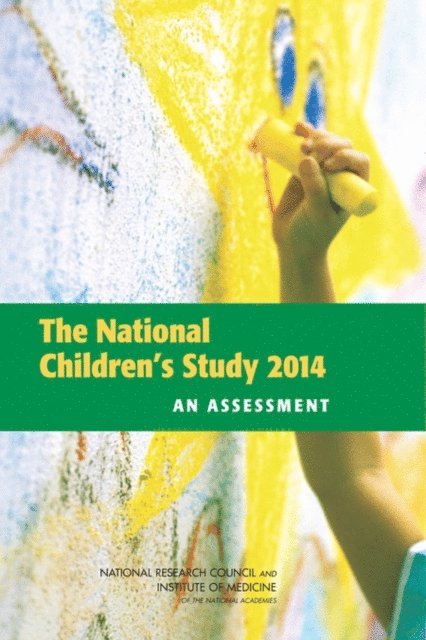
The National Children''s Study (NCS) was authorized by the Children''s Health Act of 2000 and is being implemented by a dedicated Program Office in the Eunice Kennedy Shriver National Institute of Child Health and Human Development (NICHD). The NCS is planned to be a longitudinal observational birth cohort study to evaluate the effects of chronic and intermittent exposures on child health and development in the U.S.. The NCS would be the first study to collect a broad range of environmental exposure measures for a national probability sample of about 100,000 children, followed from birth or before birth to age 21.
Detailed plans for the NCS were developed by 2007 and reviewed by a National Research Council / Institute of Medicine panel. At that time, sample recruitment for the NCS Main Study was scheduled to begin in 2009 and to be completed within about 5 years. However, results from the initial seven pilot locations, which recruited sample cases in 2009-2010, indicated that the proposed household-based recruitment approach would be more costly and time consuming than planned. In response, the Program Office implemented a number of pilot tests in 2011 to evaluate alternative recruitment methods and pilot testing continues to date.
At the request of Congress, The National Children''s Study 2014 reviews the revised study design and proposed methodologies for the NCS Main Study. This report assesses the study''s plan to determine whether it is likely to produce scientifically sound results that are generalizable to the United States population and appropriate subpopulations. The report makes recommendations about the overall study framework, sample design, timing, content and need for scientific expertise and oversight.
The National Children''s Study has the potential to add immeasurably to scientific knowledge about the impact of environmental exposures, broadly defined, on children\''s health and development in the United States. The recommendations of this report will help the NCS will achieve its intended objective to examine the effects of environmental influences on the health and development of American children.
925 kr
Läs direkt efter köp
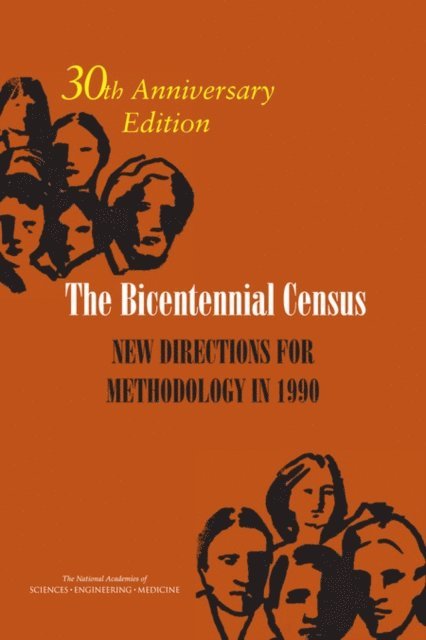
In 1982 the Census Bureau requested the Committee on National Statistics to establish a panel to suggest research and experiments, to recommend improved methods, and to guide the Census Bureau on technical problems in appraising contending methods with regard to the conduct of the decennial census. In response, the panel produced an interim report that focused on recommendations for improvements in census methodology that warranted early investigation and testing. This report updates and expands the ideas and conclusions about decennial census methodology.
740 kr
Läs direkt efter köp
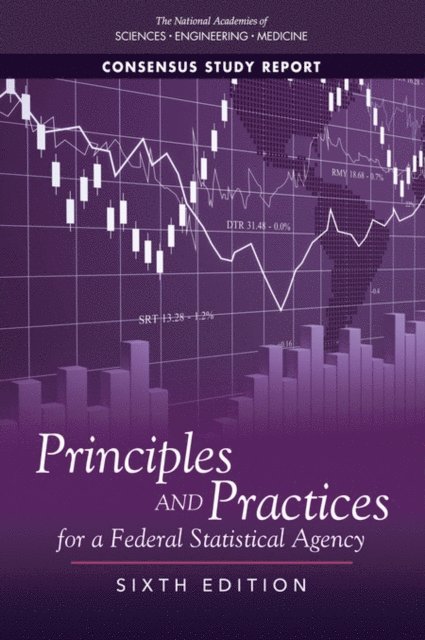
Publicly available statistics from government agencies that are credible, relevant, accurate, and timely are essential for policy makers, individuals, households, businesses, academic institutions, and other organizations to make informed decisions. Even more, the effective operation of a democratic system of government depends on the unhindered flow of statistical information to its citizens.
In the United States, federal statistical agencies in cabinet departments and independent agencies are the governmental units whose principal function is to compile, analyze, and disseminate information for such statistical purposes as describing population characteristics and trends, planning and monitoring programs, and conducting research and evaluation. The work of these agencies is coordinated by the U.S. Office of Management and Budget. Statistical agencies may acquire information not only from surveys or censuses of people and organizations, but also from such sources as government administrative records, private-sector datasets, and Internet sources that are judged of suitable quality and relevance for statistical use. They may conduct analyses, but they do not advocate policies or take partisan positions. Statistical purposes for which they provide information relate to descriptions of groups and exclude any interest in or identification of an individual person, institution, or economic unit.
Four principles are fundamental for a federal statistical agency: relevance to policy issues, credibility among data users, trust among data providers, and independence from political and other undue external influence. Principles and Practices for a Federal Statistical Agency: Sixth Edition presents and comments on these principles as they''ve been impacted by changes in laws, regulations, and other aspects of the environment of federal statistical agencies over the past 4 years.
824 kr
Läs direkt efter köp
The U.S. Census Bureau maintains an important portfolio of economic statistics programs, including quinquennial economic censuses, annual economic surveys, and quarterly and monthly indicator surveys. Government, corporate, and academic users rely on the data to understand the complexity and dynamism of the U.S. economy. Historically, the Bureau''s economic statistics programs developed sector by sector (e.g., separate surveys of manufacturing, retail trade, and wholesale trade), and they continue to operate largely independently. Consequently, inconsistencies in questionnaire content, sample and survey design, and survey operations make the data not only more difficult to use, but also more costly to collect and process and more burdensome to the business community than they could be.
This report reviews the Census Bureau''s annual economic surveys. Specifically, it examines the design, operations, and products of 11 surveys and makes recommendations to enable them to better answer questions about the evolving economy.
1 005 kr
Läs direkt efter köp
The Panel on Estimates of Poverty for Small Geographic Areas was established by the Committee on National Statistics at the National Research Council in response to the Improving America''s Schools Act of 1994. That act charged the U.S. Census Bureau to produce updated estimates of poor school-age children every two years for the nation''s more than 3,000 counties and 14,000 school districts. The act also charged the panel with determining the appropriateness and reliability of the Bureau''s estimates for use in the allocation of more than $7 billion of Title I funds each year for educationally disadvantaged children.
The panel''s charge was both a major one and one with immovable deadlines. The panel had to evaluate the Census Bureau''s work on a very tight schedule in order to meet legal requirements for allocation of Title I funds. As it turned out, the panel produced three interim reports: the first one evaluated county-level estimates of poor school-age children in 1993, the second one assessed a revised set of 1993 county estimates; and the third one covered both county- and school district-level estimates of poor school-age children in 1995. This volume combines and updates these three reports into a single reference volume.