and Economic Policy Board on Science, Technology – författare
Visar alla böcker från författaren and Economic Policy Board on Science, Technology. Handla med fri frakt och snabb leverans.
188 produkter
Advanced Technology Program
Assessing Outcomes
Av National Research Council, Policy and Global Affairs m. fl.
Häftad, 2001
985 kr
Lägg i varukorg
This report examines the operations of the APT, reviews its extensive assessment program, and provides NRC Committee findings concerning the ATPa (TM)s operations and recommendations for potential improvements to the program. The report includes a summary of a major conference held in April 2000 as …
Software, Growth, and the Future of the U.S Economy
Report of a Symposium
Av National Research Council, Policy and Global Affairs m. fl.
Häftad, 2006
888 kr
Lägg i varukorg
Starting in the mid 1990s, the United States economy experienced an unprecedented upsurge in economic productivity. Rapid technological change in communications, computing, and information management continue to promise further gains in productivity, a phenomenon often referred to as the New …
Aeronautics Innovation
NASA's Challenges and Opportunities
Av National Research Council, Policy and Global Affairs m. fl.
Häftad, 2006
618 kr
Lägg i varukorg
NASA is a global leader in aeronautics research and development a " fostering advances in aviation safety and emissions, propulsion technology, and many other areas. And the agency's Aeronautics Research Mission Directorate (ARMD) has played a vital role in the U.S. aeronautics industry. In recent …
Innovation Policies for the 21st Century
Report of a Symposium
Av National Research Council, Policy and Global Affairs m. fl.
Inbunden, 2007
850 kr
Lägg i varukorg
To mark the opening of a study of Comparative Innovation Policy: Best Practice for the 21st Century the Board on Science, Technology, and Economic Policy (STEP) convened a symposium providing an overview of areas to be examined in the study and topics requiring further policy attention. The event …
India's Changing Innovation System
Achievements, Challenges, and Opportunities for Cooperation: Report of a Symposium
Av National Research Council, Policy and Global Affairs m. fl.
Inbunden, 2007
876 kr
Lägg i varukorg
As part of its review of Comparative National Innovation Policies: Best Practice for the 21st Century, the Board on Science, Technology, and Economic Policy convened a major symposium in Washington to examine the policy changes that have contributed to India's enhanced innovative capacity. This …
Innovative Flanders
Innovation Policies for the 21st Century: Report of a Symposium
Av Committee on Comparative Innovation Policy: Best Practice for the 21st Century, and Economic Policy Board on Science, Technology m. fl.
E-bok, 2008
606 kr
Lägg i varukorg
Recognizing that innovation is the key to international competitiveness in the 21st century, policymakers around the world are seeking more effective ways to translate scientific and technological knowledge into new products, processes, and businesses. They have initiated major programs, often with …
Innovation in Global Industries
U.S. Firms Competing in a New World (Collected Studies)
Av Committee on the Competitiveness and Workforce Needs of U.S. Industry, and Economic Policy Board on Science, Technology m. fl.
E-bok, 2008
719 kr
Lägg i varukorg
The debate over offshoring of production, transfer of technological capabilities, and potential loss of U.S. competitiveness is a long-running one. Prevailing thinking is that "the world is flat"—that is, innovative capacity is spreading uniformly; as new centers of manufacturing emerge, research …
21st Century Innovation Systems for Japan and the United States
Lessons from a Decade of Change: Report of a Symposium
Av Committee on Comparative Innovation Policy: Best Practice for the 21st Century, and Economic Policy Board on Science, Technology m. fl.
E-bok, 2009
832 kr
Lägg i varukorg
Recognizing that a capacity to innovate and commercialize new high-technology products is increasingly a key for the economic growth in the environment of tighter environmental and resource constraints, governments around the world have taken active steps to strengthen their national innovation …
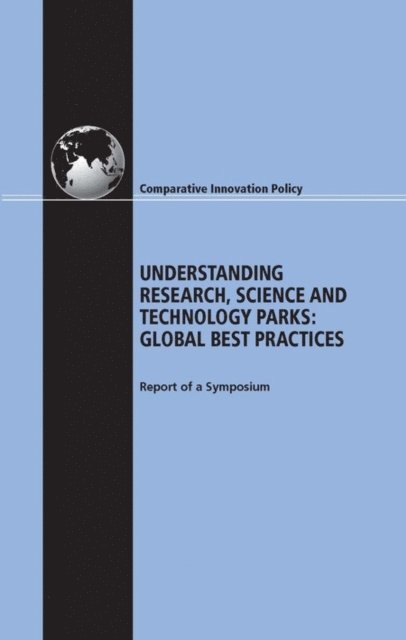
Understanding Research, Science and Technology Parks
Global Best Practices: Report of a Symposium
Av Committee on Comparative Innovation Policy: Best Practice for the 21st Century, and Economic Policy Board on Science, Technology m. fl.
E-bok, 2009
589 kr
Lägg i varukorg
Many nations are currently adopting a variety of directed strategies to launch and support research parks, often with significant financial commitments and policy support. By better understanding how research parks of other nations operate, we can seek to improve the scale and contributions of …
Innovation in Global Industries
U.S. Firms Competing in a New World (Collected Studies)
Av Committee on the Competitiveness and Workforce Needs of U.S. Industry, and Economic Policy Board on Science, Technology m. fl.
E-bok, 2008
1009 kr
Lägg i varukorg
The debate over offshoring of production, transfer of technological capabilities, and potential loss of U.S. competitiveness is a long-running one. Prevailing thinking is that "the world is flat"—that is, innovative capacity is spreading uniformly; as new centers of manufacturing emerge, research …
21st Century Innovation Systems for Japan and the United States
Lessons from a Decade of Change: Report of a Symposium
Av National Research Council, Policy and Global Affairs m. fl.
Inbunden, 2009
1012 kr
Lägg i varukorg
Recognizing that a capacity to innovate and commercialize new high-technology products is increasingly a key for the economic growth in the environment of tighter environmental and resource constraints, governments around the world have taken active steps to strengthen their national innovation …
Future of Photovoltaics Manufacturing in the United States
Summary of Two Symposia
Av Committee on Competing in the 21st Century: Best Practice in State and Regional Innovation Initiatives, and Economic Policy Board on Science, Technology m. fl.
E-bok, 2011
806 kr
Lägg i varukorg
Technological innovation and growth are critical to U.S. competitiveness in a global economy. One means of facilitating growth and improving competitiveness is to foster more robust innovation ecosystems through the development of public-private partnerships, industry consortia, and other regional …
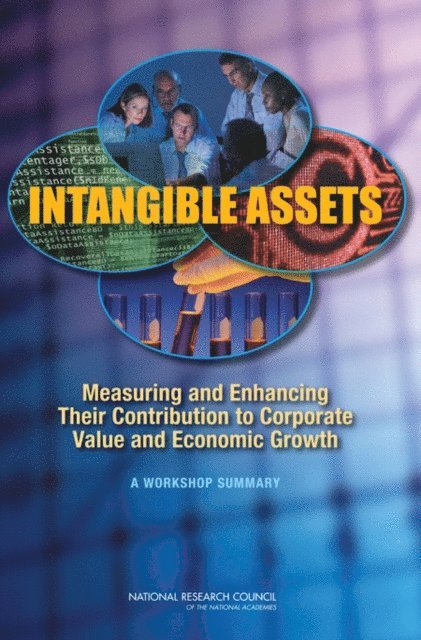
Intangible Assets
Measuring and Enhancing Their Contribution to Corporate Value and Economic Growth
Av and Economic Policy Board on Science, Technology, Policy and Global Affairs m. fl.
E-bok, 2009
415 kr
Lägg i varukorg
Intangible assets—which include computer software, research and development (R&D), intellectual property, workforce training, and spending to raise the efficiency and brand identification of firms—comprise a subset of services, which, in turn, accounts for three-quarters of all economic activity. …
Understanding Research, Science and Technology Parks
Global Best Practices: Report of a Symposium
Av Committee on Comparative Innovation Policy: Best Practice for the 21st Century, and Economic Policy Board on Science, Technology m. fl.
E-bok, 2009
807 kr
Lägg i varukorg
Many nations are currently adopting a variety of directed strategies to launch and support research parks, often with significant financial commitments and policy support. By better understanding how research parks of other nations operate, we can seek to improve the scale and contributions of …
Hidden Costs of Energy
Unpriced Consequences of Energy Production and Use
Av and Other External Costs and Benefits of Energy Production and Consumption Committee on Health, Environmental, Board on Environmental Studies and Toxicology m. fl.
E-bok, 2010
624 kr
Lägg i varukorg
Despite the many benefits of energy, most of which are reflected in energy market prices, the production, distribution, and use of energy causes negative effects. Many of these negative effects are not reflected in energy market prices. When market failures like this occur, there may be a case for …
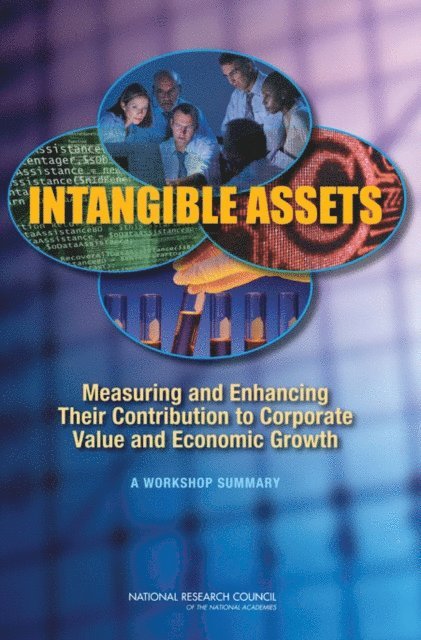
Intangible Assets
Measuring and Enhancing Their Contribution to Corporate Value and Economic Growth
Av and Economic Policy Board on Science, Technology, Policy and Global Affairs m. fl.
E-bok, 2009
542 kr
Lägg i varukorg
Intangible assets—which include computer software, research and development (R&D), intellectual property, workforce training, and spending to raise the efficiency and brand identification of firms—comprise a subset of services, which, in turn, accounts for three-quarters of all economic activity. …
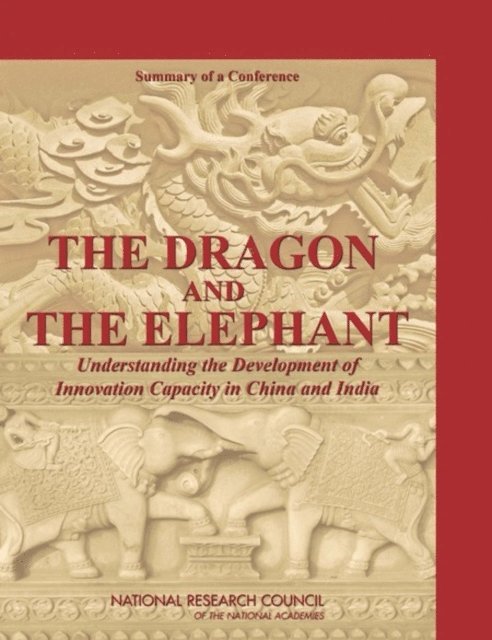
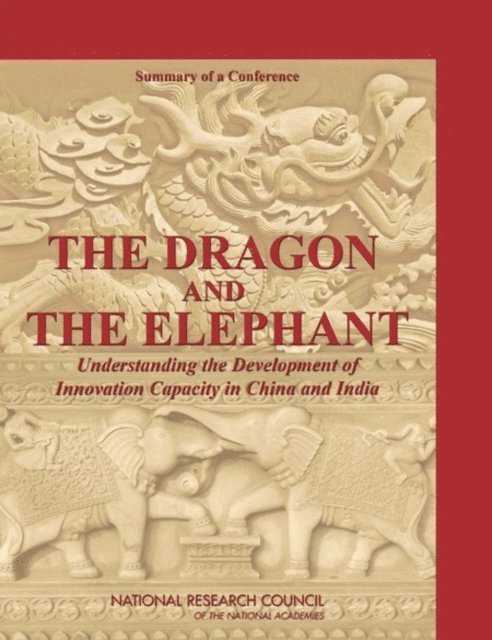
Dragon and the Elephant
Understanding the Development of Innovation Capacity in China and India: Summary of a Conference
Av Committee on the Competitiveness and Workforce Needs of U.S. Industry, and Economic Policy Board on Science, Technology m. fl.
E-bok, 2010
286 kr
Lägg i varukorg
The return of the once-dormant economies of China and India to dynamism and growth is one of the most remarkable stories in recent history. The two countries are home to nearly 40 percent of the world''s population, but until recently neither had played an influential role in the contemporary …
Dragon and the Elephant
Understanding the Development of Innovation Capacity in China and India: Summary of a Conference
Av Committee on the Competitiveness and Workforce Needs of U.S. Industry, and Economic Policy Board on Science, Technology m. fl.
E-bok, 2010
416 kr
Lägg i varukorg
The return of the once-dormant economies of China and India to dynamism and growth is one of the most remarkable stories in recent history. The two countries are home to nearly 40 percent of the world''s population, but until recently neither had played an influential role in the contemporary …
Hidden Costs of Energy
Unpriced Consequences of Energy Production and Use
Av and Other External Costs and Benefits of Energy Production and Consumption Committee on Health, Environmental, Board on Environmental Studies and Toxicology m. fl.
E-bok, 2010
866 kr
Lägg i varukorg
Despite the many benefits of energy, most of which are reflected in energy market prices, the production, distribution, and use of energy causes negative effects. Many of these negative effects are not reflected in energy market prices. When market failures like this occur, there may be a case for …
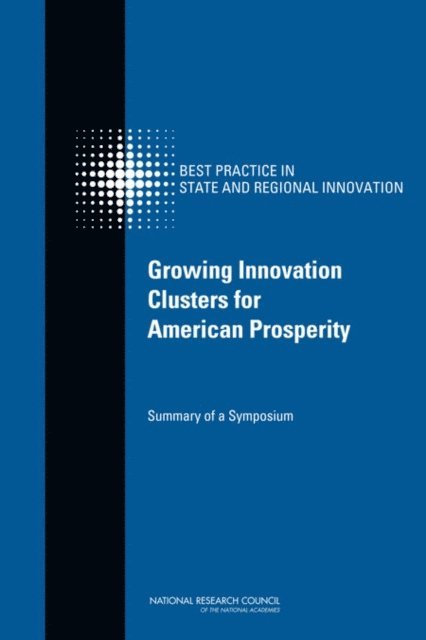
Growing Innovation Clusters for American Prosperity
Summary of a Symposium
Av National Research Council, Policy and Global Affairs m. fl.
Häftad, 2011
649 kr
Lägg i varukorg
Responding to the challenges of fostering regional growth and employment in an increasingly competitive global economy, many U.S. states and regions have developed programs to attract and grow companies as well as attract the talent and resources necessary to develop innovation clusters. These …
Growing Innovation Clusters for American Prosperity
Summary of a Symposium
Av Committee on Competing in the 21st Century: Best Practice in State and Regional Innovation Initiatives, and Economic Policy Board on Science, Technology m. fl.
E-bok, 2011
563 kr
Lägg i varukorg
Responding to the challenges of fostering regional growth and employment in an increasingly competitive global economy, many U.S. states and regions have developed programs to attract and grow companies as well as attract the talent and resources necessary to develop innovation clusters. These …
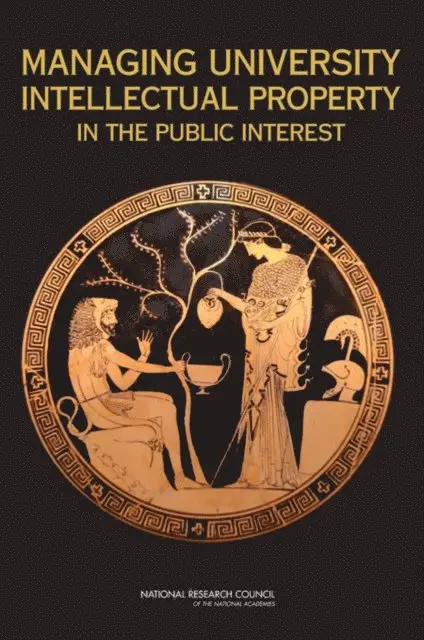
Managing University Intellectual Property in the Public Interest
Av and Dialogue Committee on Management of University Intellectual Property: Lessons from a Generation of Experience, Research, and Economic Policy Board on Science, Technology m. fl.
E-bok, 2011
413 kr
Lägg i varukorg
Thirty years ago federal policy underwent a major change through the Bayh-Dole Act of 1980, which fostered greater uniformity in the way research agencies treat inventions arising from the work they sponsor. Before the Act, if government agencies funded university research, the funding agency …
Reaping the Benefits of Genomic and Proteomic Research
Intellectual Property Rights, Innovation, and Public Health
Av Committee on Intellectual Property Rights in Genomic and Protein Research and Innovation, and Economic Policy Board on Science, Technology m. fl.
E-bok, 2006
746 kr
Lägg i varukorg
The patenting and licensing of human genetic material and proteins represents an extension of intellectual property (IP) rights to naturally occurring biological material and scientific information, much of it well upstream of drugs and other disease therapies. This report concludes that IP …
Partnering Against Terrorism
Summary of a Workshop
Av Charles W. Wessner, Committee on Government-Industry Partnerships for the Development of New Technologies m. fl.
E-bok, 2005
693 kr
Lägg i varukorg
Terrorism and the measures needed to prevent terrorist attacks pose a central policy challenge for the U.S. To meet this unprecedented challenge, the U.S. has great technological assets. What is needed are mechanisms to help the government draw on these strengths in a timely and effective fashion. …
Productivity and Cyclicality in Semiconductors
Trends, Implications, and Questions: Report of a Symposium
Av Committee on Measuring and Sustaining the New Economy, and Economic Policy Board on Science, Technology m. fl.
E-bok, 2004
892 kr
Lägg i varukorg
Hosted by Harvard University''s Kennedy School of Government, this symposium brought together leading technologists and economists to review technical challenges facing the semiconductor industry, the industry''s business cycle, the interconnections between the two, and the implications of growth …
Saving Women's Lives
Strategies for Improving Breast Cancer Detection and Diagnosis
Av Committee on New Approaches to Early Detection and Diagnosis of Breast Cancer, National Cancer Policy Board m. fl.
E-bok, 2005
873 kr
Lägg i varukorg
The outlook for women with breast cancer has improved in recent years.Due to the combination of improved treatments and the benefits of mammographyscreening, breast cancer mortality has decreased steadily since1989. Yet breast cancer remains a major problem, second only to lungcancer as a leading …
Patents in the Knowledge-Based Economy
Av Committee on Intellectual Property Rights in the Knowledge-Based Economy, and Economic Policy Board on Science, Technology m. fl.
E-bok, 2003
1271 kr
Lägg i varukorg
This volume assembles papers commissioned by the National Research Council''s Board on Science, Technology, and Economic Policy (STEP) to inform judgments about the significant institutional and policy changes in the patent system made over the past two decades. The chapters fall into three areas. …
Securing the Future
Regional and National Programs to Support the Semiconductor Industry
Av and Economic Policy Board on Science, Technology, Policy and Global Affairs m. fl.
E-bok, 2003
1271 kr
Lägg i varukorg
Based on the deliberations of a high-level international conference, this report summarizes the presentations of an exceptional group of experts, convened by Intel''s Chairman Emeritus Gordon Moore and SEMATECH''s Chairman Emeritus William Spencer. The report documents the critical technological …
Government-Industry Partnerships for the Development of New Technologies
Av and Economic Policy Board on Science, Technology, Policy and Global Affairs m. fl.
E-bok, 2003
779 kr
Lägg i varukorg
This report reviews a variety of partnership programs in the United States, and finds that partnerships constitute a vital positive element of public policy, helping to address major challenges and opportunities at the nexus of science, technology, and economic growth.
Partnership for Solid-State Lighting
Report of a Workshop
Av and Economic Policy Board on Science, Technology, Policy and Global Affairs m. fl.
E-bok, 2002
676 kr
Lägg i varukorg
As part of its analysis of public-private partnerships, the Academies convened leading academic researchers, government officials and policy makers, and representatives from large and small firms to explore the potential contributions, technical challenges, and opportunities for …