Cordula Gdaniec - Böcker
Visar alla böcker från författaren Cordula Gdaniec. Handla med fri frakt och snabb leverans.
2 produkter
2 produkter
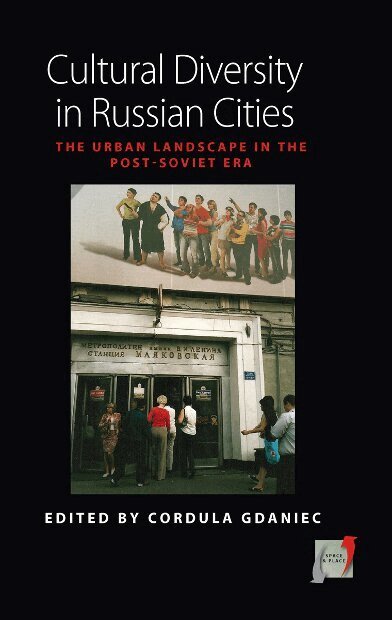
Cultural Diversity in Russian Cities
The Urban Landscape in the post-Soviet Era
Häftad, Engelska, 2012
496 kr
Skickas inom 3-6 vardagar
Cultural diversity — the multitude of different lifestyles that are not necessarily based on ethnic culture — is a catchphrase increasingly used in place of multiculturalism and in conjunction with globalization. Even though it is often used as a slogan it does capture a widespread phenomenon that cities must contend with in dealing with their increasingly diverse populations. The contributors examine how Russian cities are responding and through case studies from Moscow, St. Petersburg, Novosibirsk, and Sochi explore the ways in which different cultures are inscribed into urban spaces, when and where they are present in public space, and where and how they carve out their private spaces. Through its unique exploration of the Russian example, this volume addresses the implications of the fragmented urban landscape on cultural practices and discourses, ethnicity, lifestyles and subcultures, and economic practices, and in doing so provides important insights applicable to a global context.
Cultural Diversity in Russian Cities
The Urban Landscape in the post-Soviet Era
Inbunden, Engelska, 2010
1 956 kr
Skickas inom 3-6 vardagar
Cultural diversity — the multitude of different lifestyles that are not necessarily based on ethnic culture — is a catchphrase increasingly used in place of multiculturalism and in conjunction with globalization. Even though it is often used as a slogan it does capture a widespread phenomenon that cities must contend with in dealing with their increasingly diverse populations. The contributors examine how Russian cities are responding and through case studies from Moscow, St. Petersburg, Novosibirsk, and Sochi explore the ways in which different cultures are inscribed into urban spaces, when and where they are present in public space, and where and how they carve out their private spaces. Through its unique exploration of the Russian example, this volume addresses the implications of the fragmented urban landscape on cultural practices and discourses, ethnicity, lifestyles and subcultures, and economic practices, and in doing so provides important insights applicable to a global context.