• Fri frakt över 249 kr
  • •
  • Snabba leveranser
  • •
  • Billiga böcker
Kundservice

Du är på sajten för privatpersoner.

Företag, bibliotek eller offentlig verksamhet?

Du handlar på classic.bokus.com, där alla dina funktioner finns intakta.
Till classic.bokus.com
Bokus logotyp. Gå till startsidan.
  • Erbjudanden
  • Nyheter
  • Student
  • Topplistor
  • Barn & ungdom
  • Bokus Play
  • E-böcker
  • Pocketböcker
  • Spel & pussel

10% rabatt på allt med kod: NYSTART10 →

Sidfot

Mina sidor

    Hjälp

    • Kundservice
    • Vanliga frågor och svar
    • Frakt och leverans
    • Retur vid ångerrätt
    • Reklamera vara
    • Betalning
    • Köpvillkor
    • Allmänna villkor
    • Information om webbplatsens tillgänglighet

    Om Bokus

    • Om oss
    • Pressrum
    • För studenter
    • För företag
    • För bibliotek och offentlig verksamhet
    • För leverantörer
    • Hållbarhet

    Populärt

    • Aktuella erbjudanden
    • Presentkort
    • Studentlitteratur
    • Nya böcker
    • Topplistor
    • Signerade böcker
    • Engelska böcker

    Inspiration

    • Boktips
    • BookTok
    • Populära bokserier
    • Barnbokskaraktärer
    • Populära författare
    Logotyp för Bokus
    Följ oss på Facebook (extern länk)Följ oss på Instagram (extern länk)Följ oss på YouTube (extern länk)Följ oss på TikTok (extern länk)
    bokus @ CookiesAnpassa cookiesIntegritetspolicyKöpvillkor
    Till Citymail hemsida (extern länk)Till Budbee hemsida (extern länk)Till Postnord hemsida (extern länk)Till Schenker hemsida (extern länk)Till Early Bird hemsida (extern länk)Till Walleys hemsida (extern länk)
    1. Samhälle och politik
    2. Samhälle och kultur
    3. Kultur och medier
    4. Kulturvetenskap

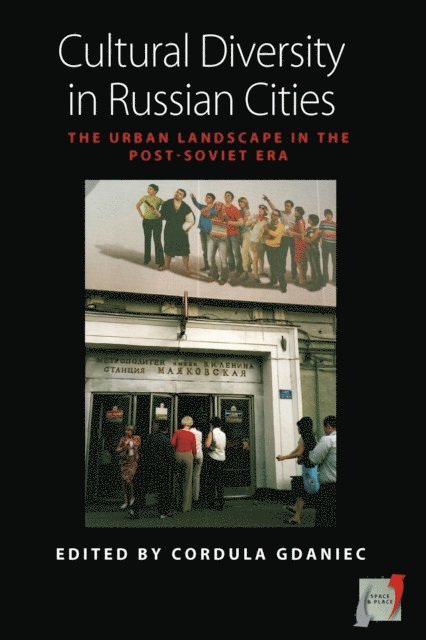
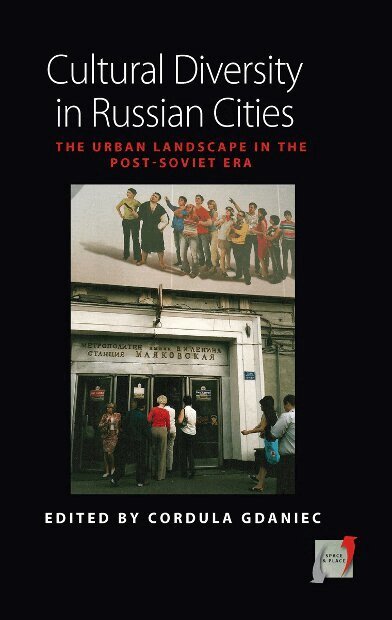
    Cultural Diversity in Russian Cities

    The Urban Landscape in the post-Soviet Era

    AvCordula Gdaniec

    Häftad, Engelska, 2012

    Del i serien Space and Place

    440 kr

    Beställningsvara. Skickas inom 5-8 vardagar. Fri frakt över 249 kr.

    Beskrivning

    Cultural diversity — the multitude of different lifestyles that are not necessarily based on ethnic culture — is a catchphrase increasingly used in place of multiculturalism and in conjunction with globalization. Even though it is often used as a slogan it does capture a widespread phenomenon that cities must contend with in dealing with their increasingly diverse populations. The contributors examine how Russian cities are responding and through case studies from Moscow, St. Petersburg, Novosibirsk, and Sochi explore the ways in which different cultures are inscribed into urban spaces, when and where they are present in public space, and where and how they carve out their private spaces. Through its unique exploration of the Russian example, this volume addresses the implications of the fragmented urban landscape on cultural practices and discourses, ethnicity, lifestyles and subcultures, and economic practices, and in doing so provides important insights applicable to a global context.

    Produktinformation

    • Utgivningsdatum:2012-12-01
    • Mått:152 x 229 x 11 mm
    • Vikt:272 g
    • Format:Häftad
    • Språk:Engelska
    • Serie:Space and Place
    • Antal sidor:196
    • Förlag:Berghahn Books
    • ISBN:9780857458131

    Utforska kategorier

    • Kulturvetenskap inom Samhälle och politik
    • Sociala grupper och identitet inom Samhälle och politik
    • Etnicitet inom Samhälle och politik

    Mer om författaren

    Cordula Gdaniec currently works at the German-Russian Museum Berlin-Karlshorst in a project on cultures of remembrance. From 2003-2008, she was a Research Fellow and Lecturer at Humboldt University in Berlin, involved in the project "Urban culture and ethnic representation Berlin and Moscow as emerging world cities?" at the Department of European Ethnology.

    Recensioner i media

    “Taken together, these [contributions] reveal that cosmopolitanism’s definitions and meanings only exist in the plural, that the formation of cosmopolitan ideas and communities is inevitably contingent and place-specific, and that the forces preaching exclusion and intolerance are often at least as powerful as those promoting cultural acceptance in a rapidly globalising world. I recommend it for the insights and case studies it offers, and it would be a useful text for courses concerned with globalisation and urbanism.”  ·  Urban Studies“The volume is a well-integrated collection of chapters, which explore new perspectives on urban life in post-Soviet Russian cities, addressing the themes of multiculturalism, socio-spatial divisions and competing claims to urban space. It will be of interest to Russian studies scholars, as well as to urban studies researchers within the disciplines of anthropology, sociology and human geography.”  ·  Cultural Analysis"In total, this volume provides accessible, interesting and detailed empirical studies and offers compelling insights into various aspects of urban cultural diversity as related to space and spatial practices. By focusing on Russian cities and incorporating many contributions from Russian researchers, it also adds a new perspective to our understanding of this region.”  ·  Anthropological Notebooks“[This] book makes it evident that space, place, and territory are factors to be taken seriously in any further exploration of the nation–building process, nationalism, the formation of national and urban identities, and the impact of globalization on cities. This theoretical insight, combined with the empirical analyses of numerous sites, processes, phenomena, and practices make [it] important and thought-provoking reading that needs to be considered not only for those focusing on Russia, but for Eastern Europe as well.”  ·  Social and Cultural Geography

    Innehållsförteckning

    • Chapter 1. Cultural Diversity Between Staging and the Everyday – Experiences from Moscow, St. Petersburg and Other Russian Cities. An IntroductionCordula GdaniecChapter 2. Is Chinese Space “Chinese?” New Migrants in St. PetersburgMegan DixonChapter 3. Contructions of the “Other”: Racialization of Migrants in Moscow and NovosibirskLarisa KosyginaChapter 4. Reshaping Living Space: Concepts of Home Represented by Women Migrants Working in St.PetersburgOlga Brednikova and Olga TkachChapter 5. African Communities in Moscow and St. Petersburg: Inclusion and Exclusion to Social Life in RussiaSvetlana BoltovskayaChapter 6. The Construction of ‘Marginality’ and ‘Normality’ – In Search of a Collective Identity Among Youth Cultural Scenes in SochiIrina Kosterina and Ulia AndreevaChapter 7. “You Know What Kind of Place This is, Don’t You?” An Exploration of Lesbian Spaces In MoscowKatja SarajevaChapter 8. Begging as Economic Practice: Urban Niches in Central St. PetersburgMaria ScattoneNotes on ContributorsIndex