• Fri frakt över 249 kr
  • •
  • Snabba leveranser
  • •
  • Billiga böcker
Kundservice

Du är på sajten för privatpersoner.

Företag, bibliotek eller offentlig verksamhet?

Du handlar på classic.bokus.com, där alla dina funktioner finns intakta.
Till classic.bokus.com
Bokus logotyp. Gå till startsidan.
  • Erbjudanden
  • Nyheter
  • Student
  • Topplistor
  • Barn & ungdom
  • Bokus Play
  • E-böcker
  • Pocketböcker
  • Spel & pussel

10% rabatt på allt med kod: NYSTART10 →

Sidfot

Mina sidor

    Hjälp

    • Kundservice
    • Vanliga frågor och svar
    • Frakt och leverans
    • Retur vid ångerrätt
    • Reklamera vara
    • Betalning
    • Köpvillkor
    • Allmänna villkor
    • Information om webbplatsens tillgänglighet

    Om Bokus

    • Om oss
    • Pressrum
    • För studenter
    • För företag
    • För bibliotek och offentlig verksamhet
    • För leverantörer
    • Hållbarhet

    Populärt

    • Aktuella erbjudanden
    • Presentkort
    • Studentlitteratur
    • Nya böcker
    • Topplistor
    • Signerade böcker
    • Engelska böcker

    Inspiration

    • Boktips
    • BookTok
    • Populära bokserier
    • Barnbokskaraktärer
    • Populära författare
    Logotyp för Bokus
    Följ oss på Facebook (extern länk)Följ oss på Instagram (extern länk)Följ oss på YouTube (extern länk)Följ oss på TikTok (extern länk)
    bokus @ CookiesAnpassa cookiesIntegritetspolicyKöpvillkor
    Till Citymail hemsida (extern länk)Till Budbee hemsida (extern länk)Till Postnord hemsida (extern länk)Till Schenker hemsida (extern länk)Till Early Bird hemsida (extern länk)Till Walleys hemsida (extern länk)
    1. Samhälle och politik
    2. Sociologi och antropologi
    3. Antropologi

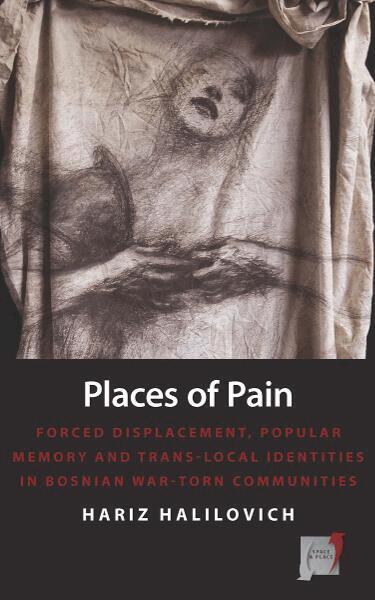
    Places of Pain

    Forced Displacement, Popular Memory and Trans-local Identities in Bosnian War-torn Communities

    AvHariz Halilovich

    Häftad, Engelska, 2015

    Del i serien Space and Place

    440 kr

    Beställningsvara. Skickas inom 5-8 vardagar. Fri frakt över 249 kr.

    Fler format och utgåvor

    Inbunden

    1 861 kr

    E-bok

    284 kr

    Beskrivning

    For displaced persons, memory and identity is performed, (re)constructed and (re)negotiated daily. Forced displacement radically reshapes identity, with results ranging from successful hybridization to feelings of permanent misplacement. This compelling and intimate description of places of pain and (be)longing that were lost during the 1992–95 war in Bosnia and Herzegovina, as well as of survivors’ places of resettlement in Australia, Europe and North America, serves as a powerful illustration of the complex interplay between place, memory and identity. It is even more the case when those places have been vandalized, divided up, brutalized and scarred. However, as the author shows, these places of humiliation and suffering are also places of desire, with displaced survivors emulating their former homes in the far corners of the globe where they have resettled.

    Produktinformation

    • Utgivningsdatum:2015-09-01
    • Mått:152 x 229 x 16 mm
    • Vikt:390 g
    • Format:Häftad
    • Språk:Engelska
    • Serie:Space and Place
    • Antal sidor:288
    • Förlag:Berghahn Books
    • ISBN:9781782387626

    Utforska kategorier

    • Antropologi inom Samhälle och politik
    • Migration inom Samhälle och politik

    Mer om författaren

    Hariz Halilovich, social anthropologist and writer, is a Professor at the School of Global, Urban and Social Studies, RMIT University, Melbourne. His research interests include place-based identity politics, forced migration, politically motivated violence, memory studies and human rights. He has been recipient of a number of prestigious research and writing awards in Australia and internationally.

    Recensioner i media

    “This is, overall, a carefully researched book following the tradition of Geertzian thick description in an effort to contribute theoretically through the concept of translocalism, analyze reflexively via the author’s own history of displacement and emplacement, and comment in a heartfelt way on how refugees recreate social worlds even after massive destruction. Halilovich’s account deserves room in any upper-level, if not introductory, undergraduate or graduate course covering some aspect of international migration, especially forced displacement — a phenomenon impacting some 50 million people around the world today.” · International Migration Review“Halilovich’s book ... powerfully highlights the translocal as the most critical aspect of the diasporic love, care, loyalty, and community. Furthermore, the author’s personal investment, respect, attention, and engagement with “his” people and places are truly admirable. The book should be of great interest to scholars interested in the studies of displacement, memory, and identity projects in postwar Bosnia and Herzegovina and beyond.” · American Ethnologist“Scholars of transnational migration and diaspora will find in this book a compelling exploration of the day-to-day practices of translocalism. What is most valuable in Halilovich’s approach is that it encourages analysis of both homogeneous national and religious groups and heterogeneous multiethnic collectives in empirical, rather than essentialist or ideological, terms. By de-emphasizing the traditional or official markers of difference in Bosnia, Halilovich sheds light on how collective identities may be fostered through shared attachment to places remembered, imagined, and real.” · Slavic Review“In his study of Bosnia and Herzegovina’s legacy of forced migration, Hariz Halilovich takes us on a powerful, at times heartwrenching, journey into the lives, memories, and communities of the war’s displaced…[It] represents an important contribution to the anthropological scholarship of the region, forced migration, and transnationalism. Halilovich has done a masterful job in leading us through critical, underexamined interstices of pain and place that so forcefully define the experiences of Bosnia’s displaced persons.” · American Anthropologist“This is one of the most powerful accounts – the most powerful account by a survivor – of the impact of forced displacement in the wake of the Bosnian conflict…The book is a survivor’s account and at the same time a scholarly critique of what happened. It is an exemplar of engaged and informed writing: moving and informative, evocative and profound. It is a deeply serious book, but with the light touch of an accomplished writer.” · Ron Adams, Victoria University“This title addressed the complexity of lives of the Bosnian diaspora and issues of the trans-local identities like no other book before. The fact that the author has himself experienced the war and the refugee experience, as well as demonstrated the awareness of the process of forging his own new-old identity, contributes greatly to the quality of this book.” · Edina Becirevic, University of Sarajevo“This is a first-class text, covering a hitherto neglected topic. It is original and of a very high intellectual standard. It is crisply written, well structured, based on extensive primary research and guided by a solid theoretical understanding… there are very few English-language books in this field that really impress me, but this is one of them.” · Marko Hoare, Kingston University, UK

    Innehållsförteckning

    • Table of FiguresAcknowledgementsA note on pronunciation of some specific Bosnian, Croatian and Serbian charactersGlossary of non–English wordsList of selected abbreviationsChapter 1. Introduction: The Journey through Bosnian War‒torn CommunitiesWriting Displacement of BosniansPractical ChallengesTheoretical ChallengesMethodological ChallengesReflexive EthnographyEthics and Politics of the ResearchChapter 2. Klotjevac: Forced Displacement and ‘Ethnic Cleansing’ in an Eastern Bosnian VillageReunionWhen You Forget JulyJourney to a VillageOnce there was a CommunityBeliefs and RitualsTaboosIn Šljivovica VeritasHuman Geography of the PlaceAnnihilation of a CommunityThe ‘(UN)Safe Area’ SrebrenicaRecognising GenocideBack to the PresentMapping displacementConclusionChapter 3. Beyond the Sadness: Narratives of Displacement, Refuge and Homecomings among Bosnian Refugees in AustriaDebating DisplacementNarrating DisplacementSejo in ViennaEdita’s ‘Wonderland’ in ViennaMapping Edita’s Lost HomeLess than ‘Six Degrees of Separation’ Between Edita and IbroPrijedor Region—Blueprint for ‘Ethnic Cleansing’Massacre in HegićiMassacre in BrdoEdita, Ibro and Sejo in AustriaEdita’s HomecomingTorn Between Home and Exile, Past and PresentChapter 4. (Dis)Placing Memories: Monuments, Memorials and Commemorations in Post–war Bosnia and HerzegovinaThe Funeral at HegićiOmarskaKeraterm and TrnopoljeSrebrenica/Potočari CommemorationsMostar Carrying its CrossSarajevo RemembersChapter 5. Reframing Identity in Places of Pain: A Photographic Essay of Displacement and MemoryChapter 6. Trans–local Diasporic Communities in the Age of Transnationalism: Bosnians in Australia, Europe and the USDebating DiasporaEmergence of the Bosnian DiasporaOne Family, Two Languages, Many Cultures‘German Bosnians’ in Sweden and ‘Aussie Bosnians’ from GermanyThe Trans–local Within the TransnationalBrčko in MelbourneStrengthening Unity through Inter–marriageOther Forms of Trans–localism in ActionFormation of Trans–local Diasporic CommunitiesConclusionChapter 7. Measuring the Pain of Others: Gendered Displacement, Memory and IdentityRe–counting the Displaced‘Not in My Front Yard!’: The Case of Fata OrlovićEthnic EngineeringUncounted ‘Collateral Damage’: The Case of Aunty Edina(Mis)using IDPsRefugeeWomen in DiasporaMothers’ ChildrenChapter 8. Concluding the Journey through Bosnian War–torn CommunitiesBosnian VikingsBosnian MidwesternersVienna BluesUnearthing the Missing in BosniaFrom St Louis to St Albans: All Roads Lead to Hanna’s CaféBibliography

    Betyg & recensioner

    5/5