Corinne C. Datchi – författare
Visar alla böcker från författaren Corinne C. Datchi. Handla med fri frakt och snabb leverans.
3 produkter
3 produkter
Häftad, Engelska, 2022
598 kr
Skickas inom 5-8 vardagar
Addressing the critical intersection between mental health and the legal system, this book presents a competency-based approach to clinical practice with justice-involved couples and families.Author Corinne C. Datchi demonstrates that couple and family interventions are vital components of rehabilitation for both youth and adults, supporting positive family involvement and enhancing solutions to delinquency and crime. Chapters lay out essential data about juvenile and criminal justice systems, correctional populations, family systems theory, and forensic mental health issues, incorporating an understanding of these factors into the systemic assessment, case conceptualization, intervention, and treatment of clinical problems.A compelling case study brings this foundational knowledge to life, with a focus on systems thinking and scientific knowledge, and illustrates the functional competencies necessary to work effectively with couples and families in the juvenile and criminal justice system. The book outlines evidence on couple and family-focused interventions with justice-involved populations, and demonstrates how to use this information about effective therapeutic models.The volume is the first in the APA Fundamentals of Clinical Practice With Couples and Families Series that illustrates the application of specialty professional competencies in this area.
Inbunden, Engelska, 2017
989 kr
Skickas inom 10-15 vardagar
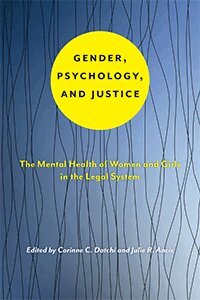
Reveals how gender intersects with race, class, and sexual orientation in ways that impact the legal status and well-being of women and girls in the justice system. Women and girls' contact with the justice system is often influenced by gender-related assumptions and stereotypes. The justice practices of the past 40 years have been largely based on conceptual principles and assumptions—including personal theories about gender—more than scientific evidence about what works to address the specific needs of women and girls in the justice system. Because of this, women and girls have limited access to equitable justice and are increasingly caught up in outdated and harmful practices, including the net of the criminal justice system. Gender, Psychology, and Justice uses psychological research to examine the experiences of women and girls involved in the justice system. Their experiences, from initial contact with justice and court officials, demonstrate how gender intersects with race, class, and sexual orientation to impact legal status and well-being. The volume also explains the role psychology can play in shaping legal policy, ranging from the areas of corrections to family court and drug court. Gender, Psychology, and Justice provides a critical analysis of girls' and women's experiences in the justice system. It reveals the practical implications of training and interventions grounded in psychological research, and suggests new principles for working with women and girls in legal settings.
Häftad, Engelska, 2017
399 kr
Skickas inom 5-8 vardagar
Reveals how gender intersects with race, class, and sexual orientation in ways that impact the legal status and well-being of women and girls in the justice system. Women and girls' contact with the justice system is often influenced by gender-related assumptions and stereotypes. The justice practices of the past 40 years have been largely based on conceptual principles and assumptions—including personal theories about gender—more than scientific evidence about what works to address the specific needs of women and girls in the justice system. Because of this, women and girls have limited access to equitable justice and are increasingly caught up in outdated and harmful practices, including the net of the criminal justice system. Gender, Psychology, and Justice uses psychological research to examine the experiences of women and girls involved in the justice system. Their experiences, from initial contact with justice and court officials, demonstrate how gender intersects with race, class, and sexual orientation to impact legal status and well-being. The volume also explains the role psychology can play in shaping legal policy, ranging from the areas of corrections to family court and drug court. Gender, Psychology, and Justice provides a critical analysis of girls' and women's experiences in the justice system. It reveals the practical implications of training and interventions grounded in psychological research, and suggests new principles for working with women and girls in legal settings.