Craig L. Frisby - Böcker
Visar alla böcker från författaren Craig L. Frisby. Handla med fri frakt och snabb leverans.
6 produkter
6 produkter
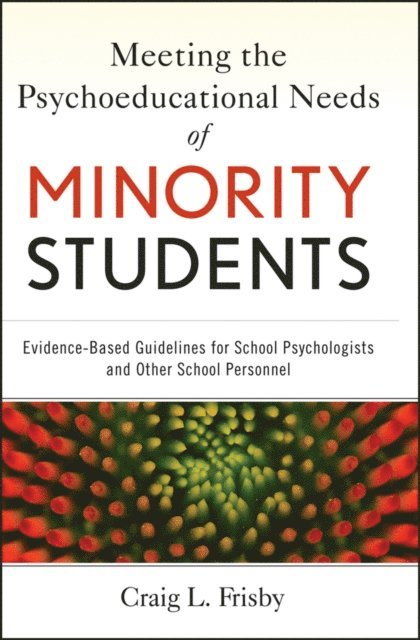
Meeting the Psychoeducational Needs of Minority Students
Evidence-Based Guidelines for School Psychologists and Other School Personnel
Inbunden, Engelska, 2013
836 kr
Skickas inom 11-20 vardagar
"Dr. Frisby focuses a bright light on issues that often remain obscured in a fog of polemics, deeply held convictions, and genuine concern for the plight of minority students. Meeting the Psychoeducational Needs of Minority Students cuts through this fog with intense, sharp, clear thinking and data-driven conclusions."Jeffrey P. Braden, PhD, Professor of Psychology and Dean of the College of Humanities and Social Sciences, North Carolina State University"Going beyond superficial 'feel good' or 'feel bad' ideologies to probe what really makes a difference in meeting the needs of often underserved populations, Craig Frisby provides a comprehensive, rigorous, well-written, and entertaining (honest!) work that addresses the intersection of race, ethnicity, and education."Betty Henry, PhD, School Psychologist, California School for the Blind"Dr. Frisby makes a perceptive and incisive assessment of much of the multicultural ideology currently propagated in professional psychology and education and directly confronts some of the major issues surrounding multiculturalism. Unlike many other critiques that have been proffered over the last few decades, however, Meeting the Psychoeducational Needs of Minority Students also provides many concrete solutions for how to begin changing the current milieu."A. Alexander Beaujean, PhD, Associate Professor, Baylor UniversityA practical, research-based guide to facilitating positive educational outcomes for racial, ethnic, and language minority studentsThis timely book is written from the perspective of contemporary school psychology for a variety of school personnel, including school psychologists, teachers, guidance counselors, and administrators, with coverage of: The problem of quack multiculturalismHome and familyContext for school learningGeneral cognitive ability, learning, and instructionTesting and assessmentSchool discipline and behavior managementCrime, delinquency, and gangsSchool district resources
498 kr
Skickas inom 7-10 vardagar
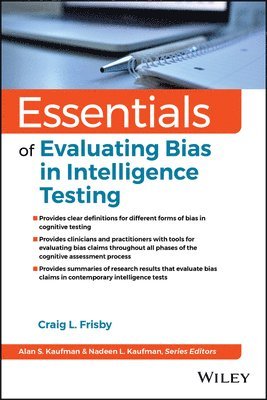
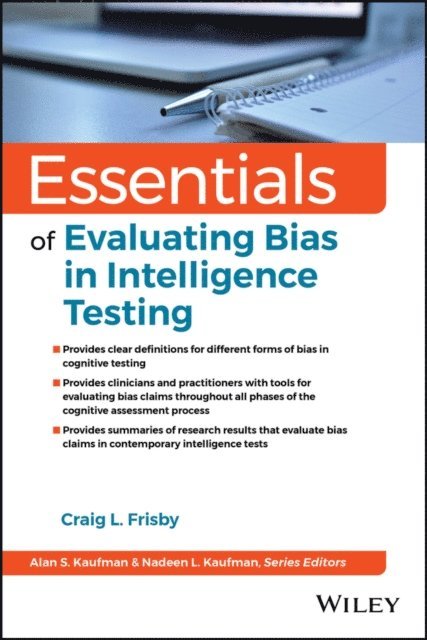
Thorough overview of the history, viewpoints, and research findings of bias in intelligence testing Essentials of Evaluating Bias in Intelligence Testing delivers a comprehensive overview of potential biases that can come to light when making use of IQ tests across demographics, detailing where bias can work its way into IQ test selection, standardization, content, administration/scoring, and interpretation and providing key foundational knowledge on what IQ test bias is versus what it is not as well as the history of bias claims in recent decades. Research findings are included throughout the book to provide key context. Some of the topics discussed in this book include: The Larry P. v. Wilson Riles trial decision of 1979, which prohibited the use of IQ tests for placing Black students in special education programs, and its carryover to todayThe heritability of IQ scores, the “nature/nurture” issue, and the role of IQ in the stratification of subpopulation groups in societyImplicit assumptions within claims of standardization bias, including that all population subgroups must display equal mean scores and that racial/ethnic groups are internally homogeneousEssentials of Evaluating Bias in Intelligence Testing is an essential read for educators, academics, and administrators seeking to understand the full picture on IQ testing and its validity or lack thereof across different demographics.
Cultural Competence in Applied Psychology
An Evaluation of Current Status and Future Directions
Häftad, Engelska, 2019
2 883 kr
Skickas inom 10-15 vardagar
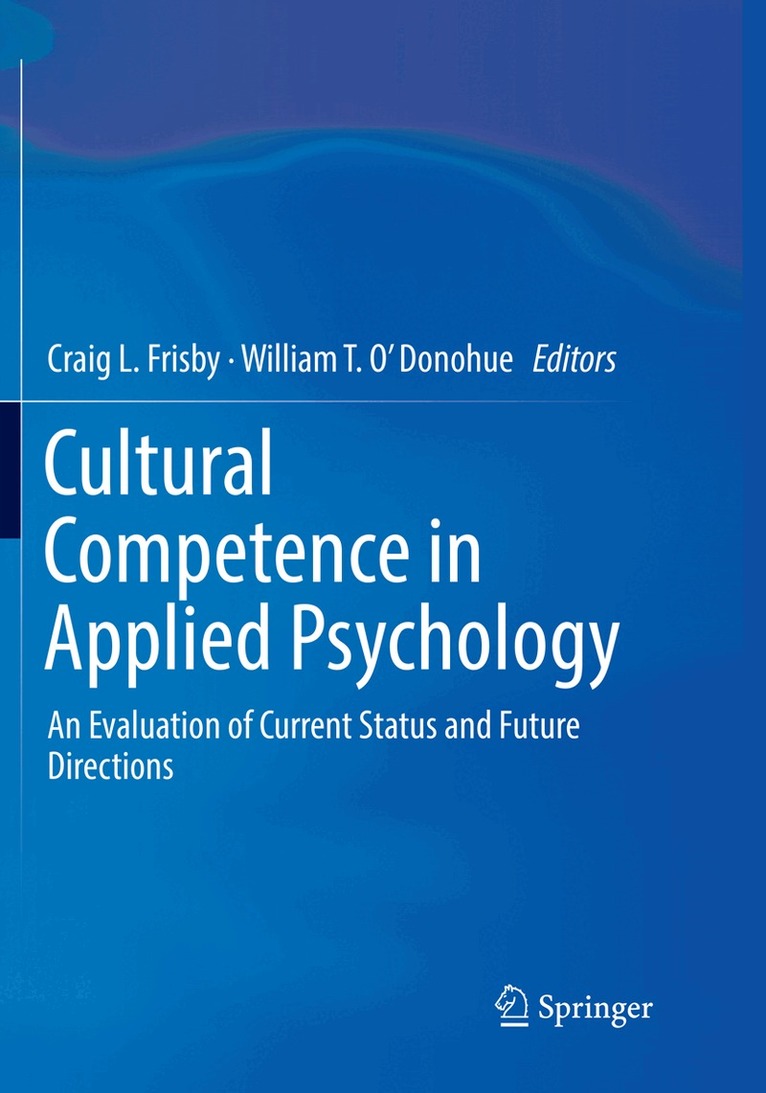
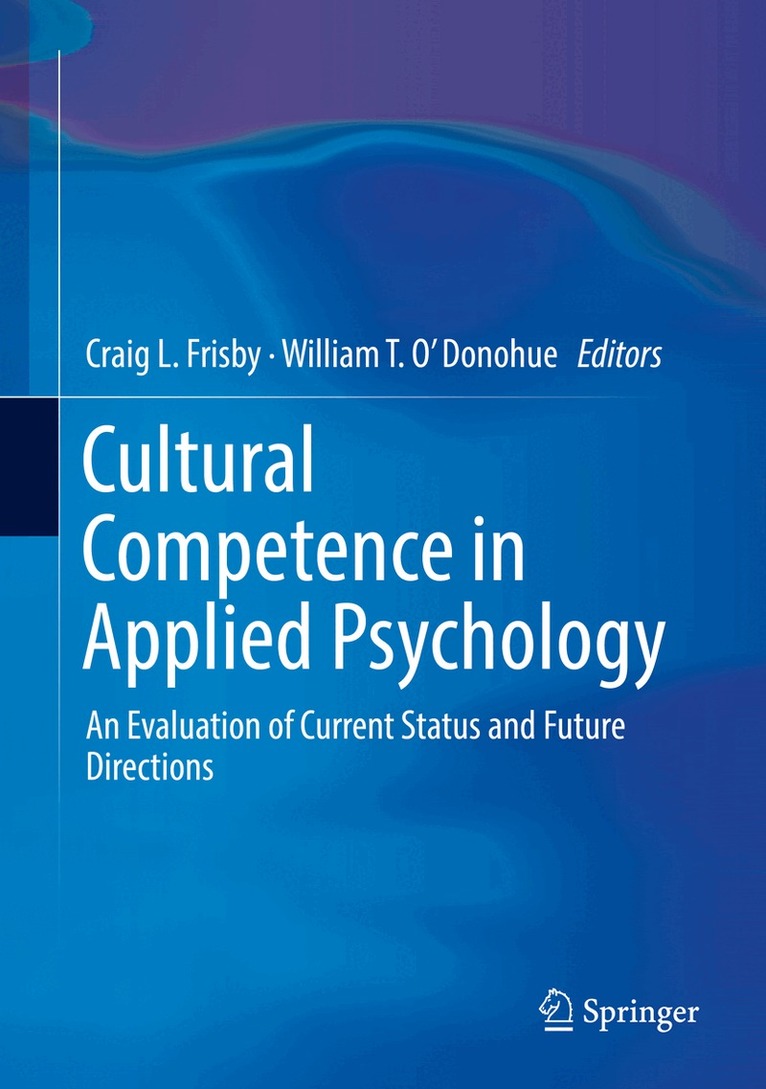
The first volume of its kind, this provocative book evaluates the construct of cultural competence from multiple perspectives. At the intersection of diverse disciplines and domains, contributors argue for greater clarity in understanding the cultural competence construct, a deeper level of analysis as to its multifaceted components, and call for concrete practical objectives and science-based means of measurement. Serious, nuanced discussion addresses challenges, strengths, and limitations of current cultural competence practice in terms of sociocultural concepts (e.g., race, ethnicity) and practical concepts (e.g., sensitivity in the therapeutic relationship, treatment efficacy). In addition, contributors identify future directions for research, training, and practice with the potential to spur the further evolution of this clinically important construct.This timely book:Critiques the cultural competence construct and its evaluation as it is currently disseminated within applied psychology.Compares and contrasts how cultural competence is defined within clinical, school, and counseling psychology.Analyzes difficulties and challenges in understanding the cultural competence construct as evaluated through the lens of closely related fields outside of applied psychology.Spotlights complexities in cultural competence issues pertaining to specific populations.Sets out implications for education and training, offering a detailed outline for an ideal college course in cultural competenceWith this level of reasoning and rigor, Cultural Competence in Applied Psychology is sure to stimulate long-overdue dialogue and debate among professionals across a wide variety of fields, such as clinical psychology, social work, child and socialpsychology, psychotherapy, school psychology, and counseling.
1 548 kr
Skickas inom 10-15 vardagar
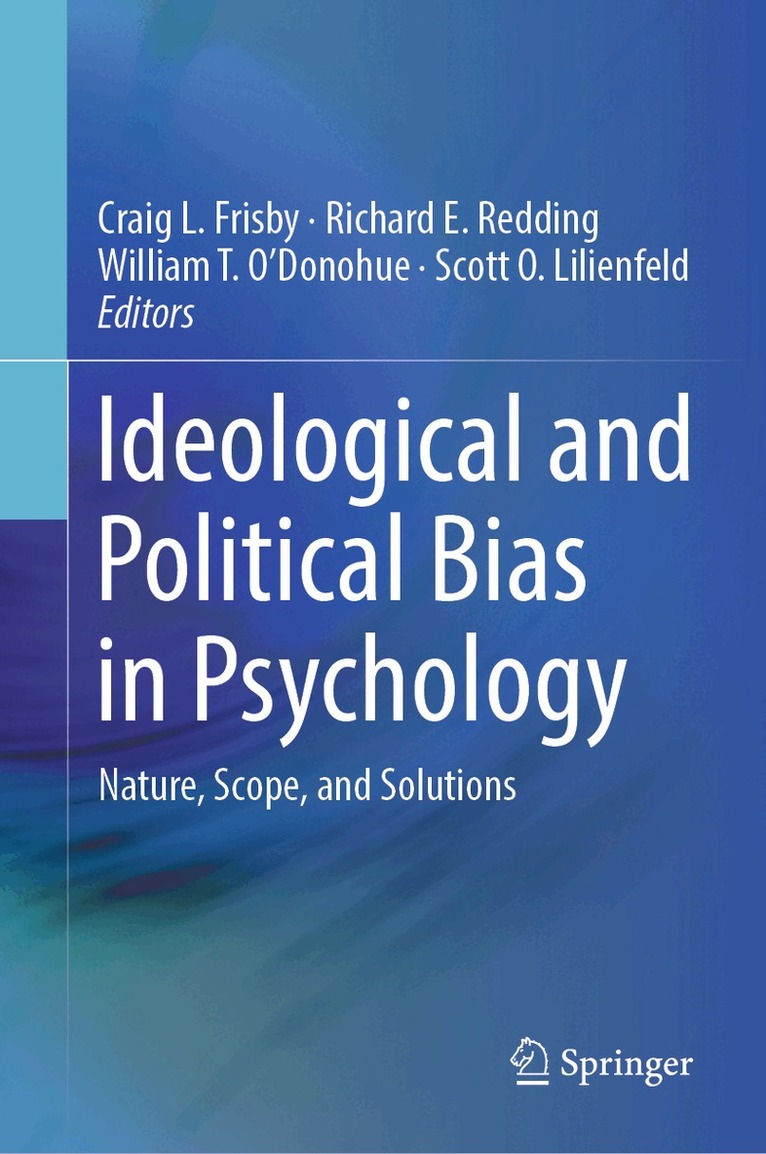
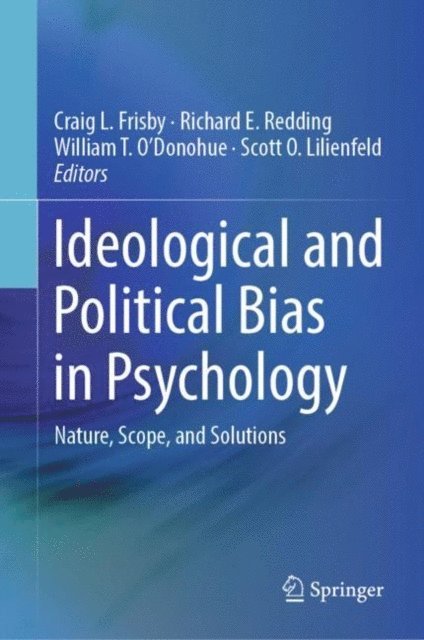
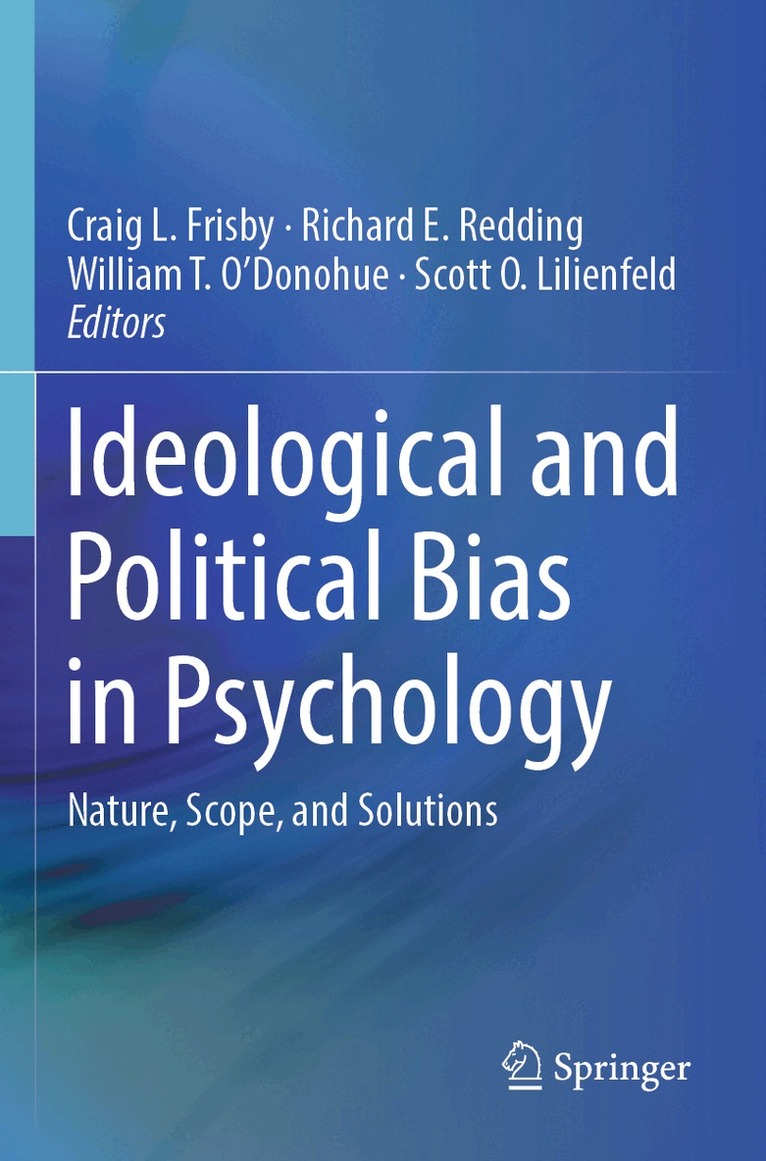
This book examines the traditional assumptions made by academics and professionals alike that have embedded sociopolitical biases that impede practice. and undermine efforts to achieve an objective scientific status. If allowed to go unchallenged, the credibility of psychology as a discipline is compromised. This contributed volume thoroughly and comprehensively examines this concern in a conceptually and empirically rigorous manner and offers constructive solutions for minimizing undue political influences within the field of psychology.Societies in the 21st century desperately need reliable psychological science, but we don’t have it. This important volume explains one of the main reasons why we are making little progress on any issue that gets contaminated by the left-right culture war: because the field of psychology is an enthusiastic member of one of the two teams, so it rejects findings and researchers who question its ideological commitments. The authors ofthis engaging volume also show us the way out. They diagnose the social dynamics of bias and point to reforms that would give us the psychology that we need to address 21st century problems. Jonathan Haidt, Thomas Cooley Professor of Ethical Leadership, NYU—Stern School of Business and author of The Righteous MindThe boundaries of free speech, censorship, moral cultures, social justice, and ideological biases are among the many incendiary topics discussed in this book. If you are looking for a deep-dive into real-world contemporary controversies, Ideological and Political Bias in Psychology fits the bill. The chapters are thoughtful and thought-provoking. Most readers will find something to agree with and something to rage at in almost every chapter. It just may change how you think about some of these topics.Diane F. Halpern, Professor of Psychology Emerita, Claremont McKenna College and Past President, American Psychological Association Unless the political left is always correct about everything (in which case, we wouldn’t need to do research; we could just ask a leftist), the growing political monoculture of social science is a major barrier to our search for the truth. This volume shows how ideological bias should be treated as a source of research error, up there with classic methodological flaws like non-random assignment and non-blind measurement. Steven Pinker, Johnstone Professor of Psychology, Harvard University, and the author of Rationality An important read for academics curious about how their politics fashions beliefs that too often are uncritically taken for granted, and for non-academics wondering why we can't shake off the politics that so influences scientific work.Vernon Smith, Nobel Laureate in Economic Sciences and George L. Argyros Chair in Finance and Economics, Chapman UniversityAdvances and deepens empirically rigorous scholarship into biased political influences affecting academic and professional psychology.Offers constructive solutions for minimizing undue political influences within psychology and moving the field forward.Serves as a resource for psychological academicians, researchers, practitioners, and consultants seeking to restore the principles of accurate science and effective practice to their respective areas of research.
1 640 kr
Skickas inom 10-15 vardagar
This book examines the traditional assumptions made by academics and professionals alike that have embedded sociopolitical biases that impede practice. and undermine efforts to achieve an objective scientific status. If allowed to go unchallenged, the credibility of psychology as a discipline is compromised. This contributed volume thoroughly and comprehensively examines this concern in a conceptually and empirically rigorous manner and offers constructive solutions for minimizing undue political influences within the field of psychology.Societies in the 21st century desperately need reliable psychological science, but we don’t have it. This important volume explains one of the main reasons why we are making little progress on any issue that gets contaminated by the left-right culture war: because the field of psychology is an enthusiastic member of one of the two teams, so it rejects findings and researchers who question its ideological commitments. The authors ofthis engaging volume also show us the way out. They diagnose the social dynamics of bias and point to reforms that would give us the psychology that we need to address 21st century problems. Jonathan Haidt, Thomas Cooley Professor of Ethical Leadership, NYU—Stern School of Business and author of The Righteous MindThe boundaries of free speech, censorship, moral cultures, social justice, and ideological biases are among the many incendiary topics discussed in this book. If you are looking for a deep-dive into real-world contemporary controversies, Ideological and Political Bias in Psychology fits the bill. The chapters are thoughtful and thought-provoking. Most readers will find something to agree with and something to rage at in almost every chapter. It just may change how you think about some of these topics.Diane F. Halpern, Professor of Psychology Emerita, Claremont McKenna College and Past President, American Psychological Association Unless the political left is always correct about everything (in which case, we wouldn’t need to do research; we could just ask a leftist), the growing political monoculture of social science is a major barrier to our search for the truth. This volume shows how ideological bias should be treated as a source of research error, up there with classic methodological flaws like non-random assignment and non-blind measurement. Steven Pinker, Johnstone Professor of Psychology, Harvard University, and the author of Rationality An important read for academics curious about how their politics fashions beliefs that too often are uncritically taken for granted, and for non-academics wondering why we can't shake off the politics that so influences scientific work.Vernon Smith, Nobel Laureate in Economic Sciences and George L. Argyros Chair in Finance and Economics, Chapman UniversityAdvances and deepens empirically rigorous scholarship into biased political influences affecting academic and professional psychology.Offers constructive solutions for minimizing undue political influences within psychology and moving the field forward.Serves as a resource for psychological academicians, researchers, practitioners, and consultants seeking to restore the principles of accurate science and effective practice to their respective areas of research.
Cultural Competence in Applied Psychology
An Evaluation of Current Status and Future Directions
Inbunden, Engelska, 2018
2 883 kr
Skickas inom 10-15 vardagar
The first volume of its kind, this provocative book evaluates the construct of cultural competence from multiple perspectives. At the intersection of diverse disciplines and domains, contributors argue for greater clarity in understanding the cultural competence construct, a deeper level of analysis as to its multifaceted components, and call for concrete practical objectives and science-based means of measurement. Serious, nuanced discussion addresses challenges, strengths, and limitations of current cultural competence practice in terms of sociocultural concepts (e.g., race, ethnicity) and practical concepts (e.g., sensitivity in the therapeutic relationship, treatment efficacy). In addition, contributors identify future directions for research, training, and practice with the potential to spur the further evolution of this clinically important construct.This timely book:Critiques the cultural competence construct and its evaluation as it is currently disseminated within applied psychology.Compares and contrasts how cultural competence is defined within clinical, school, and counseling psychology.Analyzes difficulties and challenges in understanding the cultural competence construct as evaluated through the lens of closely related fields outside of applied psychology.Spotlights complexities in cultural competence issues pertaining to specific populations.Sets out implications for education and training, offering a detailed outline for an ideal college course in cultural competenceWith this level of reasoning and rigor, Cultural Competence in Applied Psychology is sure to stimulate long-overdue dialogue and debate among professionals across a wide variety of fields, such as clinical psychology, social work, child and socialpsychology, psychotherapy, school psychology, and counseling.