Cynthia Farrar - Böcker
Visar alla böcker från författaren Cynthia Farrar. Handla med fri frakt och snabb leverans.
4 produkter
4 produkter
886 kr
Skickas inom 5-8 vardagar
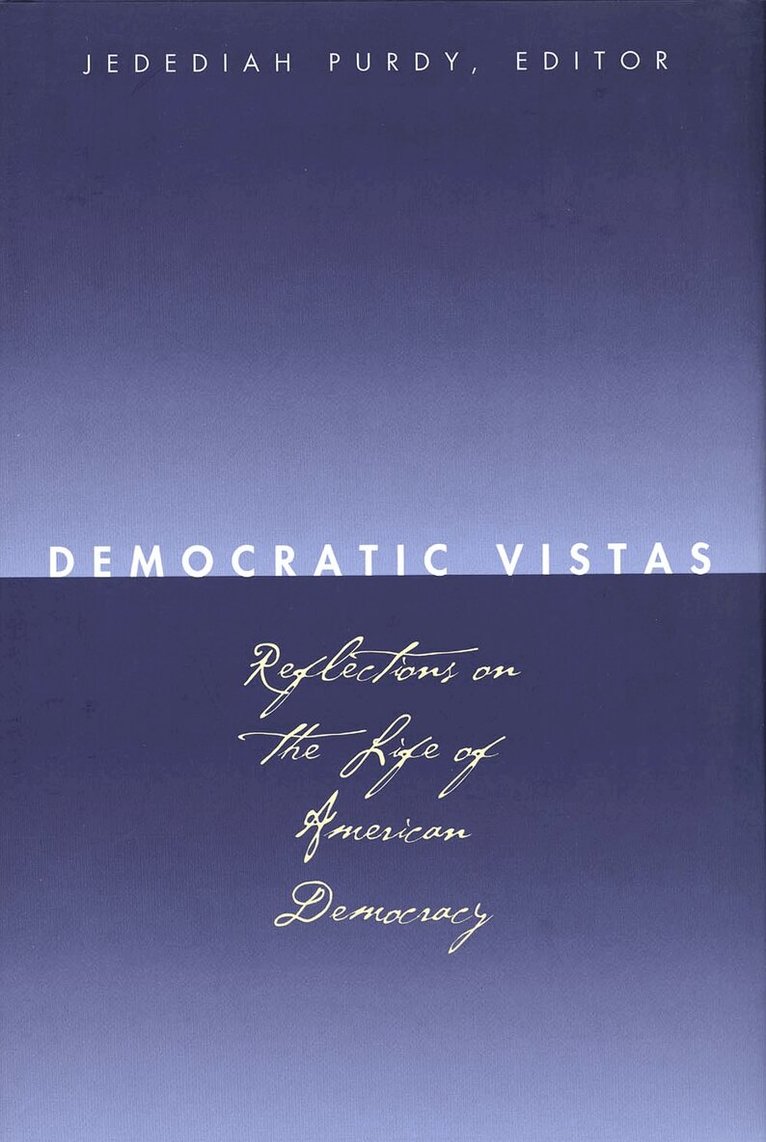
In this thought-provoking collection, leading scholars explore democracy in the United States from a sweeping variety of perspectives. A dozen contributors consider the nature and prospects of democracy as it relates to the American experience—free markets, religion, family life, the Cold War, higher education, and more. These probing essays bring American democracy into fresh focus, complete with its idealism, its moral greatness, its disappointments, and its contradictions.Based on DeVane lectures delivered at Yale University, these writings examine large themes and ask important questions: Why do democratic societies, and the United States in particular, tolerate profound economic inequality? Has the United States ever been truly democratic? How has democratic aspiration influenced the development of practices as diverse as education, religious worship, and family life? With deep insights and lively discussion, the authors expand our understanding of what democracy has meant in the past, how it functions now, and what its course may be in the future.
The Origins of Democratic Thinking
The Invention of Politics in Classical Athens
Häftad, Engelska, 1989
765 kr
Skickas inom 5-8 vardagar
The ancient Greeks invented democracy. They also invented political theory. This book seeks to show that these were not unrelated achievements. The development of political theory accompanied the growth of democracy at Athens in the fifth century BC. By analysing the writings of Protagoras the sophist, Thucydides the historian, and Democritus the cosmologist in the context of political developments and speculation about the universe, Dr Farrar reveals the existence of a distinctive approach to the characterisation of democratic order, and in doing so demonstrates the virtues of Thucydides' historical conception of politics. Thucydides' history is shown to be an argument for the political force of historical judgement.
The Origins of Democratic Thinking
The Invention of Politics in Classical Athens
Inbunden, Engelska, 2026
1 228 kr
Skickas inom 7-10 vardagar
The Athenians invented democracy - and as they grappled with the implications, they also invented democratic political theory. By reconstruing Protagoras the sophist, Thucydides the historian, and Democritus the cosmologist in the context of political developments and contemporary scientific, literary, and philosophical works, Cynthia Farrar's seminal study reveals the emergence of a distinctive and still cogent understanding of democratic order. All three thinkers wrestled with democracy's insistence on separating political from social identity and status. Unlike Plato and Aristotle, they constructed democratic theories that were genuinely democratic: addressed to citizens, and inviting them to interpret what their own and collective well-being demands in the world as it is. In a new introduction, Farrar makes the case for the continued relevance of the ideas explored in this book by recounting her own attempts to adapt Athenian structures of democratic citizenship and to reinterpret their democratic theory for the modern world.
The Origins of Democratic Thinking
The Invention of Politics in Classical Athens
Häftad, Engelska, 2026
370 kr
Skickas inom 7-10 vardagar
The Athenians invented democracy - and as they grappled with the implications, they also invented democratic political theory. By reconstruing Protagoras the sophist, Thucydides the historian, and Democritus the cosmologist in the context of political developments and contemporary scientific, literary, and philosophical works, Cynthia Farrar's seminal study reveals the emergence of a distinctive and still cogent understanding of democratic order. All three thinkers wrestled with democracy's insistence on separating political from social identity and status. Unlike Plato and Aristotle, they constructed democratic theories that were genuinely democratic: addressed to citizens, and inviting them to interpret what their own and collective well-being demands in the world as it is. In a new introduction, Farrar makes the case for the continued relevance of the ideas explored in this book by recounting her own attempts to adapt Athenian structures of democratic citizenship and to reinterpret their democratic theory for the modern world.