D. Alan Cruse - Böcker
Visar alla böcker från författaren D. Alan Cruse. Handla med fri frakt och snabb leverans.
4 produkter
4 produkter
1 053 kr
Skickas inom 7-10 vardagar
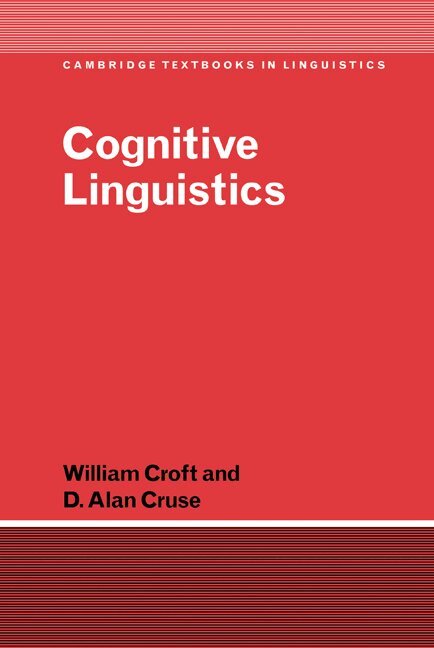
Cognitive Linguistics argues that language is governed by general cognitive principles, rather than by a special-purpose language module. This introductory textbook surveys the field of cognitive linguistics as a distinct area of study, presenting its theoretical foundations and the arguments supporting it. Clearly organised and accessibly written, it provides a useful introduction to the relationship between language and cognitive processing in the human brain. It covers the main topics likely to be encountered in a course or seminar, and provides a synthesis of study and research in this fast-growing field of linguistics. The authors begin by explaining the conceptual structures and cognitive processes governing linguistic representation and behaviour, and go on to explore cognitive approaches to lexical semantics, as well as syntactic representation and analysis, focusing on the closely related frameworks of cognitive grammar and construction grammar. This much-needed introduction will be welcomed by students in linguistics and cognitive science.
549 kr
Skickas inom 7-10 vardagar
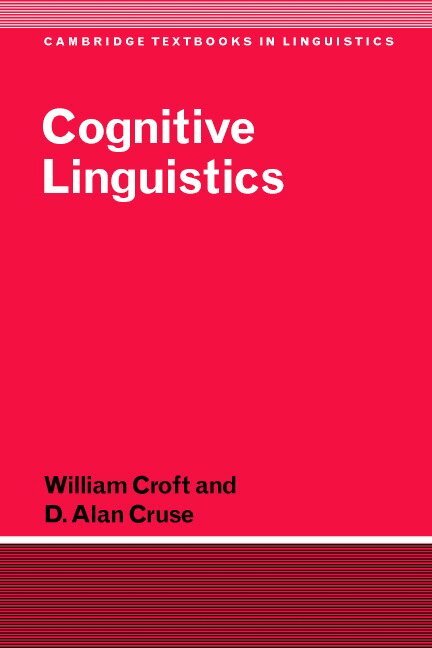
Cognitive Linguistics argues that language is governed by general cognitive principles, rather than by a special-purpose language module. This introductory textbook surveys the field of cognitive linguistics as a distinct area of study, presenting its theoretical foundations and the arguments supporting it. Clearly organised and accessibly written, it provides a useful introduction to the relationship between language and cognitive processing in the human brain. It covers the main topics likely to be encountered in a course or seminar, and provides a synthesis of study and research in this fast-growing field of linguistics. The authors begin by explaining the conceptual structures and cognitive processes governing linguistic representation and behaviour, and go on to explore cognitive approaches to lexical semantics, as well as syntactic representation and analysis, focusing on the closely related frameworks of cognitive grammar and construction grammar. This much-needed introduction will be welcomed by students in linguistics and cognitive science.
7 098 kr
Skickas inom 7-10 vardagar
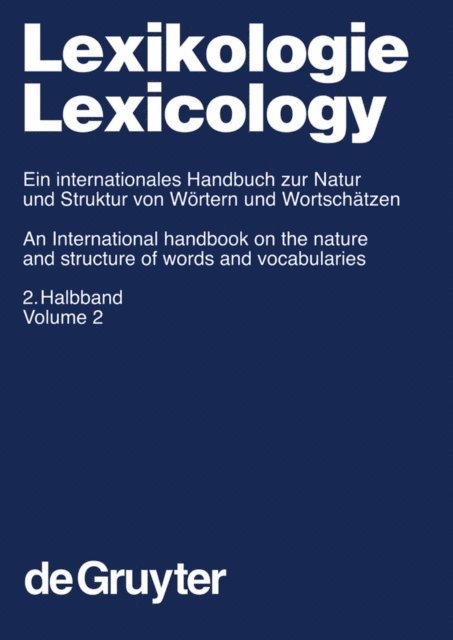
The impression one initially has of lexicology is rather diffuse. As a discipline, it suffers from the fate of either not being noticed at all or of being itself broken down into semi-independent sub-disciplines such as phraseology and mental lexicon. It is against this background that the handbook identifies and deals with the following aims for academic progression and practical/theoretical research: the establishment and maintenance of an independent profile for the discipline of lexicology the collection and documentation of up-to-date knowledge in the field of lexicology the documentation of research still outstanding and the provision of guidelines on concrete fields of study The handbook starts off with the two main sections: 'word' and 'vocabulary'. The sense relations act as the threads which bind these two sections together, because their ability to link words in pairs allows us to make successive inroads into the vocabulary. Moving from the term 'word' to the term 'lexical element' forces us into a more detailed investigation of phraseology. Detailed treatments of each of the ways of looking at 'vocabulary' are provided, in view of the ambiguity of the term 'vocabulary' (vocabulary in its relation to a natural language vs. vocabulary in its relation to an individual [mental lexicon] vs. vocabulary in its relation to grammar [lexicon]). Similarly, synchronic and diachronic points of view are taken into account, in order to be able to arrive at an adequate description of the underlying dynamics of the vocabulary of natural languages. In conclusion the present state of lexicology made it necessary to deal thoroughly with questions about the discipline, its methodology and its links with related disciplines. Key features: International handbook series Two volumes offering the current state of research Fundamental and theoretical approaches of the discipline
8 804 kr
Skickas inom 5-8 vardagar
The handbook identifies and deals with the following aims for academic progression and practical/theoretical research: the establishment and maintenance of an independent profile for the discipline of lexicology the collection and documentation of up-to-date knowledge in the field of lexicology the documentation of research still outstanding and the provision of guidelines on concrete fields of study The handbook starts off with the two main sections: 'word' and 'vocabulary'. The sense relations act as the threads which bind these two sections together, because their ability to link words in pairs allows us to make successive inroads into the vocabulary. Moving from the term 'word' to the term 'lexical element' forces us into a more detailed investigation of phraseology. Detailed treatments of each of the ways of looking at 'vocabulary' are provided, in view of the ambiguity of the term 'vocabulary' (vocabulary in its relation to a natural language vs. Vocabulary in its relation to an individual [mental lexicon] vs. vocabulary in its relation to grammar [lexicon]).Similarly, synchronic and diachronic points of view are taken into account, in order to be able to arrive at an adequate description of the underlying dynamics of the vocabulary of natural languages. In conclusion the present state of lexicology made it necessary to deal thoroughly with questions about the discipline, its methodology and its links with related disciplines.