D. Max Moerman – författare
Visar alla böcker från författaren D. Max Moerman. Handla med fri frakt och snabb leverans.
2 produkter
2 produkter
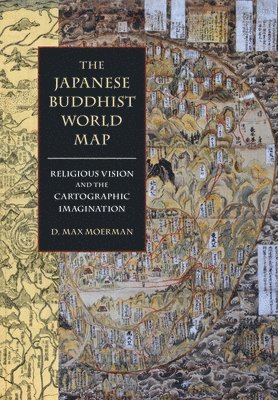
Japanese Buddhist World Map
Religious Vision and the Cartographic Imagination
Inbunden, Engelska, 2021
776 kr
Skickas inom 5-8 vardagar
From the fourteenth through the nineteenth centuries Japanese monks created hundreds of maps to construct and locate their place in a Buddhist world. This expansively illustrated volume is the first to explore the largely unknown archive of Japanese Buddhist world maps and analyze their production, reproduction, and reception. In examining these fascinating sources of visual and material culture, author D. Max Moerman argues for an alternative history of Japanese Buddhism—one that compels us to recognize the role of the Buddhist geographic imaginary in a culture that encompassed multiple cartographic and cosmological world views. The contents and contexts of Japanese Buddhist world maps reveal the ambivalent and shifting position of Japan in the Buddhist world, its encounter and negotiation with foreign ideas and technologies, and the possibilities for a global history of Buddhism and science. Moerman’s visual and intellectual history traces the multiple trajectories of Japanese Buddhist world maps, beginning with the earliest extant Japanese map of the world: a painting by a fourteenth-century Japanese monk charting the cosmology and geography of India and Central Asia based on an account written by a seventh-century Chinese pilgrim-monk. He goes on to discuss the cartographic inclusion and marginal position of Japan, the culture of the copy and the power of replication in Japanese Buddhism, and the transcultural processes of engagement and response to new visions of the world produced by Iberian Christians, Chinese Buddhists, and the Japanese maritime trade. Later chapters explore the transformations in the media and messages of Buddhist cartography in the age of print culture and in intellectual debates during the eighteenth and nineteenth centuries over cosmology and epistemology and the polemics of Buddhist science.The Japanese Buddhist World Map offers a wholly innovative picture of Japanese Buddhism that acknowledges the possibility of multiple and heterogeneous modernities and alternative visions of Japan and the world.
776 kr
Skickas inom 5-8 vardagar
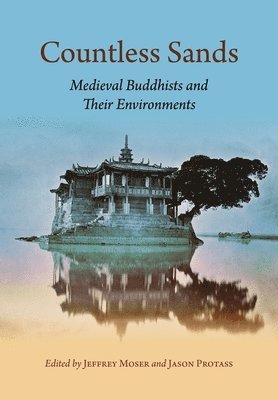
Countless Sands presents engaging analyses of the diverse relationships between Buddhism and the environment that existed in medieval Asia. Recent years have witnessed a surge in publications across the humanities that advance powerful ethical and political arguments to account for the human failure to respond effectively to global climate change. While the contributors to this volume are attuned to this challenge, rather than present explicit political arguments, they pursue a subtler effort to historicize the environment as a site and subject of Buddhist practice while providing research grounded in rigorous analysis of complex and fragmentary sources. The volume thereby mitigates against the Orientalist, East-West binaries that have long informed the invocation of Buddhism in Euro-American environmental discourses. As the chapters collectively demonstrate, there was no singular, consistently "Buddhist" understanding of the natural world, but innumerable, varied engagements preserved in discrete texts, images, and artifacts. We title the volume Countless Sands to echo the Buddhist metaphor of "sands of the Ganges" that implies an uncountable number. Through specific case studies, the authors consider such questions as: How did premodern Buddhists understand what we today call "the environment"? How did they think about their earth? How, when, and where did the various processes of the earth actually impinge on the practices of historical Buddhists? What kinds of "environmental imaginations" informed specific Buddhist practices? In so doing, the authors explore the connections between the ways in which historical Buddhist communities interacted with their environments and how they understood those environments. In the broader field of Buddhist studies, Countless Sands contributes to ongoing efforts to expand the locus of inquiry from textually based investigations of Buddhist doctrine to a broader examination of the complex and varied place of Buddhism in the lives of historical communities. The book furthers this broader process by casting it in environmental terms and will engage readers looking for models of thought-provoking historical analysis on environmental themes.