Dagikhudo Dagiev – författare
665 kr
Skickas inom 10-15 vardagar
2 246 kr
Skickas inom 10-15 vardagar
379 kr
Skickas inom 10-15 vardagar
1 178 kr
Skickas inom 10-15 vardagar
2 176 kr
Skickas inom 10-15 vardagar
802 kr
Läs direkt efter köp
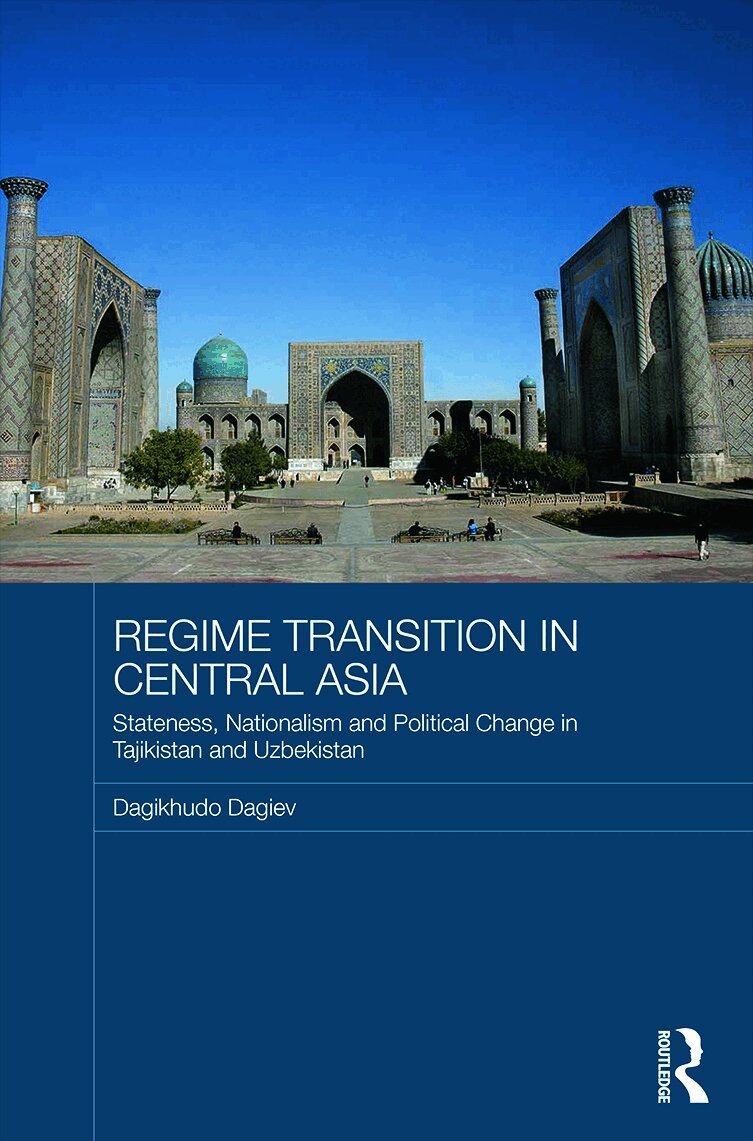
Presenting a study of regime transition, political transformation, and the challenges that faced the post-Communist republics of Central Asia on independence, this book focuses on the process of transition in Tajikistan and Uzbekistan, and the obstacles that these newly-independent states are facing in the post-Communist period.
The book analyses how in the early stages of their independence, the governments of Central Asia declared that they would build democratic states, but that in practice, they demonstrated that they are more inclined towards authoritarianism. With the declaration of independence, Tajikistan and Uzbekistan, like many other former Soviet national republics, were faced with the issues of nationalism, ethnicity, identity and territorial delimitation. This book looks at how the discourse of patrimonial nationalism in post-Communist Tajikistan and Uzbekistan has been the elites’ strategy to address all these issues: to maintain the stateness of their respective countries; to preserve the unity of their nation; to fill the ideological void of post-Communism; to prevent the rise of Islam; and to legitimize their authoritarian practice.
Arguing against the claim that the Central Asian states have undergone divergent paths of transition, the book discusses how they are in fact all authoritarian, although exhibiting different degrees of authoritarianism. This book provides a useful contribution to studies on Central Asian Politics and International Relations.
795 kr
Läs direkt efter köp
Presenting a study of regime transition, political transformation, and the challenges that faced the post-Communist republics of Central Asia on independence, this book focuses on the process of transition in Tajikistan and Uzbekistan, and the obstacles that these newly-independent states are facing in the post-Communist period.
The book analyses how in the early stages of their independence, the governments of Central Asia declared that they would build democratic states, but that in practice, they demonstrated that they are more inclined towards authoritarianism. With the declaration of independence, Tajikistan and Uzbekistan, like many other former Soviet national republics, were faced with the issues of nationalism, ethnicity, identity and territorial delimitation. This book looks at how the discourse of patrimonial nationalism in post-Communist Tajikistan and Uzbekistan has been the elites’ strategy to address all these issues: to maintain the stateness of their respective countries; to preserve the unity of their nation; to fill the ideological void of post-Communism; to prevent the rise of Islam; and to legitimize their authoritarian practice.
Arguing against the claim that the Central Asian states have undergone divergent paths of transition, the book discusses how they are in fact all authoritarian, although exhibiting different degrees of authoritarianism. This book provides a useful contribution to studies on Central Asian Politics and International Relations.
713 kr
Skickas inom 10-15 vardagar
866 kr
Kommande
763 kr
Läs direkt efter köp
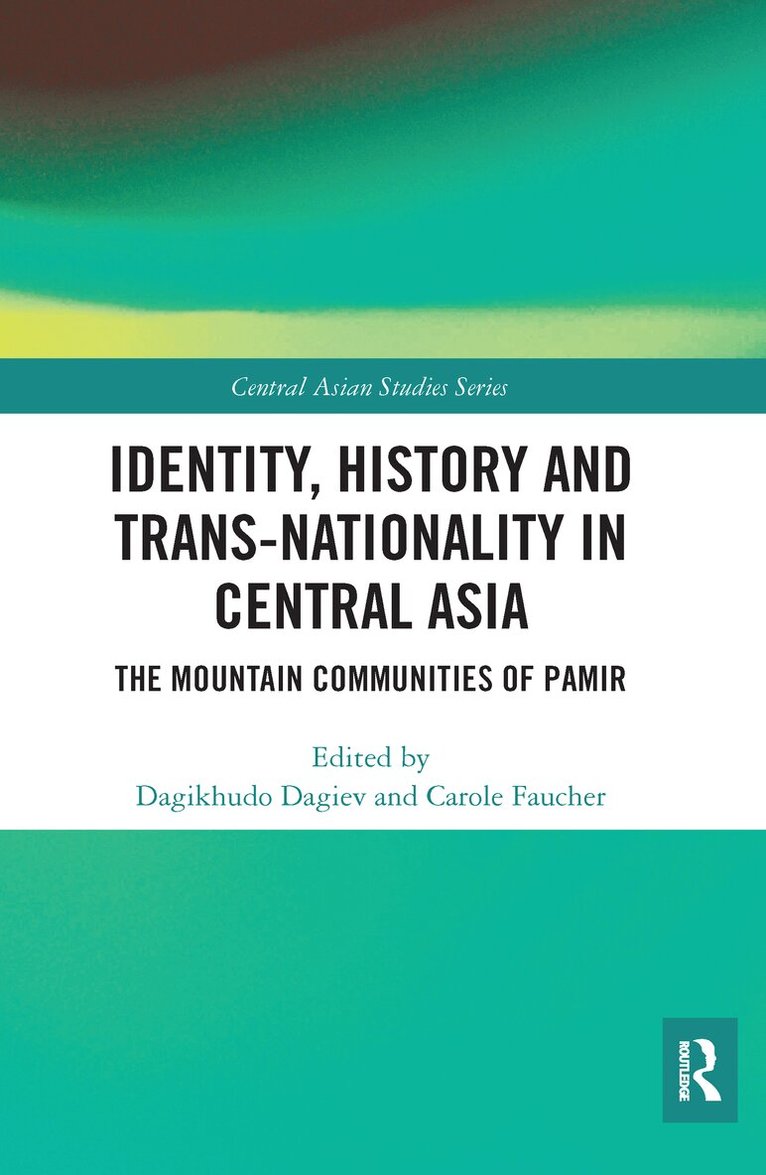
Pamiris, or Badakhshanis in popular discourse, form a small group of Iranic peoples who inhabit the mountainous region of Pamir-Hindu Kush, being the historical region of Badakhshan. Pamiri communities are located in the territories of four current nation-states: Tajikistan, Afghanistan, China and Pakistan.
This book provides insights in the identity process of a group of mountain communities whose vigorous cultures, languages and complex political history have continued to shape a strategic part of the world. Its various chapters capture what being a Pamiri may entail and critically explore the impact of both trans-regionalism and the globalisation processes on activating, engaging and linking the dispersed communities. The book presents a variety of lines of argument pertaining to Pamiri identity and identification processes. Structured in three parts, the book first addresses themes relevant to the region’s geography and the recent history of Pamiri communities. The second section critically explores the rich philosophical, religious and cultural Pamiri heritage through the writings of prominent historical figures. The final section addresses issues pertaining to the contemporary diffusion of traditions, peace-building, interconnectivity and what it means to be a Pamiri for the youth of the region. Contributions by experts in their field offer fresh insights into the Ismaili communities in the region while successfully updating the historical and ethnographic legacy of Soviet times with present-day scholarship.
As the first collection of scholarly contributions in English entirely focusing on the Pamiri people, this book will be of interest to academics in the fields of the history, anthropology, religious studies, sociology, linguistics, education and geography of Central Asia and/or East Asia as well as of Islam, Islamic thought, minority-majority relations, population movements and the processes of defining and affirming identity among minority groups.
763 kr
Läs direkt efter köp
Pamiris, or Badakhshanis in popular discourse, form a small group of Iranic peoples who inhabit the mountainous region of Pamir-Hindu Kush, being the historical region of Badakhshan. Pamiri communities are located in the territories of four current nation-states: Tajikistan, Afghanistan, China and Pakistan.
This book provides insights in the identity process of a group of mountain communities whose vigorous cultures, languages and complex political history have continued to shape a strategic part of the world. Its various chapters capture what being a Pamiri may entail and critically explore the impact of both trans-regionalism and the globalisation processes on activating, engaging and linking the dispersed communities. The book presents a variety of lines of argument pertaining to Pamiri identity and identification processes. Structured in three parts, the book first addresses themes relevant to the region’s geography and the recent history of Pamiri communities. The second section critically explores the rich philosophical, religious and cultural Pamiri heritage through the writings of prominent historical figures. The final section addresses issues pertaining to the contemporary diffusion of traditions, peace-building, interconnectivity and what it means to be a Pamiri for the youth of the region. Contributions by experts in their field offer fresh insights into the Ismaili communities in the region while successfully updating the historical and ethnographic legacy of Soviet times with present-day scholarship.
As the first collection of scholarly contributions in English entirely focusing on the Pamiri people, this book will be of interest to academics in the fields of the history, anthropology, religious studies, sociology, linguistics, education and geography of Central Asia and/or East Asia as well as of Islam, Islamic thought, minority-majority relations, population movements and the processes of defining and affirming identity among minority groups.