Daisaku Higashi - Böcker
Visar alla böcker från författaren Daisaku Higashi. Handla med fri frakt och snabb leverans.
5 produkter
5 produkter
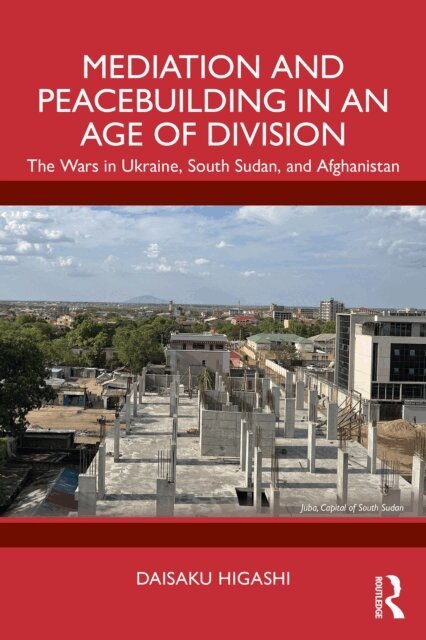
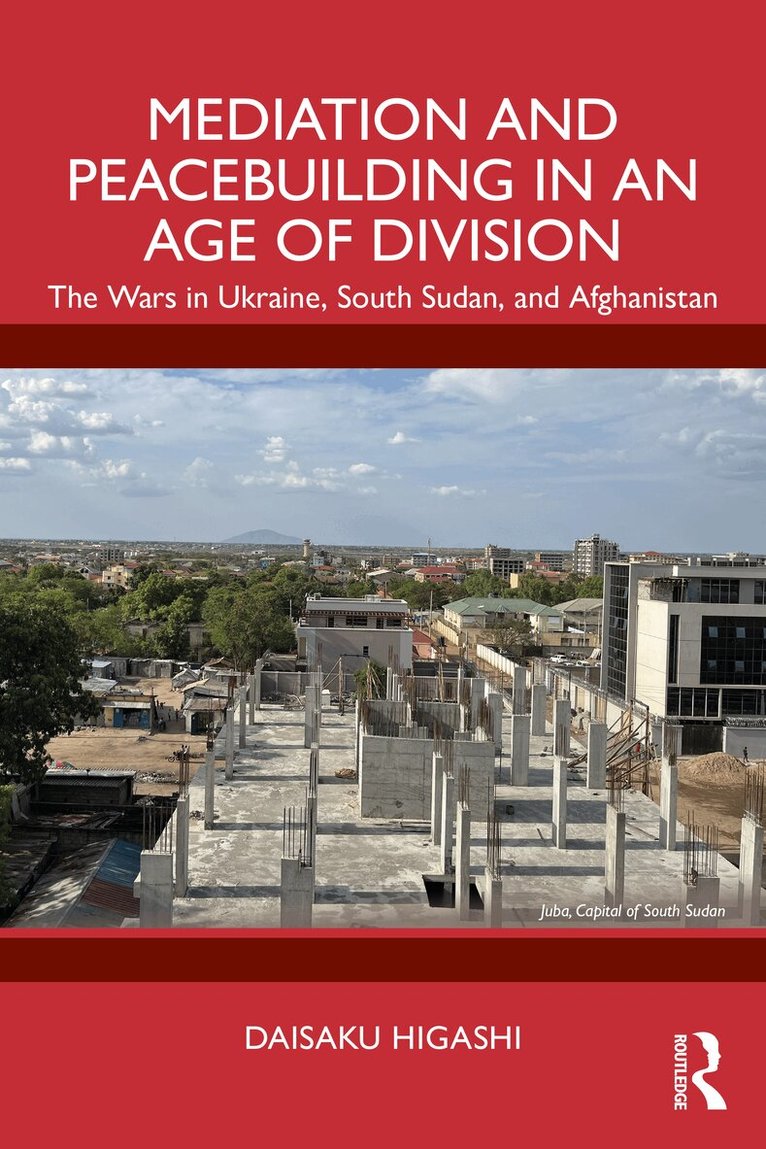
Mediation and Peacebuilding in an Age of Division
The Wars in Ukraine, South Sudan, and Afghanistan
Inbunden, Engelska, 2026
2 258 kr
Kommande
This book explores the major challenges of mediation during armed conflicts and post-conflict peacebuilding in an age of division, when the permanent members of the UN Security Council are fundamentally divided. The author argues that it is critical to mediate armed conflicts and implement peacebuilding by maintaining the fundamental rules of the international system, such as respecting “national sovereignty, borders of states, and self-determination of peoples,” even in the age of division. At the same time, he calls for “adaptive peacebuilding,” reflecting local contexts, histories, and political dynamics, avoiding text-tailored approaches.Dialogues and interviews with the leadership of conflicted states provide unique perspectives on both inter-state and intra-state wars, presenting major findings regarding the wars in Ukraine, South Sudan, and Afghanistan.This volume targets scholars and students of international relations and international organizations, especially those interested in mediation and peacebuilding; it is also valuable for practitioners working for UN, NGOs, think-tanks, diplomats, policymakers, and member states.
Mediation and Peacebuilding in an Age of Division
The Wars in Ukraine, South Sudan, and Afghanistan
Häftad, Engelska, 2026
617 kr
Kommande
This book explores the major challenges of mediation during armed conflicts and post-conflict peacebuilding in an age of division, when the permanent members of the UN Security Council are fundamentally divided. The author argues that it is critical to mediate armed conflicts and implement peacebuilding by maintaining the fundamental rules of the international system, such as respecting “national sovereignty, borders of states, and self-determination of peoples,” even in the age of division. At the same time, he calls for “adaptive peacebuilding,” reflecting local contexts, histories, and political dynamics, avoiding text-tailored approaches.Dialogues and interviews with the leadership of conflicted states provide unique perspectives on both inter-state and intra-state wars, presenting major findings regarding the wars in Ukraine, South Sudan, and Afghanistan.This volume targets scholars and students of international relations and international organizations, especially those interested in mediation and peacebuilding; it is also valuable for practitioners working for UN, NGOs, think-tanks, diplomats, policymakers, and member states.

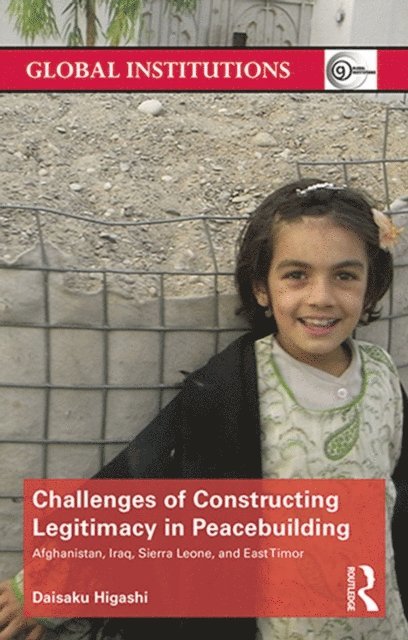
Challenges of Constructing Legitimacy in Peacebuilding
Afghanistan, Iraq, Sierra Leone, and East Timor
Häftad, Engelska, 2016
646 kr
Skickas inom 10-15 vardagar
Peacebuilding is a critical issue in world politics. Surprisingly, however, there has not been a full examination of concrete policies and implementation strategies to generate legitimacy in "host states" by either international relations (IR) theorists or practitioners. The objective of this book is to develop an understanding of the mechanisms for constructing—or eroding—the legitimacy of newly created governments in post-conflict peacebuilding environments. The book argues that although existing accounts in the literature contend that compliance with key political programs, and constructing legitimacy in peacebuilding, largely depend on the levels of force (guns) and resource distribution (money) aimed at people who are governed, there are other significant factors, such as inclusive governments reconciling with old enemies, and the substantial role of international organizations (IOs) as credible third parties to establish fairness and impartiality within the political process. Highashi focuses on an in-depth analysis of the challenges involved in creating a legitimate government in Afghanistan, focusing on disarmament programs with powerful warlords, and the reconciliation efforts with the insurgency, especially the Taliban. In the conclusion the book also examines three complimentary cases—Iraq, East Timor, and Sierra Leone—which consistently support the argument presented earlierThis work will be of interest to students and scholars of peacebuilding and conflict resolution as well as international relations more broadly.
Challenges of Constructing Legitimacy in Peacebuilding
Afghanistan, Iraq, Sierra Leone, and East Timor
Inbunden, Engelska, 2015
2 181 kr
Skickas inom 10-15 vardagar
Peacebuilding is a critical issue in world politics. Surprisingly, however, there has not been a full examination of concrete policies and implementation strategies to generate legitimacy in "host states" by either international relations (IR) theorists or practitioners. The objective of this book is to develop an understanding of the mechanisms for constructing—or eroding—the legitimacy of newly created governments in post-conflict peacebuilding environments. The book argues that although existing accounts in the literature contend that compliance with key political programs, and constructing legitimacy in peacebuilding, largely depend on the levels of force (guns) and resource distribution (money) aimed at people who are governed, there are other significant factors, such as inclusive governments reconciling with old enemies, and the substantial role of international organizations (IOs) as credible third parties to establish fairness and impartiality within the political process. Highashi focuses on an in-depth analysis of the challenges involved in creating a legitimate government in Afghanistan, focusing on disarmament programs with powerful warlords, and the reconciliation efforts with the insurgency, especially the Taliban. In the conclusion the book also examines three complimentary cases—Iraq, East Timor, and Sierra Leone—which consistently support the argument presented earlierThis work will be of interest to students and scholars of peacebuilding and conflict resolution as well as international relations more broadly.
Inclusivity in Mediation and Peacebuilding
UN, Neighboring States, and Global Powers
Inbunden, Engelska, 2022
1 435 kr
Skickas inom 7-10 vardagar
This cutting-edge book illuminates the key characteristics of inclusivity in mediation during armed conflicts and post-conflict peacebuilding. Daisaku Higashi illustrates the importance of mediators taking flexible approaches to inclusivity in arbitration during armed conflicts, highlighting the crucial balance between the need to select conflicting parties to make an agreement feasible and the need to include a multiplicity of parties to make the peace sustainable. Higashi also emphasizes the importance of inclusive processes in the phase of post-conflict peacebuilding.Higashi draws on first-hand experience as a team leader for reconciliation and reintegration in UNAMA, as well as interviews with leaders in conflicting states and UN missions, and recommends various roles for the UN, neighboring states and global powers in mediation during and after armed conflicts. Utilizing extensive field research and analysis, the book focuses on conflict regions in Afghanistan, South Sudan, Syria, Yemen, Iraq and East Timor to demonstrate the significance of addressing inclusivity in mediation and peacebuilding with different approaches.Engaging with a range of empirical sources to make key policy recommendations, this book is crucial reading for practitioners working in mediation and peacebuilding, particularly UN officials, think-tank experts, government officials and NGOs. It will also benefit scholars and students of political science and international relations in need of unique, real-world accounts of global mediation, peacebuilding and conflict management.