Dale Southerton - Böcker
Visar alla böcker från författaren Dale Southerton. Handla med fri frakt och snabb leverans.
4 produkter
4 produkter
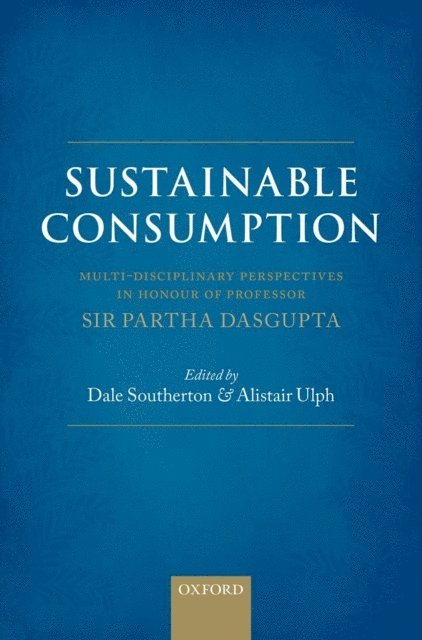
Sustainable Consumption
Multi-disciplinary Perspectives In Honour of Professor Sir Partha Dasgupta
Inbunden, Engelska, 2014
1 717 kr
Skickas inom 7-10 vardagar
If global society is to address the many environmental and other sustainability challenges that confront us in the twenty-first century, such as climate change and water resources, it will be necessary to make significant changes in our patterns of consumption, production, and distribution. There is a growing realization that while changes in production and distribution are formidable, the proposed solutions may not succeed unless it is possible to persuade individuals and households to change their patterns of consumption to make them more sustainable. However there are significant differences in how key disciplines such as psychology, neuroscience, economics, politics, sociology, anthropology, and history conceptualise consumption, empirically test their theoretical predictions, and use these to inform policy-makers across the private, public and third sectors on how to make consumption more sustainable. This book contains chapters from world-leading experts in these different disciplines that seek to explain the perspectives on sustainable consumption of their disciplines, suggest how these might be further enriched by taking on board some of the findings from other disciplines, and consider what this implies for new policies to address the key sustainability challenges outlined above. The book is dedicated to Professor Sir Partha Dasgupta, one of the world's leading economists who has worked across a range of topics, including environmental and resource economics and development economics, and throughout his career has sought to incorporate into his economic thinking ideas from a range of other disciplines.
853 kr
Skickas inom 10-15 vardagar
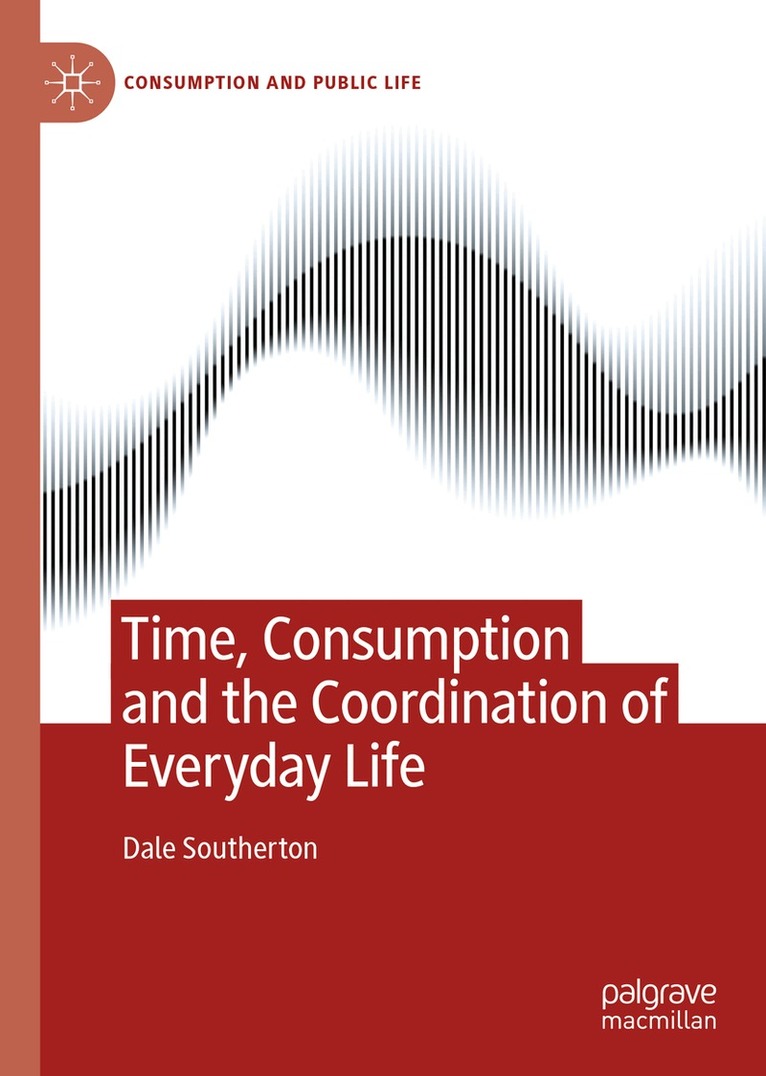
Time pressure, speed and the desire for instant consumption pervade accounts of contemporary lives. Why is it that people feel pressed for time, in what ways have societies changed to create this condition, and with what implications? This book examines critical contentions in the field of time and society, ranging from the emergence and dominance of ‘clock time’ and time discipline, the time pressures associated with consumer culture, through to technological innovation and the acceleration of everyday lives. Through extensive analysis of empirical studies of the changing ways in which people organise and experience home, work, leisure, consumption and personal relationships, time pressure is shown to be a problem of the coordination and synchronization of activities. Appreciation of temporal rhythms – formed and reproduced through the organisation and performance of social practices – is necessary to tackle the challenges of coordination, and offers new avenues for analysing social issues such as sustainable consumption, health and well-being. This book is essential reading for all of those interested in social change, consumption and time, including researchers and students from across the social sciences.
9 061 kr
Tillfälligt slut
The three-volume Encyclopedia of Consumer Culture covers consuming societies around the world, from the Age of Enlightenment to the present, and shows how consumption has become intrinsic to the world′s social, economic, political, and cultural landscapes. Offering an invaluable interdisciplinary approach, this reference work is a useful resource for researchers in sociology, political science, consumer science, global studies, comparative studies, business and management, human geography, economics, history, anthropology, and psychology. The first encyclopedia to outline the parameters of consumer culture, the Encyclopedia of Consumer Culture provides a critical, scholarly resource on consumption and consumerism over time. Some of the topics included are:Theories and conceptsSocio-economic change (i.e. social mobility)Socio-demographic change (i.e. immigration, aging)Identity and social differentiation (i.e. social networks)Media (i.e. broadcast media)Style and taste (i.e. fashion, youth culture)Mass consumptions (i.e. retail culture)Ethical Consumption (i.e. social movements)Civil society (i.e. consumer advocacy)Environment (i.e. sustainability)Domestic consumption (i.e. childhood, supermarkets)Leisure (i.e. sport, tourism)Technology (i.e. planned obsolescence)Work (i.e. post industrial society)Production (i.e. post fordism, global economy)Markets (i.e. branding)Institutions (i.e. religion)Welfare (i.e. reform, distribution of resources)Urban life (i.e. suburbs)
Sustainable Consumption
The Implications of Changing Infrastructures of Provision
Inbunden, Engelska, 2004
1 626 kr
Skickas inom 7-10 vardagar
Sustainable Consumption is unique, not just in its inter-disciplinary and substantive subject matter (changing networks of utility consumption and production), but because it examines empirically the key theoretical debates underpinning the social sciences at the beginning of the 21st century. This book shifts the focus of sustainable consumption away from the individual consumer and their lifestyles, and examines how existing systems of provision constrain how people consume and how sustainability is conceived in popular and policy-related discourses. The authors address a number of relevant and topical issues including: the relationship between production and consumption, with a focus on how each sphere configures the other; the escalation of choice and the emergence of differentiation in service provision and lifestyle orientation; the constraints on consumption that are embedded both in systems of provision and in the collective routines of everyday life; and the differential capacities of states, public agencies, social movements and commercial companies to facilitate sustainable consumption. In tackling these issues, the book advances the sustainable consumption agenda by highlighting the ways in which socio-technical and market regulatory arrangements at the systemic level increase opportunities for the gradual re-orientation of consumption habits across social groups and over time. This book offers a comprehensive evaluation of sustainable consumption in the context of infrastructure provision. The interdisciplinary nature and rigorous analysis will make it essential reading for scholars, students and policymakers interested in sustainability, sociology, culture, consumption patterns and the environment.