Dan Flores – författare
Visar alla böcker från författaren Dan Flores. Handla med fri frakt och snabb leverans.
8 produkter
8 produkter
182 kr
Skickas inom 7-10 vardagar
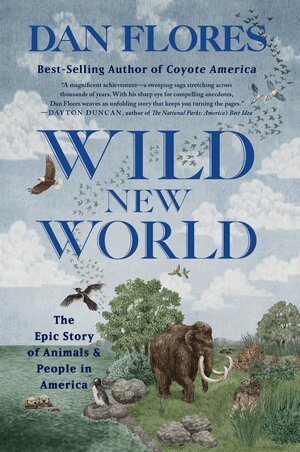
In 1908, near Folsom, New Mexico, a cowboy discovered the remains of a herd of extinct giant bison. By examining flint points embedded in the bones, archeologists later determined that a band of humans had killed and butchered the animals 12,450 years ago. This discovery vastly expanded America’s known human history but also revealed the long-standing danger Homo sapiens presented to the continent’s evolutionary richness.Distinguished author Dan Flores’s ambitious history chronicles the epoch in which humans and animals have coexisted in the “wild new world” of North America—a place shaped both by its own grand evolutionary forces and by momentous arrivals from Asia, Africa, and Europe. With portraits of iconic creatures such as mammoths, horses, wolves, and bison, Flores describes the evolution and historical ecology of North America like never before.The arrival of humans precipitated an extraordinary disruption of this teeming environment. Flores treats humans not as a species apart but as a new animal entering two continents that had never seen our likes before. He shows how our long past as carnivorous hunters helped us settle America, initially establishing a coast-to-coast culture that lasted longer than the present United States. But humanity’s success had devastating consequences for other creatures. In telling this epic story, Flores traces the origins of today’s “Sixth Extinction” to the spread of humans around the world; tracks the story of a hundred centuries of Native America; explains how Old World ideologies precipitated 400 years of market-driven slaughter that devastated so many ancient American species; and explores the decline and miraculous recovery of species in recent decades.In thrilling narrative style, informed by genomic science, evolutionary biology, and environmental history, Flores celebrates the astonishing bestiary that arose on our continent and introduces the complex human cultures and individuals who hastened its eradication, studied America’s animals, and moved heaven and earth to rescue them. Eons in scope and continental in scale, Wild New World is a sweeping yet intimate Big History of the animal-human story in America.
179 kr
Skickas inom 7-10 vardagar
With its uncanny night howls, unrivaled ingenuity, and amazing resilience, the coyote is the stuff of legends. In Indian folktales it often appears as a deceptive trickster or a sly genius. But legends don't come close to capturing the incredible survival story of the coyote. As soon as Americans--especially white Americans--began ranching and herding in the West, they began working to destroy the coyote. Despite campaigns of annihilation employing poisons, gases, helicopters, and engineered epidemics, coyotes didn't just survive, they thrived, expanding across the continent from Anchorage, Alaska, to New York's Central Park. In the war between humans and coyotes, coyotes have won hands-down.Coyote America is both an environmental and a deep natural history of the coyote. It traces both the five-million-year-long biological story of an animal that has become the "wolf" in our backyards, as well as its cultural evolution from a preeminent spot in Native American religions to the hapless foil of the Road Runner. A deeply American tale, the story of the coyote in the American West and beyond is a sort of Manifest Destiny in reverse, with a pioneering hero whose career holds up an uncanny mirror to the successes and failures of American expansionism.An illuminating biography of this extraordinary animal, Coyote America isn't just the story of an animal's survival--it is one of the great epics of our time.
435 kr
Skickas inom 10-15 vardagar
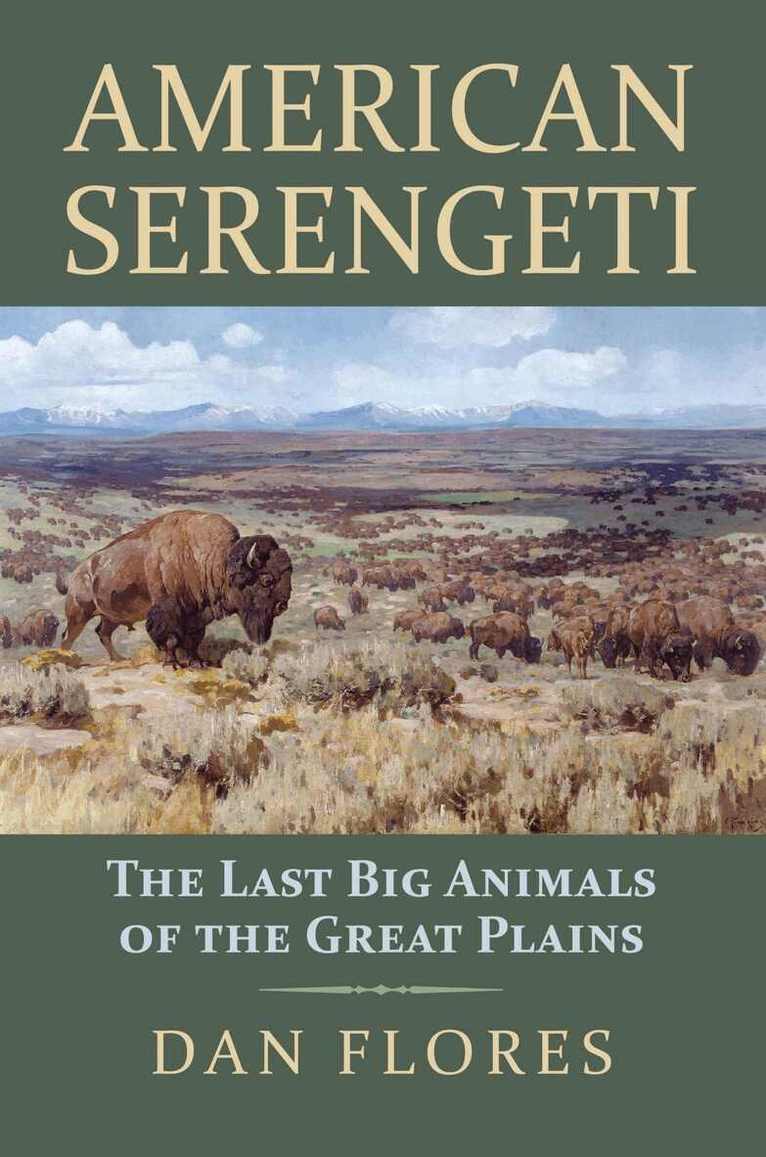
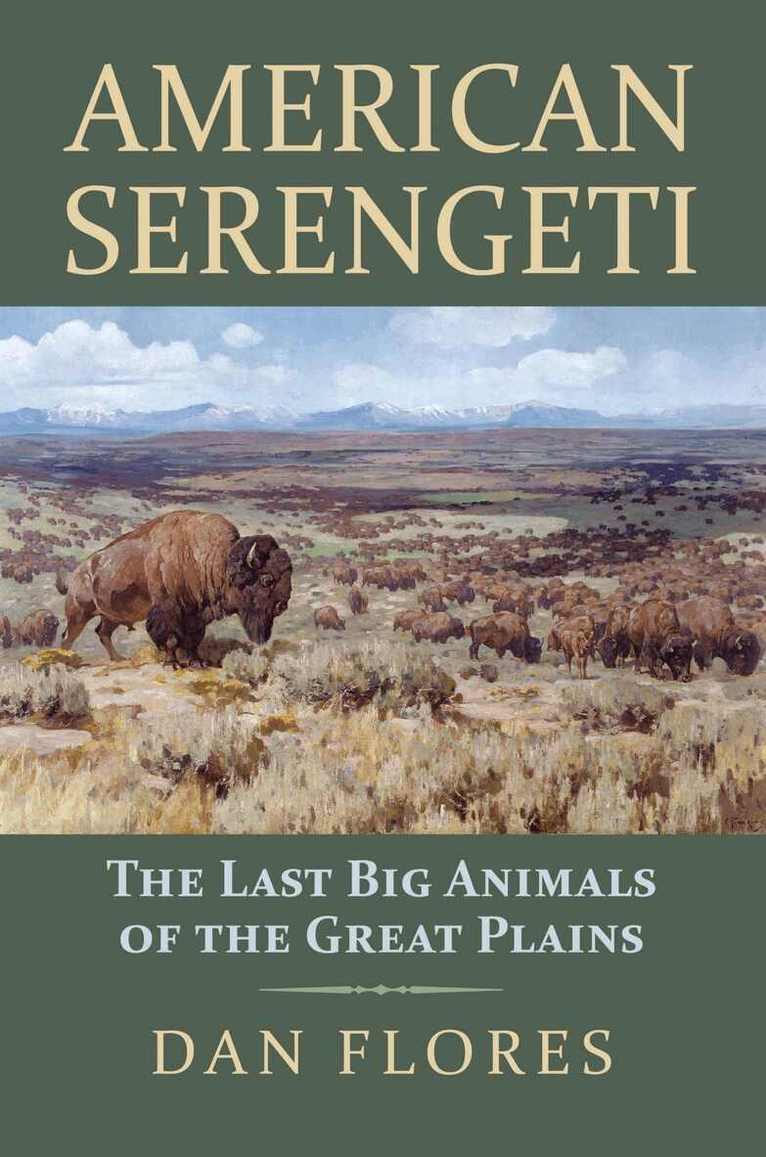
America’s Great Plains once possessed one of the grandest wildlife spectacles of the world, equaled only by such places as the Serengeti, the Masai Mara, or the veld of South Africa. Pronghornantelope, gray wolves, bison, coyotes, wild horses, and grizzly bears: less than two hundred years ago these creatures existed insuch abundance that John James Audubon was moved to write, “it is impossible to describe or even conceive the vast multitudesof these animals.”In a work that is at once a lyricalevocation of that lost splendor and a detailed natural history of these charismatic species of the historic Great Plains, veterannaturalist and outdoorsman Dan Flores draws a vivid portrait of each of these animals in their glory—and tells the harrowing story of what happened to them at the hands of market hunters and ranchersand ultimately a federal killing program in the nineteenth and twentieth centuries. The Great Plains with its wildlife intact dazzled Americans and Europeans alike, prompting numerous literary tributes. American Serengeti takes its place alongside these celebratory works, showing us the grazers and predators of the plains against the vast opalescent distances, the blue mountains shimmering on the horizon, the great rippling tracts of yellowed grasslands. Far from the empty “flyover country” of recent times, this landscape is alive with a complex ecology at least 20,000 years old—a continental patrimony whose wonders may not be entirely lost, as recent efforts hold out hope of partial restoration of these historic species.Written by an author who has done breakthrough work on the histories of several of these animals—including bison, wild horses, and coyotes—American Serengeti is as rigorous in its research as it isintimate in its sense of wonder—the most deeply informed, closely observed view we have of the Great Plains’ wild heritage.
269 kr
Skickas inom 10-15 vardagar
America’s Great Plains once possessed one of the grandest wildlife spectacles of the world, equaled only by such places as the Serengeti, the Masai Mara, or the veld of South Africa. Pronghorn antelope, gray wolves, bison, coyotes, wild horses, and grizzly bears: less than two hundred years ago these creatures existed in such abundance that John James Audubon was moved to write, “it is impossible to describe or even conceive the vast multitudes of these animals.”In a work that is at once a lyrical evocation of that lost splendor and a detailed natural history of these charismatic species of the historic Great Plains, veteran naturalist and outdoorsman Dan Flores draws a vivid portrait of each of these animals in their glory—and tells the harrowing story of what happened to them at the hands of market hunters and ranchers and ultimately a federal killing program in the nineteenth and twentieth centuries. The Great Plains with its wildlife intact dazzled Americans and Europeans alike, prompting numerous literary tributes. American Serengeti takes its place alongside these celebratory works, showing us the grazers and predators of the plains against the vast opalescent distances, the blue mountains shimmering on the horizon, the great rippling tracts of yellowed grasslands. Far from the empty “flyover country” of recent times, this landscape is alive with a complex ecology at least 20,000 years old—a continental patrimony whose wonders may not be entirely lost, as recent efforts hold out hope of partial restoration of these historic species.Written by an author who has done breakthrough work on the histories of several of these animals—including bison, wild horses, and coyotes—American Serengeti is as rigorous in its research as it is intimate in its sense of wonder—the most deeply informed, closely observed view we have of the Great Plains’ wild heritage.
Southern Counterpart to Lewis and Clark
The Freeman and Custis Expedition of 1806
Häftad, Engelska, 1986
241 kr
Skickas inom 10-15 vardagar
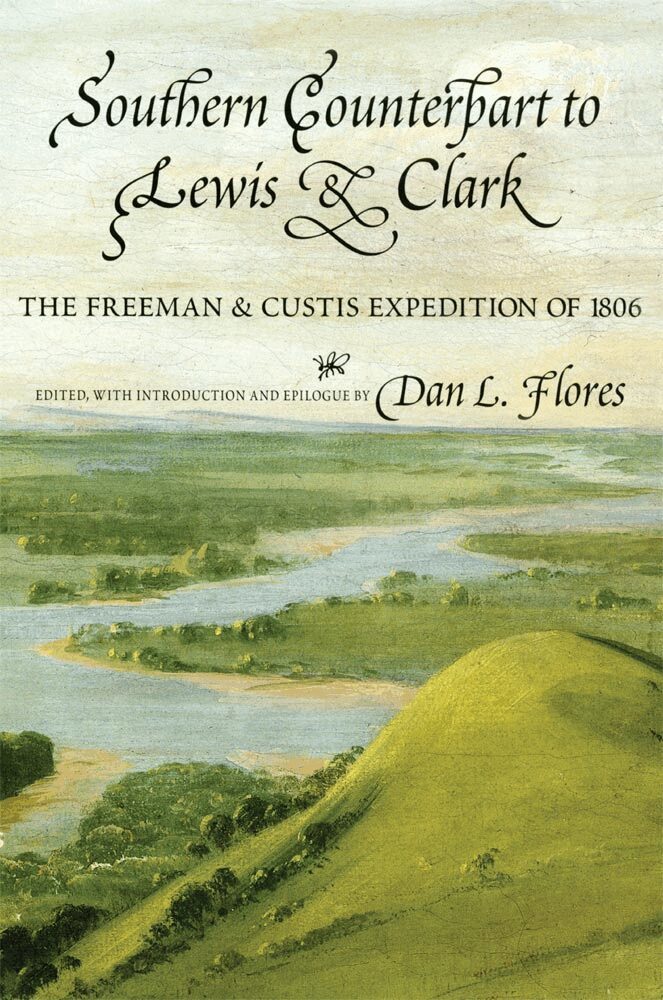
In 1806 President Thomas Jefferson sent cartographer Thomas Freeman and botanist Peter Custis to explore the southen Louisiana Purchase westward to the Rocky Moutnains. Stopped by a Spanish army in what is today extreme southern Oklahoma, they did not complete their mission. President Jefferson minimized their failure by focusing instead on the success of their northern counterparts Lewis and Clark. Hence the fame of Lewis and Clark and the virtual anonymity of Freeman and Custis-until now, thanks to editor Dan L. Flores.Dan Flores presents the primary documents created by Freeman and Custis during their ill-fated attempt to explore the Louisiana territory and areas west of the Mississippi in 1806.
234 kr
Skickas inom 10-15 vardagar
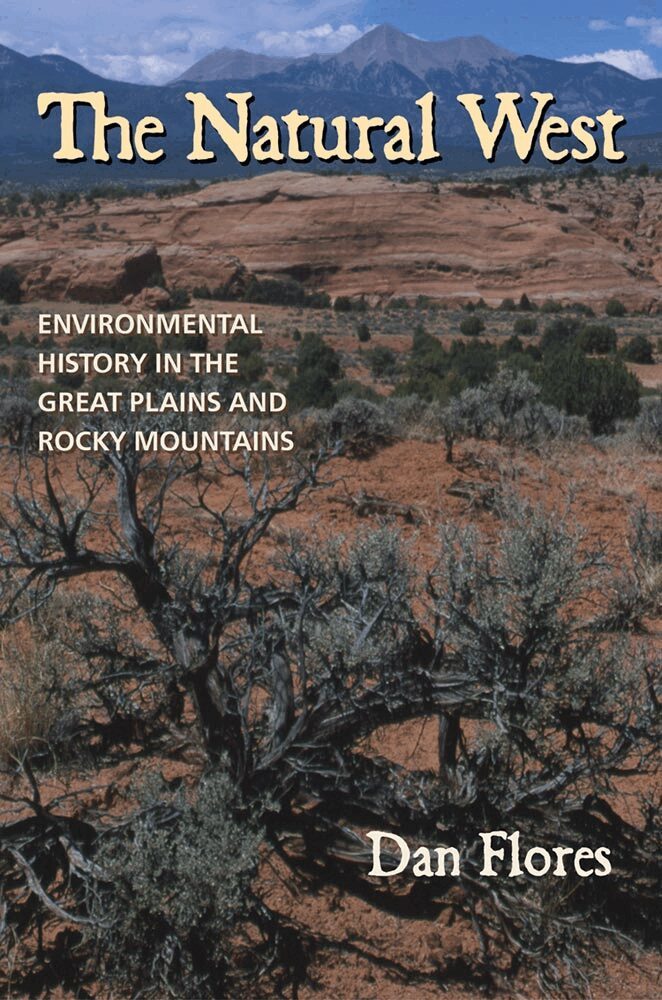
The Natural West offers essays reflecting the natural history of the American West as written by one of its most respected environmental historians. Developing a provocative theme, Dan Flores asserts that Western environmental history cannot be explained by examining place, culture, or policy alone, but should be understood within the context of a universal human nature.The Natural West entertains the notion that we all have a biological nature that helps explain some of our attitudes towards the environment. FLores also explains the ways in which various cultures-including the Comanches, New Mexico Hispanos, Mormons, Texans, and Montanans-interact with the environment of the West.Gracefully moving between the personal and the objective, Flores intersperses his writings with literature, scientific theory, and personal reflection. The topics cover a wide range-from historical human nature regarding animals and exploration, to the environmental histories of particular Western bioregions, and finally, to Western restoration as the great environmental theme of the twenty-first century.
310 kr
Skickas inom 7-10 vardagar
In 1908, near Folsom, New Mexico, a cowboy discovered the remains of a herd of extinct giant bison. By examining flint points embedded in the bones, archeologists later determined that a band of humans had killed and butchered the animals 12,450 years ago. This discovery vastly expanded America’s known human history but also revealed the long-standing danger Homo sapiens presented to the continent’s evolutionary richness.Distinguished author Dan Flores’s ambitious history chronicles the epoch in which humans and animals have coexisted in the “wild new world” of North America—a place shaped both by its own grand evolutionary forces and by momentous arrivals from Asia, Africa, and Europe. With portraits of iconic creatures such as mammoths, horses, wolves, and bison, Flores describes the evolution and historical ecology of North America like never before.The arrival of humans precipitated an extraordinary disruption of this teeming environment. Flores treats humans not as a species apart but as a new animal entering two continents that had never seen our likes before. He shows how our long past as carnivorous hunters helped us settle America, initially establishing a coast-to-coast culture that lasted longer than the present United States. But humanity’s success had devastating consequences for other creatures. In telling this epic story, Flores traces the origins of today’s “Sixth Extinction” to the spread of humans around the world; tracks the story of a hundred centuries of Native America; explains how Old World ideologies precipitated 400 years of market-driven slaughter that devastated so many ancient American species; and explores the decline and miraculous recovery of species in recent decades.In thrilling narrative style, informed by genomic science, evolutionary biology, and environmental history, Flores celebrates the astonishing bestiary that arose on our continent and introduces the complex human cultures and individuals who hastened its eradication, studied America’s animals, and moved heaven and earth to rescue them. Eons in scope and continental in scale, Wild New World is a sweeping yet intimate Big History of the animal-human story in America.
190 kr
Skickas inom 7-10 vardagar
Finalist for the PEN/E.O. Wilson Literary Science Writing Award"A masterly synthesis of scientific research and personal observation."-Wall Street JournalLegends don't come close to capturing the incredible survival story of the coyote. In the face of centuries of annihilation campaigns employing poisons, gases, helicopters, and bioweapons, coyotes didn't just survive, they thrived, expanding across North America from Alaska to Florida and New York, and now, as this new edition explores, to South America as well. In the war between humans and coyotes, coyotes have won hands-down.Coyote America traces both the five-million-year-long biological story of coyotes, as well as their cultural evolution from preeminence in Native American religions to haplessness before the Road Runner. A deeply American tale, the story of the coyote in the American West and then across the entire country is a sort of Manifest Destiny in reverse, with a pioneering hero whose career holds up an uncanny mirror to the successes and failures of American expansionism.An illuminating biography of an extraordinary animal, Coyote America is one of the great epics of our time.