Dan Healey – författare
Visar alla böcker från författaren Dan Healey. Handla med fri frakt och snabb leverans.
8 produkter
8 produkter
Häftad, Engelska, 2001
399 kr
Skickas inom 5-8 vardagar
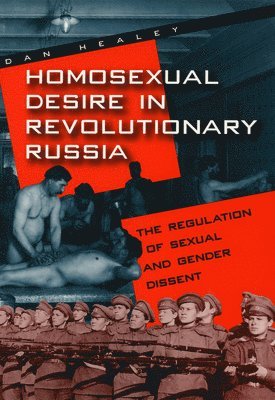
The first full-length study of same-sex love in any period of Russian or Soviet history, Homosexual Desire in Revolutionary Russia investigates the private worlds of sexual dissidents during the pivotal decades before and after the 1917 Bolshevik Revolution. Using records and archives available to researchers only since the fall of Communism, Dan Healey revisits the rich homosexual subcultures of St. Petersburg and Moscow, illustrating the ambiguous attitude of the late Tsarist regime and revolutionary rulers toward gay men and lesbians. Homosexual Desire in Revolutionary Russia reveals a world of ordinary Russians who lived extraordinary lives and records the voices of a long-silenced minority.
Inbunden, Engelska, 2025
1 213 kr
Skickas inom 5-8 vardagar
Other Voices in Soviet History identifies Soviet historian Lynne Viola’s critical methodological and thematic interventions in the study of Soviet history and builds on them through a selection of new research trajectories inspired by her thinking.The collection’s essays are oriented around three overlapping themes: listening to subaltern voices, challenging a rigid victim-perpetrator binary, and contesting dominant narratives. By looking beyond central archives, official collections, and traditional sources, the contributors convey peripheral and subaltern voices and uncover how state narratives overlaid, existed alongside, or ignored altogether voices from the many crevices of empire.Other Voices in Soviet History decentres Soviet history by examining how colonial mindsets, war, agency, identity, the proximity of various borders, and transnational interactions shaped political, social, and cultural dynamics in the Union of Soviet Socialist Republics.
Inbunden, Engelska, 2024
334 kr
Skickas inom 5-8 vardagar
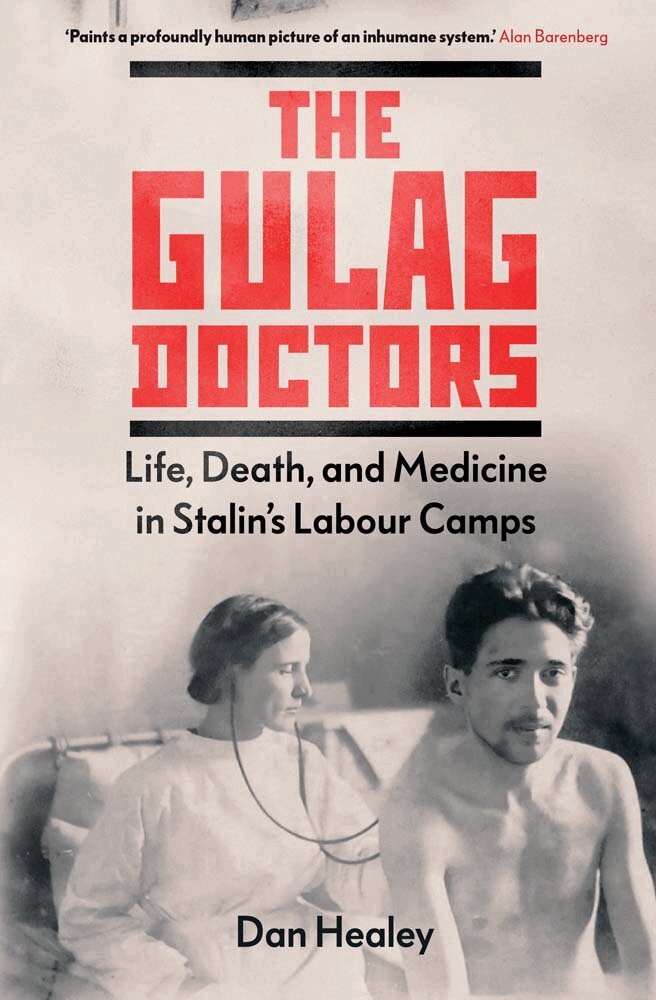
A pioneering history of medical care in Stalin’s Gulag—showing how doctors and nurses cared for inmates in appalling conditions A byword for injustice, suffering, and mass mortality, the Gulag exploited prisoners, compelling them to work harder for better rations in shocking conditions. From 1930 to 1953, eighteen million people passed through this penal-industrial empire. Many inmates, not reaching their quotas, succumbed to exhaustion, emaciation, and illness. It seems paradoxical that any medical care was available in the camps. But it was in fact ubiquitous. By 1939 the Gulag Sanitary Department employed 10,000 doctors, nurses and paramedics—about 40 percent of whom were prisoners. Dan Healey explores the lives of the medical staff who treated inmates in the Gulag. Doctors and nurses faced extremes of repression, supply shortages, and isolation. Yet they still created hospitals, re-fed prisoners, treated diseases, and “saved” a proportion of their patients. They taught apprentices and conducted research too. This groundbreaking account offers an unprecedented view of Stalin’s forced-labour camps as experienced by its medical staff.
Inbunden, Engelska, 2009
1 447 kr
Skickas inom 10-15 vardagar
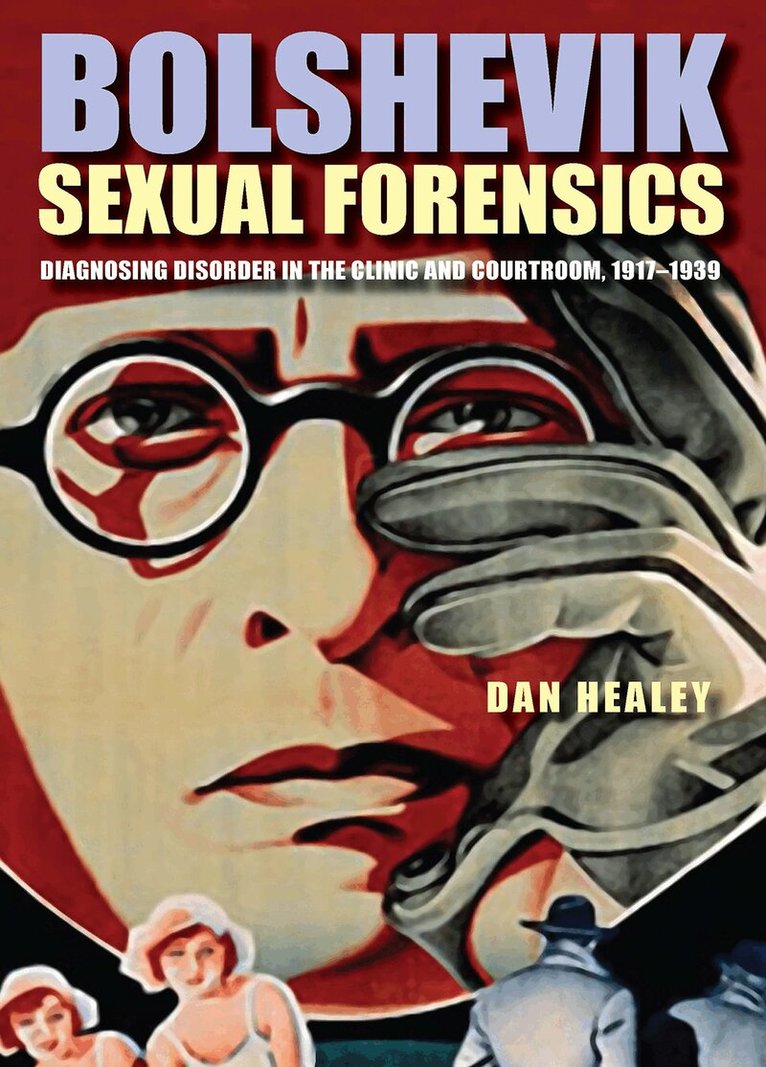
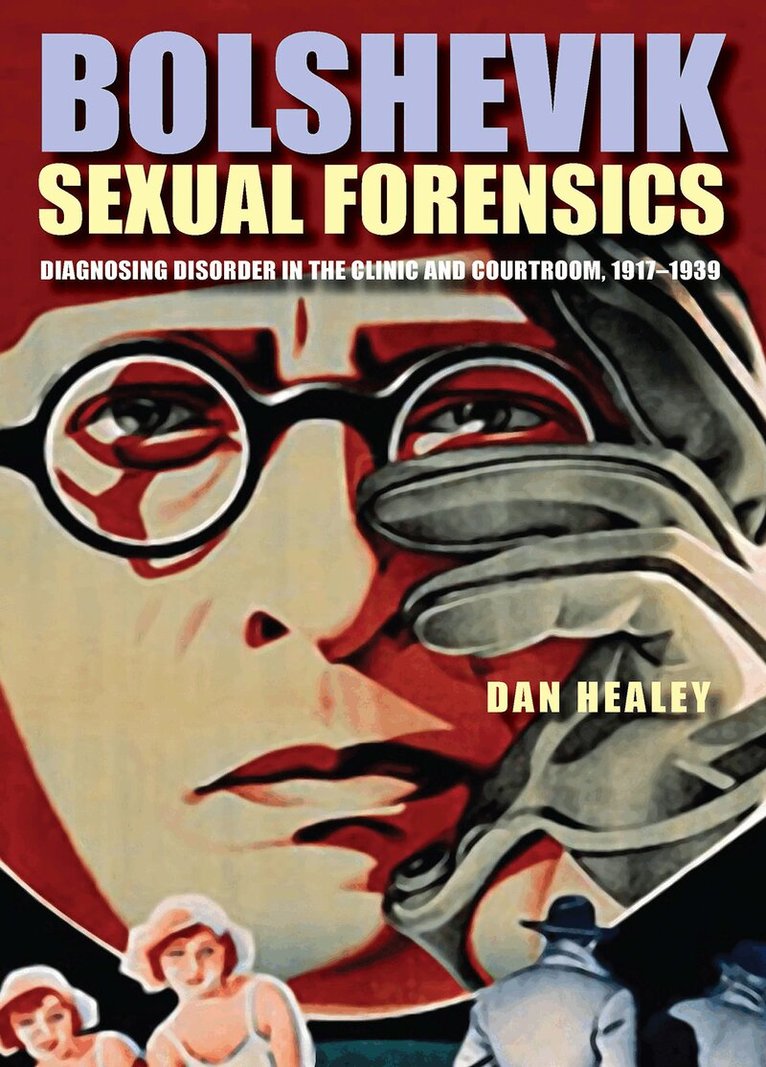
In an effort to modernize criminal and civil investigations, early Bolsheviks gave forensic doctors—most of whom had been trained under the tsarist regime—new authority over issues of sexuality. Revolutionaries believed that forensic medicine could provide scientific and objective solutions to sexual disorder in the new society. Bolshevik Sexual Forensics explores the institutional history of Russian and Soviet forensic medicine and examines the effects of its authority when confronting sexual disorder. Healey compares sex crime investigations from Petrograd and Sverdlovsk in the 1920s to the numerous publications by forensic doctors and psychiatrists of the prerevolutionary and early Soviet periods to illustrate the role that these specialists played. In addition, Healey presents a fascinating look at how doctors diagnosed and treated hermaphroditism, showing how Soviet physicians revolutionized the standard scientific view in these cases by taking into account individual desire.This study sheds light on unexplored radical and reactionary forces that shaped the Bolshevik "sexual revolution" as lawmakers defined new ways of seeing sexual crime and disorder. Forensic doctors struggled to interpret the replacement of the age of consent with a standard of "sexual maturity," a designation that made female sexuality a collective "resource," not part of an individual's personality. "Innocence," "experience," and virginity played a major role in the expertise doctors furnished in rape and abuse trials. Psychiatrists recoiled from the language of sexual psychology in their investigations of sex criminals. Yet in the clinic, Soviet physicians probed the desires of the two-sexed citizen, whose psychology served as the basis for a distinctly modern approach to the "erasure" of the hermaphrodite.Healey concludes that the vision of men and women as equals after a "sexual revolution" was undermined from the outset of the Soviet experiment. Law and medicine failed to protect women and girls from violence, and Soviet medicine's physiological and biological model of sexual citizenship erased the vision of sexual self-expression, especially for women. This groundbreaking study will appeal to Soviet historians and those interested in gender studies, sexuality, medicine, and forensics.
Inbunden, Engelska, 2010
481 kr
Skickas inom 10-15 vardagar
Thanks to the opening of archives and the forging of exchanges between Russian and Western scholars interested in the history of medicine, it is now possible to write new forms of social and political history in the Soviet medical field. Using the lenses of critical social histories of healthcare and medical science, and looking at both new material from Russian archives and interviews with those who experienced the Soviet health system, the contributors to this volume explore the ways experts and the Soviet state radically reshaped medical provision after the Revolution of 1917. Soviet Medicine presents the work of an international group of leading scholars. Twelve essays—treating subjects that span the 74-year history of the Soviet Union—cover such diverse topics as how epidemiologists handled plague on the Soviet borderlands in the revolutionary era, how venereologists fighting sexually transmitted disease struggled to preserve the patient's right to secrecy, and how Soviet forensic experts falsified the evidence of the Katyn Forest massacre of 1940. This important volume demonstrates the crucial role played by medical science, practice, and culture in the shaping of a modern Soviet Union and illustrates how the study of Soviet medical history can benefit historians of medicine, science, the Soviet Union, and social and gender historians.
Häftad, Engelska, 2017
396 kr
Skickas inom 10-15 vardagar
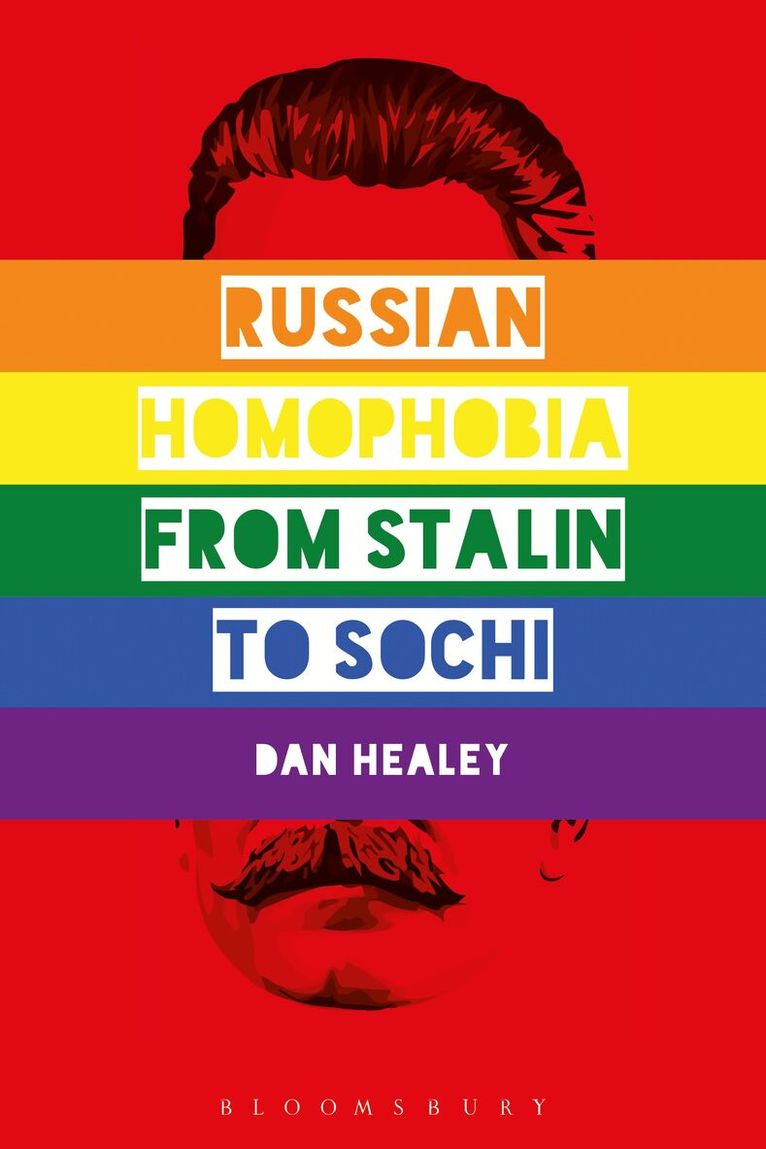
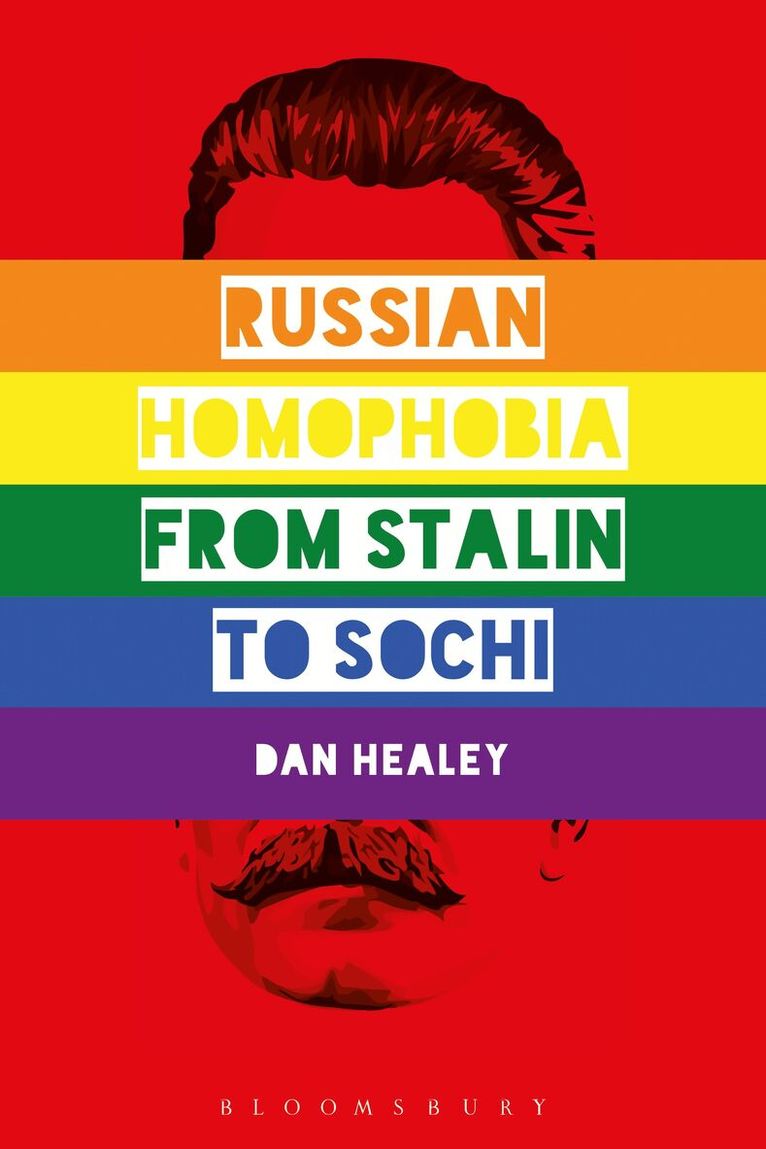
Examining nine ‘case histories’ that reveal the origins and evolution of homophobic attitudes in modern Russia, Dan Healey asserts that the nation’s contemporary homophobia can be traced back to the particular experience of revolution, political terror and war its people endured after 1917.The book explores the roots of homophobia in the Gulag, the rise of a visible queer presence in Soviet cities after Stalin, and the political battles since 1991 over whether queer Russians can be valued citizens. Healey also reflects on the problems of ‘memorylessness’ for Russia’s LGBT (lesbian, gay, bisexual and transgender) movement more broadly and the obstacles it faces in trying to write its own history. The book makes use of little-known source material - much of it untranslated archival documentation - to explore how Russians have viewed same-sex love and gender transgression since the mid-20th century.Russian Homophobia from Stalin to Sochi provides a compelling background to the culture wars over the status of LGBT citizens in Russia today, whilst serving as a key text for all students of modern Russia.
Inbunden, Engelska, 2017
1 328 kr
Skickas inom 10-15 vardagar
Examining nine ‘case histories’ that reveal the origins and evolution of homophobic attitudes in modern Russia, Dan Healey asserts that the nation’s contemporary homophobia can be traced back to the particular experience of revolution, political terror and war its people endured after 1917.The book explores the roots of homophobia in the Gulag, the rise of a visible queer presence in Soviet cities after Stalin, and the political battles since 1991 over whether queer Russians can be valued citizens. Healey also reflects on the problems of ‘memorylessness’ for Russia’s LGBT (lesbian, gay, bisexual and transgender) movement more broadly and the obstacles it faces in trying to write its own history. The book makes use of little-known source material - much of it untranslated archival documentation - to explore how Russians have viewed same-sex love and gender transgression since the mid-20th century.Russian Homophobia from Stalin to Sochi provides a compelling background to the culture wars over the status of LGBT citizens in Russia today, whilst serving as a key text for all students of modern Russia.
Häftad, Engelska, 2022
255 kr
Skickas inom 10-15 vardagar
In an effort to modernize criminal and civil investigations, early Bolsheviks gave forensic doctors—most of whom had been trained under the tsarist regime—new authority over issues of sexuality. Revolutionaries believed that forensic medicine could provide scientific and objective solutions to sexual disorder in the new society. Bolshevik Sexual Forensics explores the institutional history of Russian and Soviet forensic medicine and examines the effects of its authority when confronting sexual disorder. Healey compares sex crime investigations from Petrograd and Sverdlovsk in the 1920s to the numerous publications by forensic doctors and psychiatrists of the prerevolutionary and early Soviet periods to illustrate the role that these specialists played. In addition, Healey presents a fascinating look at how doctors diagnosed and treated hermaphroditism, showing how Soviet physicians revolutionized the standard scientific view in these cases by taking into account individual desire.This study sheds light on unexplored radical and reactionary forces that shaped the Bolshevik "sexual revolution" as lawmakers defined new ways of seeing sexual crime and disorder. Forensic doctors struggled to interpret the replacement of the age of consent with a standard of "sexual maturity," a designation that made female sexuality a collective "resource," not part of an individual's personality. "Innocence," "experience," and virginity played a major role in the expertise doctors furnished in rape and abuse trials. Psychiatrists recoiled from the language of sexual psychology in their investigations of sex criminals. Yet in the clinic, Soviet physicians probed the desires of the two-sexed citizen, whose psychology served as the basis for a distinctly modern approach to the "erasure" of the hermaphrodite.Healey concludes that the vision of men and women as equals after a "sexual revolution" was undermined from the outset of the Soviet experiment. Law and medicine failed to protect women and girls from violence, and Soviet medicine's physiological and biological model of sexual citizenship erased the vision of sexual self-expression, especially for women. This groundbreaking study will appeal to Soviet historians and those interested in gender studies, sexuality, medicine, and forensics.