An area of 6 ha just east of Kempsford was examined in 2000-2001 in advance of gravel extraction. The site saw little archaeologically detectable activity before the late Iron Age or possibly a little later, when a ditched field system was established. This was superseded in the early Roman period by a very regular layout of trackways, linking nearby settlements (just outside the excavated area) with wider field systems. After a hiatus of uncertain duration in the 3rd century the principle trackway was re-established, by which time the adjacent settlements we probably out of use though a substantial post-built stockade was contemporary with this late trackway. Environmental evidence suggests an emphasis on pastoral agriculture, and horse bones were prominent in the small animal remains assemblage. Track junction and other locations were used intermittently throughout the Roman period for burial. The chronology and apparently planned character of the Roman layout from the early 2nd century are discussed in the context of wider developments in settlement patterns in the region.
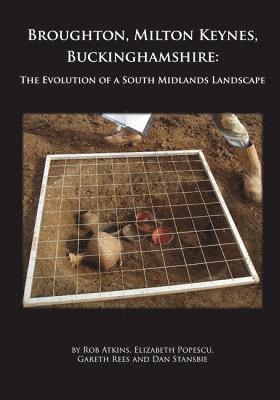
Extensive excavations near the village of Broughton, which lies on the outskirts of Milton Keynes, revealed the fluctuating fortunes of neighbouring settlements from the Iron Age to the medieval period. A middle Iron Age ‘hamlet’ was succeeded in the 1st century BC by various farmsteads which were at their height in the early Roman period. Associated with these were richly furnished cremation cemeteries of Aylesford(-Swarling) type, with burial continuing into the Romano-British period. The cemeteries provide the largest group of such burials yet found in Buckinghamshire and reflect the position of Broughton within the territory of the Catuvellauni. Cremation burial ceased in the mid 2nd century and two of the farmsteads were abandoned soon afterwards. The main settlement continued to develop during the late Roman period, while a new farmstead nearby survived into the early 5th century. Elsewhere, a cluster of sunken-featured buildings yielded early Saxon pottery in Roman form and possible feasting waste. These settlements were in turn abandoned, to be replaced after the Norman Conquest by a farmstead and surrounding ridge and furrow field system which formed an outlying part of the village that had, by the time of Domesday, taken the name of Broughton – ‘the farm or settlement by the brook’.
An area of 6 ha just east of Kempsford was examined in 2000-2001 in advance of gravel extraction. The site saw little archaeologically detectable activity before the late Iron Age or possibly a little later, when a ditched field system was established. This was superseded in the early Roman period by a very regular layout of trackways, linking nearby settlements (just outside the excavated area) with wider field systems. After a hiatus of uncertain duration in the 3rd century the principle trackway was re-established, by which time the adjacent settlements we probably out of use though a substantial post-built stockade was contemporary with this late trackway. Environmental evidence suggests an emphasis on pastoral agriculture, and horse bones were prominent in the small animal remains assemblage. Track junction and other locations were used intermittently throughout the Roman period for burial. The chronology and apparently planned character of the Roman layout from the early 2nd century are discussed in the context of wider developments in settlement patterns in the region.
Extensive excavations near the village of Broughton, which lies on the outskirts of Milton Keynes, revealed the fluctuating fortunes of neighbouring settlements from the Iron Age to the medieval period. A middle Iron Age ‘hamlet’ was succeeded in the 1st century BC by various farmsteads which were at their height in the early Roman period. Associated with these were richly furnished cremation cemeteries of Aylesford(-Swarling) type, with burial continuing into the Romano-British period. The cemeteries provide the largest group of such burials yet found in Buckinghamshire and reflect the position of Broughton within the territory of the Catuvellauni. Cremation burial ceased in the mid 2nd century and two of the farmsteads were abandoned soon afterwards. The main settlement continued to develop during the late Roman period, while a new farmstead nearby survived into the early 5th century. Elsewhere, a cluster of sunken-featured buildings yielded early Saxon pottery in Roman form and possible feasting waste. These settlements were in turn abandoned, to be replaced after the Norman Conquest by a farmstead and surrounding ridge and furrow field system which formed an outlying part of the village that had, by the time of Domesday, taken the name of Broughton – ‘the farm or settlement by the brook’.