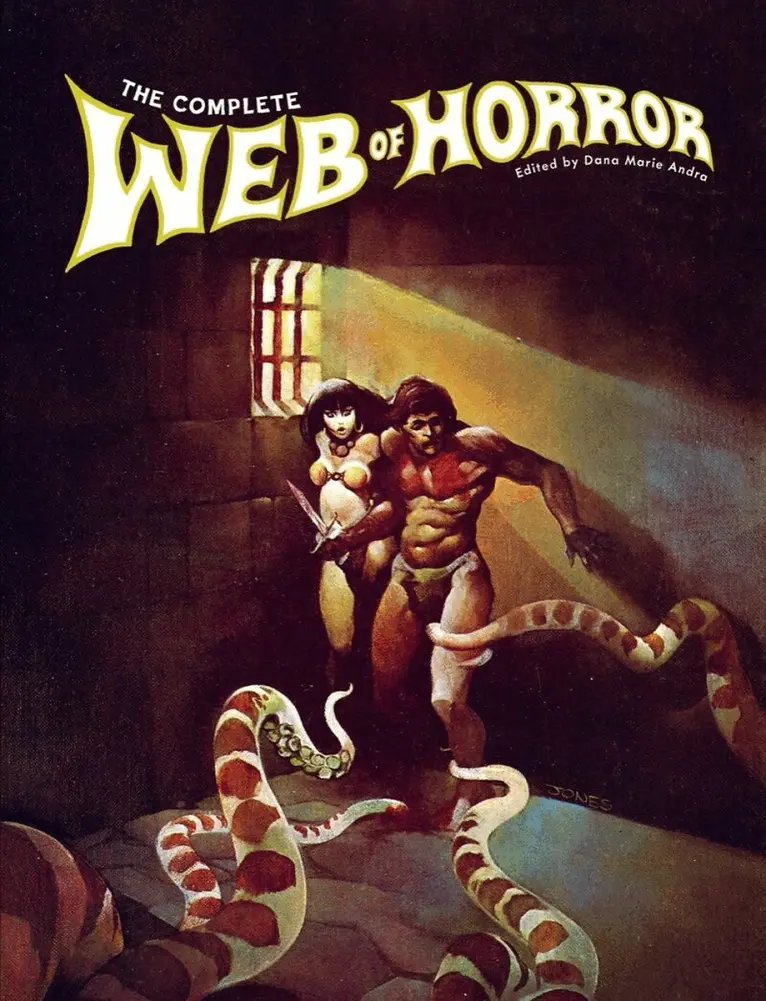
In 1969, a feisty new comics magazine emerged to rival the popular horror magazines Creepy and Eerie: Web of Horror. Conceived by a plucky, independent publisher, Web of Horror showcased instant classics of horror and science fiction by such rising stars of comic art as Bernie Wrightson, Michael Kaluta, Bruce Jones, Ralph Reese, Frank Brunner, Roger Brand, and Wayne Howard, as well as seasoned veterans such as Syd Shores and Norman Nodel, illustrating stories written by Otto Binder, Nicola Cuti, and others. Now, over 50 years later, Fantagraphics presents the complete Web of Horror in one expertly edited and designed volume. In addition to all three published issues, this collection includes over a dozen stories intended for subsequent issues that have been rarely or never-before published, several long thought to be lost and recently unearthed. Among these 'lost' stories is Wrightson's 'The Monster Jar,' lovingly restored by Frederic Manzano. The Complete Web Of Horror also features a wealth of historical and contextual essays, including the Foreword by original Web of Horror editor and science fiction novelist Terry Bisson; an account of the magazine's origin by the late Clark Dimond; the history of the magazine's rise and baffling demise by collection editor Dana Marie Andra; reminiscences by fanzine publishers Robert Lewis and Robert Gerson; and an Afterword by Richard J. Arndt.
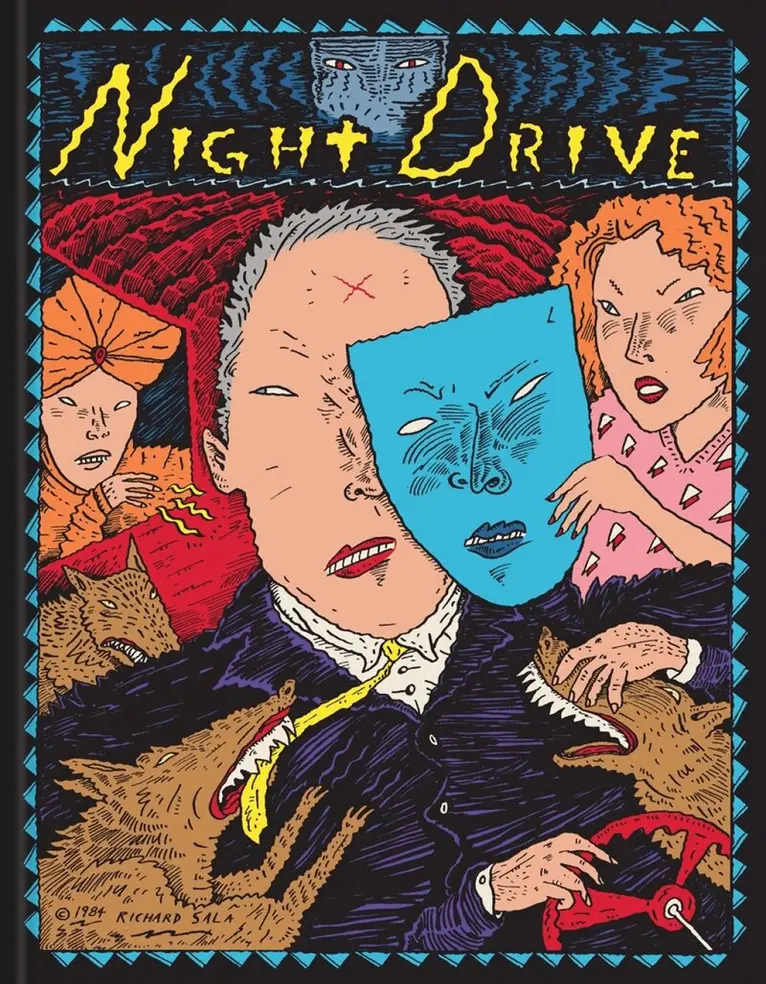
When Richard Sala passed away in 2020, he left behind a uniquely eldritch body of graphic novels and illustrations, fuelled by macabre whimsy and a love of dark mysteries and vintage monsters. Like David Lynch, Sala was a painter who turned to a storytelling medium that allowed him to create inventive narratives inspired by such disparate influences as French crime fiction, the grim humour of Charles Addams, the surreal poetry of Jorge Luis Borges, and his own penchant for all things gleefully ghoulish and sinister. Originally self-published in an edition of 500 copies in 1984, Night Drive collects several short stories inspired directly by pulp magazines, film noir, and Andre Breton - sinister and creepy pieces heavy on the atmosphere and signalling the creative emergence of a singular talent finding his footing with the surety of an artist equipped with the innate mastery of his craft and vision. Night Drive directly led to Sala contributing to Art Spiegelman and Francoise Mouly's Raw and the adaptation of Night Drive's 'Invisible Hands' for MTV's Liquid Television, sparking an almost 40-year career as one of comics' finest creators and idiosyncratic creators. Edited by longtime Sala friend Dana Marie Andra (Web of Horror) and designed by Sala's friend and fellow cartoonist Daniel Clowes (Monica, Ghost World), who also contributes the Afterword, this graphic novella is rounded out with rare artwork, interviews with Sala about the book, and an essay by Andra.
In 1969, a feisty new comics magazine emerged to rival the popular horror magazines Creepy and Eerie: Web of Horror. Conceived by a plucky, independent publisher, Web of Horror showcased instant classics of horror and science fiction by such rising stars of comic art as Bernie Wrightson, Michael Kaluta, Bruce Jones, Ralph Reese, Frank Brunner, Roger Brand, and Wayne Howard, as well as seasoned veterans such as Syd Shores and Norman Nodel, illustrating stories written by Otto Binder, Nicola Cuti, and others. Now, over 50 years later, Fantagraphics presents the complete Web of Horror in one expertly edited and designed volume. In addition to all three published issues, this collection includes over a dozen stories intended for subsequent issues that have been rarely or never-before published, several long thought to be lost and recently unearthed. Among these 'lost' stories is Wrightson's 'The Monster Jar,' lovingly restored by Frederic Manzano. The Complete Web Of Horror also features a wealth of historical and contextual essays, including the Foreword by original Web of Horror editor and science fiction novelist Terry Bisson; an account of the magazine's origin by the late Clark Dimond; the history of the magazine's rise and baffling demise by collection editor Dana Marie Andra; reminiscences by fanzine publishers Robert Lewis and Robert Gerson; and an Afterword by Richard J. Arndt.
When Richard Sala passed away in 2020, he left behind a uniquely eldritch body of graphic novels and illustrations, fuelled by macabre whimsy and a love of dark mysteries and vintage monsters. Like David Lynch, Sala was a painter who turned to a storytelling medium that allowed him to create inventive narratives inspired by such disparate influences as French crime fiction, the grim humour of Charles Addams, the surreal poetry of Jorge Luis Borges, and his own penchant for all things gleefully ghoulish and sinister. Originally self-published in an edition of 500 copies in 1984, Night Drive collects several short stories inspired directly by pulp magazines, film noir, and Andre Breton - sinister and creepy pieces heavy on the atmosphere and signalling the creative emergence of a singular talent finding his footing with the surety of an artist equipped with the innate mastery of his craft and vision. Night Drive directly led to Sala contributing to Art Spiegelman and Francoise Mouly's Raw and the adaptation of Night Drive's 'Invisible Hands' for MTV's Liquid Television, sparking an almost 40-year career as one of comics' finest creators and idiosyncratic creators. Edited by longtime Sala friend Dana Marie Andra (Web of Horror) and designed by Sala's friend and fellow cartoonist Daniel Clowes (Monica, Ghost World), who also contributes the Afterword, this graphic novella is rounded out with rare artwork, interviews with Sala about the book, and an essay by Andra.