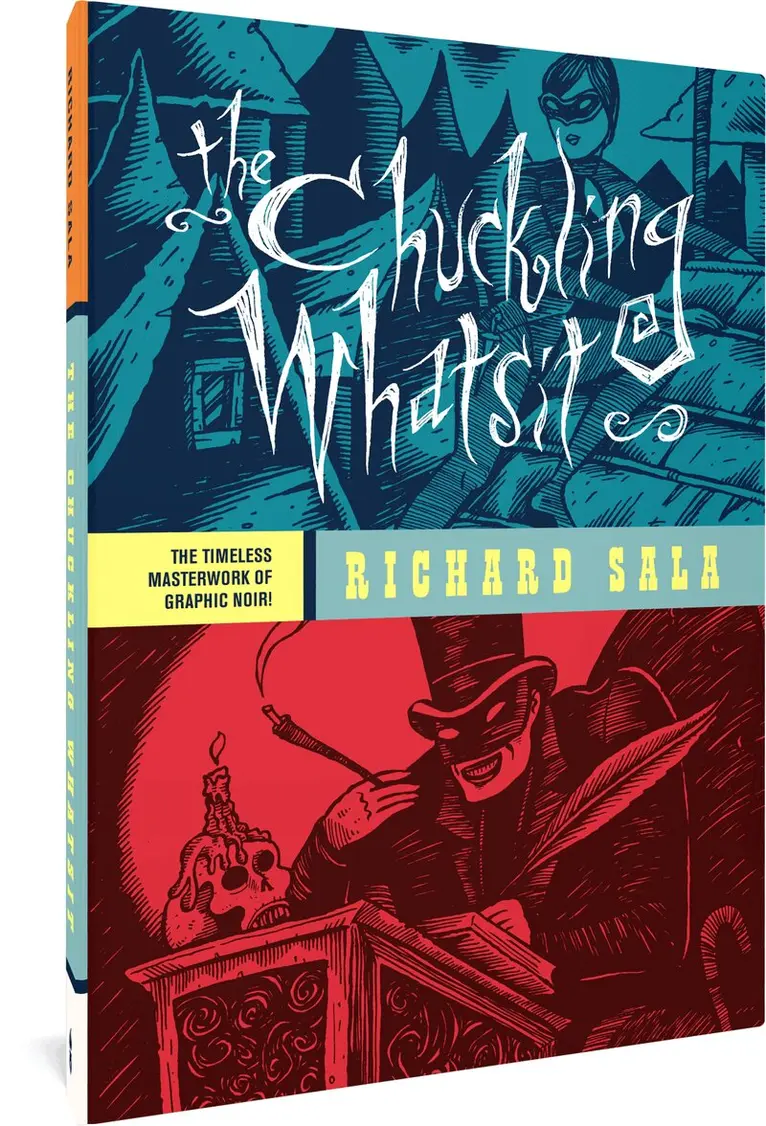
Sala weaves the gothic cartooning traditions of Edward Gorey and Charles Addams with an ingeniously constructed, melodramatic murder mystery involving astrology, ghouls, academia, and outsider art. Part noir, part horror, and part comedy, this labyrinthian tale of intrigue follows an unemployed writer named Broom who becomes ensnared unwittingly in a complex plot involving mysterious outsider artist Emile Jarnac, the shadowy machinations of the Ghoul Appreciation Society Headquarters (GASH), and the enigmatic Mr. Ixnay. Sala's deadpan delivery makes this ingeniously layered narrative a roller-coaster ride of darkly pure comic suspense. Sala's drawing style also reveals the influence of everything from Hollywood monster movies and Dick Tracy to German expressionism and Grimm's fairy tales. It's a style that's perfectly suited to the narrative, constantly flirting with Sala's fascination for the grotesque and lending palpable tension to the gruesome riddle of The Chuckling Whatsit.
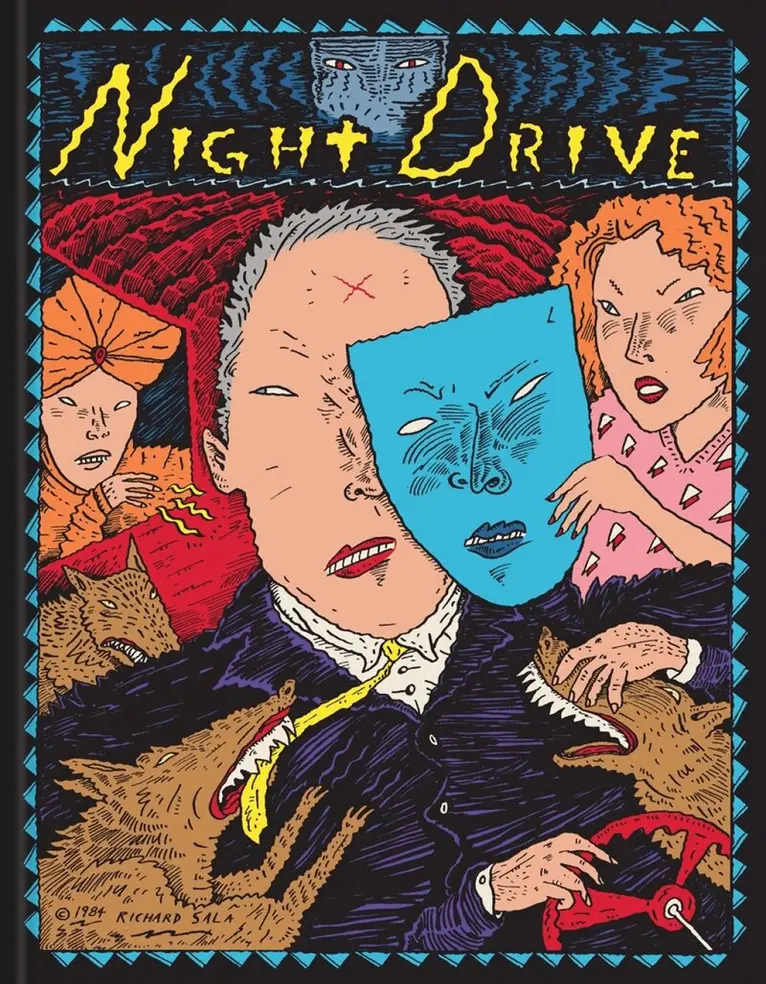
When Richard Sala passed away in 2020, he left behind a uniquely eldritch body of graphic novels and illustrations, fuelled by macabre whimsy and a love of dark mysteries and vintage monsters. Like David Lynch, Sala was a painter who turned to a storytelling medium that allowed him to create inventive narratives inspired by such disparate influences as French crime fiction, the grim humour of Charles Addams, the surreal poetry of Jorge Luis Borges, and his own penchant for all things gleefully ghoulish and sinister. Originally self-published in an edition of 500 copies in 1984, Night Drive collects several short stories inspired directly by pulp magazines, film noir, and Andre Breton - sinister and creepy pieces heavy on the atmosphere and signalling the creative emergence of a singular talent finding his footing with the surety of an artist equipped with the innate mastery of his craft and vision. Night Drive directly led to Sala contributing to Art Spiegelman and Francoise Mouly's Raw and the adaptation of Night Drive's 'Invisible Hands' for MTV's Liquid Television, sparking an almost 40-year career as one of comics' finest creators and idiosyncratic creators. Edited by longtime Sala friend Dana Marie Andra (Web of Horror) and designed by Sala's friend and fellow cartoonist Daniel Clowes (Monica, Ghost World), who also contributes the Afterword, this graphic novella is rounded out with rare artwork, interviews with Sala about the book, and an essay by Andra.
Sala weaves the gothic cartooning traditions of Edward Gorey and Charles Addams with an ingeniously constructed, melodramatic murder mystery involving astrology, ghouls, academia, and outsider art. Part noir, part horror, and part comedy, this labyrinthian tale of intrigue follows an unemployed writer named Broom who becomes ensnared unwittingly in a complex plot involving mysterious outsider artist Emile Jarnac, the shadowy machinations of the Ghoul Appreciation Society Headquarters (GASH), and the enigmatic Mr. Ixnay. Sala's deadpan delivery makes this ingeniously layered narrative a roller-coaster ride of darkly pure comic suspense. Sala's drawing style also reveals the influence of everything from Hollywood monster movies and Dick Tracy to German expressionism and Grimm's fairy tales. It's a style that's perfectly suited to the narrative, constantly flirting with Sala's fascination for the grotesque and lending palpable tension to the gruesome riddle of The Chuckling Whatsit.
When Richard Sala passed away in 2020, he left behind a uniquely eldritch body of graphic novels and illustrations, fuelled by macabre whimsy and a love of dark mysteries and vintage monsters. Like David Lynch, Sala was a painter who turned to a storytelling medium that allowed him to create inventive narratives inspired by such disparate influences as French crime fiction, the grim humour of Charles Addams, the surreal poetry of Jorge Luis Borges, and his own penchant for all things gleefully ghoulish and sinister. Originally self-published in an edition of 500 copies in 1984, Night Drive collects several short stories inspired directly by pulp magazines, film noir, and Andre Breton - sinister and creepy pieces heavy on the atmosphere and signalling the creative emergence of a singular talent finding his footing with the surety of an artist equipped with the innate mastery of his craft and vision. Night Drive directly led to Sala contributing to Art Spiegelman and Francoise Mouly's Raw and the adaptation of Night Drive's 'Invisible Hands' for MTV's Liquid Television, sparking an almost 40-year career as one of comics' finest creators and idiosyncratic creators. Edited by longtime Sala friend Dana Marie Andra (Web of Horror) and designed by Sala's friend and fellow cartoonist Daniel Clowes (Monica, Ghost World), who also contributes the Afterword, this graphic novella is rounded out with rare artwork, interviews with Sala about the book, and an essay by Andra.