Dana Statton Thompson – författare
Visar alla böcker från författaren Dana Statton Thompson. Handla med fri frakt och snabb leverans.
3 produkter
3 produkter
Connecting Visual Literacy to Theory
Revisiting the Disruptions of Visual Thinkers in Education and Beyond
Häftad, Engelska, 2024
601 kr
Skickas inom 10-15 vardagar
This volume seeks to close the gap between education systems across the world that remain systematically devoted to understanding our world through text rather than images.Through an exploration of the contributions of well- and lesser-known visual thinkers from across disciplines and geographies, the contributors offer contemporary appraisals and modern re-conceptualizations of the subject. The book illuminates how experts from various disciplines ranging from art, communication, education, and philosophy laid the foundations for what we know today as visual literacy. These foundations and innovative ways of thinking and understanding images have been disruptive, but until now, have been relatively understudied. As such, the chapters examine the context of individual thinkers, expanding upon famous theories and providing new insight into why these visual and cognitive processes are imperative to learning and education and to disciplines spanning art history, museum studies, philosophy, photography, and more. The authors, all members of the International Visual Literacy Association (IVLA), are committed to advancing the study of visual literacy by raising new questions and proposing new routes of inquiry.A unique and timely exploration of the way we derive meaning from what we see and how we interact with our visual environment, it will appeal to researchers, scholars, and educators from a range of interdisciplinary backgrounds across art, art education, art history, design, information science, photography and visual communication.
Connecting Visual Literacy to Theory
Revisiting the Disruptions of Visual Thinkers in Education and Beyond
Inbunden, Engelska, 2024
2 053 kr
Skickas inom 10-15 vardagar
This volume seeks to close the gap between education systems across the world that remain systematically devoted to understanding our world through text rather than images.Through an exploration of the contributions of well- and lesser-known visual thinkers from across disciplines and geographies, the contributors offer contemporary appraisals and modern re-conceptualizations of the subject. The book illuminates how experts from various disciplines ranging from art, communication, education, and philosophy laid the foundations for what we know today as visual literacy. These foundations and innovative ways of thinking and understanding images have been disruptive, but until now, have been relatively understudied. As such, the chapters examine the context of individual thinkers, expanding upon famous theories and providing new insight into why these visual and cognitive processes are imperative to learning and education and to disciplines spanning art history, museum studies, philosophy, photography, and more. The authors, all members of the International Visual Literacy Association (IVLA), are committed to advancing the study of visual literacy by raising new questions and proposing new routes of inquiry.A unique and timely exploration of the way we derive meaning from what we see and how we interact with our visual environment, it will appeal to researchers, scholars, and educators from a range of interdisciplinary backgrounds across art, art education, art history, design, information science, photography and visual communication.
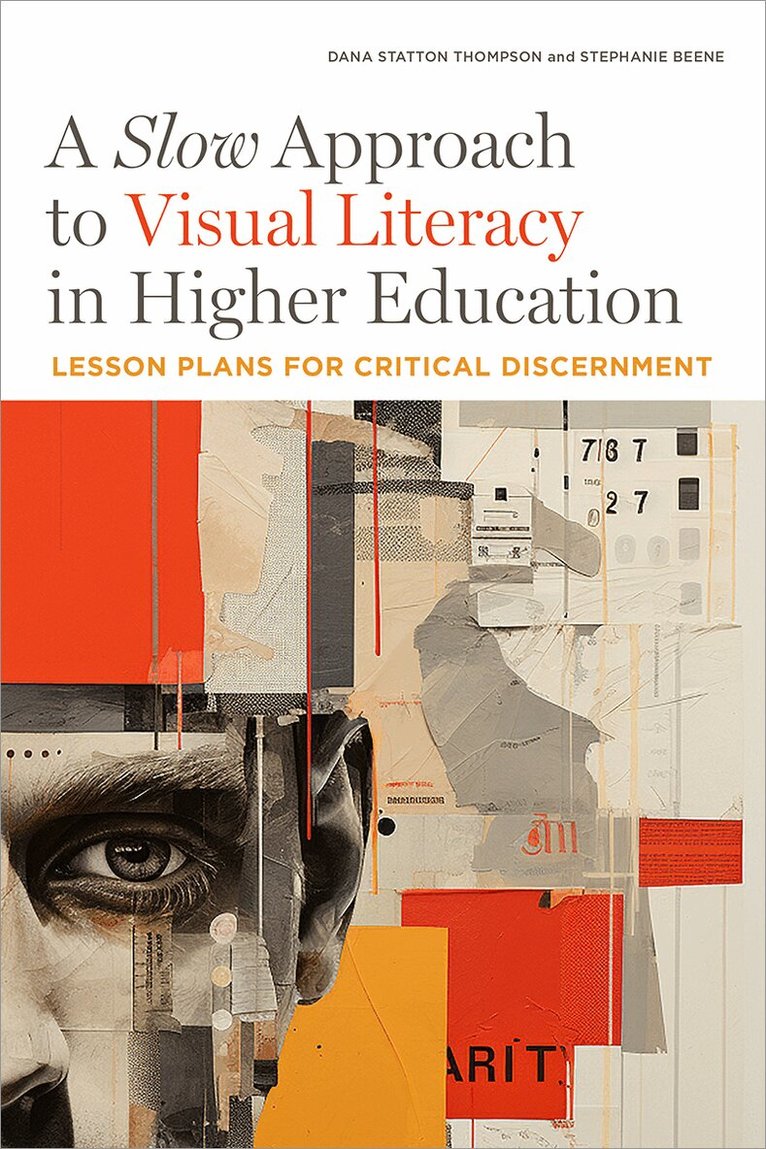
Slow Approach to Visual Literacy in Higher Education
Lesson Plans for Critical Discernment
Häftad, Engelska, 2024
789 kr
Skickas inom 3-6 vardagar
The principles of “slow librarianship”—which prioritizes reflection, collaboration, solidarity, and valuing all kinds of contributions—can also support deeper and more sustained learning and understanding. This book emphasizes the importance of attention and focus to the process of visual literacy, demonstrating how this approach supports ACRL’s Visual Literacy Competency Standards for Higher Education and the Framework for Visual Literacy in Higher Education. Library workers, educators, and instructors will discover dozens of flexible lesson plans for teaching visual literacy, scaffolded by competency levels: novice, intermediate, and advanced; ways to integrate slow looking into the classroom, emphasizing careful observation and the sustained act of looking; techniques for showing learners how to select images with intention, as well as carefully determine when and how to share those images; reasons why slow creating is essential to understanding and applying visual literacy in the twenty-first century; and a look at how increasing access to internet connectivity, generative artificial intelligence (AI), and new ethics for sharing and using information online will affect the future of visual literacy.