
Danelle D. Larson – författare
Visar alla böcker från författaren . Handla med fri frakt och snabb leverans.
2 produkter
2 produkter
Inbunden, Engelska, 2026
1 442 kr
Skickas inom 10-15 vardagar
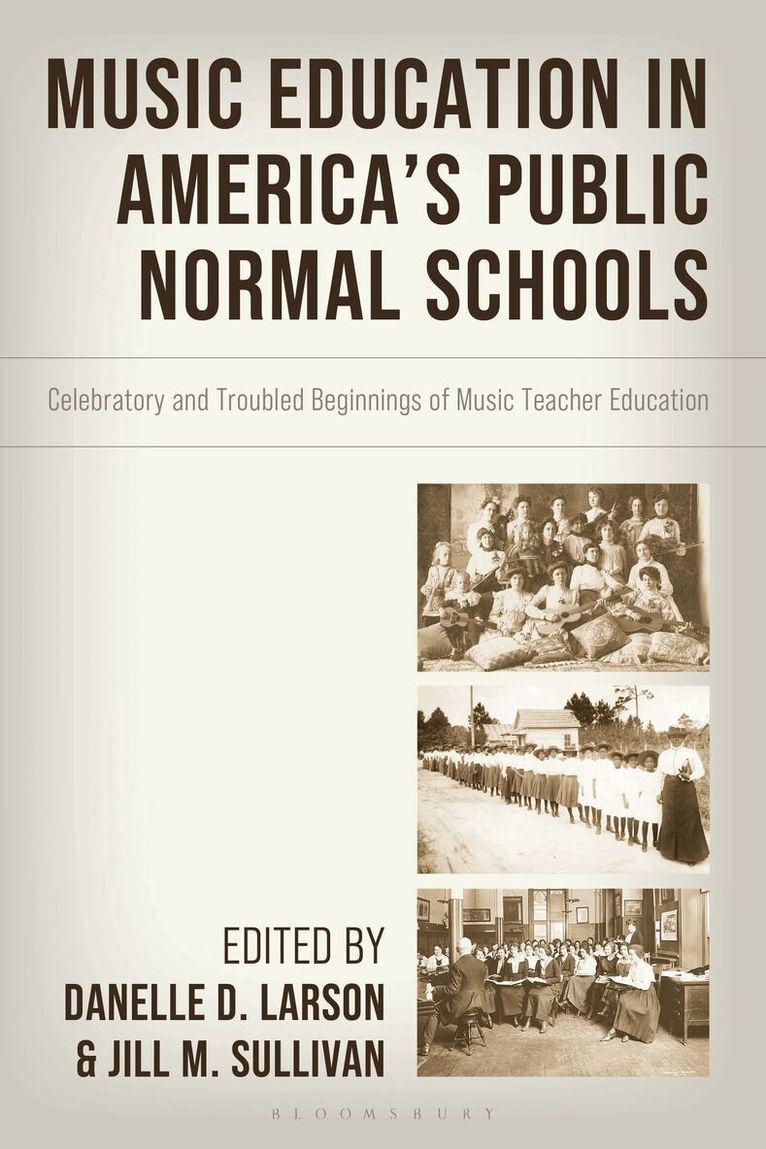
This book provides a history of music education (1839–1960), capturing the beginning of music participation and engagement in many of the public universities that started as normal schools.The normal schools of the 19th and 20th centuries each had their own identity, curricular policies, networks of stakeholders, music education coursework, and collaborative-performing opportunities. The contributing authors argue that arts education, specifically music, was part of the curriculum in the first public normal schools in America, which provided rich democratic arts experiences to its teacher-education students. Their embodied music experiences would live on to impact music teaching and learning curriculum not only in the k-12 schools where they taught, but nearly two centuries of music education in the colleges and universities from which they stem.
E-bok
Engelska, 20261 558 kr
Läs direkt efter köp
Capturing the beginning of music participation and engagement in many of the public universities that started as normal schools, this book provides a history of American music education in the 19th and 20th centuries.American music-teacher education evolved from teacher education in public normal schools, many of which eventually became state universities. For social and religious reasons, students learned hymns, European art music, folk songs, and military music; segregated Black and Native American normal schools included Jubilee choirs and powwow music. Student- and teacher-led music ensembles were ubiquitous, mirroring music-making in American society. Eventually, normal schools educated music teachers and music supervisors. In this book, the contributing authors discuss the early history of arts education, specifically music, in the first public normal schools in America through the lenses of class, gender, and race, revealing both celebratory and troubling beginnings. Schools were built on confiscated Native lands and segregated by race, and separate spheres existed for men and women. The embodied experiences of teacher-education students would live on to influence music teaching and learning curricula not only in the K-12 schools where they taught, but also nearly two centuries of music education in the colleges and universities from which they stem.