Daniel Araya - Böcker
Visar alla böcker från författaren Daniel Araya. Handla med fri frakt och snabb leverans.
10 produkter
10 produkter
Higher Education in the Global Age
Policy, Practice and Promise in Emerging Societies
Inbunden, Engelska, 2013
2 237 kr
Skickas inom 10-15 vardagar
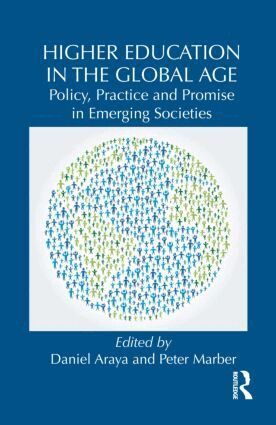
Discussions on globalization now routinely focus on the economic impact of developing countries in Asia, Africa, the Middle East, the former Soviet Union and Latin America. Only twenty-five years ago, many developing countries were largely closed societies. Today, the growing power of “emerging markets” is reordering the geopolitical landscape. On a purchasing power parity basis, emerging economies now constitute half of the world’s economic activity. Financial markets too are seeing growing integration: Asia now accounts for 1/3 of world stock markets, more than double that of just 15 years ago. Given current trajectories, most economists predict that China and India alone will account for half of global output by 2050 (almost a complete return to their positions prior to the Industrial Revolution). How is higher education shaping and being shaped by these massive tectonic shifts? As education rises as a geopolitical priority, it has converged with discussions on economic policy and a global labor market. As part of the Routledge Studies in Emerging Societies series, this edited collection focuses on the globalization of higher education, particularly the increasing symbiosis between advanced and developing countries. Bringing together senior scholars, journalists, and practitioners from around the world, this collection explores the relatively new and changing higher education landscape.
Augmented Education in the Global Age
Artificial Intelligence and the Future of Learning and Work
Inbunden, Engelska, 2023
1 844 kr
Skickas inom 10-15 vardagar
Augmented Education in the Global Age: Artificial Intelligence and the Future of Learning and Work is an edited collection that explores the social impact of Artificial Intelligence over the coming decades, specifically how this emerging technology will transform and disrupt our contemporary institutions. Chapters in this book discuss the history of technological revolutions and consider the anxieties and social challenges of lost occupations, as well as the evolution of new industries overlapping robotics, biotechnology, space exploration, and clean energy. Chapter authors unpack the nature of augmented education, from revamping curriculum and personalizing education, to redesigning workplace learning for an algorithmic era. Ultimately the book discusses policy and planning for an augmented future, arguing that work and learning are undergoing a metamorphosis around creativity and innovation amid a new global era and the race against automating technologies. Bringing together expert perspectives from around the world, this exciting, informative collection of research and analysis helps educators, policymakers and analysts navigate the future of work and learning amid rapid and accelerating technological change.The Open Access version of this book, available at http://www.taylorfrancis.com, has been made available under a Creative Commons Attribution-Non Commercial-No Derivatives (CC-BY-NC-ND) 4.0 license.
Augmented Education in the Global Age
Artificial Intelligence and the Future of Learning and Work
Häftad, Engelska, 2023
532 kr
Skickas inom 10-15 vardagar
Augmented Education in the Global Age: Artificial Intelligence and the Future of Learning and Work is an edited collection that explores the social impact of Artificial Intelligence over the coming decades, specifically how this emerging technology will transform and disrupt our contemporary institutions. Chapters in this book discuss the history of technological revolutions and consider the anxieties and social challenges of lost occupations, as well as the evolution of new industries overlapping robotics, biotechnology, space exploration, and clean energy. Chapter authors unpack the nature of augmented education, from revamping curriculum and personalizing education, to redesigning workplace learning for an algorithmic era. Ultimately the book discusses policy and planning for an augmented future, arguing that work and learning are undergoing a metamorphosis around creativity and innovation amid a new global era and the race against automating technologies. Bringing together expert perspectives from around the world, this exciting, informative collection of research and analysis helps educators, policymakers and analysts navigate the future of work and learning amid rapid and accelerating technological change.The Open Access version of this book, available at http://www.taylorfrancis.com, has been made available under a Creative Commons Attribution-Non Commercial-No Derivatives (CC-BY-NC-ND) 4.0 license.
1 272 kr
Skickas inom 10-15 vardagar
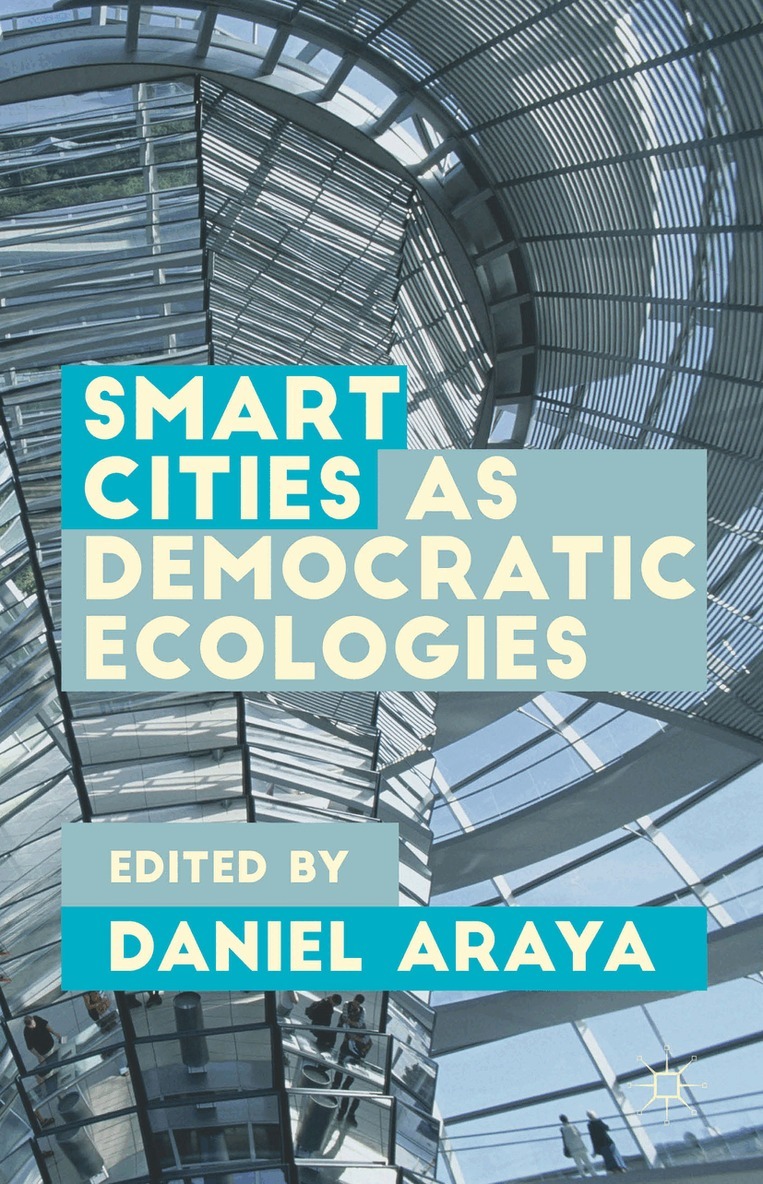
The concept of the 'smart city' as the confluence of urban planning and technological innovation has become a predominant feature of public policy discourse. Despite its expanding influence, however, there is little consensus on the precise meaning of a 'smart city'. One reason for this ambiguity is that the term means different things to different disciplines. For some, the concept of the 'smart city' refers to advances in sustainability and green technologies. For others, it refers to the deployment of information and communication technologies as next generation infrastructure. This volume focuses on a third strand in this discourse, specifically technology driven changes in democracy and civic engagement. In conjunction with issues related to power grids, transportation networks and urban sustainability, there is a growing need to examine the potential of 'smart cities' as 'democratic ecologies' for citizen empowerment and user-driven innovation. What is the potential of 'smart cities' to become platforms for bottom-up civic engagement in the context of next generation communication, data sharing, and application development? What are the consequences of layering public spaces with computationally mediated technologies? Foucault's notion of the panopticon, a metaphor for a surveillance society, suggests that smart technologies deployed in the design of 'smart cities' should be evaluated in terms of the ways in which they enable, or curtail, new urban literacies and emergent social practices.
476 kr
Skickas inom 10-15 vardagar
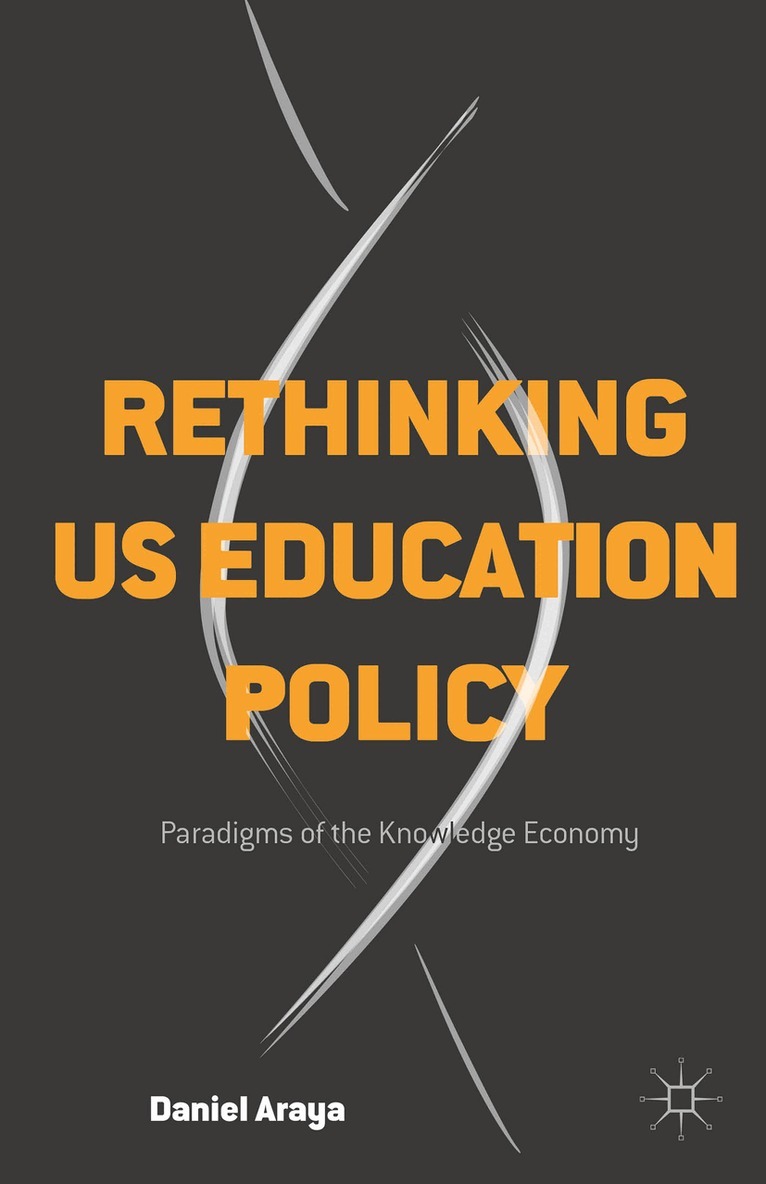
Drawing on discussions of the "Creative Economy," the "Network Economy," and the "Green Economy," Rethinking US Education Policy critiques educational policies authored by the Obama administration and considers the need for a new educational policy framework that is better adapted to an era of accelerating innovation.
1 844 kr
Skickas inom 10-15 vardagar
Advanced and developing countries across the globe are embracing the liberal arts approach in higher education to foster more innovative human capital to compete in the global economy. Even as interest in the tradition expands outside the United States, can the democratic philosophy underlying the liberal arts tradition be sustained? Can developing countries operating under heavy authoritarian systems cultivate schools predicated on open discussion and debate? Can entrenched specialist systems in Europe and Asia successfully adopt the multidisciplinary liberal arts model? These are some of the questions put to leading scholars and senior higher education practitioners within this edited collection. Beginning with historical context, international contributors explore the contours of liberal arts education amid public calls for change in the United States, the growing global interest in the approach outside the United States, as well as the potential of liberal arts philosophy in a global knowledge economy.
689 kr
Skickas inom 10-15 vardagar
Advanced and developing countries across the globe are embracing the liberal arts approach in higher education to foster more innovative human capital to compete in the global economy. Even as interest in the tradition expands outside the United States, can the democratic philosophy underlying the liberal arts tradition be sustained? Can developing countries operating under heavy authoritarian systems cultivate schools predicated on open discussion and debate? Can entrenched specialist systems in Europe and Asia successfully adopt the multidisciplinary liberal arts model? These are some of the questions put to leading scholars and senior higher education practitioners within this edited collection. Beginning with historical context, international contributors explore the contours of liberal arts education amid public calls for change in the United States, the growing global interest in the approach outside the United States, as well as the potential of liberal arts philosophy in a global knowledge economy.
Higher Education in the Global Age
Policy, Practice and Promise in Emerging Societies
Häftad, Engelska, 2015
650 kr
Skickas inom 10-15 vardagar
Discussions on globalization now routinely focus on the economic impact of developing countries in Asia, Africa, the Middle East, the former Soviet Union and Latin America. Only twenty-five years ago, many developing countries were largely closed societies. Today, the growing power of “emerging markets” is reordering the geopolitical landscape. On a purchasing power parity basis, emerging economies now constitute half of the world’s economic activity. Financial markets too are seeing growing integration: Asia now accounts for 1/3 of world stock markets, more than double that of just 15 years ago. Given current trajectories, most economists predict that China and India alone will account for half of global output by 2050 (almost a complete return to their positions prior to the Industrial Revolution). How is higher education shaping and being shaped by these massive tectonic shifts? As education rises as a geopolitical priority, it has converged with discussions on economic policy and a global labor market. As part of the Routledge Studies in Emerging Societies series, this edited collection focuses on the globalization of higher education, particularly the increasing symbiosis between advanced and developing countries. Bringing together senior scholars, journalists, and practitioners from around the world, this collection explores the relatively new and changing higher education landscape.
Del 81 - New Literacies and Digital Epistemologies
Augmented Intelligence
Smart Systems and the Future of Work and Learning
Häftad, Engelska, 2018
562 kr
Skickas inom 5-8 vardagar
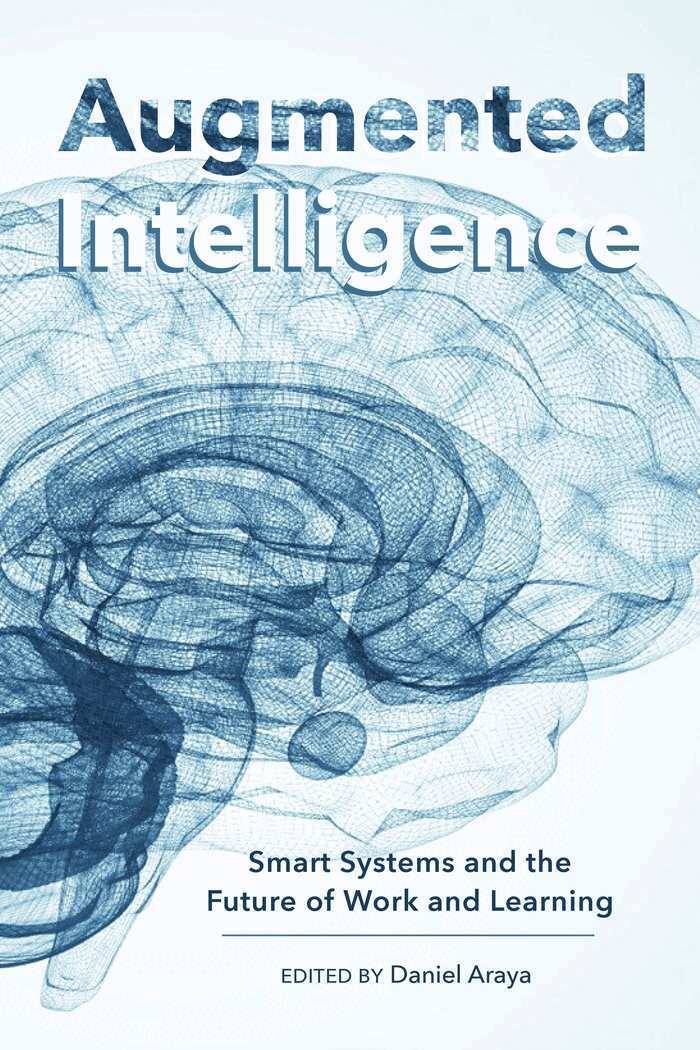
Where the Agricultural Revolution harnessed domesticated animals for pastoral farming, and the Industrial Revolution leveraged machines for factory production, so today the Computational Revolution is advancing computers to augment human intelligence. Indeed, many now argue that the promise of exascale computing and the slow migration towards a computational society may represent a new threshold in human history. This "transcension" of earlier stages of tool-mediated work and learning foreshadows a momentous change in the kinds of cities we might build, the kinds of medicine we might practice, and the kinds of education we might provide. What is perhaps most surprising about the current Computational Revolution, however, is its expanding reach. The question that many now ask is "what is the trajectory of this human-machine symbiosis?" It would appear that we are on the cusp of a sea change in our capacities to augment human intelligence. But what is the future of work and learning? Will augmented intelligence help us in transforming a waning industrial society? These are the kinds of questions that we explore in Augmented Intelligence: Smart Systems and the Future of Work and Learning.
Del 81 - New Literacies and Digital Epistemologies
Augmented Intelligence
Smart Systems and the Future of Work and Learning
Inbunden, Engelska, 2018
1 449 kr
Skickas inom 5-8 vardagar
Where the Agricultural Revolution harnessed domesticated animals for pastoral farming, and the Industrial Revolution leveraged machines for factory production, so today the Computational Revolution is advancing computers to augment human intelligence. Indeed, many now argue that the promise of exascale computing and the slow migration towards a computational society may represent a new threshold in human history. This "transcension" of earlier stages of tool-mediated work and learning foreshadows a momentous change in the kinds of cities we might build, the kinds of medicine we might practice, and the kinds of education we might provide. What is perhaps most surprising about the current Computational Revolution, however, is its expanding reach. The question that many now ask is "what is the trajectory of this human-machine symbiosis?" It would appear that we are on the cusp of a sea change in our capacities to augment human intelligence. But what is the future of work and learning? Will augmented intelligence help us in transforming a waning industrial society? These are the kinds of questions that we explore in Augmented Intelligence: Smart Systems and the Future of Work and Learning.