Peter Marber - Böcker
Visar alla böcker från författaren Peter Marber. Handla med fri frakt och snabb leverans.
9 produkter
9 produkter
Higher Education in the Global Age
Policy, Practice and Promise in Emerging Societies
Inbunden, Engelska, 2013
2 237 kr
Skickas inom 10-15 vardagar
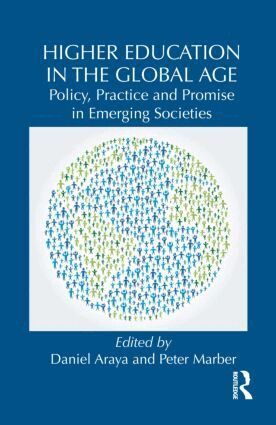
Discussions on globalization now routinely focus on the economic impact of developing countries in Asia, Africa, the Middle East, the former Soviet Union and Latin America. Only twenty-five years ago, many developing countries were largely closed societies. Today, the growing power of “emerging markets” is reordering the geopolitical landscape. On a purchasing power parity basis, emerging economies now constitute half of the world’s economic activity. Financial markets too are seeing growing integration: Asia now accounts for 1/3 of world stock markets, more than double that of just 15 years ago. Given current trajectories, most economists predict that China and India alone will account for half of global output by 2050 (almost a complete return to their positions prior to the Industrial Revolution). How is higher education shaping and being shaped by these massive tectonic shifts? As education rises as a geopolitical priority, it has converged with discussions on economic policy and a global labor market. As part of the Routledge Studies in Emerging Societies series, this edited collection focuses on the globalization of higher education, particularly the increasing symbiosis between advanced and developing countries. Bringing together senior scholars, journalists, and practitioners from around the world, this collection explores the relatively new and changing higher education landscape.
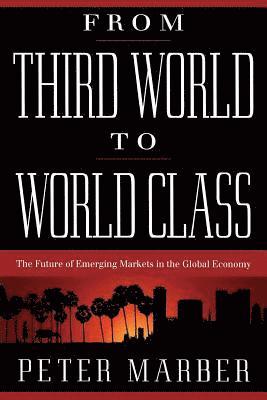
From Third World To World Class
The Future Of Emerging Markets In The Global Economy
Häftad, Engelska, 1999
208 kr
Skickas inom 10-15 vardagar
From Argentina to Zimbabwe, rapid growth and economic transformation are creating a wide array of new business opportunities,for multinational corporations and individual investors alike. But the rise of the developing world is also challenging long-held beliefs that the industrialized nations would call all the shots. In this highly original analysis of developing nations, investment, and global business expansion, Peter Marber identifies the risks and rewards of investing in emerging markets, and reveals new sources of conflict as value systems clash in a game of global economic integration where there will inevitably be financial winners, as well as losers.
Augmented Education in the Global Age
Artificial Intelligence and the Future of Learning and Work
Inbunden, Engelska, 2023
1 844 kr
Skickas inom 10-15 vardagar
Augmented Education in the Global Age: Artificial Intelligence and the Future of Learning and Work is an edited collection that explores the social impact of Artificial Intelligence over the coming decades, specifically how this emerging technology will transform and disrupt our contemporary institutions. Chapters in this book discuss the history of technological revolutions and consider the anxieties and social challenges of lost occupations, as well as the evolution of new industries overlapping robotics, biotechnology, space exploration, and clean energy. Chapter authors unpack the nature of augmented education, from revamping curriculum and personalizing education, to redesigning workplace learning for an algorithmic era. Ultimately the book discusses policy and planning for an augmented future, arguing that work and learning are undergoing a metamorphosis around creativity and innovation amid a new global era and the race against automating technologies. Bringing together expert perspectives from around the world, this exciting, informative collection of research and analysis helps educators, policymakers and analysts navigate the future of work and learning amid rapid and accelerating technological change.The Open Access version of this book, available at http://www.taylorfrancis.com, has been made available under a Creative Commons Attribution-Non Commercial-No Derivatives (CC-BY-NC-ND) 4.0 license.
Augmented Education in the Global Age
Artificial Intelligence and the Future of Learning and Work
Häftad, Engelska, 2023
532 kr
Skickas inom 10-15 vardagar
Augmented Education in the Global Age: Artificial Intelligence and the Future of Learning and Work is an edited collection that explores the social impact of Artificial Intelligence over the coming decades, specifically how this emerging technology will transform and disrupt our contemporary institutions. Chapters in this book discuss the history of technological revolutions and consider the anxieties and social challenges of lost occupations, as well as the evolution of new industries overlapping robotics, biotechnology, space exploration, and clean energy. Chapter authors unpack the nature of augmented education, from revamping curriculum and personalizing education, to redesigning workplace learning for an algorithmic era. Ultimately the book discusses policy and planning for an augmented future, arguing that work and learning are undergoing a metamorphosis around creativity and innovation amid a new global era and the race against automating technologies. Bringing together expert perspectives from around the world, this exciting, informative collection of research and analysis helps educators, policymakers and analysts navigate the future of work and learning amid rapid and accelerating technological change.The Open Access version of this book, available at http://www.taylorfrancis.com, has been made available under a Creative Commons Attribution-Non Commercial-No Derivatives (CC-BY-NC-ND) 4.0 license.
201 kr
Skickas inom 7-10 vardagar
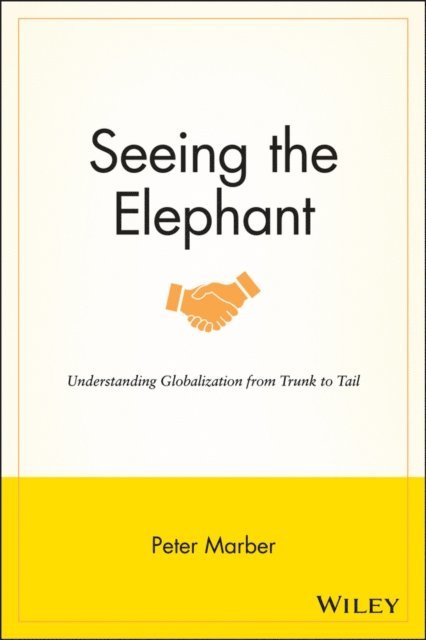
Thanks to globalization, more countries depend on each other for trade, capital, and ideas than ever before. Yet politically, these countries are drifting further apart. In Seeing the Elephant, author and emerging markets expert Peter Marber describes how increasing economic integration and the rise of new actors is drastically altering the geopolitical landscape, and offers insights on how the US can maintain a leading role in the 21st century and beyond. While America remains the single most important economy today, rising economic powerhouses — China, Russia, India, Brazil and others — bring a diverse set of interests to the table that the US cannot afford to ignore, Marber explains. Moreover, globalization has created thousands of non-state actors – corporations, banks, hedge funds, activists and even terrorists – who bring their own concerns to bear on the world system.In the era of globalization, America's success hinges on the success of its neighbors, too. Yet from its invasion of Iraq to its disregard of major treaties — some recent US choices have shown little regard for these new players. As the lines between economic, defense, environmental, immigration, and energy policy become increasingly blurred, having a holistic and coherent approach to cross-border challenges is essential. Yet the forums and institutions that once coordinated these relationships – the UN, World Bank and the G7— are losing relevance and no longer adequately represent the world's expanded power roster. To remain vital, Marber believes all our multilateral institutions will require fresh ideas and revamping.Seeing the Elephant demystifies globalization, and analyzes the megatrends and interconnections of the 21st century. With bold suggestions on how America reassert its historic leadership in the new global arena, Seeing the Elephant should be required reading for policy makers, businessmen and informed citizens alike.
1 844 kr
Skickas inom 10-15 vardagar
Advanced and developing countries across the globe are embracing the liberal arts approach in higher education to foster more innovative human capital to compete in the global economy. Even as interest in the tradition expands outside the United States, can the democratic philosophy underlying the liberal arts tradition be sustained? Can developing countries operating under heavy authoritarian systems cultivate schools predicated on open discussion and debate? Can entrenched specialist systems in Europe and Asia successfully adopt the multidisciplinary liberal arts model? These are some of the questions put to leading scholars and senior higher education practitioners within this edited collection. Beginning with historical context, international contributors explore the contours of liberal arts education amid public calls for change in the United States, the growing global interest in the approach outside the United States, as well as the potential of liberal arts philosophy in a global knowledge economy.
689 kr
Skickas inom 10-15 vardagar
Advanced and developing countries across the globe are embracing the liberal arts approach in higher education to foster more innovative human capital to compete in the global economy. Even as interest in the tradition expands outside the United States, can the democratic philosophy underlying the liberal arts tradition be sustained? Can developing countries operating under heavy authoritarian systems cultivate schools predicated on open discussion and debate? Can entrenched specialist systems in Europe and Asia successfully adopt the multidisciplinary liberal arts model? These are some of the questions put to leading scholars and senior higher education practitioners within this edited collection. Beginning with historical context, international contributors explore the contours of liberal arts education amid public calls for change in the United States, the growing global interest in the approach outside the United States, as well as the potential of liberal arts philosophy in a global knowledge economy.
Higher Education in the Global Age
Policy, Practice and Promise in Emerging Societies
Häftad, Engelska, 2015
650 kr
Skickas inom 10-15 vardagar
Discussions on globalization now routinely focus on the economic impact of developing countries in Asia, Africa, the Middle East, the former Soviet Union and Latin America. Only twenty-five years ago, many developing countries were largely closed societies. Today, the growing power of “emerging markets” is reordering the geopolitical landscape. On a purchasing power parity basis, emerging economies now constitute half of the world’s economic activity. Financial markets too are seeing growing integration: Asia now accounts for 1/3 of world stock markets, more than double that of just 15 years ago. Given current trajectories, most economists predict that China and India alone will account for half of global output by 2050 (almost a complete return to their positions prior to the Industrial Revolution). How is higher education shaping and being shaped by these massive tectonic shifts? As education rises as a geopolitical priority, it has converged with discussions on economic policy and a global labor market. As part of the Routledge Studies in Emerging Societies series, this edited collection focuses on the globalization of higher education, particularly the increasing symbiosis between advanced and developing countries. Bringing together senior scholars, journalists, and practitioners from around the world, this collection explores the relatively new and changing higher education landscape.
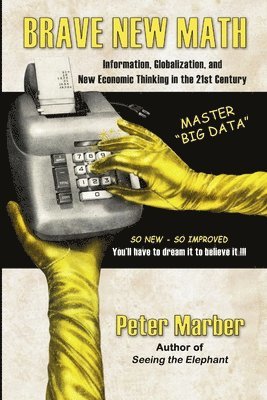
Brave New Math: Information, Globalization, and New Economic Thinking in the 21st Century
Häftad, Engelska, 2014
164 kr
Skickas inom 5-8 vardagar