Daniel Brinks – författare
Visar alla böcker från författaren Daniel Brinks. Handla med fri frakt och snabb leverans.
7 produkter
7 produkter
Inbunden, Engelska, 2021
1 043 kr
Skickas inom 5-8 vardagar
From unsafe working conditions in garment manufacturing to the failure to consult indigenous communities with regard to extractive industries that affect them, human rights violations remain a pervasive aspect of the global economy. Advocates have long called upon states, as the primary duty bearers and enforcers of human rights, to hold corporations directly accountable for violations committed throughout the supply chain. More recently, many business and human rights advocates have considered the development and enforcement of private regulatory initiatives (PRIs) to certify that actors along the supply chain conform to certain codes of conduct. Many advocates see these PRIs as holding the potential to create better outcomes-whether for workers, affected communities, or the environment-within a global economy structured by supply chain capitalism.This volume brings together academics and practitioners from a number of regions throughout the world to engage in theoretical analysis, case study exploration, and reflection on a variety of PRIs. Theorizing outward from the work of practitioners and activists on the ground, the book brings essential but often overlooked questions to the scholarly debates on business, human rights, and global governance.Ultimately, the contributions coalesce around one basic claim: that the inequalities and disparities of power and wealth that are a key characteristic of the contemporary global economy can also mark the origins and operation of PRIs, and do so to varying degrees. The collection highlights the need for discussions about labor, environmental, and other human rights accountability to be situated within a broader analysis of the political economy of contemporary supply chain capitalism. It seeks to enrich discussions of PRIs by bringing into the conversation concerns about distributive justice and political economy.
Häftad, Engelska, 2021
389 kr
Skickas inom 5-8 vardagar
From unsafe working conditions in garment manufacturing to the failure to consult indigenous communities with regard to extractive industries that affect them, human rights violations remain a pervasive aspect of the global economy. Advocates have long called upon states, as the primary duty bearers and enforcers of human rights, to hold corporations directly accountable for violations committed throughout the supply chain. More recently, many business and human rights advocates have considered the development and enforcement of private regulatory initiatives (PRIs) to certify that actors along the supply chain conform to certain codes of conduct. Many advocates see these PRIs as holding the potential to create better outcomes-whether for workers, affected communities, or the environment-within a global economy structured by supply chain capitalism.This volume brings together academics and practitioners from a number of regions throughout the world to engage in theoretical analysis, case study exploration, and reflection on a variety of PRIs. Theorizing outward from the work of practitioners and activists on the ground, the book brings essential but often overlooked questions to the scholarly debates on business, human rights, and global governance.Ultimately, the contributions coalesce around one basic claim: that the inequalities and disparities of power and wealth that are a key characteristic of the contemporary global economy can also mark the origins and operation of PRIs, and do so to varying degrees. The collection highlights the need for discussions about labor, environmental, and other human rights accountability to be situated within a broader analysis of the political economy of contemporary supply chain capitalism. It seeks to enrich discussions of PRIs by bringing into the conversation concerns about distributive justice and political economy.
E-bok
Engelska, 2021573 kr
Läs direkt efter köp
From unsafe working conditions in garment manufacturing to the failure to consult indigenous communities with regard to extractive industries that affect them, human rights violations remain a pervasive aspect of the global economy. Advocates have long called upon states, as the primary duty bearers and enforcers of human rights, to hold corporations directly accountable for violations committed throughout the supply chain. More recently, many business and human rights advocates have considered the development and enforcement of private regulatory initiatives (PRIs) to certify that actors along the supply chain conform to certain codes of conduct. Many advocates see these PRIs as holding the potential to create better outcomes-whether for workers, affected communities, or the environment-within a global economy structured by supply chain capitalism.This volume brings together academics and practitioners from a number of regions throughout the world to engage in theoretical analysis, case study exploration, and reflection on a variety of PRIs. Theorizing outward from the work of practitioners and activists on the ground, the book brings essential but often overlooked questions to the scholarly debates on business, human rights, and global governance.Ultimately, the contributions coalesce around one basic claim: that the inequalities and disparities of power and wealth that are a key characteristic of the contemporary global economy can also mark the origins and operation of PRIs, and do so to varying degrees. The collection highlights the need for discussions about labor, environmental, and other human rights accountability to be situated within a broader analysis of the political economy of contemporary supply chain capitalism. It seeks to enrich discussions of PRIs by bringing into the conversation concerns about distributive justice and political economy.
Inbunden, Engelska, 2014
812 kr
Skickas inom 5-8 vardagar
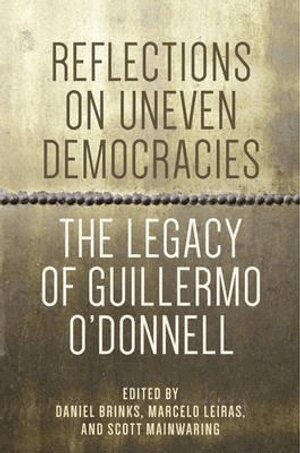
The third wave of democratization produced a wealth of enduring social science. Beginning in the 1970s, it prompted scholars to develop important theories on authoritarian breakdowns and transitions to democracy. No one in the field was more influential than Guillermo O'Donnell (1936-2011), whose pathbreaking work shaped the scholarship of generations of social scientists. Reflections on Uneven Democracies honors the legacy of O'Donnell's research by advancing debates related to his work on democracy. Drawing together a veritable Who's Who of eminent scholars - including two of O'Donnell's closest collaborators, Philippe Schmitter and Laurence Whitehead - the volume examines issues related to democratic breakdowns and stability, the nature and quality of new democracies, institutional strength, the rule of law, and delegative democracy. This reexamination of some of the most influential arguments about democracy of the past forty years leads to original approaches and insights for a new era of democracy studies. Students of democracy and institutional performance, both Latin Americanists and comparativists more generally, will find this essential reading.
Häftad, Engelska, 2014
433 kr
Skickas inom 5-8 vardagar
The third wave of democratization produced a wealth of enduring social science. Beginning in the 1970s, it prompted scholars to develop important theories on authoritarian breakdowns and transitions to democracy. No one in the field was more influential than Guillermo O'Donnell (1936-2011), whose pathbreaking work shaped the scholarship of generations of social scientists. Reflections on Uneven Democracies honors the legacy of O'Donnell's research by advancing debates related to his work on democracy. Drawing together a veritable Who's Who of eminent scholars - including two of O'Donnell's closest collaborators, Philippe Schmitter and Laurence Whitehead - the volume examines issues related to democratic breakdowns and stability, the nature and quality of new democracies, institutional strength, the rule of law, and delegative democracy. This reexamination of some of the most influential arguments about democracy of the past forty years leads to original approaches and insights for a new era of democracy studies. Students of democracy and institutional performance, both Latin Americanists and comparativists more generally, will find this essential reading.
Inbunden, Engelska, 2022
611 kr
Skickas inom 5-8 vardagar
E-bok
Spanska, 2021113 kr
Läs direkt efter köp
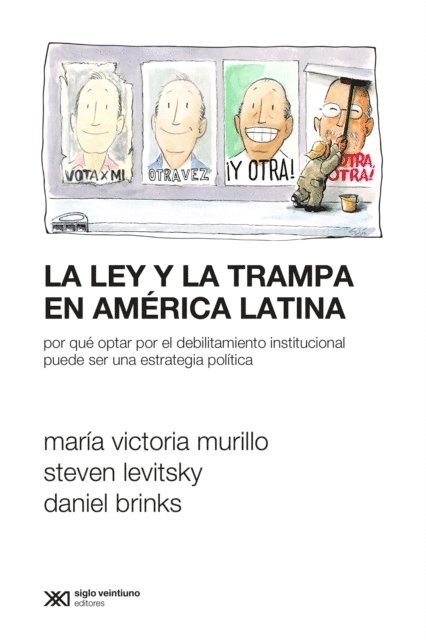
Si en América Latina las leyes destinadas a eliminar la corrupción, el clientelismo electoral, la discriminación racial o la violencia contra la mujer, a redistribuir los ingresos a los pobres o a proteger el medio ambiente efectivamente se cumplieran a lo largo del tiempo, las consecuencias sociales y políticas serían impactantes. En efecto, la distancia entre lo que imponen las normas escritas y lo que sucede en la práctica es un rasgo persistente en la región, que se ha vuelto más visible desde que los procesos de democratización, en los años ochenta del siglo XX, renovaron las demandas sociales e impulsaron la competencia política.A menudo se asume que la debilidad institucional que está detrás de esta brecha es una condición de fondo, una suerte de destino inscripto en el ADN político latinoamericano. En este libro original y persuasivo se argumenta todo lo contrario: la debilidad institucional suele ser una estrategia política, a la que pueden apelar tanto quienes gobiernan como quienes aspiran a llegar al poder. Así, los autores –que sistematizan y condensan aquí sus largas trayectorias en el estudio de la debilidad institucional en la región– analizan reglas que se diseñan para no aplicarse, o para que las cumplan algunos pero no otros; reglas políticamente atractivas para quienes las crean pero vetadas de hecho, en el terreno, por los responsables de aplicarlas; reglas creadas para no cumplirse ahora sino en el futuro; reglas que se aplican según la coalición en el poder o la capacidad de los actores sociales movilizados para apoyarlas o rechazarlas.En ese ajedrez político, que empieza en el diseño, sigue en la implementación y termina en el grado de cumplimiento de las normas, se juega buena parte de la calidad de la democracia en el continente, todavía acechada por una combinación de desigualdad, capacidad estatal disminuida y volatilidad política y económica. Al plantear con solidez conceptual y ejemplos concretos un modelo para identificar y comparar la debilidad institucional en la región, este libro quiere llamar la atención sobre una urgencia estructural. Como escriben los autores, tanto en el Norte como en el Sur, "ninguna democracia puede funcionar bien sin instituciones fuertes".