Daniel E. Agbiboa - Böcker
Visar alla böcker från författaren Daniel E. Agbiboa. Handla med fri frakt och snabb leverans.
7 produkter
7 produkter
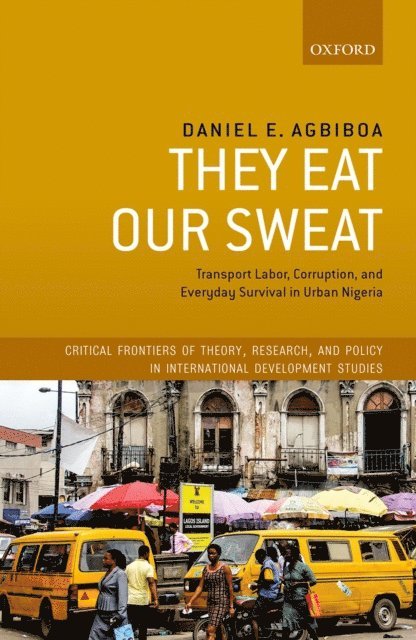
They Eat Our Sweat
Transport Labor, Corruption, and Everyday Survival in Urban Nigeria
Inbunden, Engelska, 2022
1 438 kr
Skickas inom 5-8 vardagar
Accounts of corruption in Africa and the Global South are generally overly simplistic and macro-oriented, and commonly disconnect everyday (petty) corruption from political (grand) corruption. In contrast to this tendency, They Eat Our Sweat offers a fresh and engaging look at the corruption complex in Africa through a micro analysis of its informal transport sector, where collusion between state and nonstate actors is most rife. Focusing on Lagos, Nigeria's commercial capital and Africa's largest city, Daniel Agbiboa investigates the workaday world of road transport operators as refracted through the extortion racket and violence of transport unions acting in complicity with the state. Steeped in an embodied knowledge of Lagos and backed by two years of thorough ethnographic fieldwork, including working as an informal bus conductor, Agbiboa provides an emic perspective on precarious labour, popular agency and the daily pursuit of survival under the shadow of the modern world system. Corruption, Agbiboa argues, is not rooted in Nigerian culture but is shaped by the struggle to get by and get ahead on the fast and slow lanes of Lagos. The pursuit of economic survival compels transport operators to participate in the reproduction of the very transgressive system they denounce. They Eat Our Sweat is not just a book about corruption but also about transportation, politics, and governance in urban Africa.
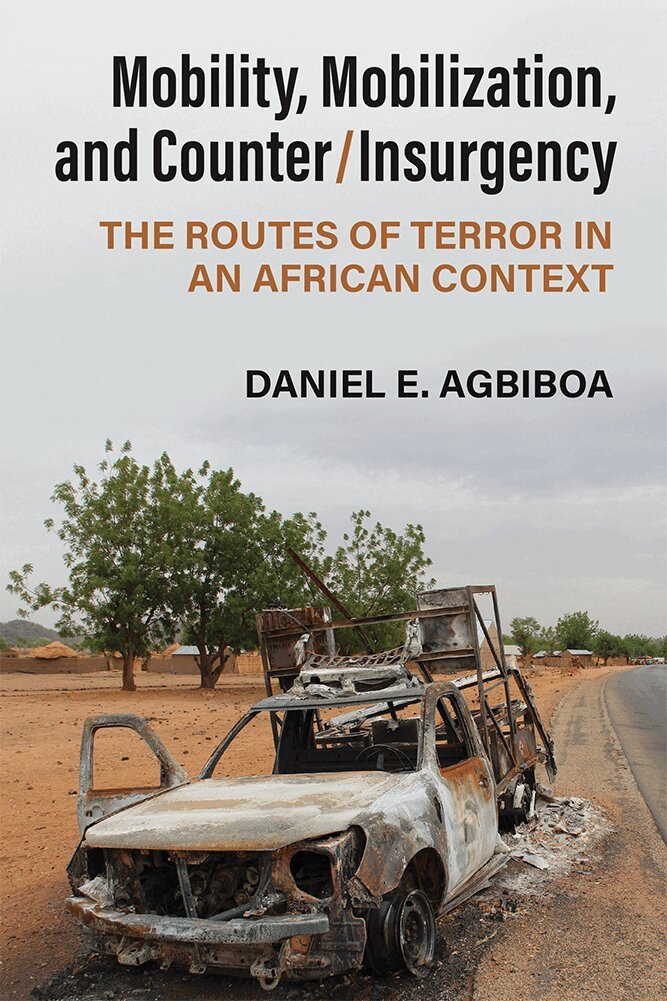
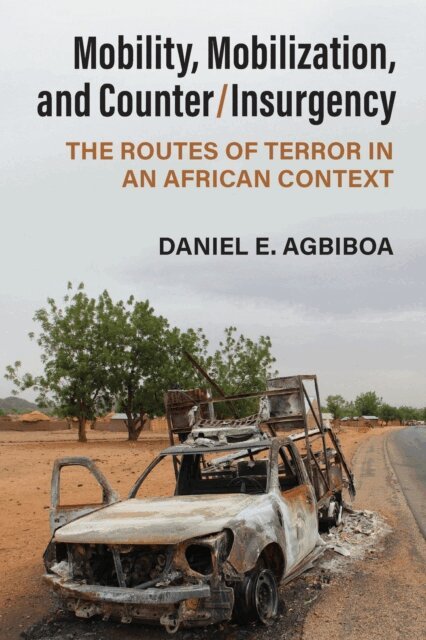
Mobility, Mobilization, and Counter/Insurgency
The Routes of Terror in an African Context
Häftad, Engelska, 2022
372 kr
Skickas inom 7-10 vardagar
In Mobility, Mobilization, and Counter/Insurgency, Daniel Agbiboa takes African insurgencies back to their routes by providing a transdisciplinary perspective on the centrality of mobility to the strategies of insurgents, state security forces, and civilian populations caught in conflict. Drawing on one of the world’s deadliest insurgencies, the Boko Haram insurgency in northeast Nigeria and the Lake Chad region, this well-crafted and richly nuanced intervention offers fresh insights into how violent extremist organizations exploit forms of local immobility and border porosity to mobilize new recruits, how the state’s “war on terror” mobilizes against so-called subversive mobilities, and how civilian populations in transit are treated as could-be terrorists and subjected to extortion and state-sanctioned violence en route. The multiple and intersecting flows analyzed here upend Eurocentric representations of movement in Africa as one-sided, anarchic, and dangerous. Instead, this book underscores the contradictions of mobility in conflict zones as simultaneously a resource and a burden. Intellectually rigorous yet clear, engaging, and accessible, Mobility, Mobilization, and Counter/Insurgency is a seminal contribution that lays bare the neglected linkages between conflict and mobility.
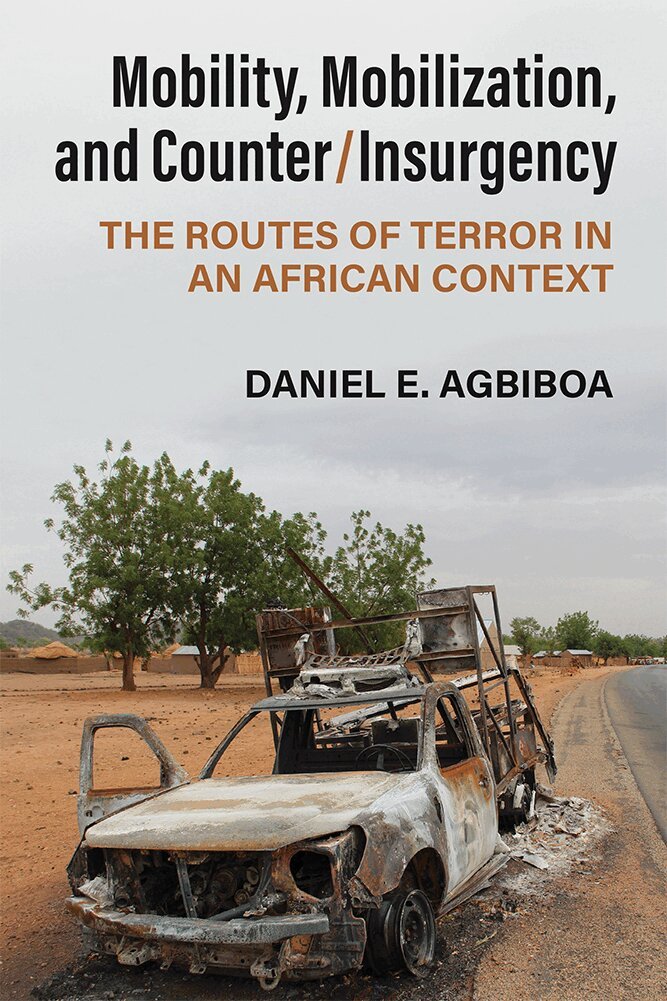
Mobility, Mobilization, and Counter/Insurgency
The Routes of Terror in an African Context
Inbunden, Engelska, 2022
959 kr
Skickas inom 7-10 vardagar
In Mobility, Mobilization, and Counter/Insurgency, Daniel Agbiboa takes African insurgencies back to their routes by providing a transdisciplinary perspective on the centrality of mobility to the strategies of insurgents, state security forces, and civilian populations caught in conflict. Drawing on one of the world’s deadliest insurgencies, the Boko Haram insurgency in northeast Nigeria and the Lake Chad region, this well-crafted and richly nuanced intervention offers fresh insights into how violent extremist organizations exploit forms of local immobility and border porosity to mobilize new recruits, how the state’s “war on terror” mobilizes against so-called subversive mobilities, and how civilian populations in transit are treated as could-be terrorists and subjected to extortion and state-sanctioned violence en route. The multiple and intersecting flows analyzed here upend Eurocentric representations of movement in Africa as one-sided, anarchic, and dangerous. Instead, this book underscores the contradictions of mobility in conflict zones as simultaneously a resource and a burden. Intellectually rigorous yet clear, engaging, and accessible, Mobility, Mobilization, and Counter/Insurgency is a seminal contribution that lays bare the neglected linkages between conflict and mobility.
955 kr
Kommande
Cities are now on the front line of dangers associated with the climate crisis, health emergencies, uncontrolled artificial intelligence, escalating warfare, growing authoritarianism and capitalist profligacy. This is especially so for their unprotected populations who, in large numbers, now face a dire future of precarity as powerful elites seek to turn urban assets to their advantage in confronting an uncertain future. For the vast majority of people living in cities, the future is one of foreclosure – a future of dispossession and impoverishment that is lacking a horizon of hope.What pathways remain open for cities to avert a future of foreclosure for people leading modest lives in modest neighbourhoods? To answer this question, this book looks to the popular practices and knowledges that exist within urban communities and neighbourhoods, finding within them elements that are potentially reparative and curative. Here the engagement with time is different, involving repertoires of horizontal relations, affinities of place and restive knowledge capable of making something out of nothing, of bending adversity towards other goals. Here, rich yet neglected ecologies of urban inhabitation – with all their wiles and improvisations – emerge as the ground of future-making. The book offers a body of concepts to encapsulate this threatened yet resistant urbanism, exemplifies its workings in the streets of Kinshasa, Lagos, Mexico City and Naples, and outlines an infrastructural and aesthetic politics to bring out its potential, thereby enabling another future to shine through urban foreclosure.
345 kr
Kommande
Cities are now on the front line of dangers associated with the climate crisis, health emergencies, uncontrolled artificial intelligence, escalating warfare, growing authoritarianism and capitalist profligacy. This is especially so for their unprotected populations who, in large numbers, now face a dire future of precarity as powerful elites seek to turn urban assets to their advantage in confronting an uncertain future. For the vast majority of people living in cities, the future is one of foreclosure – a future of dispossession and impoverishment that is lacking a horizon of hope.What pathways remain open for cities to avert a future of foreclosure for people leading modest lives in modest neighbourhoods? To answer this question, this book looks to the popular practices and knowledges that exist within urban communities and neighbourhoods, finding within them elements that are potentially reparative and curative. Here the engagement with time is different, involving repertoires of horizontal relations, affinities of place and restive knowledge capable of making something out of nothing, of bending adversity towards other goals. Here, rich yet neglected ecologies of urban inhabitation – with all their wiles and improvisations – emerge as the ground of future-making. The book offers a body of concepts to encapsulate this threatened yet resistant urbanism, exemplifies its workings in the streets of Kinshasa, Lagos, Mexico City and Naples, and outlines an infrastructural and aesthetic politics to bring out its potential, thereby enabling another future to shine through urban foreclosure.
587 kr
Skickas inom 7-10 vardagar
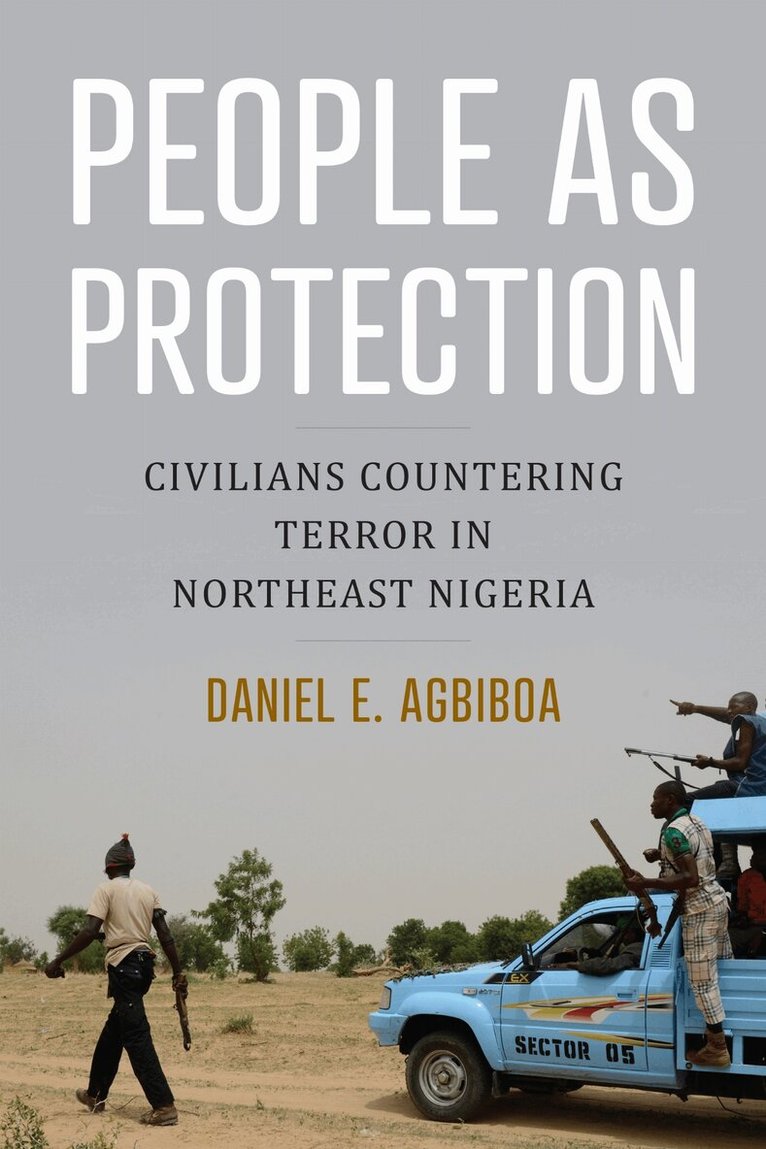
Explores the complex and underappreciated role of civilian self-defense groups in northeastern Nigeria during the Boko Haram insurgencyPeople as Protection is a groundbreaking exploration of the complex and underappreciated role of civilian self-defense groups in northeastern Nigeria during the Boko Haram insurgency, particularly the Civilian Joint Task Force (CJTF). Emerging in 2013, the CJTF was a grassroots initiative led by civilian populations, especially youth, to protect their communities from Boko Haram terror and the brutality of military forces. Caught between insurgents and the state, young volunteers patrolled their neighborhoods and risked their lives to prevent attacks while working alongside security forces many considered complicit in civilian harm.Focusing on the deep motivations of these civilians, Daniel E. Agbiboa reveals how young Nigerians, when they chose to protect their communities, were driven by a desperate hope for security, a profound sense of patriotism, and personal courage. He shows how political emotions, such as a desire for recognition, dignity, and belonging, fueled civilians' willingness to act, even as they grappled with, and sometimes contributed to, the deeply fraught nature of the Nigerian state. These civilians, he argues, remain emotionally tethered to the dream of a safer future, despite systemic betrayals.People as Protection further reveals how civilians actively reshape security and governance in conflict zones, often through acts of profound political and emotional significance. Challenging the view of civilians as victims or pawns, and through extensive interviews and ethnographic fieldwork, Agbiboa uncovers the grit, courage, and emotional investments that drive the CJTF's efforts. By foregrounding the roles of patriotism, political emotions, and grassroots values, he brings civilian agency into focus within the boundaries of security, governance, and citizenship in one of the world's most volatile regions.
689 kr
Skickas inom 5-8 vardagar