Daniel G. Bates - Böcker
Visar alla böcker från författaren Daniel G. Bates. Handla med fri frakt och snabb leverans.
5 produkter
5 produkter
1 640 kr
Skickas inom 10-15 vardagar
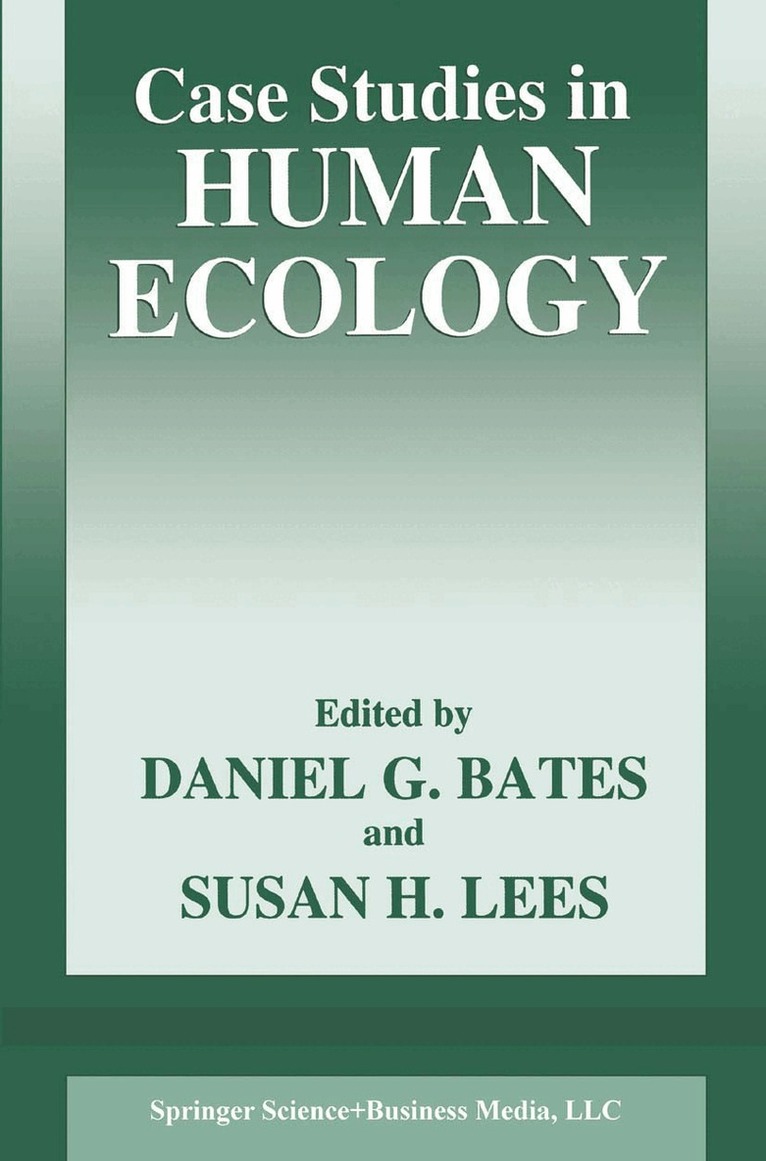
This volume was developed to meet a much noted need for accessible case study material for courses in human ecology, cultural ecology, cultural geography, and other subjects increasingly offered to fulfill renewed student and faculty interest in environmental issues. The case studies, all taken from the journal Human Ecology: An Interdisciplinary Jouma~ represent a broad cross-section of contemporary research. It is tempting but inaccurate to sug gest that these represent the "Best of Human Ecology." They were selected from among many outstanding possibilities because they worked well with the organization of the book which, in turn, reflects the way in which courses in human ecology are often organized. This book provides a useful sample of case studies in the application of the perspective of human ecology to a wide variety of problems in dif ferent regions of the world. University courses in human ecology typically begin with basic concepts pertaining to energy flow, feeding relations, ma terial cycles, population dynamics, and ecosystem properties, and then take up illustrative case studies of human-environmental interactions. These are usually discussed either along the lines of distinctive strategies of food pro curement (such as foraging or pastoralism) or as adaptations to specific habitat types or biomes (such as the circumpolar regions or arid lands).
1 640 kr
Skickas inom 10-15 vardagar
This volume was developed to meet a much noted need for accessible case study material for courses in human ecology, cultural ecology, cultural geography, and other subjects increasingly offered to fulfill renewed student and faculty interest in environmental issues. The case studies, all taken from the journal Human Ecology: An Interdisciplinary Jouma~ represent a broad cross-section of contemporary research. It is tempting but inaccurate to sug gest that these represent the "Best of Human Ecology." They were selected from among many outstanding possibilities because they worked well with the organization of the book which, in turn, reflects the way in which courses in human ecology are often organized. This book provides a useful sample of case studies in the application of the perspective of human ecology to a wide variety of problems in dif ferent regions of the world. University courses in human ecology typically begin with basic concepts pertaining to energy flow, feeding relations, ma terial cycles, population dynamics, and ecosystem properties, and then take up illustrative case studies of human-environmental interactions. These are usually discussed either along the lines of distinctive strategies of food pro curement (such as foraging or pastoralism) or as adaptations to specific habitat types or biomes (such as the circumpolar regions or arid lands).
138 kr
Skickas inom 7-10 vardagar
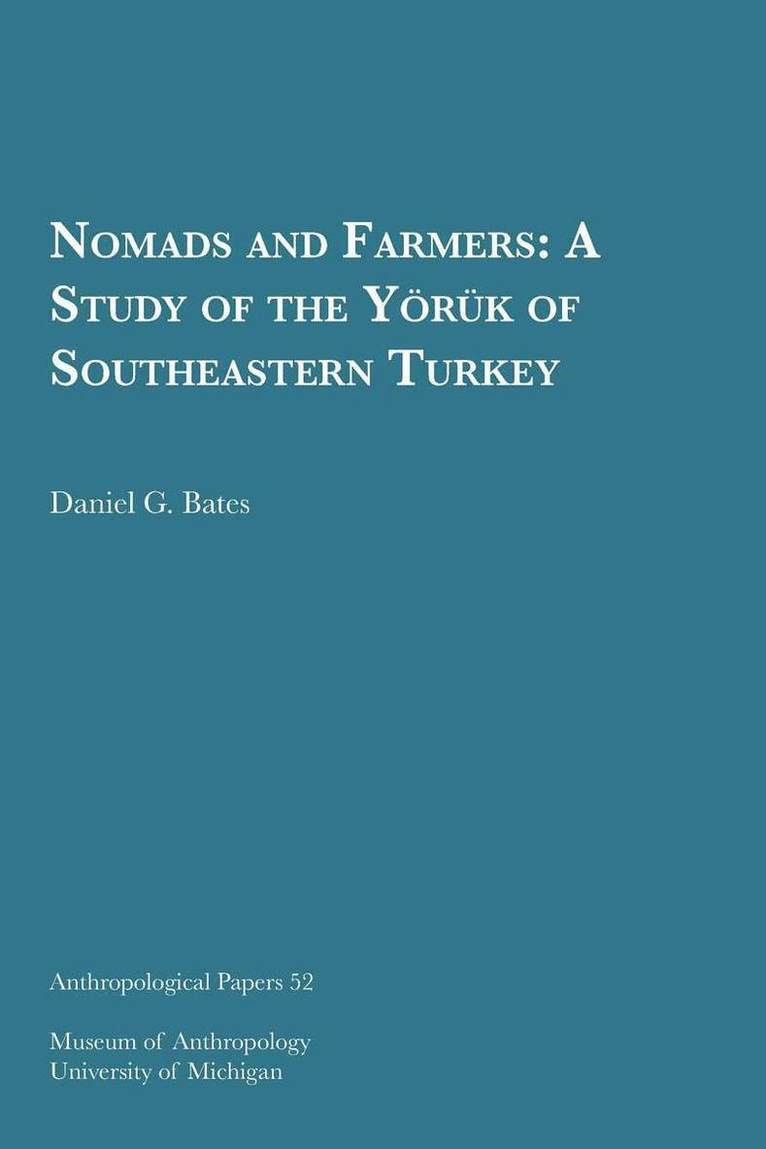
The Yörük of southeastern Turkey are both farmers and nomads. Every year, some of them migrate with their flocks into the mountains for summer pasture, and then back down to the plains for the winter. Others have chosen to remain settled. Anthropologist Daniel G. Bates lived in Turkey for two years in order to study the tribe. Here he describes the many aspects of tribal life: marriage and kidnapping, descent, residence and household patterns, pasture rights, domestic production and wealth, and settlement patterns.
536 kr
Skickas inom 10-15 vardagar
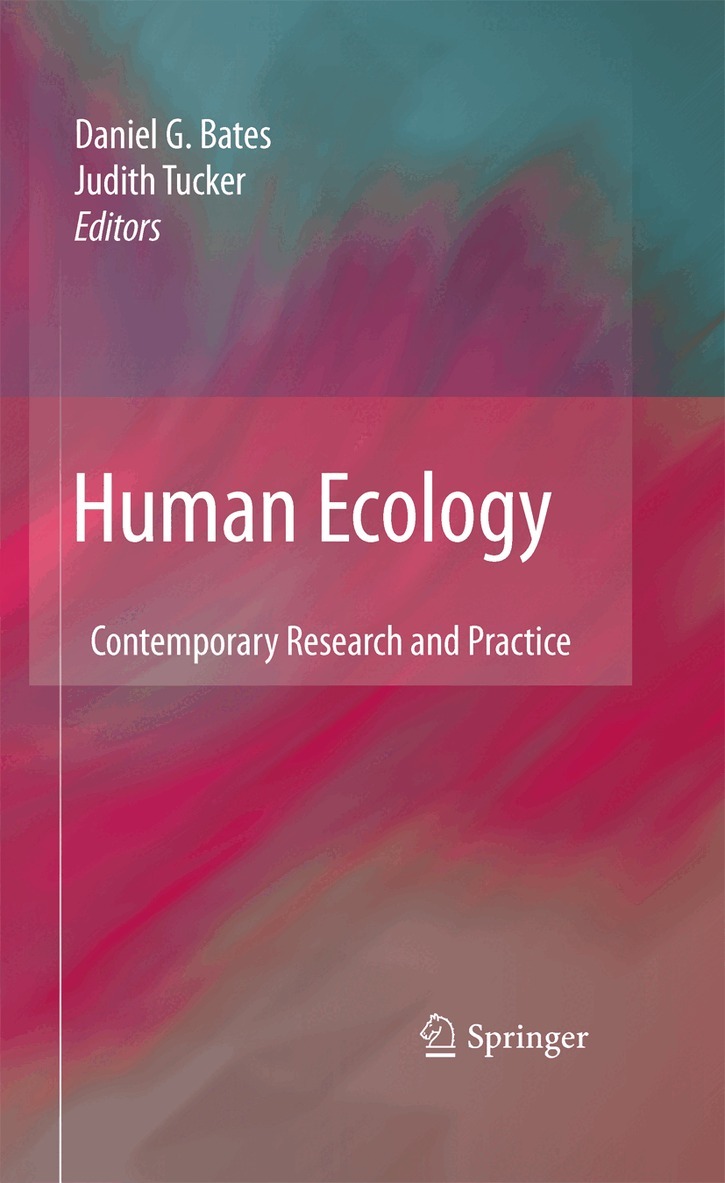
This book arose from the need to develop accessible research-based case study material which addresses contemporary issues and problems in the rapidly evolving field of human ecology. Academic, political, and, indeed, public interest in the environmental sciences is on the rise. This is no doubt spurred by media coverage of climate change and global warming and attendant natural disasters such as unusual drought and flood conditions, toxic dust storms, pollution of air and water, and the like. But there is also a growing intellectual awareness of the social causes of anthropogenic environmental impacts, political vectors in determining conser- tion outcomes, and the role of local representations of ecological knowledge in resource management and sustainable yield production. This is reflected in the rapid increase of ecology courses being taught at leading universities in the fa- growing developing countries much as was the case a decade or two ago in Europe and North America. The research presented here is all taken from recent issues of Human Ecology: An Interdisciplinary Journal. Since the journal itself is a leading forum for cont- porary research, the articles we have selected represent a cross-section of work which brings the perspectives of human ecology to bear on current problems being faced around the world. The chapters are organized in such a way to facilitate the use of this volume either to teach a course or to introduce an informed reader to the field.
536 kr
Skickas inom 10-15 vardagar
This book arose from the need to develop accessible research-based case study material which addresses contemporary issues and problems in the rapidly evolving field of human ecology.