Inbunden, Engelska, 2000
803 kr
Skickas inom 5-8 vardagar
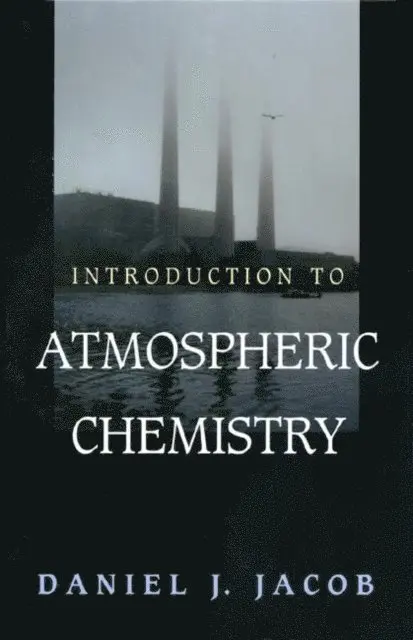
Atmospheric chemistry is one of the fastest growing fields in the earth sciences. Until now, however, there has been no book designed to help students capture the essence of the subject in a brief course of study. Daniel Jacob, a leading researcher and teacher in the field, addresses that problem by presenting the first textbook on atmospheric chemistry for a one-semester course. Based on the approach he developed in his class at Harvard, Jacob introduces students in clear and concise chapters to the fundamentals as well as the latest ideas and findings in the field. Jacob's aim is to show students how to use basic principles of physics and chemistry to describe a complex system such as the atmosphere. He also seeks to give students an overview of the current state of research and the work that led to this point. Jacob begins with atmospheric structure, design of simple models, atmospheric transport, and the continuity equation, and continues with geochemical cycles, the greenhouse effect, aerosols, stratospheric ozone, the oxidizing power of the atmosphere, smog, and acid rain. Each chapter concludes with a problem set based on recent scientific literature.This is a novel approach to problem-set writing, and one that successfully introduces students to the prevailing issues. This is a major contribution to a growing area of study and will be welcomed enthusiastically by students and teachers alike.