Daniel Nettle - Böcker
Visar alla böcker från författaren Daniel Nettle. Handla med fri frakt och snabb leverans.
15 produkter
15 produkter
356 kr
Skickas inom 5-8 vardagar
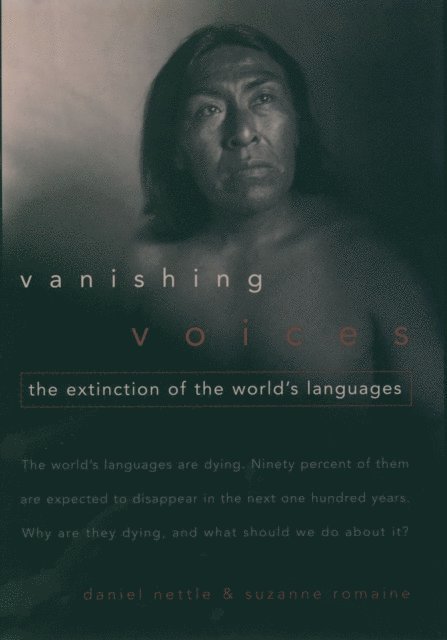
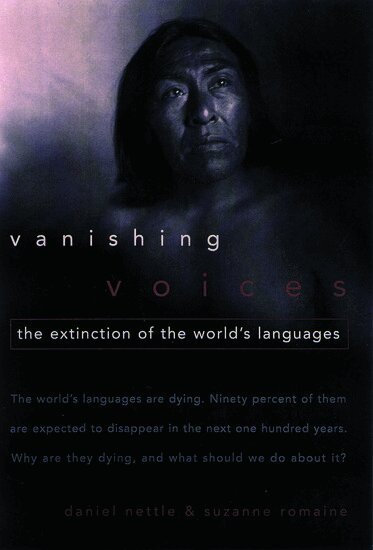
Few people know that nearly 100 native languages once spoken in what is now California are near extinction, or that most of Australia's 250 aboriginal languages have vanished. In fact, at least half of the world's languages may die out in the next century. What has happened to these voices? Should we be alarmed about the disappearance of linguistic diversity?The authors of Vanishing Voices assert that this trend is far more than simply disturbing. Making explicit the link between language survival and environmental issues, they argue that the extinction of languages is part of the larger picture of near-total collapse of the worldwide ecosystem. Indeed, the authors contend that the struggle to preserve precious environmental resources-such as the rainforest-cannot be separated from the struggle to maintain diverse cultures, and that the causes of language death, like that of ecological destruction, lie at the intersection of ecology and politics.And while Nettle and Romaine defend the world's endangered languages, they also pay homage to the last speakers of dying tongues, such as Red Thundercloud, a Native American in South Carolina, Ned Mandrell, with whom the Manx language passed away in 1974, and Arthur Bennett, an Australian, the last person to know more than a few words of Mbabaram. In our languages lies the accumulated knowledge of humanity. Indeed, each language is a unique window on experience. Vanishing Voices is a call to preserve this resource, before it is too late.
216 kr
Skickas inom 5-8 vardagar
A dramatic account of the rate of language extinction, and how it endangers the future of biodiversityFew people know that nearly 100 native languages once spoken in what is now California are near extinction, or that most of Australia's 250 aboriginal languages have vanished. In fact, at least half of the world's languages may die out in the next century. What has happened to these voices? Should we be alarmed about the disappearance of linguistic diversity?The authors of Vanishing Voices assert that this trend is far more than simply disturbing. Making explicit the link between language survival and environmental issues, they argue that the extinction of languages is part of the larger picture of near-total collapse of the worldwide ecosystem. Indeed, the authors contend that the struggle to preserve precious environmental resources-such as the rainforest-cannot be separated from the struggle to maintain diverse cultures, and that the causes of language death, like that of ecological destruction, lie at the intersection of ecology and politics.And while Nettle and Romaine defend the world's endangered languages, they also pay homage to the last speakers of dying tongues, such as Red Thundercloud, a Native American in South Carolina, Ned Mandrell, with whom the Manx language passed away in 1974, and Arthur Bennett, an Australian, the last person to know more than a few words of Mbabaram. In our languages lies the accumulated knowledge of humanity. Indeed, each language is a unique window on experience. Vanishing Voices is a call to preserve this resource, before it is too late.
703 kr
Skickas inom 5-8 vardagar
There are some 6,500 different languages in the world, belonging to around 250 distinct families and conforming to numerous grammatical types. This book explains why. Given that the biological mechanisms underlying language are the same in all normal human beings, would we not be a more successful species if we spoke one language? Daniel Nettle considers how this extraordinary and rich diversity arose, how it relates to the nature of language, cognition, and culture, and how it is linked with the main patterns of human geography and history.Human languages and language families are not distributed evenly: there are relatively few in Eurasia compared to the profusion found in Australasia, the Pacific, and the Americas. There is also a marked correlation between biodiversity and linguistic diversity. The author explains the processes by which this distribution evolved and changes still. To do so he returns to the earliest origins of language, reconstructing the processes of linguistic variation and diffusion that occurred when humans first filled the continents and, thousands of years later, turned to agriculture. He ends by examining the causes of linguistic mortality, and why the number of the world's languages may halve before 2100.Linguistic Diversity draws on work in anthropology, linguistics, geography, archaeology, and evolutionary science to provide a comprehensive account of the patterns of linguistic diversity. It is written in a clear, lively and accessible style, and will appeal broadly across the natural and human sciences, as well as to the informed general reader.
1 206 kr
Skickas inom 3-6 vardagar
There are some 6,500 different languages in the world, belonging to around 250 distinct families and conforming to numerous grammatical types. This book explains why. Given that the biological mechanisms underlying language are the same in all normal human beings, would we not be a more successful species if we spoke one language? Daniel Nettle considers how this extraordinary and rich diversity arose, how it relates to the nature of language, cognition, and culture, and how it is linked with the main patterns of human geography and history.Human languages and language families are not distributed evenly: there are relatively few in Eurasia compared to the profusion found in Australasia, the Pacific, and the Americas. There is also a marked correlation between biodiversity and linguistic diversity. The author explains the processes by which this distribution evolved and changes still. To do so he returns to the earliest origins of language, reconstructing the processes of linguistic variation and diffusion that occurred when humans first filled the continents and, thousands of years later, turned to agriculture. He ends by examining the causes of linguistic mortality, and why the number of the world's languages may halve before 2100.Linguistic Diversity draws on work in anthropology, linguistics, geography, archaeology, and evolutionary science to provide a comprehensive account of the patterns of linguistic diversity. It is written in a clear, lively and accessible style, and will appeal broadly across the natural and human sciences, as well as to the informed general reader.
598 kr
Skickas inom 5-8 vardagar
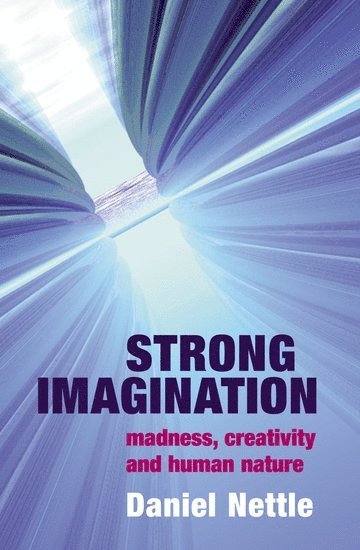
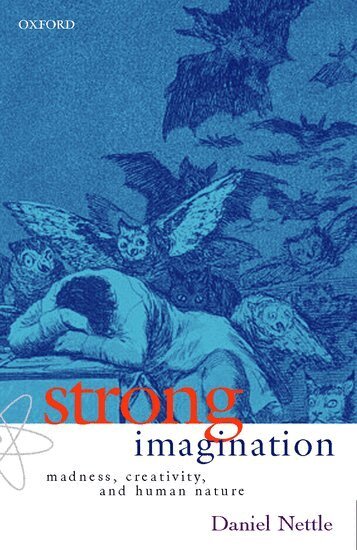
Madness is the central mystery of the human psyche. Our minds evolved to give us a faithful understanding of reality, to allow us to integrate into our communities, and to help us adapt our behaviour to our environment. Yet in serious mental illness, the mind does exactly the opposite of these things. The sufferer builds castles of imaginative delusion, fails to adapt, and becomes a stranger among his own people. Yet mental illness is no marginal phenomenon: it is found in all societies and all historical epochs, and the genes that underlie it are quite common. Furthermore, the traits that identify the madman are found in attenuated form in normal thinking and feeling. The persistence of madness, then, is a terrible puzzle from both an evolutionary and a human point of view. In A Midsummer Night's Dream, Shakespeare suggested a link between madness and artistic creativity: 'The lunatic, the lover, and the poet', he wrote, 'Are of imagination all compact'. Recent studies have shown that there is indeed a connection. Rates of mental illness are hugely elevated in the families of poets, writers and artists, suggesting that the same genes, the same temperaments, and the same imaginative capacities are at work in insanity and in creative ability. Thus the reason madness continues to exist is that the traits behind it have psychological benefits as well as psychological costs. In Strong Imagination, Daniel Nettle explores the nature of mental illness, the biological mechanisms that underlie it, and its link to creative genius. He goes on to consider the place of both madness and creative imagination in the evolution of our species.
299 kr
Skickas inom 5-8 vardagar
Madness is the central mystery of the human psyche. Our minds evolved to give us a faithful understanding of reality, to allow us to integrate into our communities, and to help us to adapt our behaviour to our environment. Yet in serious mental illness, the mind does exactly the opposite of these things. The sufferer builds castles of imaginative delusion, fails to adapt, and becomes a stranger among their own people. Mental illness is no marginal phenomenon: it is found in all societies and all historical epochs, and the genes that underlie it are quite common. Furthermore, the traits that identify the madman are found in attenuated form in normal thinking and feeling. The persistence of madness, then, is a terrible puzzle from both an evolutionary and a human point of view.In A Midsummer Night's Dream, Shakespeare suggested a link between madness and artistic creativity: 'The lunatic, the lover, and the poet', he wrote, 'Are of imagination all compact'. Recent studies have shown that there is indeed a connection. Rates of mental illness are hugely elevated in the families of poets, writers, and artists, suggesting that the same genes, the same temperaments, and the same imaginative capacities are at work in insanity and in creative ability. Thus the reason madness continues to exist is that the traits behind it have psychological benefits as well as psychological costs.In Strong Imagination, Daniel Nettle explores the nature of mental illness, the biological mechanisms that underlie it, and its link to creative genius. He goes on to consider the place of both madness and creative imagination in the evolution of our species.
660 kr
Skickas inom 5-8 vardagar
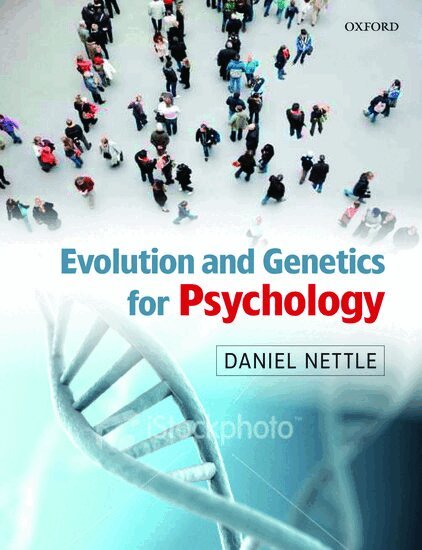
Evolutionary theory is driving forward our understanding of human behaviour like never before. Yet, many of us lack a firm grasp of the basics of the theory of evolution - a clear picture of what evolution is, and how and why it operates. But such clarity is essential if we are to fully understand and explore the fascinating behavioural questions that lie before us.Evolution and Genetics for Psychology lays out the conceptual toolkit one needs in order to think in evolutionary terms - and to apply this thinking to any subject. With the toolkit firmly in place, it goes on to show how these key concepts are applied to issues of human behaviour, from sex to social relationships, to learning.Evolution and Genetics for Psychology does not set out to teach evolutionary psychology or behavioural genetics, but explores the key fundamental principles on which such disciplines are based. If you need to understand what heritability really means, what the difference is between a gene and an allele, or whether evolutionary and social explanations are compatible, this book is the survival guide you need.Online Resource CentreThe Online Resource Centre to accompany Evolution and Genetics for Psychology featuresFor registered adopters of the text:Figures from the book in electronic form, ready to downloadA test bank of questions, with feedback linked to the book, for both formative and summative assessmentFor students:Topical updates: the latest on key topics covered in the bookAnswers to end of chapter questions
380 kr
Skickas inom 5-8 vardagar
434 kr
Skickas inom 5-8 vardagar
133 kr
Skickas
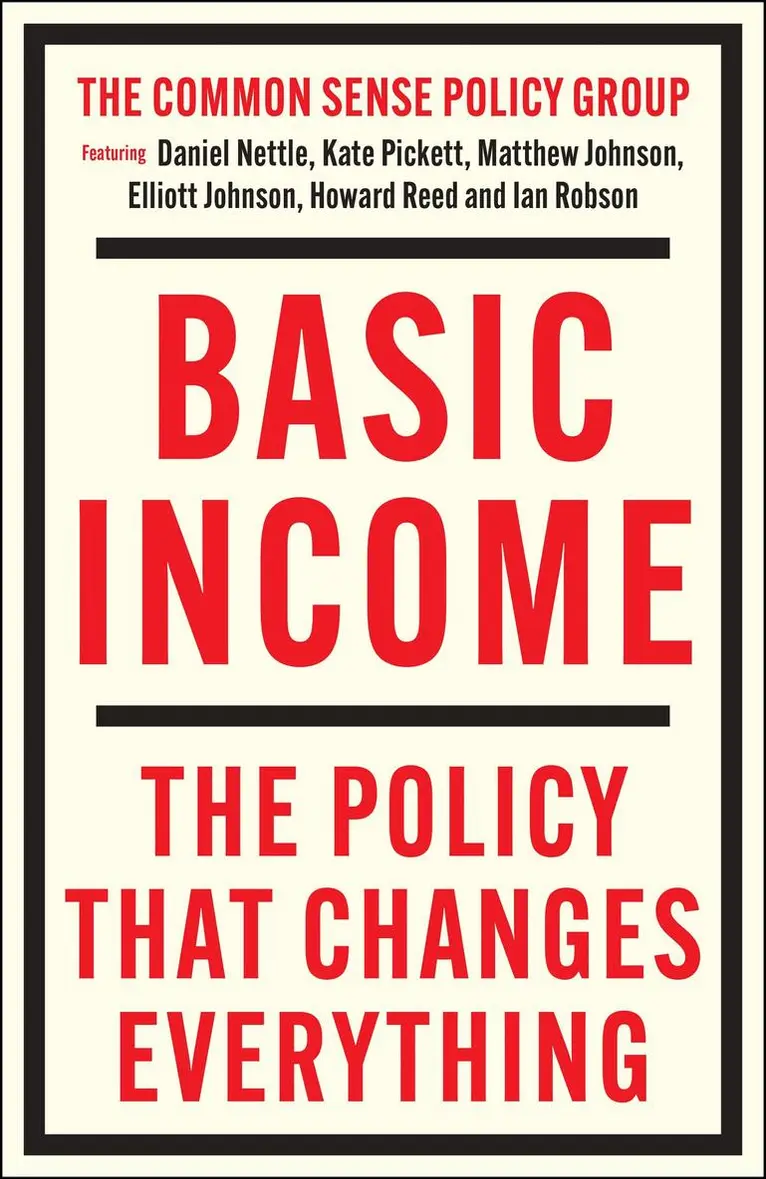
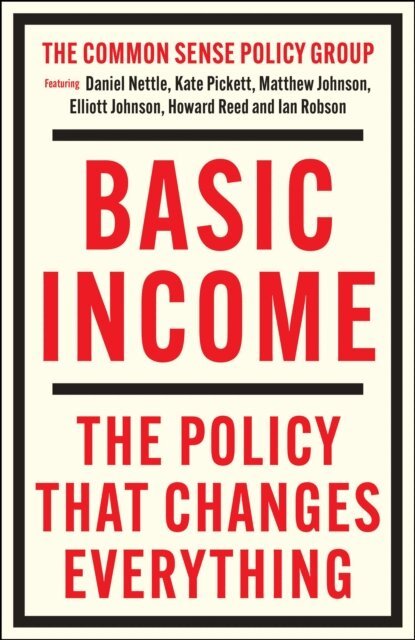
Basic income can no longer be dismissed as a utopian idea — it’s being tested worldwide. But can it truly transform economies and societies?This book dives into real-world examples, revealing how basic income reshapes lives. It explores the ripple effects of financial security—better health, stronger communities, more education, meaningful work, and engaged citizenship. By breaking the cycle of poverty, basic income unlocks access to essentials like food and housing, empowers people, and fuels long-term thinking and entrepreneurshipTying together theory with groundbreaking evidence from real-world trials, this book shows why basic income isn’t just possible—it’s the vital solution to our age of crisis, paving the way for a fairer society.
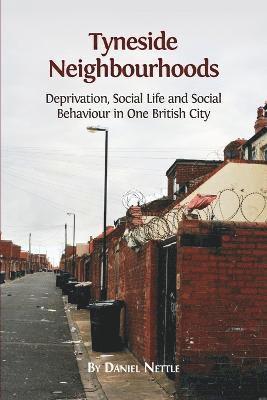
Tyneside Neighbourhoods
Deprivation, Social Life and Social Behaviour in one British City
Häftad, Engelska, 2015
312 kr
Skickas inom 5-8 vardagar
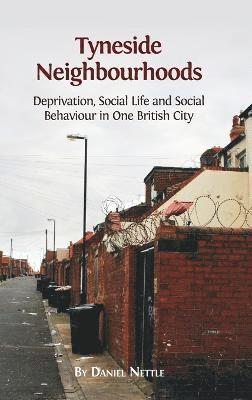
Tyneside Neighbourhoods
Deprivation, Social Life and Social Behaviour in One British City
Inbunden, Engelska, 2015
489 kr
Skickas inom 5-8 vardagar
312 kr
Skickas inom 5-8 vardagar
489 kr
Skickas inom 5-8 vardagar
From Questions to Knowledge
Data Analysis for Psychology and Behavioural Science using R
Häftad, Engelska, 2025
154 kr
Skickas inom 5-8 vardagar