Bokus
Daniel Nettle - Linguistic Diversity, Häftad

Häftad, Engelska, 1999

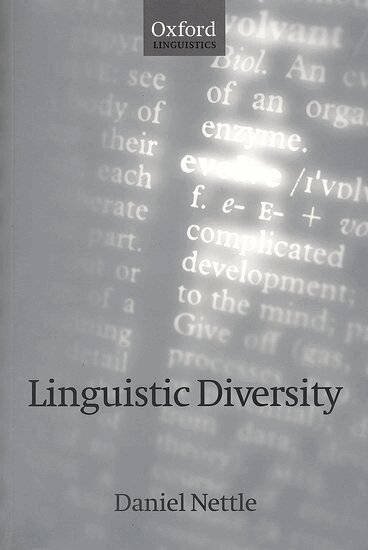
Linguistic Diversity

Av Daniel Nettle

968 kr

Beställningsvara. Skickas inom 5-8 vardagar. Fri frakt över 249 kr.

Beskrivning
There are some 6,500 different languages in the world, belonging to around 250 distinct families and conforming to numerous grammatical types. This book explains why. Given that the biological mechanisms underlying language are the same in all normal human beings, would we not be a more successful species if we spoke one language? Daniel Nettle considers how this extraordinary and rich diversity arose, how it relates to the nature of language, cognition, and culture, and how it is linked with the main patterns of human geography and history.Human languages and language families are not distributed evenly: there are relatively few in Eurasia compared to the profusion found in Australasia, the Pacific, and the Americas. There is also a marked correlation between biodiversity and linguistic diversity. The author explains the processes by which this distribution evolved and changes still. To do so he returns to the earliest origins of language, reconstructing the processes of linguistic variation and diffusion that occurred when humans first filled the continents and, thousands of years later, turned to agriculture. He ends by examining the causes of linguistic mortality, and why the number of the world's languages may halve before 2100.Linguistic Diversity draws on work in anthropology, linguistics, geography, archaeology, and evolutionary science to provide a comprehensive account of the patterns of linguistic diversity. It is written in a clear, lively and accessible style, and will appeal broadly across the natural and human sciences, as well as to the informed general reader.
Produktinformation
  • Utgivningsdatum: 1999-04-22
  • Mått: 155 x 233 x 11 mm
  • Vikt: 276 g
  • Format: Häftad
  • Språk: Engelska
  • Antal sidor: 180
  • Förlag: OUP OXFORD
  • ISBN: 9780198238577
Utforska kategorier
Betyg & recensioner

1 recensioner, genomsnitt 3/5

  1. 3/5 Erik E

    Författaren tar upp olika skäl till att språk utvecklas åt skilda håll och redovisar utfallet av datorsimuleringar han genomfört, och även hur väl antal språk i olika länder (beroende variabel) följer skattade värden enligt olika modeller där de påverkande eller oberoende variabler är t ex antal invånare och växtsäsong (skäl för valet av den sistnämnda variabeln ges i boken). Även om de valda modellerna alltså motiveras och anpassningen är hyfsat god känner jag mig ännu litet fundersam inför ansatsen. En modellering innebär att man funderat igenom vad som har betydelse för variationen och hur strukturen är för beroendet, och även om ansatsen är intressant är jag tveksam till modellerna på den sista punkten.
    Det ligger kanske i ämnets natur att det är ganska hög andel ovanliga ord, dvs relativt svår engelska.