Daniel R. Brooks - Böcker
Visar alla böcker från författaren Daniel R. Brooks. Handla med fri frakt och snabb leverans.
11 produkter
11 produkter
353 kr
Skickas inom 7-10 vardagar
"The merits of this work are many. A rigorous integration of phylogenetic hypotheses into studies of adaptation, adaptive radiation, and coevolution is absolutely necessary and can change dramatically our collective 'gestalt' about much in evolutionary biology. The authors advance and illustrate this thesis beautifully. The writing is often lucid, the examples are plentiful and diverse, and the juxtaposition of examples from different biological systems argues forcefully for the validity of the thesis. Many new insights are offered here, and the work is usually accessible to both the practiced phylogeneticist and the naive ecologist."—Joseph Travis, Florida State University "[Phylogeny, Ecology, and Behavior] presents its arguments forcefully and cogently, with ample . . .support. Brooks and McLennan conclude as they began, with the comment that evolution is a result, not a process, and that it is the result of an interaction of a variety of processes, environmental and historical. Evolutionary explanations must consider all these components, else they are incomplete. As Darwin's explanations of descent with modification integrated genealogical and ecological information, so must workers now incorporate historical and nonhistorical, and biological and nonbiological, processes in their evolutionary perspective."—Marvalee H. Wake, Bioscience"This book is well-written and thought-provoking, and should be read by those of us who do not routinely turn to phylogenetic analysis when investigating adaptation, evolutionary ecology and co-evolution."—Mark R. MacNair, Journal of Natural History
353 kr
Skickas inom 7-10 vardagar
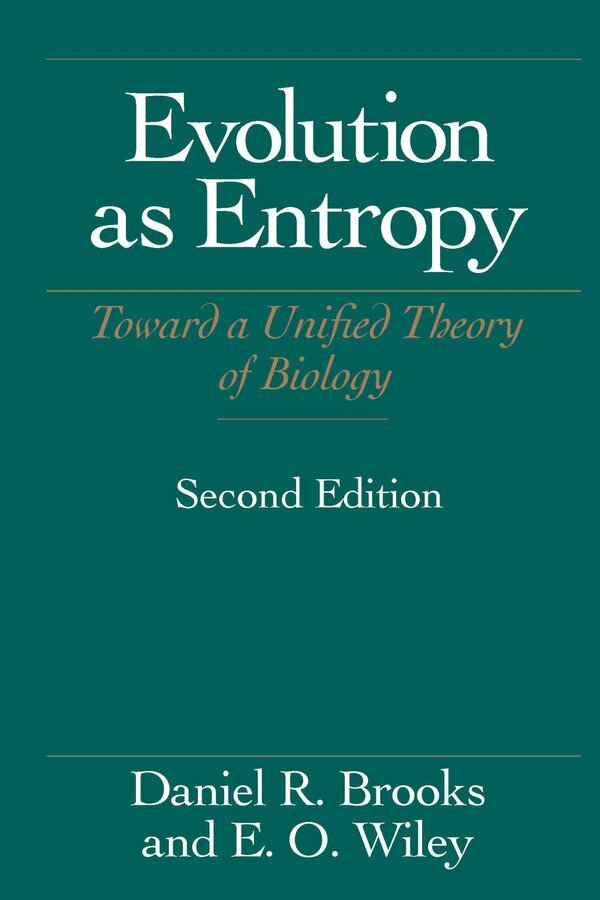
"By combining recent advances in the physical sciences with some of the novel ideas, techniques, and data of modern biology, this book attempts to achieve a new and different kind of evolutionary synthesis. I found it to be challenging, fascinating, infuriating, and provocative, but certainly not dull."—James H, Brown, University of New Mexico"This book is unquestionably mandatory reading not only for every living biologist but for generations of biologists to come."—Jack P. Hailman, Animal Behaviour, review of the first edition"An important contribution to modern evolutionary thinking. It fortifies the place of Evolutionary Theory among the other well-established natural laws."—R.Gessink,TAXON
423 kr
Skickas inom 7-10 vardagar
All living things on earth - from individual species to entire ecosystems - have evolved through time, and evolution is the acknowledged framework of modern biology. Yet many areas of biology have moved from a focus on evolution to much narrower perspectives. Daniel R. Brooks and Deborah A. McLennan argue that it is impossible to comprehend the nature of life on earth unless evolution - the history of organisms - is restored to a central position in research. They demonstrate how the phylogenetic approach can be integrated with ecological and behavioral studies to produce a richer and more complete picture of evolution. Clearly setting out the conceptual, methodological, and empirical foundations of their research program, Brooks and McLennan show how scientists can use it to unravel the evolutionary history of virtually any characteristic of any living thing, from behaviors to ecosystems. They illustrate and test their approach with examples drawn from a wide variety of species and habitats. The Nature of Diversity provides a powerful new tool for understanding, documenting, and preserving the world's biodiversity.It is an essential book for biologists working in evolution, ecology, behavior, conservation, and systematics.
1 106 kr
Tillfälligt slut
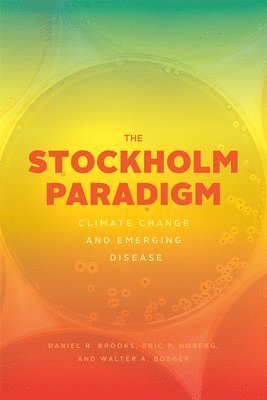
The contemporary crisis of emerging disease has been a century and a half in the making. Human, veterinary, and crop health practitioners convinced themselves that disease could be controlled by medicating the sick, vaccinating those at risk, and eradicating the parts of the biosphere responsible for disease transmission. Evolutionary biologists assured themselves that coevolution between pathogens and hosts provided a firewall against disease emergence in new hosts. Most climate scientists made no connection between climate changes and disease. None of these traditional perspectives anticipated the onslaught of emerging infectious diseases confronting humanity today.As this book reveals, a new understanding of the evolution of pathogen-host systems, called the Stockholm Paradigm, explains what is happening. The planet is a minefield of pathogens with preexisting capacities to infect susceptible but unexposed hosts, needing only the opportunity for contact. Climate change has always been the major catalyst for such new opportunities, because it disrupts local ecosystem structure and allows pathogens and hosts to move. Once pathogens expand to new hosts, novel variants may emerge, each with new infection capacities. Mathematical models and real-world examples uniformly support these ideas. Emerging disease is thus one of the greatest climate change-related threats confronting humanity.While time is short, the danger is great, and we are largely unprepared, The Stockholm Paradigm offers hope for managing the crisis. By using the DAMA (document, assess, monitor, act) protocol, we can "anticipate to mitigate" emerging disease, buying time and saving money while we search for more effective ways to cope with this challenge.
472 kr
Skickas inom 7-10 vardagar
The contemporary crisis of emerging disease has been a century and a half in the making. Human, veterinary, and crop health practitioners convinced themselves that disease could be controlled by medicating the sick, vaccinating those at risk, and eradicating the parts of the biosphere responsible for disease transmission. Evolutionary biologists assured themselves that coevolution between pathogens and hosts provided a firewall against disease emergence in new hosts. Most climate scientists made no connection between climate changes and disease. None of these traditional perspectives anticipated the onslaught of emerging infectious diseases confronting humanity today.As this book reveals, a new understanding of the evolution of pathogen-host systems, called the Stockholm Paradigm, explains what is happening. The planet is a minefield of pathogens with preexisting capacities to infect susceptible but unexposed hosts, needing only the opportunity for contact. Climate change has always been the major catalyst for such new opportunities, because it disrupts local ecosystem structure and allows pathogens and hosts to move. Once pathogens expand to new hosts, novel variants may emerge, each with new infection capacities. Mathematical models and real-world examples uniformly support these ideas. Emerging disease is thus one of the greatest climate change-related threats confronting humanity.While time is short, the danger is great, and we are largely unprepared, The Stockholm Paradigm offers hope for managing the crisis. By using the DAMA (document, assess, monitor, act) protocol, we can "anticipate to mitigate" emerging disease, buying time and saving money while we search for more effective ways to cope with this challenge.
336 kr
Skickas
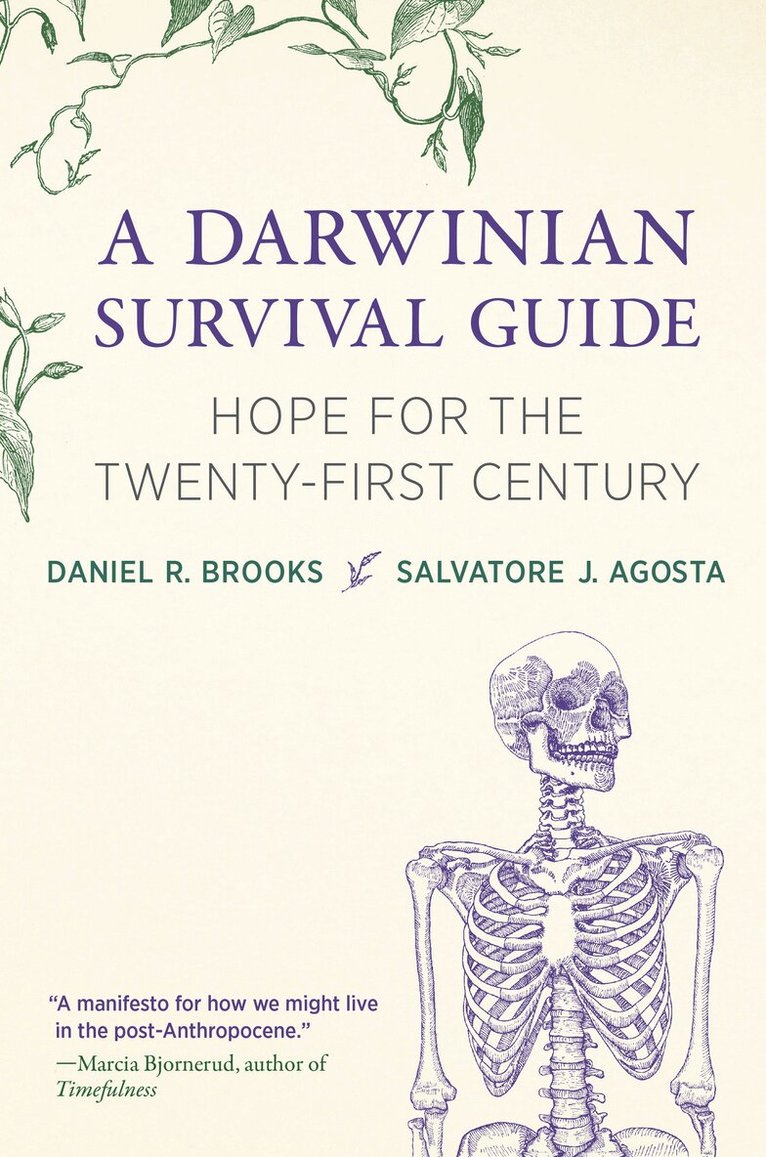
How humanity brought about the climate crisis by departing from its evolutionary trajectory 15,000 years ago—and how we can use evolutionary principles to save ourselves from the worst outcomes.Despite efforts to sustain civilization, humanity faces existential threats from overpopulation, globalized trade and travel, urbanization, and global climate change. In A Darwinian Survival Guide, Daniel Brooks and Salvatore Agosta offer a novel—and hopeful—perspective on how to meet these tremendous challenges by changing the discourse from sustainability to survival. Darwinian evolution, the world’s only theory of survival, is the means by which the biosphere has persisted and renewed itself following past environmental perturbations, and it has never failed, they explain. Even in the aftermath of mass extinctions, enough survivors remain with the potential to produce a new diversified biosphere.Drawing on their expertise as field biologists, Brooks and Agosta trace the evolutionary path from the early days of humans through the Late Pleistocene and the beginning of the Anthropocene all the way to the Great Acceleration of technological humanity around 1950, demonstrating how our creative capacities have allowed humanity to survive. However, constant conflict without resolution has made the Anthropocene not only unsustainable, but unsurvivable. Guided by the four laws of biotics, the authors explain how humanity should interact with the rest of the biosphere and with each other in accordance with Darwinian principles. They reveal a middle ground between apocalypse and utopia, with two options: alter our behavior now at great expense and extend civilization or fail to act and rebuild in accordance with those same principles. If we take the latter, then our immediate goal ought to focus on preserving as many of humanity’s positive achievements—from high technology to high art—as possible to shorten the time needed to rebuild.
274 kr
Skickas
How humanity brought about the climate crisis by departing from its evolutionary trajectory 15,000 years ago and how we can use evolutionary principles to save ourselves from the worst outcomes. Despite efforts to sustain civilization, humanity faces existential threats from overpopulation, globalized trade and travel, urbanization, and global climate change. In A Darwinian Survival Guide, Daniel Brooks and Salvatore Agosta offer a novel and hopeful perspective on how to meet these tremendous challenges by changing the discourse from sustainability to survival. Darwinian evolution, the world s only theory of survival, is the means by which the biosphere has persisted and renewed itself following past environmental perturbations, and it has never failed, they explain. Even in the aftermath of mass extinctions, enough survivors remain with the potential to produce a new diversified biosphere. Drawing on their expertise as field biologists, Brooks and Agosta trace the evolutionary path from the early days of humans through the Late Pleistocene and the beginning of the Anthropocene all the way to the Great Acceleration of technological humanity around 1950, demonstrating how our creative capacities have allowed humanity to survive. However, constant conflict without resolution has made the Anthropocene not only unsustainable, but unsurvivable. Guided by the four laws of biotics, the authors explain how humanity should interact with the rest of the biosphere and with each other in accordance with Darwinian principles. They reveal a middle ground between apocalypse and utopia, with two options: alter our behavior now at great expense and extend civilization or fail to act and rebuild in accordance with those same principles. If we take the latter, then our immediate goal ought to focus on preserving as many of humanity s positive achievements from high technology to high art as possible to shorten the time needed to rebuild.
364 kr
Skickas inom 5-8 vardagar
689 kr
Skickas
This book is a photo essay of all the 17th-, 18th-, and 19th-century statues of nude men in the squares, parks and museums of Paris. The pictures concentrate on the rarely photographed backsides of these statues. It is a celebration of the beauty of the male nude from the back with a particular focus on the muscular strength, sensual curves and erotic power of the derriere. It also celebrates the sculptors who have created these statues. Almost half were recipients of the Grand Prix de Rome, an award for exceptional young artists to go to Rome to study the art of the antiquities and the Renaissance. The majority of the artists had works shown in the Salons of Paris and most received major awards and commissions. The text features literary quotes about the beauty of the male, often particularly the derriere, by authors from ancient times to the present. The book is the product of a flaneur who had the time and leisure to walk the streets of Paris for the last six years collecting these images always from behind.
Del 2 - Evolutionary Biology – New Perspectives on Its Development
Major Metaphors of Evolution
Darwinism Then and Now
Inbunden, Engelska, 2020
2 100 kr
Skickas inom 10-15 vardagar
This book presents a unified evolutionary framework based on three sets of metaphors that will help to consolidate discussions on evolutionary transitions. Evolution is the unifying principle of life, making identifying ways to apply evolutionary principles to tackle existence-threatening crises such as climate change crucial.
Del 2 - Evolutionary Biology – New Perspectives on Its Development
Major Metaphors of Evolution
Darwinism Then and Now
Häftad, Engelska, 2021
2 100 kr
Skickas inom 10-15 vardagar
This book presents a unified evolutionary framework based on three sets of metaphors that will help to consolidate discussions on evolutionary transitions. Evolution is the unifying principle of life, making identifying ways to apply evolutionary principles to tackle existence-threatening crises such as climate change crucial.