Daniel R. Montello - Böcker
Visar alla böcker från författaren Daniel R. Montello. Handla med fri frakt och snabb leverans.
8 produkter
8 produkter
179 kr
Tillfälligt slut
2 103 kr
Skickas inom 10-15 vardagar
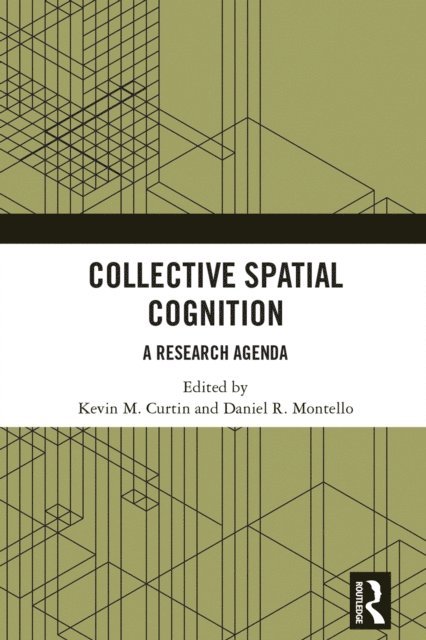
This book integrates the science of spatial cognition and the science of team cognition to explore the social, psychological, and behavioral phenomenon of spatial cognition as it occurs in human collectives such as dyads and work teams.It represents the culmination of a process of outlining and defining a growing field of research termed Collective Spatial Cognition. It engages contributions from an international and multi-disciplinary community of scholars, who have collaborated to provide a foundation for knowledge discovery regarding how groups of people of varying size acquire information and solve problems involving spatiality as a key component, leading to action that incorporates the spatial information and problem-solving collectively achieved. The collectives under study can be as small as dyads (teams of two) to large teams-of-teams who are working alongside each other to complete a mutual goal. The book lays the foundation for multi- and interdisciplinary work regarding Collective Spatial Cognition in the years to come, and this book documents that foundation.This book will be of interest to those researching spatial, behavioural, cognitive, and information sciences in the fields of human geography, sociology, psychology, and computer science.
580 kr
Skickas inom 10-15 vardagar
This book integrates the science of spatial cognition and the science of team cognition to explore the social, psychological, and behavioral phenomenon of spatial cognition as it occurs in human collectives such as dyads and work teams.It represents the culmination of a process of outlining and defining a growing field of research termed Collective Spatial Cognition. It engages contributions from an international and multi-disciplinary community of scholars, who have collaborated to provide a foundation for knowledge discovery regarding how groups of people of varying size acquire information and solve problems involving spatiality as a key component, leading to action that incorporates the spatial information and problem-solving collectively achieved. The collectives under study can be as small as dyads (teams of two) to large teams-of-teams who are working alongside each other to complete a mutual goal. The book lays the foundation for multi- and interdisciplinary work regarding Collective Spatial Cognition in the years to come, and this book documents that foundation.This book will be of interest to those researching spatial, behavioural, cognitive, and information sciences in the fields of human geography, sociology, psychology, and computer science.
An Introduction to Scientific Research Methods in Geography and Environmental Studies
Inbunden, Engelska, 2012
2 832 kr
Skickas inom 3-6 vardagar
"Covers a broad range of subjects that undergraduates in the discipline should be familiar and comfortable with upon graduation. From chapters on the scientific method and fundamental research concepts, to experimental design, sampling and statistical analysis, the text offers an excellent introduction to the key concepts of geographical research. The content is applicable for students at the beginning of their studies right through to planning and conducting dissertations. The book has also been of particular support in designing my level 1 and 2 tutorials which cover similar ground to several of the chapters."- Joseph Mallalieu, School of Geography, Leeds University"Montello and Sutton is one of the best texts I've used in seminars on research methodology. The text offers a clear balance of quantitative vs. qualitative and physical vs. human which I've found particularly valuable. The chapters on research ethics, scientific communication, information technologies and data visualization are excellent." - Kenneth E. Foote, Department of Geography, University of Colorado at BoulderThis is a broad and integrative introduction to the conduct and interpretation of scientific research, covering both geography and environmental studies. Written for undergraduate and postgraduate students, it:Explains both the conceptual and the technical aspects of research, as well as all phases of the research processCombines approaches in physical geography and environmental science, human geography and human-environment relations, and geographic and environmental information techniques (such as GIS, cartography, and remote sensing)Combines natural and social scientific approaches common to subjects in geography and environmental studiesIncludes case studies of actual research projects to demonstrate the breadth of approaches takenIt will be core reading for students studying scientific research methods in geography, environmental studies and related disciplines such as planning and earth science.
An Introduction to Scientific Research Methods in Geography and Environmental Studies
Häftad, Engelska, 2012
987 kr
Skickas inom 3-6 vardagar
"Covers a broad range of subjects that undergraduates in the discipline should be familiar and comfortable with upon graduation. From chapters on the scientific method and fundamental research concepts, to experimental design, sampling and statistical analysis, the text offers an excellent introduction to the key concepts of geographical research. The content is applicable for students at the beginning of their studies right through to planning and conducting dissertations. The book has also been of particular support in designing my level 1 and 2 tutorials which cover similar ground to several of the chapters."- Joseph Mallalieu, School of Geography, Leeds University"Montello and Sutton is one of the best texts I've used in seminars on research methodology. The text offers a clear balance of quantitative vs. qualitative and physical vs. human which I've found particularly valuable. The chapters on research ethics, scientific communication, information technologies and data visualization are excellent." - Kenneth E. Foote, Department of Geography, University of Colorado at BoulderThis is a broad and integrative introduction to the conduct and interpretation of scientific research, covering both geography and environmental studies. Written for undergraduate and postgraduate students, it:Explains both the conceptual and the technical aspects of research, as well as all phases of the research processCombines approaches in physical geography and environmental science, human geography and human-environment relations, and geographic and environmental information techniques (such as GIS, cartography, and remote sensing)Combines natural and social scientific approaches common to subjects in geography and environmental studiesIncludes case studies of actual research projects to demonstrate the breadth of approaches takenIt will be core reading for students studying scientific research methods in geography, environmental studies and related disciplines such as planning and earth science.
3 437 kr
Skickas inom 7-10 vardagar
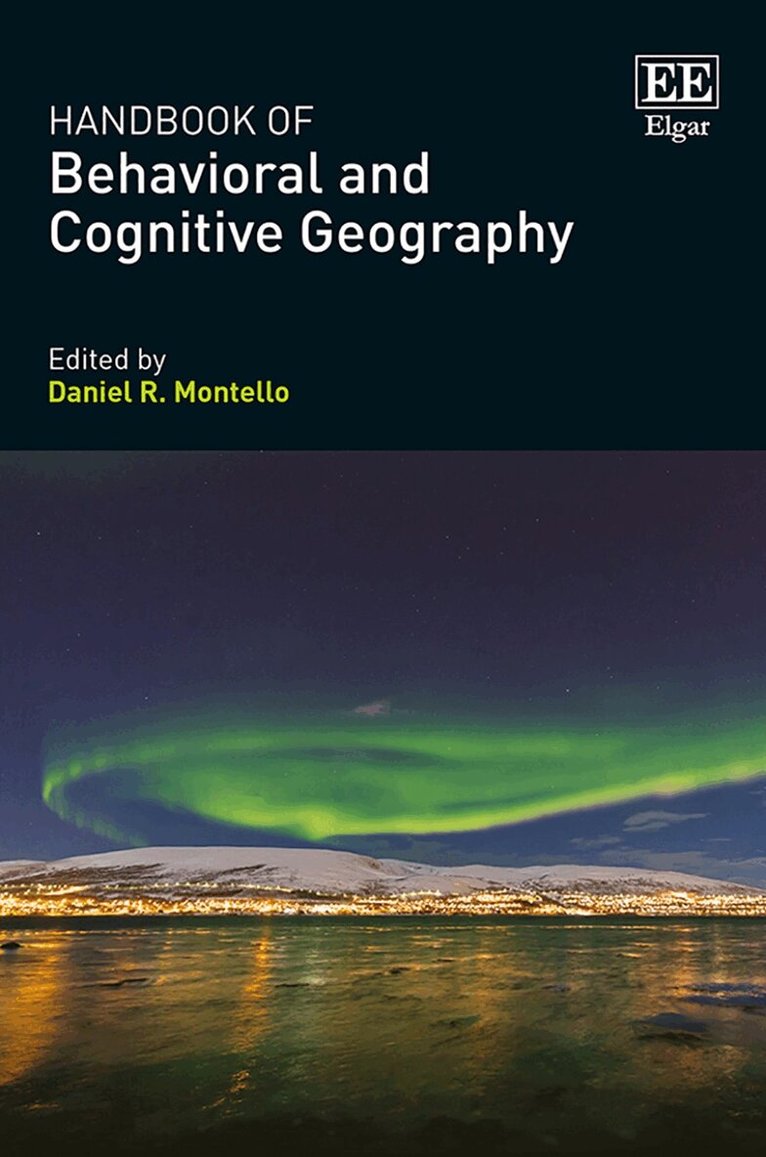
This comprehensive Handbook summarizes existing work and presents new concepts and empirical results from leading scholars in the multidisciplinary field of behavioral and cognitive geography, the study of the human mind, and activity in and concerning space, place, and environment. It provides the broadest and most inclusive coverage of the field so far, including work relevant to human geography, cartography, and geographic information science.Behavioral and cognitive geography originated as a contrast to aggregate approaches to human geography that treat people as homogenous and interchangeable; to models of human activity based on simplistic and psychologically implausible assumptions; and to conceptualizations of humans as passive responders to their environment. This Handbook is highly multi- and interdisciplinary, featuring scholars from geography, geographic information science, and more than ten other academic disciplines; including: psychology, linguistics, computer science, engineering, architecture and planning, anthropology, and neuroscience. The contributors adhere to scientific rigor in their approach, while fully engaging with issues of emotion, subjectivity, consciousness, and human variability.Thoroughly informed by the history of geography and of the cognitive sciences but also providing guideposts for future research and application, this Handbook will be an essential resource for researchers, lecturers and students in geography, psychology, and other social, behavioral, cognitive, and design sciences.Contributors include: P. Agarwal, A.P. Boone, T.T. Brunyé, H. Burte, R.C. Dalton, C. Davies, R.M. Downs, S.I. Fabrikant, A.L. Gardony, N.A. Giudice, P. Gober, K.G. Goulias, S. Hadavi, M. Hegarty, S.C. Hirtle, C. Hölscher, T. Ishikawa, P. Jankowski, J. Krukar, C.A. Lawton, H.J. Miller, D.R. Montello, J. Portugali, M. Raubal, V.R. Schinazi, W.C. Sullivan, H.A. Taylor, T. Tenbrink, T. Thrash, P.M. Torrens, D.H. Uttal
Spatial Information Theory: Foundations of Geographic Information Science
International Conference, COSIT 2001 Morro Bay, CA, USA, September 19-23, 2001 Proceedings
Häftad, Engelska, 2001
540 kr
Skickas inom 10-15 vardagar
This book constitutes the refereed proceedings of the 5th International Conference on Spatial Information Theory, COSIT 3001, held in Morro Bay, CA, USA in September 2001. The 30 revised full papers presented together with three full keynote papers were carefully reviewed and selected from more than 70 submissions. The papers are organized in topical sections on geographical ontology and onthologies; qualitative spatio-temporal reasoning; formalizations of human spatial cognition; space, cognition, and information systems; human and machine approaches to navigation; language and space; and cognitive mapping.
556 kr
Skickas inom 10-15 vardagar
This is the fifth volume in a series of book publications featuring basic interdisciplinary research in spatial cognition. The study of spatial cognition is the study of knowledge about spatial properties of objects and events in the world. Spatial properties include location, size, distance, direction, separation and connection, shape, pattern, and so on. Cognition is about the structures and processes of knowledge: its acquisition, storage, retrieval, manipulation, and use by humans, nonhuman animals, and machines. Broadly construed, cognitive activities include sensation and perception, thinking, attention, imagery, attitudes, memory, learning, language, and reasoning and problem-solving; the interaction of these activities with motoric (body movement) and affective (emotional) processing is recognized as critically important, as well. Cognition is typically considered to make up much of the activity of the mind. But though the mind is an expression of the structures and processes of the brain and nervous system, it is also an expression of an organism or agent with a physical body that typically exists in a physical and socio-cultural world. Researchers study spatial cognition for several reasons. Spatial cognition plays important roles in most of the domains of knowledge and behavior of sentient beings, including activities associated with biological survival, social interaction, cultural practice, and economic exchange. Attempts to describe, predict, and explain the basic components of spatial cognition and their interrelationships stimulate a host of interesting basic questions about how important parts of reality work.