Daniel S. Hamermesh – författare
341 kr
Skickas inom 3-6 vardagar
166 kr
Läs direkt efter köp
166 kr
Läs direkt efter köp
1 375 kr
Läs direkt efter köp
1 647 kr
Skickas inom 7-10 vardagar
Economics of Time Use
2 215 kr
Skickas inom 5-8 vardagar
770 kr
Skickas inom 5-8 vardagar
259 kr
Skickas inom 5-8 vardagar
1 027 kr
Läs direkt efter köp
In this book Daniel Hamermesh provides the first comprehensive picture of the disparate field of labor demand. The author reviews both the static and dynamic theories of labor demand, and provides evaluative summaries of the available empirical research in these two subject areas. Moreover, he uses both theory and evidence to establish a generalized framework for analyzing the impact of policies such as minimum wages, payroll taxes, job- security measures, unemployment insurance, and others. Covering every aspect of labor demand, this book uses material from a wide range of countries.
917 kr
Skickas inom 3-6 vardagar
1 135 kr
Skickas inom 5-8 vardagar
271 kr
Läs direkt efter köp
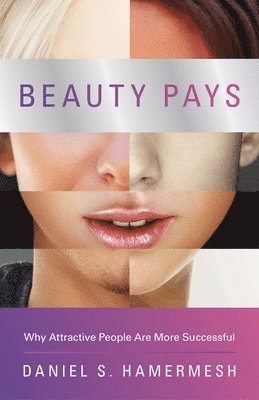
How beauty leads to better jobs, better wages, and better spousesMost of us know there is a payoff to looking good, and in the quest for beauty we spend countless hours and billions of dollars on personal grooming, cosmetics, and plastic surgery. But how much better off are the better looking? Based on the evidence, quite a lot. The first book to seriously measure the advantages of beauty, Beauty Pays demonstrates how society favors the beautiful and how better-looking people experience startling but undeniable benefits in all aspects of life. Noted economist Daniel Hamermesh shows that the attractive are more likely to be employed, work more productively and profitably, receive more substantial pay, obtain loan approvals, negotiate loans with better terms, and have more handsome and highly educated spouses. Hamermesh explains why this happens and what it means for the beautiful—and the not-so-beautiful—among us.Exploring whether a universal standard of beauty exists, Hamermesh illustrates how attractive workers make more money, how these amounts differ by gender, and how looks are valued differently based on profession. He considers whether extra pay for good-looking people represents discrimination, and, if so, who is discriminating. Hamermesh investigates the commodification of beauty in dating and how this influences the search for intelligent or high-earning mates, and even examines whether government programs should aid the ugly. He also discusses whether the economic benefits of beauty will persist into the foreseeable future and what the "looks-challenged" can do to overcome their disadvantage.Reflecting on a sensitive issue that touches everyone, Beauty Pays proves that beauty''s rewards are anything but superficial.
685 kr
Läs direkt efter köp
390 kr
Läs direkt efter köp
365 kr
Skickas inom 10-15 vardagar
376 kr
Läs direkt efter köp
390 kr
Läs direkt efter köp
376 kr
Läs direkt efter köp
1 528 kr
Läs direkt efter köp
Beginning in 1965 Nobel Laureate Gary Becker realized that shadow prices, which reflect the value of one’s time, may be at least as important as money prices. Implications of his resulting theory of time allocation were not tested until much later when governments began to collect extensive data on how individuals utilized their time.
Time Use in Economics contains original research on new aspects of time use compiled by Daniel S. Hamermesh, a long-time path-breaking labor economist leader in analyzing time use data, and Solomon W. Polachek, a pioneer in gender-related labor market research. Topics include how time is used by type of household, how time is used in particular jobs, how time is used in high versus low growth geographic areas, how time is used after a job loss, how time use affects individual wellbeing, as well as how to interpret the blurred boundaries of time use between leisure and work, a growing issue as more individuals, especially mothers, work from home.
Time Use in Economics
1 420 kr
Skickas inom 5-8 vardagar
1 474 kr
Läs direkt efter köp
Beginning in 1965 Nobel Laureate Gary Becker realized that shadow prices, which reflect the value of one’s time, may be at least as important as money prices. Implications of his resulting theory of time allocation were not tested until much later when governments began to collect extensive data on how individuals utilized their time.
Time Use in Economics contains original research on new aspects of time use compiled by Daniel S. Hamermesh, a long-time path-breaking labor economist leader in analyzing time use data, and Solomon W. Polachek, a pioneer in gender-related labor market research. Topics include how time is used by type of household, how time is used in particular jobs, how time is used in high versus low growth geographic areas, how time is used after a job loss, how time use affects individual wellbeing, as well as how to interpret the blurred boundaries of time use between leisure and work, a growing issue as more individuals, especially mothers, work from home.
DYNAMIC LABOR DEMAND AND ADJUSTMENT COSTS
3 762 kr
Skickas inom 5-8 vardagar