Daniela Krüger – författare
Visar alla böcker från författaren Daniela Krüger. Handla med fri frakt och snabb leverans.
5 produkter
5 produkter
Häftad, Engelska, 2020
629 kr
Skickas inom 10-15 vardagar
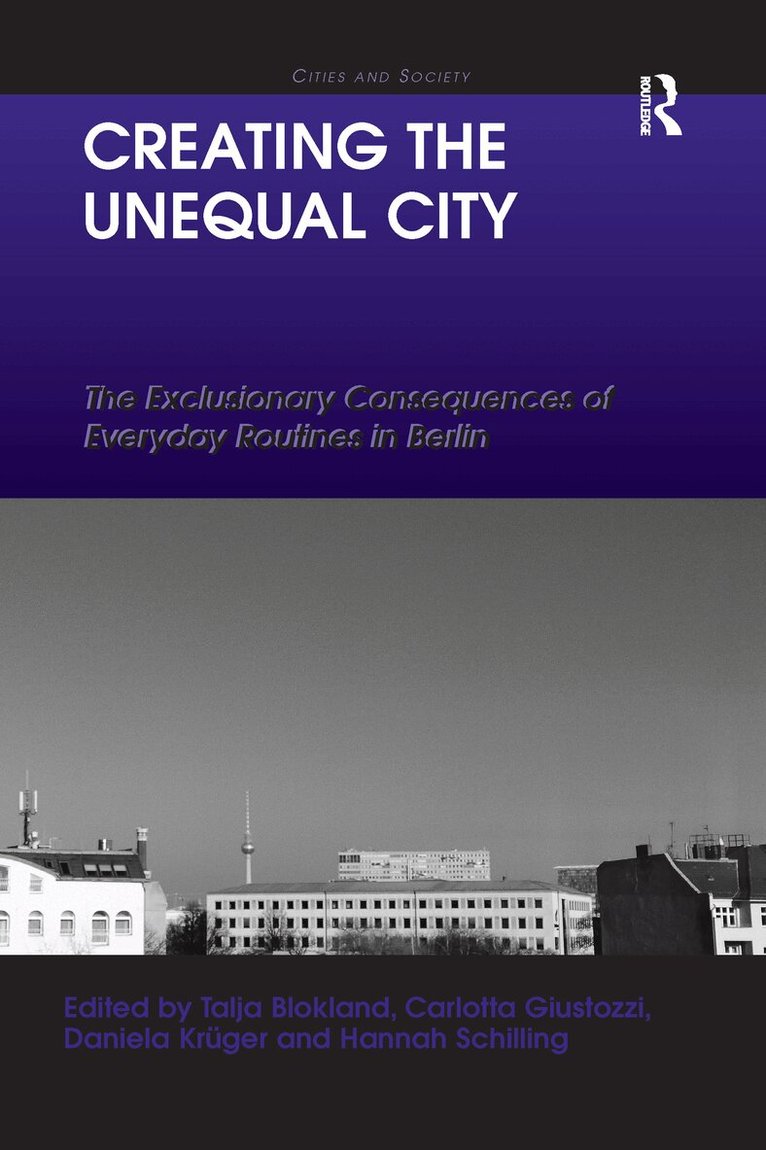
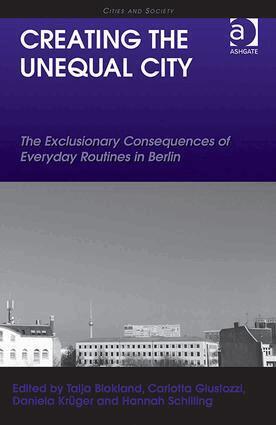
Cities can be seen as geographical imaginaries: places have meanings attributed so that they are perceived, represented and interpreted in a particular way. We may therefore speak of cityness rather than 'the city': the city is always in the making. It cannot be grasped as a fixed structure in which people find their lives, and is never stable, through agents designing courses of interactions with geographical imaginations. This theoretical perspective on cities is currently reshaping the field of urban studies, requiring new forms of theory, comparisons and methods. Meanwhile, mainstream urban studies approaches neighbourhoods as fixed social-spatial units, producing effects on groups of residents. Yet they have not convincingly shown empirically that the neighbourhood is an entity generating effects, rather than being the statistical aggregate where effects can be measured. This book challenges this common understanding, and argues for an approach that sees neighbourhood effects as the outcome of processes of marginalisation and exclusion that find spatial expressions in the city elsewhere. It does so through a comparative study of an unusual kind: Sub-Saharan Africans, second generation Turkish and Lebanese girls, and alcohol and drug consumers, some of them homeless, arguably some of the most disadvantaged categories in the German capital, Berlin, in inner city neighbourhoods, and middle class families in owner-occupied housing. This book analyses urban inequalities through the lens of the city in the making, where neighbourhood comes to play a role, at some times, in some practices, and at some moments, but is not the point of departure.
E-bok
Engelska, 2016730 kr
Läs direkt efter köp
Cities can be seen as geographical imaginaries: places have meanings attributed so that they are perceived, represented and interpreted in a particular way. We may therefore speak of cityness rather than ''the city'': the city is always in the making. It cannot be grasped as a fixed structure in which people find their lives, and is never stable, through agents designing courses of interactions with geographical imaginations. This theoretical perspective on cities is currently reshaping the field of urban studies, requiring new forms of theory, comparisons and methods. Meanwhile, mainstream urban studies approaches neighbourhoods as fixed social-spatial units, producing effects on groups of residents. Yet they have not convincingly shown empirically that the neighbourhood is an entity generating effects, rather than being the statistical aggregate where effects can be measured. This book challenges this common understanding, and argues for an approach that sees neighbourhood effects as the outcome of processes of marginalisation and exclusion that find spatial expressions in the city elsewhere. It does so through a comparative study of an unusual kind: Sub-Saharan Africans, second generation Turkish and Lebanese girls, and alcohol and drug consumers, some of them homeless, arguably some of the most disadvantaged categories in the German capital, Berlin, in inner city neighbourhoods, and middle class families in owner-occupied housing. This book analyses urban inequalities through the lens of the city in the making, where neighbourhood comes to play a role, at some times, in some practices, and at some moments, but is not the point of departure.
E-bok
PDF, Engelska, 2016730 kr
Läs direkt efter köp
Cities can be seen as geographical imaginaries: places have meanings attributed so that they are perceived, represented and interpreted in a particular way. We may therefore speak of cityness rather than ''the city'': the city is always in the making. It cannot be grasped as a fixed structure in which people find their lives, and is never stable, through agents designing courses of interactions with geographical imaginations. This theoretical perspective on cities is currently reshaping the field of urban studies, requiring new forms of theory, comparisons and methods. Meanwhile, mainstream urban studies approaches neighbourhoods as fixed social-spatial units, producing effects on groups of residents. Yet they have not convincingly shown empirically that the neighbourhood is an entity generating effects, rather than being the statistical aggregate where effects can be measured. This book challenges this common understanding, and argues for an approach that sees neighbourhood effects as the outcome of processes of marginalisation and exclusion that find spatial expressions in the city elsewhere. It does so through a comparative study of an unusual kind: Sub-Saharan Africans, second generation Turkish and Lebanese girls, and alcohol and drug consumers, some of them homeless, arguably some of the most disadvantaged categories in the German capital, Berlin, in inner city neighbourhoods, and middle class families in owner-occupied housing. This book analyses urban inequalities through the lens of the city in the making, where neighbourhood comes to play a role, at some times, in some practices, and at some moments, but is not the point of departure.
Inbunden, Engelska, 2026
1 093 kr
Kommande
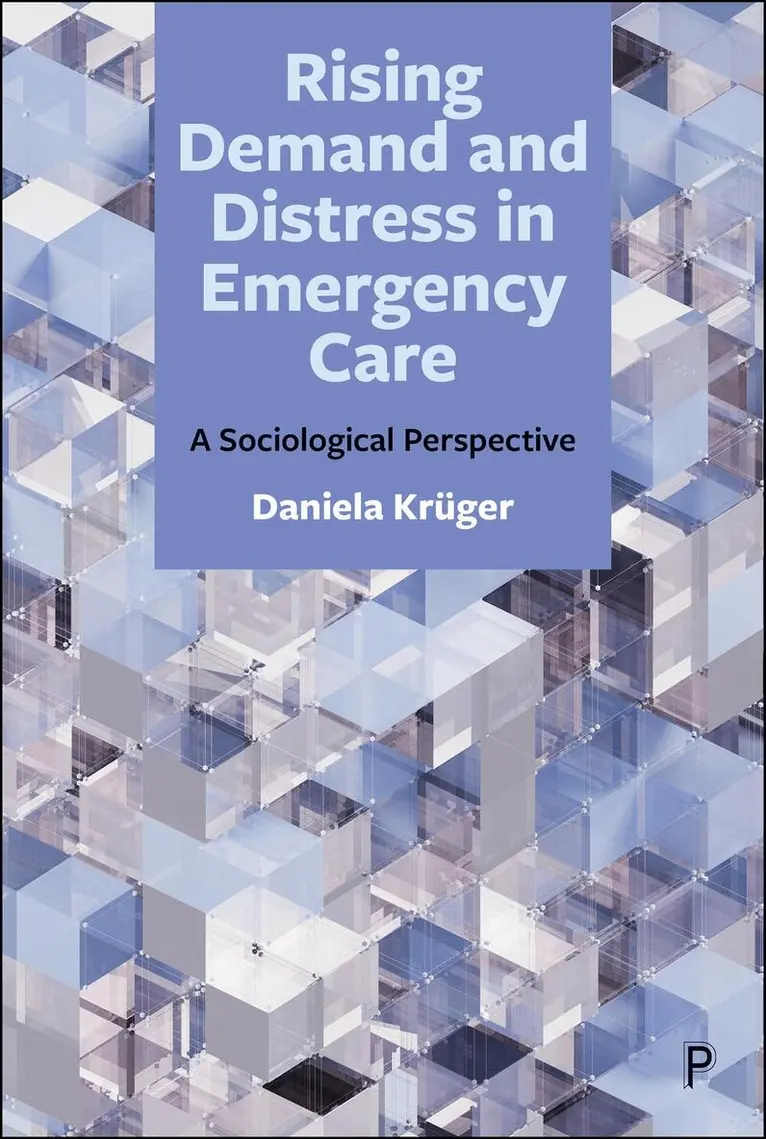
As emergency departments and ambulance services face rising demand, a considerable share of patients present with needs deemed “non-urgent”, generating strain, frustration and moral judgement across care systems.The first of its kind to apply Bourdieusian field theory to emergency care, this book analyses how changing classificatory practices reshape professional boundaries, expectations of care and notions of legitimate urgency. Using an in-depth case study of emergency care services in a German city, the book reveals emergency care as a contested social field in which struggles over meaning, authority and moral worth occur and reproduce institutional inequalities.Moving beyond debates on workload and safety, this book reveals the broader social and institutional implications of rising demand in emergency care.
Inbunden, Engelska, 2015
2 220 kr
Skickas inom 10-15 vardagar
Cities can be seen as geographical imaginaries: places have meanings attributed so that they are perceived, represented and interpreted in a particular way. We may therefore speak of cityness rather than 'the city': the city is always in the making. It cannot be grasped as a fixed structure in which people find their lives, and is never stable, through agents designing courses of interactions with geographical imaginations. This theoretical perspective on cities is currently reshaping the field of urban studies, requiring new forms of theory, comparisons and methods. Meanwhile, mainstream urban studies approaches neighbourhoods as fixed social-spatial units, producing effects on groups of residents. Yet they have not convincingly shown empirically that the neighbourhood is an entity generating effects, rather than being the statistical aggregate where effects can be measured. This book challenges this common understanding, and argues for an approach that sees neighbourhood effects as the outcome of processes of marginalisation and exclusion that find spatial expressions in the city elsewhere. It does so through a comparative study of an unusual kind: Sub-Saharan Africans, second generation Turkish and Lebanese girls, and alcohol and drug consumers, some of them homeless, arguably some of the most disadvantaged categories in the German capital, Berlin, in inner city neighbourhoods, and middle class families in owner-occupied housing. This book analyses urban inequalities through the lens of the city in the making, where neighbourhood comes to play a role, at some times, in some practices, and at some moments, but is not the point of departure.