Danielle LaVaque-Manty - Böcker
Visar alla böcker från författaren Danielle LaVaque-Manty. Handla med fri frakt och snabb leverans.
3 produkter
3 produkter
488 kr
Skickas inom 7-10 vardagar
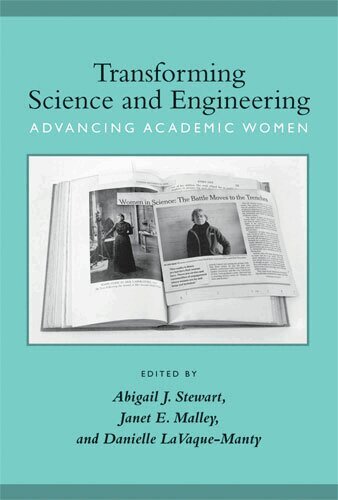
"If you have thrown up your hands in despair after trying to retain women science and engineering in the academy, read this book. It offers detailed descriptions of a wide array of tried-and-true programs that have been tested out by the NSF ADVANCE program."---Joan C. Williams, 1066 Foundation Chair & Distinguished Professor of Law Director, Center for WorkLife Law University of California"Solid and practical, this volume details the first years of NSF funded institutional change to remake gender dynamics inside U.S. science. What works? What doesn't? And why?"---Londa Schiebinger, John L. Hinds Professor of History of Science and Barbara D. Finberg Director, Michelle R. Clayman Institute for Gender Research at Stanford University, and author of Has Feminism Changed Science?"This book's time has come. Transforming Science and Engineering is important, and lots of people can learn from what has happened in the ADVANCE universities."---Lotte Bailyn, Professor of Management, Behavioral and Policy Sciences Department, Sloan School of Management, MIT; author of Breaking the Mold: Redesigning Work for Productive and Satisfying Lives; and coauthor of Beyond Work-Family Balance: Advancing Gender Equity and Workplace Performance"This collection profiles 16 NSF ADVANCE grant successes, sandwiched between an interview with Dr. Alice Hogan and Dr. Lee Harle's summary of cost-effective practices from ADVANCE programs, giving so many 'biggest bang for the buck' examples in so few pages that it will easily justify both the cost of the book and the reading time. These accounts do not continue the too-common vague referrals to 'unhealthy environment' or 'chilly climate,' but rather expound the situations before and after the interventions, something necessary in order to transplant the programs, or even to use the programs for idea generation. Transforming Science and Engineering is a model of excellence, and will be extremely useful for those women, men, faculty, or administrators wanting to help their universities move into the 21st century and attract to their campuses qualified women and men who want opportunities to attain their full potentials."---Donna J. Nelson, Associate Professor of Chemistry, University of OklahomaIn 2001, the National Science Foundation's ADVANCE Institutional Transformation program began awarding five-year grants to colleges and universities to address a common problem: how to improve the work environment for women faculty in science and engineering. Drawing on the expertise of scientists, engineers, social scientists, specialists in organizational behavior, and university administrators, this collection is the first to describe the variety of innovative efforts academic institutions around the country have undertaken.Focusing on a wide range of topics, from how to foster women's academic success in small teaching institutions, to how to use interactive theater to promote faculty reflection about departmental culture, to how a particular department created and maintained a healthy climate for women's scientific success, the contributors discuss both the theoretical and empirical aspects of the initiatives, with emphasis on the practical issues involved in creating these approaches. The resulting evidence shows that these initiatives have the desired effects. The cases represented in this collection depict the many issues women faculty in science and engineering face, and the solutions that are presented can be widely accepted at academic institutions around the United States. The essays in Transforming Science and Engineering illustrate that creating work environments that sustain and advance women scientists and engineers benefits women, men, and underrepresented minorities.Abigail J. Stewart is Sandra Schwartz Tangri Distinguished University Professor of Psychology and Women's Studies at the University of Michigan.Janet E. Malley is a psychologist and Associate Director of the Institute for Research on Women and Gender at the University of Michigan.Danielle LaVaque-Manty, former Research Associate at the Institute for Research on Women and Gender at the University of Michigan, teaches composition at U-M's Sweetland Writing Center.Cover photo: Joanne Leonard
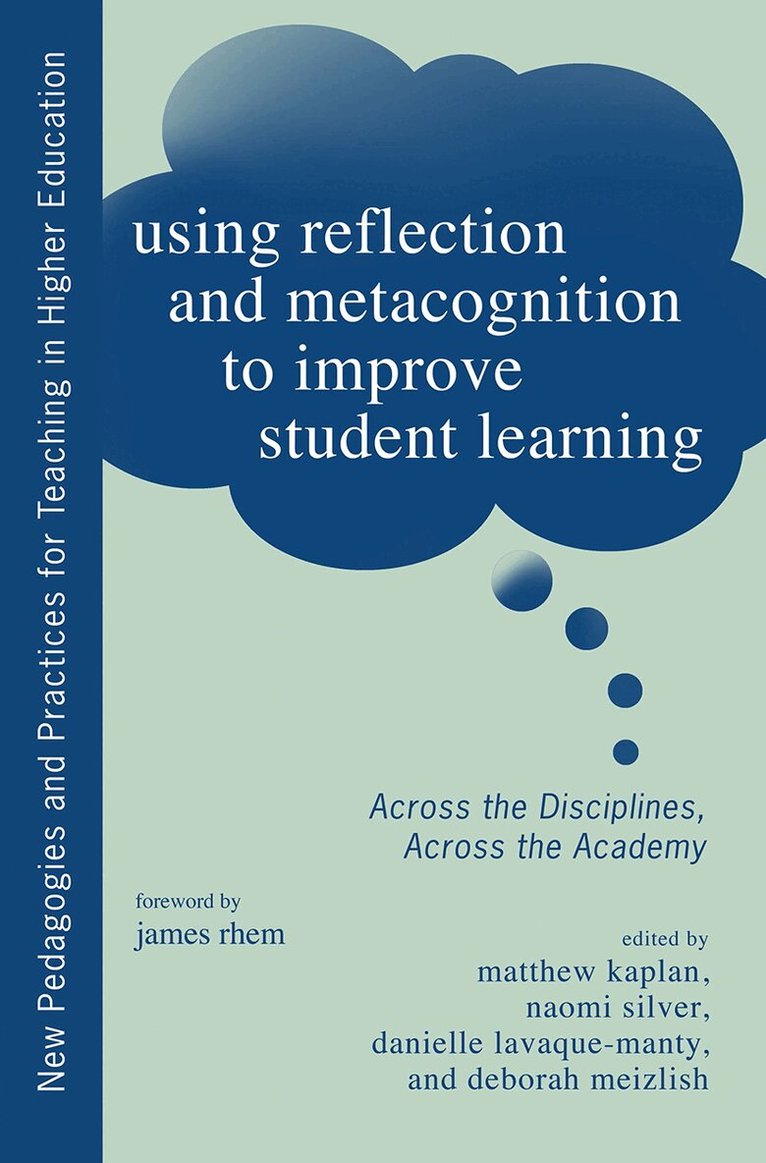
Using Reflection and Metacognition to Improve Student Learning
Across the Disciplines, Across the Academy
Inbunden, Engelska, 2013
2 029 kr
Skickas inom 10-15 vardagar
Research has identified the importance of helping students develop the ability to monitor their own comprehension and to make their thinking processes explicit, and indeed demonstrates that metacognitive teaching strategies greatly improve student engagement with course material.This book -- by presenting principles that teachers in higher education can put into practice in their own classrooms -- explains how to lay the ground for this engagement, and help students become self-regulated learners actively employing metacognitive and reflective strategies in their education.Key elements include embedding metacognitive instruction in the content matter; being explicit about the usefulness of metacognitive activities to provide the incentive for students to commit to the extra effort; as well as following through consistently.Recognizing that few teachers have a deep understanding of metacognition and how it functions, and still fewer have developed methods for integrating it into their curriculum, this book offers a hands-on, user-friendly guide for implementing metacognitive and reflective pedagogy in a range of disciplines. Offering seven practitioner examples from the sciences, technology, engineering and mathematics (STEM) fields, the social sciences and the humanities, along with sample syllabi, course materials, and student examples, this volume offers a range of strategies for incorporating these pedagogical approaches in college classrooms, as well as theoretical rationales for the strategies presented. By providing successful models from courses in a broad spectrum of disciplines, the editors and contributors reassure readers that they need not reinvent the wheel or fear the unknown, but can instead adapt tested interventions that aid learning and have been shown to improve both instructor and student satisfaction and engagement.
Using Reflection and Metacognition to Improve Student Learning
Across the Disciplines, Across the Academy
Häftad, Engelska, 2013
455 kr
Skickas inom 10-15 vardagar
Research has identified the importance of helping students develop the ability to monitor their own comprehension and to make their thinking processes explicit, and indeed demonstrates that metacognitive teaching strategies greatly improve student engagement with course material.This book -- by presenting principles that teachers in higher education can put into practice in their own classrooms -- explains how to lay the ground for this engagement, and help students become self-regulated learners actively employing metacognitive and reflective strategies in their education.Key elements include embedding metacognitive instruction in the content matter; being explicit about the usefulness of metacognitive activities to provide the incentive for students to commit to the extra effort; as well as following through consistently.Recognizing that few teachers have a deep understanding of metacognition and how it functions, and still fewer have developed methods for integrating it into their curriculum, this book offers a hands-on, user-friendly guide for implementing metacognitive and reflective pedagogy in a range of disciplines. Offering seven practitioner examples from the sciences, technology, engineering and mathematics (STEM) fields, the social sciences and the humanities, along with sample syllabi, course materials, and student examples, this volume offers a range of strategies for incorporating these pedagogical approaches in college classrooms, as well as theoretical rationales for the strategies presented. By providing successful models from courses in a broad spectrum of disciplines, the editors and contributors reassure readers that they need not reinvent the wheel or fear the unknown, but can instead adapt tested interventions that aid learning and have been shown to improve both instructor and student satisfaction and engagement.