Darian Meacham - Böcker
Visar alla böcker från författaren Darian Meacham. Handla med fri frakt och snabb leverans.
7 produkter
7 produkter
649 kr
Skickas inom 10-15 vardagar
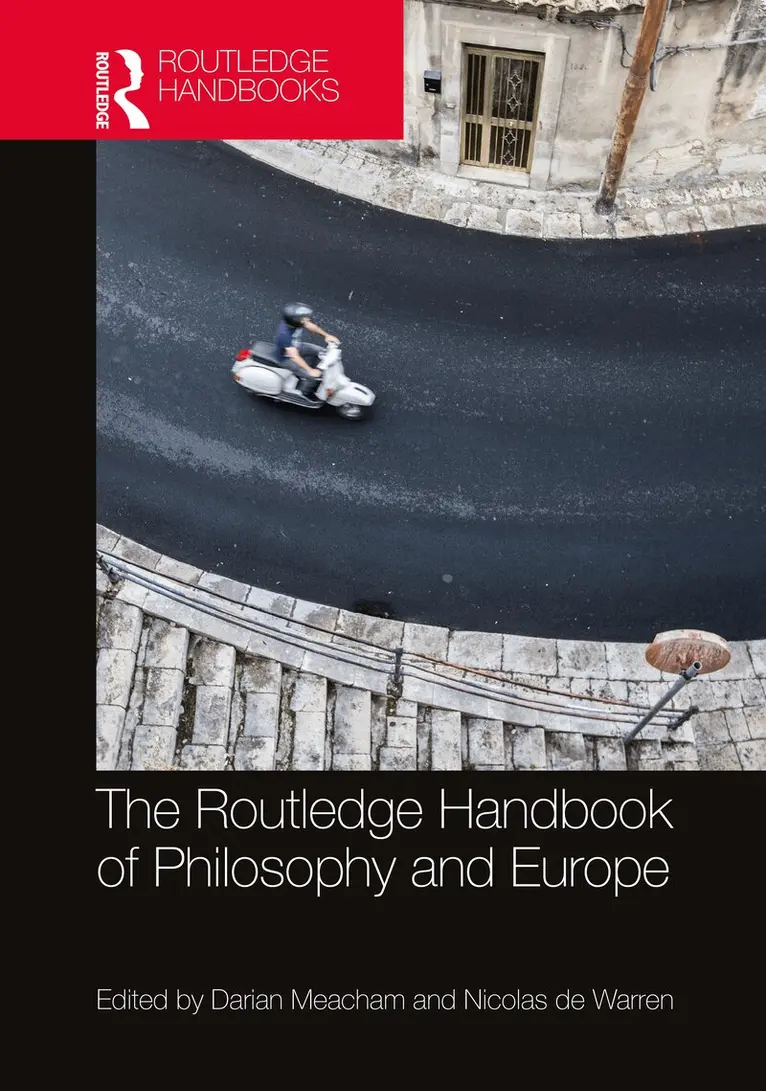
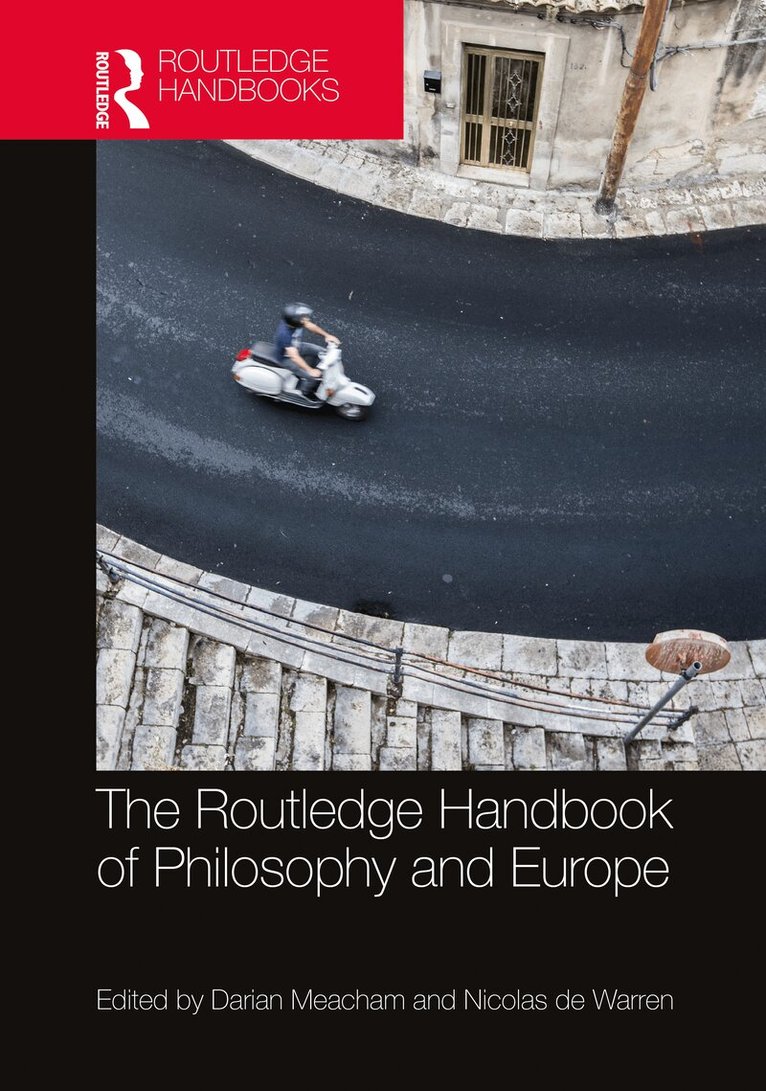
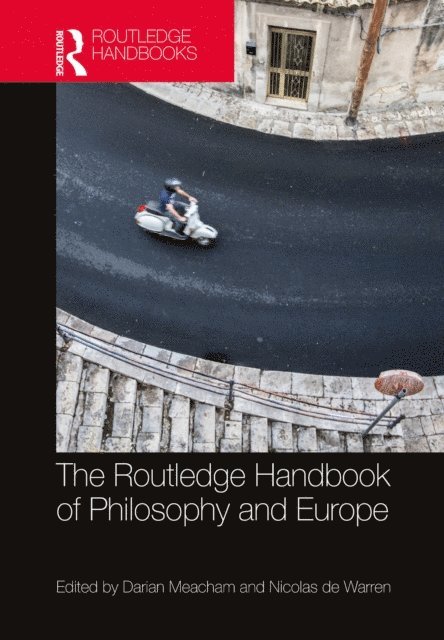
Understood historically, culturally, politically, geographically, or philosophically, the idea of Europe and notion of European identity conjure up as much controversy as consensus. The mapping of the relation between ideas of Europe and their philosophical articulation and contestation has never benefitted from clear boundaries, and if it is to retain its relevance to the challenges now facing the world, it must become an evolving conceptual landscape of critical reflection.The Routledge Handbook of Philosophy and Europe provides an outstanding reference work for the exploration of Europe in its manifold conceptions, narratives, institutions, and values. Comprising twenty-seven chapters by a group of international contributors, the Handbook is divided into three parts: Europe of the philosophersConcepts and controversiesDebates and horizons.Essential reading for students and researchers in philosophy, politics, and European studies, the Handbook will also be of interest to those in related disciplines such as sociology, religion, and European history and history of ideas.
Del 72 - Royal Institute of Philosophy Supplements
Phenomenology and Naturalism
Examining the Relationship between Human Experience and Nature
Häftad, Engelska, 2013
428 kr
Skickas inom 7-10 vardagar
What is the relationship between phenomenology and naturalism? Are they mutually exclusive or is a rapprochement possible between their approaches to consciousness and the natural world? Can phenomenology be naturalised and ought it to be? Or is naturalism fundamentally unable to accommodate phenomenological insights? How can phenomenological method be used within a naturalistic research programme? This cutting-edge collection of original essays contains brilliant contributions from leading phenomenologists across the world. The collection presents a wide range of fascinating and carefully argued answers to these questions.
3 185 kr
Skickas inom 10-15 vardagar
Understood historically, culturally, politically, geographically, or philosophically, the idea of Europe and notion of European identity conjure up as much controversy as consensus. The mapping of the relation between ideas of Europe and their philosophical articulation and contestation has never benefitted from clear boundaries, and if it is to retain its relevance to the challenges now facing the world, it must become an evolving conceptual landscape of critical reflection.The Routledge Handbook of Philosophy and Europe provides an outstanding reference work for the exploration of Europe in its manifold conceptions, narratives, institutions, and values. Comprising twenty-seven chapters by a group of international contributors, the Handbook is divided into three parts: Europe of the philosophersConcepts and controversiesDebates and horizons.Essential reading for students and researchers in philosophy, politics, and European studies, the Handbook will also be of interest to those in related disciplines such as sociology, religion, and European history and history of ideas.
1 859 kr
Skickas inom 10-15 vardagar
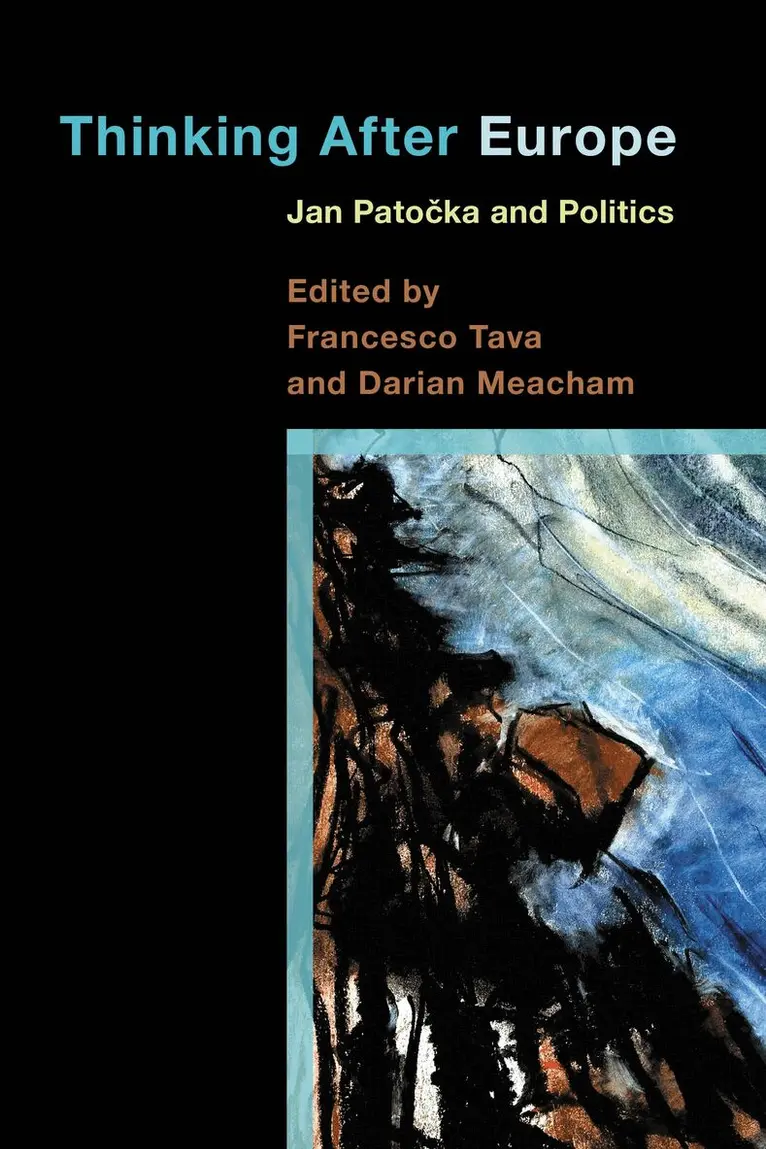
Jan Patocka, perhaps more so than any other philosopher in the twentieth century, managed to combine intense philosophical insight with a farsighted analysis of the idea and challenges facing Europe as a historical, cultural and political signifier. As a political dissident in communist Czechoslovakia he also became a moral and political inspiration to a generation of Czechs, including Václav Havel. He accomplished this in a time of intense political repression when not even the hint of a unified Europe seemed visible by showing in exemplary fashion how concrete thought can be without renouncing in any way its depth.Europe as an idea and a political project is a central issue in contemporary political theory. Patocka’s political thought offers many original insights into questions surrounding the European project. Here, for the first time, a group of leading scholars from different disciplines gathers together to discuss the specific political impact of Patocka’s philosophy and its lasting significance.
675 kr
Skickas inom 10-15 vardagar
Jan Patocka, perhaps more so than any other philosopher in the twentieth century, managed to combine intense philosophical insight with a farsighted analysis of the idea and challenges facing Europe as a historical, cultural and political signifier. As a political dissident in communist Czechoslovakia he also became a moral and political inspiration to a generation of Czechs, including Václav Havel. He accomplished this in a time of intense political repression when not even the hint of a unified Europe seemed visible by showing in exemplary fashion how concrete thought can be without renouncing in any way its depth.Europe as an idea and a political project is a central issue in contemporary political theory. Patocka’s political thought offers many original insights into questions surrounding the European project. Here, for the first time, a group of leading scholars from different disciplines gathers together to discuss the specific political impact of Patocka’s philosophy and its lasting significance.
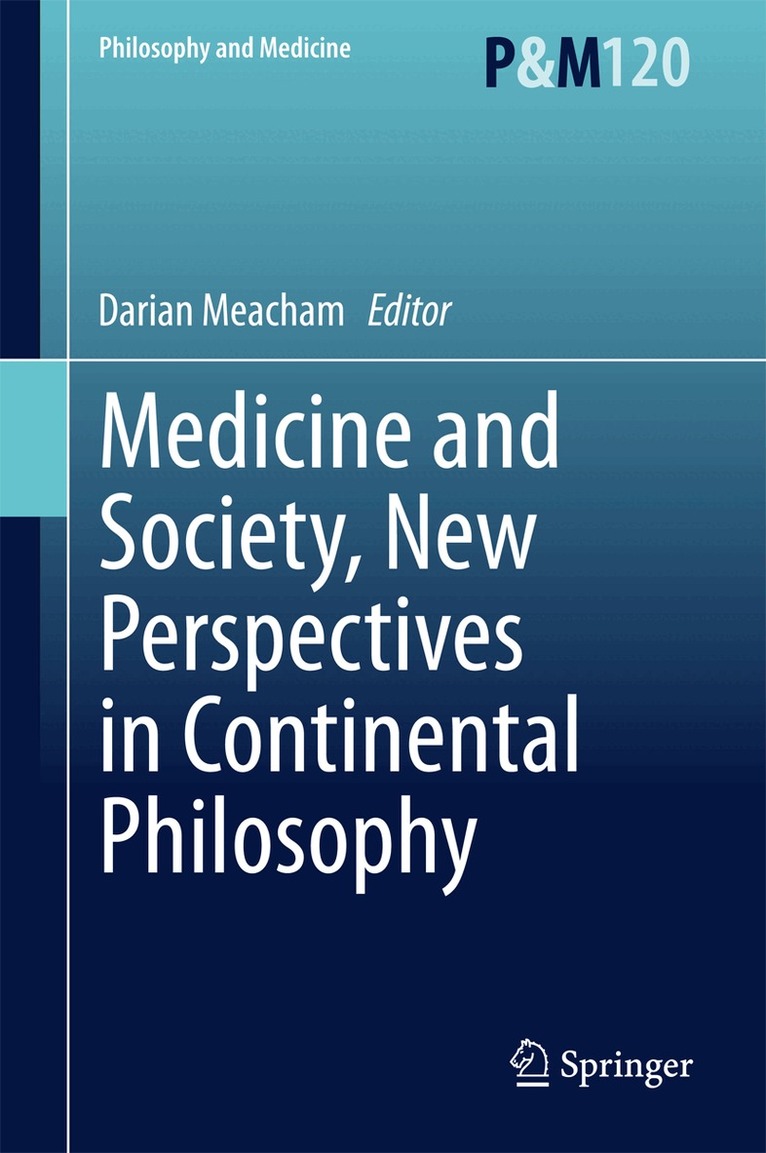
Del 120 - Philosophy and Medicine
Medicine and Society, New Perspectives in Continental Philosophy
Inbunden, Engelska, 2015
1 073 kr
Skickas inom 10-15 vardagar
This volume addresses some of the most prominent questions in contemporary bioethics and philosophy of medicine: ‘liberal’ eugenics, enhancement, the normal and the pathological, the classification of mental illness, the relation between genetics, disease and the political sphere, the experience of illness and disability, and the sense of the subject of bioethical inquiry itself. All of these issues are addressed from a “continental” perspective, drawing on a rich tradition of inquiry into these questions in the fields of phenomenology, philosophical hermeneutics, French epistemology, critical theory and post-structuralism. At the same time, the contributions engage with the Anglo-American debate, resulting in a fruitful and constructive conversation that not only shows the depth and breadth of continental perspectives in bioethics and medicine, but also opens new avenues of discussion and exploration. For decades European philosophers have offered important insights into the relation between the practices of medicine, the concept of illness, and society more broadly understood. These interventions have generally striven to be both historically nuanced and accessible to non-experts. From Georges Canguilhem’s seminal The Normal and the Pathological, Michel Foucault’s lectures on madness, sexuality, and biopolitics, Hans Jonas’s deeply thoughtful essays on the right to die, life extension, and ethics in a technological age, Hans-Georg Gadamer’s lectures on The Enigma of Health, and more recently Jürgen Habermas’s carefully nuanced interventions on the question of liberal eugenics, these thinkers have sought to engage the wider public as much as their fellow philosophers on questions of paramount importance to current bioethical and social-political debate. The essays contained here continue this tradition of engagement and accessibility. In the best practices of European philosophy, the contributions in this volumeaim to engage with and stimulate a broad spectrum of readers, not just experts. In doing so the volume offers a showcase of the richness and rigor of continental perspectives on medicine and society.
1 409 kr
Skickas inom 5-8 vardagar
This volume addresses some of the most prominent questions in contemporary bioethics and philosophy of medicine: ‘liberal’ eugenics, enhancement, the normal and the pathological, the classification of mental illness, the relation between genetics, disease and the political sphere, the experience of illness and disability, and the sense of the subject of bioethical inquiry itself. All of these issues are addressed from a “continental” perspective, drawing on a rich tradition of inquiry into these questions in the fields of phenomenology, philosophical hermeneutics, French epistemology, critical theory and post-structuralism. At the same time, the contributions engage with the Anglo-American debate, resulting in a fruitful and constructive conversation that not only shows the depth and breadth of continental perspectives in bioethics and medicine, but also opens new avenues of discussion and exploration. For decades European philosophers have offered important insights into the relation between the practices of medicine, the concept of illness, and society more broadly understood. These interventions have generally striven to be both historically nuanced and accessible to non-experts. From Georges Canguilhem’s seminal The Normal and the Pathological, Michel Foucault’s lectures on madness, sexuality, and biopolitics, Hans Jonas’s deeply thoughtful essays on the right to die, life extension, and ethics in a technological age, Hans-Georg Gadamer’s lectures on The Enigma of Health, and more recently Jürgen Habermas’s carefully nuanced interventions on the question of liberal eugenics, these thinkers have sought to engage the wider public as much as their fellow philosophers on questions of paramount importance to current bioethical and social-political debate. The essays contained here continue this tradition of engagement and accessibility. In the best practices of European philosophy, the contributions in this volumeaim to engage with and stimulate a broad spectrum of readers, not just experts. In doing so the volume offers a showcase of the richness and rigor of continental perspectives on medicine and society.