Dario Castiglione – författare
Visar alla böcker från författaren Dario Castiglione. Handla med fri frakt och snabb leverans.
20 produkter
20 produkter
E-bok
PDF, Engelska, 20082 513 kr
Läs direkt efter köp
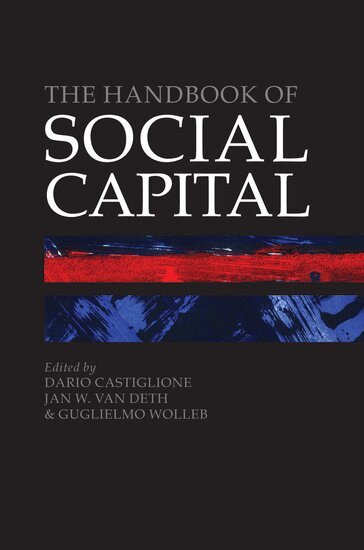
Social capital is a relatively new concept in the social sciences. In the last twenty or so years it has come to indicate that networks of social relationships represent a ''resource'' for both the individual and society, since they provide support for the individual and facilitate collective action. Although this is not an entirely new idea, the more systematic way in which social capital captures such an intuition has created a new theoretical paradigm and helped to develop a series of innovative research programmes in politics, economics, and the study of human well-being. The concept has gained currency beyond academia, extending its influence to political and policy-making circles at local, national, and international levels. It has also affected the way in which social surveys are conceived and public policies assessed. As the idea of social capital has spread, the literature about it has increased exponentially. After twenty years of rapid expansion it is time for a more considered and critical assessment of how the original concept has been adapted and refined, and how successful its application has been. The Handbook of Social Capital intends to do precisely that. It offers a state-of-the-art view of discussions about the concept of social capital and the way in which it has been applied in empirical research. The organization of the Handbook reflects this intention by focusing on conceptual development and analysis in the first part; by identifying two main areas of research in which social capital has favoured the development of new and influential research programmes - political participation in democratic societies, and economic development; and by exploring the more normative and policy oriented consequences of social capital. All chapters comprising the volume were specifically written for the Handbook by some of the main experts in the fields. The book provides authoritative and innovative introduction to the study of social capital.
Inbunden, Engelska, 2008
2 763 kr
Skickas inom 5-8 vardagar
Social capital is a relatively new concept in the social sciences. In the last twenty or so years it has come to indicate that networks of social relationships represent a 'resource' for both the individual and society, since they provide support for the individual and facilitate collective action. Although this is not an entirely new idea, the more systematic way in which social capital captures such an intuition has created a new theoretical paradigm and helped to develop a series of innovative research programmes in politics, economics, and the study of human well-being. The concept has gained currency beyond academia, extending its influence to political and policy-making circles at local, national, and international levels. It has also affected the way in which social surveys are conceived and public policies assessed. As the idea of social capital has spread, the literature about it has increased exponentially. After twenty years of rapid expansion it is time for a more considered and critical assessment of how the original concept has been adapted and refined, and how successful its application has been. The Handbook of Social Capital intends to do precisely that. It offers a state-of-the-art view of discussions about the concept of social capital and the way in which it has been applied in empirical research. The organization of the Handbook reflects this intention by focusing on conceptual development and analysis in the first part; by identifying two main areas of research in which social capital has favoured the development of new and influential research programmes - political participation in democratic societies, and economic development; and by exploring the more normative and policy oriented consequences of social capital. All chapters comprising the volume were specifically written for the Handbook by some of the main experts in the fields. The book provides authoritative and innovative introduction to the study of social capital.
Häftad, Engelska, 2019
320 kr
Skickas inom 5-8 vardagar
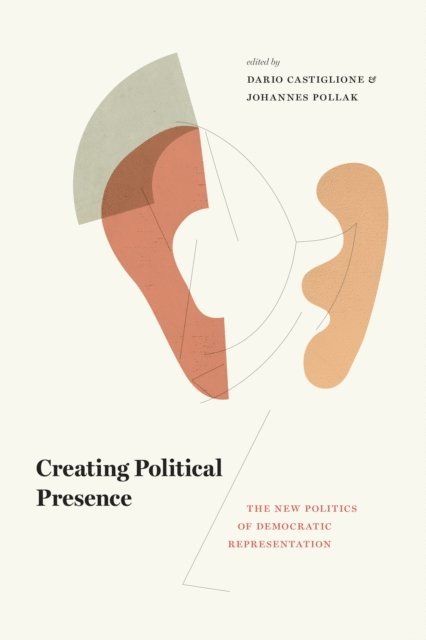
For at least two centuries, democratic representation has been at the center of debate. Should elected representatives express the views of the majority, or do they have the discretion to interpret their constituents' interests? How can representatives balance the desires of their parties and their electors? What should be done to strengthen the representation of groups that have been excluded from the political system? Representative democracy itself remains frequently contested, regarded as incapable of reflecting the will of the masses, or inadequate for today's global governance. Recently, however, this view of democratic representation has been under attack for its failure to capture the performative and constructive elements of the process of representation, and a new literature more attentive to these aspects of the relationship between representatives and the represented has arisen.In Creating Political Presence, a diverse and international group of scholars explores the implications of such a turn. Two broad, overlapping perspectives emerge. In the first section, the contributions investigate how political representation relates to empowerment, either facilitating or interfering with the capacity of citizens to develop autonomous judgment in collective decision making. Contributions in the second section look at representation from the perspective of inclusion, focusing on how representative relationships and claims articulate the demands of those who are excluded or have no voice. The final section examines political representation from a more systemic perspective, exploring its broader environmental conditions and the way it acquires democratic legitimacy.
E-bok
Engelska, 2018602 kr
Läs direkt efter köp
For at least two centuries, democratic representation has been at the center of debate. Should elected representatives express the views of the majority, or do they have the discretion to interpret their constituents’ interests? How can representatives balance the desires of their parties and their electors? What should be done to strengthen the representation of groups that have been excluded from the political system? Representative democracy itself remains frequently contested, regarded as incapable of reflecting the will of the masses, or inadequate for today’s global governance. Recently, however, this view of democratic representation has been under attack for its failure to capture the performative and constructive elements of the process of representation, and a new literature more attentive to these aspects of the relationship between representatives and the represented has arisen. In Creating Political Presence, a diverse and international group of scholars explores the implications of such a turn. Two broad, overlapping perspectives emerge. In the first section, the contributions investigate how political representation relates to empowerment, either facilitating or interfering with the capacity of citizens to develop autonomous judgment in collective decision making. Contributions in the second section look at representation from the perspective of inclusion, focusing on how representative relationships and claims articulate the demands of those who are excluded or have no voice. The final section examines political representation from a more systemic perspective, exploring its broader environmental conditions and the way it acquires democratic legitimacy.
E-bok
PDF, Engelska, 2004687 kr
Läs direkt efter köp
Lineages of European Citizenship provides an historical analysis of the development of citizenship from the nineteenth to the Twentieth-century in Europe and the USA. The contributors focus on the role played by internal struggles for social and political inclusion in shaping the character of both the state and citizenship, and the deployment of two main political languages, loosely associated with liberalism and republicanism, in legitimizing citizens'' claims.
Inbunden, Engelska, 2004
545 kr
Skickas inom 10-15 vardagar
Lineages of European Citizenship provides an historical analysis of the development of citizenship from the nineteenth to the twentieth century in Europe and the USA. The contributors focus on the role played by internal struggles for social and political inclusion in shaping the character of both the state and citizenship, and the deployment of two main political languages, loosely associated with liberalism and republicanism, in legitimizing citizens' claims. LUCA BACCELLI Associate Professor of Legal Philosophy, University of Pisa, Italy BRUNELLA CASALINI Associate Professor, Faculty of Political Science, University of Florence, Italy CARLOS CLOSA Senior Lecturer in Politics, University of Zaragoza, Spain PIETRO COSTA Professor of the History of Law, University of Florence, Italy JOSE HARRIS Professor of Modern History, University of Oxford, UK CCILE LABORDE Lecturer in Political Theory, University College London, UK ULRICH K.PREU Professor of Law and Politics, Free University Bremen, Germany RUI RAMOS Research Fellow, Institute of Social Sciences, University of Lisbon, Portugal BIRTE SIIM Associate Professor, University of Aalborg, Denmark HEGE SKJEIE Associate Professor, Department of Political Science, University of Oslo, Norway SIEP STUURMAN Jean Monnet Chair of European History, Erasmus University of Rotterdam, The Netherlands
Del 61 - Ideas in Context
The History of Political Thought in National Context
Häftad, Engelska, 2011
565 kr
Skickas inom 7-10 vardagar
In this 2001 volume a distinguished international team of contributors characterises the nature of, and developments in, the history of political thought in their respective countries. The essays scrutinise not only the different academic histories and methodological traditions on which the study of the history of political thought has drawn, but also its relationship to cultural and political debates within nations. This collection represents a major contribution to the history of ideas, in which political thought has always been central, whilst reflecting the disciplinary tensions - and national differences - of what remains a 'borderline' subject, located at the intersection of history, politics and philosophy. The different national characteristics taken on by political discourse, and the complex relationship these characteristics have to the aspirations of the discipline itself, are considered in these wide-ranging essays, which cover the history of political thought in the UK, the USA, France, Germany, Italy, Central and Eastern Europe.
Del 61 - Ideas in Context
The History of Political Thought in National Context
Inbunden, Engelska, 2001
1 292 kr
Skickas inom 7-10 vardagar
In this 2001 volume a distinguished international team of contributors characterises the nature of, and developments in, the history of political thought in their respective countries. The essays scrutinise not only the different academic histories and methodological traditions on which the study of the history of political thought has drawn, but also its relationship to cultural and political debates within nations. This collection represents a major contribution to the history of ideas, in which political thought has always been central, whilst reflecting the disciplinary tensions - and national differences - of what remains a 'borderline' subject, located at the intersection of history, politics and philosophy. The different national characteristics taken on by political discourse, and the complex relationship these characteristics have to the aspirations of the discipline itself, are considered in these wide-ranging essays, which cover the history of political thought in the UK, the USA, France, Germany, Italy, Central and Eastern Europe.
Häftad, Engelska, 2008
352 kr
Skickas inom 5-8 vardagar
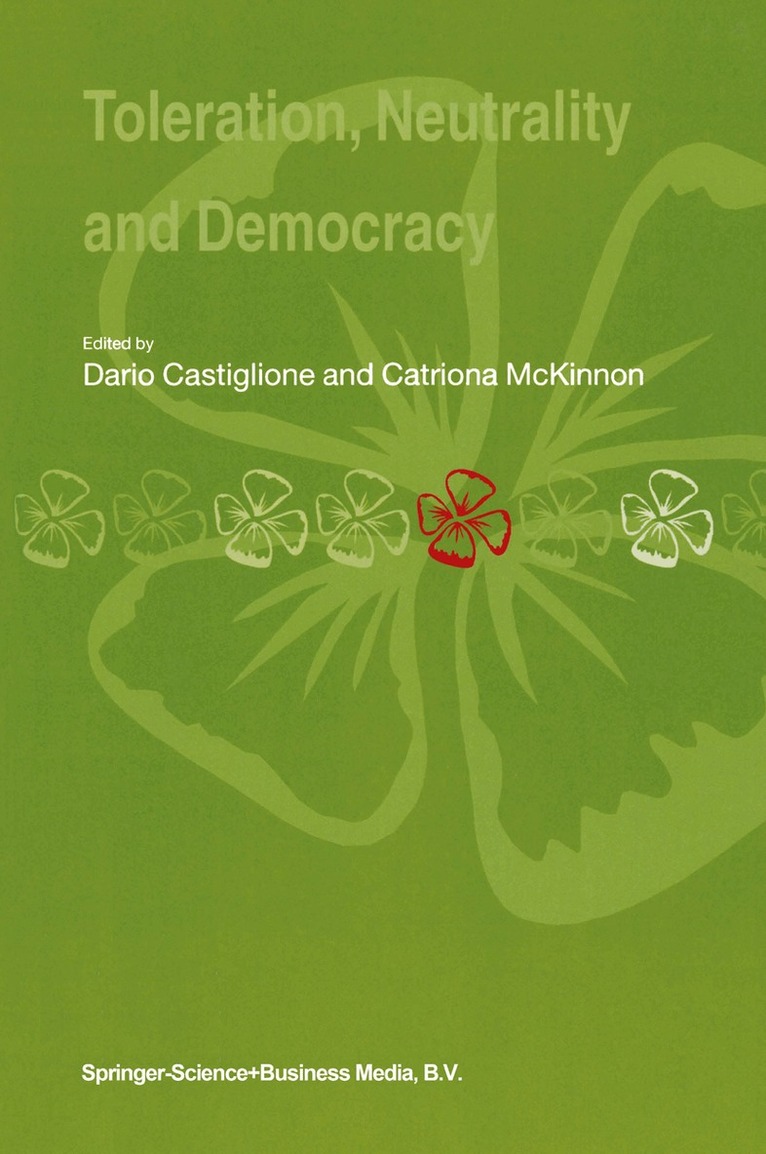
The idea of toleration as the appropriate response to difference has been central to liberal thought since Locke. Although the subject has been widely and variously explored, there has been reluctance to acknowledge the new meaning that current debates on toleration have when compared with those at its origins in the early modern period and with subsequent discussions about pluralism and freedom of expression.This collection starts from a clear recognition of the new terms of the debate. It recognises that a new academic consensus is slowly emerging on a view of tolerance that is reasonable in two senses. Firstly of reflecting the capacity of seeing the other's viewpoint, secondly on the relatively limited extent to which toleration can be granted. It reflects the cross-thematic and cross-disciplinary nature of such discussions, dissecting a number of debates such as liberalism and communitarianism, public and private, multiculturalism and the politics of identity, and a number of disciplines: moral, legal and political philosophy, historical and educational studies, anthropology, sociology and psychology. A group of distinguished authors explore the complexities emerging from the new debate. They scrutinise, with analytical sophistication, the philosophical foundation, the normative content and the broadly political implications of a new culture of toleration for diverse societies. Specific issues considered include the toleration of religious discrimination in employment, city life and community, social ethos, publicity, justice and reason and ethics.The book is unique in resolutely looking forward to the theoretical and practical challenges posed by commitment to a conception of toleration demanding empathy and understanding in an ever-diversifying world.An electronic edition of this book is freely available under a Creative Commons (CC BY-NC-ND) licence.
Inbunden, Engelska, 1995
1 961 kr
Skickas inom 5-8 vardagar
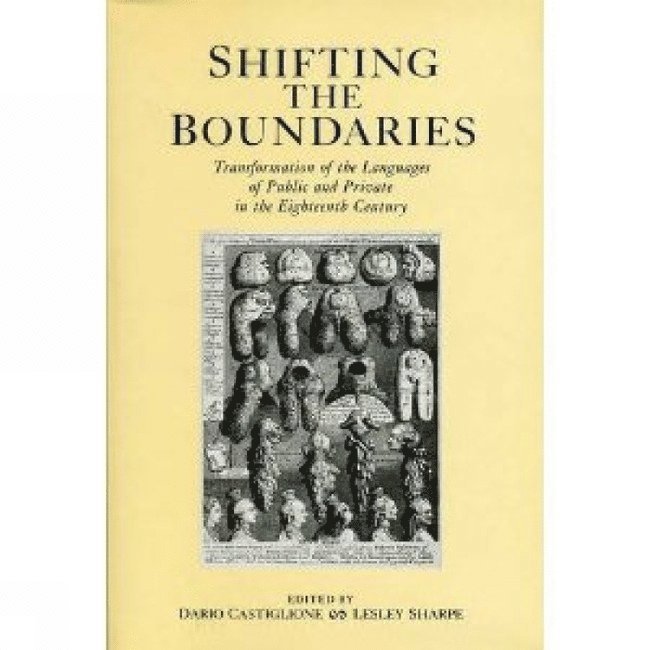
A collection of essays, written by well-known specialists in their fields, which deal with the problematic and ever-shifting boundaries between the public and the private spheres in Western Europe in the eighteenth century. It examines and challenges the notion that there was a clear distinction between the emerging public sphere, which mediated between the State and individuals and provided a forum for Enlightenment debates, and the private, intimate or familial sphere.The essays focus on political, legal, historiographic, literary and gender issues in an attempt to create a more subtle and differentiated view of how men and women established and understood various 'public 'and 'private' domains, and used the languages of public and private actions and sentiments.
Inbunden, Engelska, 2003
1 083 kr
Skickas inom 10-15 vardagar
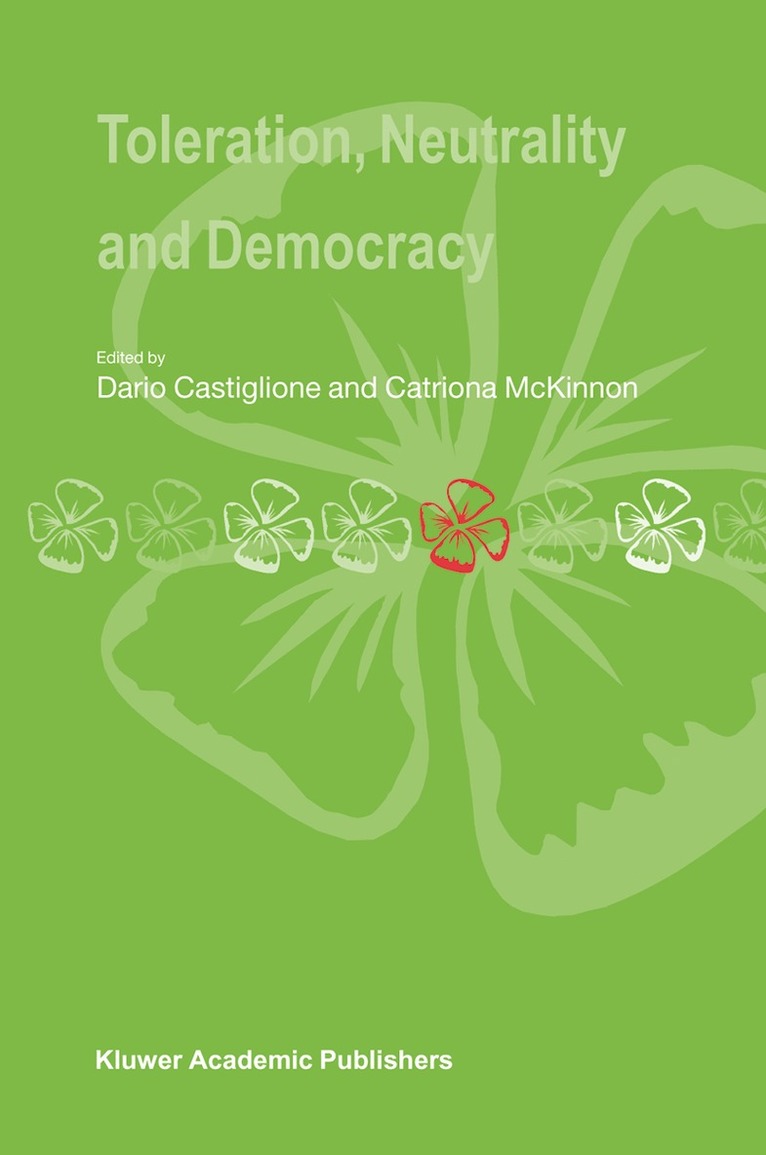
Catriona McKinnon and Dario Castiglione It is not an overstatement to say that toleration is one of the most important issues for the defmition of a moral and political theory with application to modem globalised societies. Toleration is a value which no politician in any liberal democratic society would dare to reject. In the UK, its value is reflected in the learning outcomes of education for citizenship isolated by the Final Report of the Advisory Group on Citizenship (which schools have a statutory responsibility to deliver): children ought to be disposed to the 'practice of toleration', and have the 'ability to tolerate other view points'. In these days of feelings of heightened insecurity prompting suspicion of strangers and departures from the norm, toleration has again taken centre stage as one of the values defmitive of stable and just liberal democratic societies. Toleration is a matter of principled restraint with respect to differences which are opposed, either at the personal or at the political level. With respect to the former level, the tolerant person does not use the power she has over others she dislikes and/or disapproves of to interfere with them. However, the tolerant person does not thereby divest herself of her dislike or disapproval; the tolerant person does not transform her dislike and disapproval into warm feelings, and neither does she simply become indifferent to what she hitherto disliked and disapproved of when she practices toleration.
Inbunden, Engelska, 2016
1 300 kr
Skickas inom 10-15 vardagar
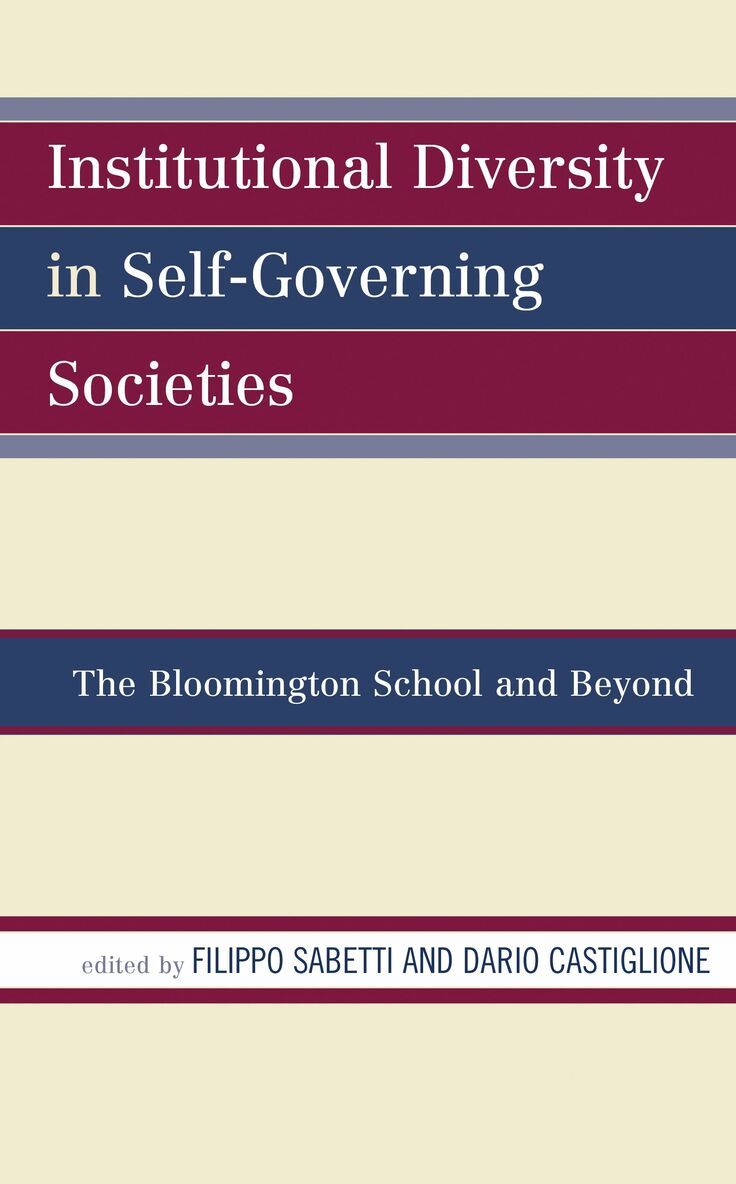
The work of Elinor and Vincent Ostrom represents a distinctive contribution to the study of political economy, public policy and administration, collective action, and governance theory. Efforts to present a comprehensive overview of the Bloomington School that grew around the Workshop in Political Theory and Policy Analysis (now renamed the Ostrom Workshop), which they founded more than 40 years ago, received new impetus with the award of the Nobel Memorial Prize in Economic Science to Elinor Ostrom in 2009. Since then, renewed attempts have been made to map the Ostroms’ contributions to theories of polycentric governance and collective action, and to multi-methods and comparative institutional analysis of ways of managing social and ecological systems, common pool resources, public economies, and metropolitan reform. The open-ended and multiform nature of the Ostroms’ research program defies a single comprehensive overview; yet, it is a stimulus towards both creativity and disciplinary cross-fertilization in social science research. What sets this volume apart is that it brings together theory and practice, models and work on the ground, design and creativity, empirics and norms, to outline the significance of the Ostroms’ research program for the future. Each contribution to the volume takes the Ostromian perspective as the point of departure, amplifies it and explores the ground for future work by engaging with other approaches and areas of research with which the Bloomington School has some affinities. This way of testing and extending the ideas and methods of the Ostroms is particularly appropriate since their research program, initiated and nurtured through the Workshop, has always been in-between different fields and sub-fields in the social sciences (political science, economics, public administration, law, history, anthropology), cultivating a strong interdisciplinary way of doing research and exploiting the virtuous circle between theory, analysis, model building, and empirical research. Engaging in a creative dialogue with ideas and methods of other research programs is a way of sharpening one’s analytic tools, while renovating one’s own vision of social research. This volume is a way of thinking through and beyond the Bloomington School.
Häftad, Engelska, 2021
488 kr
Skickas inom 5-8 vardagar
Inbunden, Engelska, 2019
1 312 kr
Skickas inom 5-8 vardagar
Inbunden, Engelska, 2007
1 263 kr
Skickas inom 10-15 vardagar
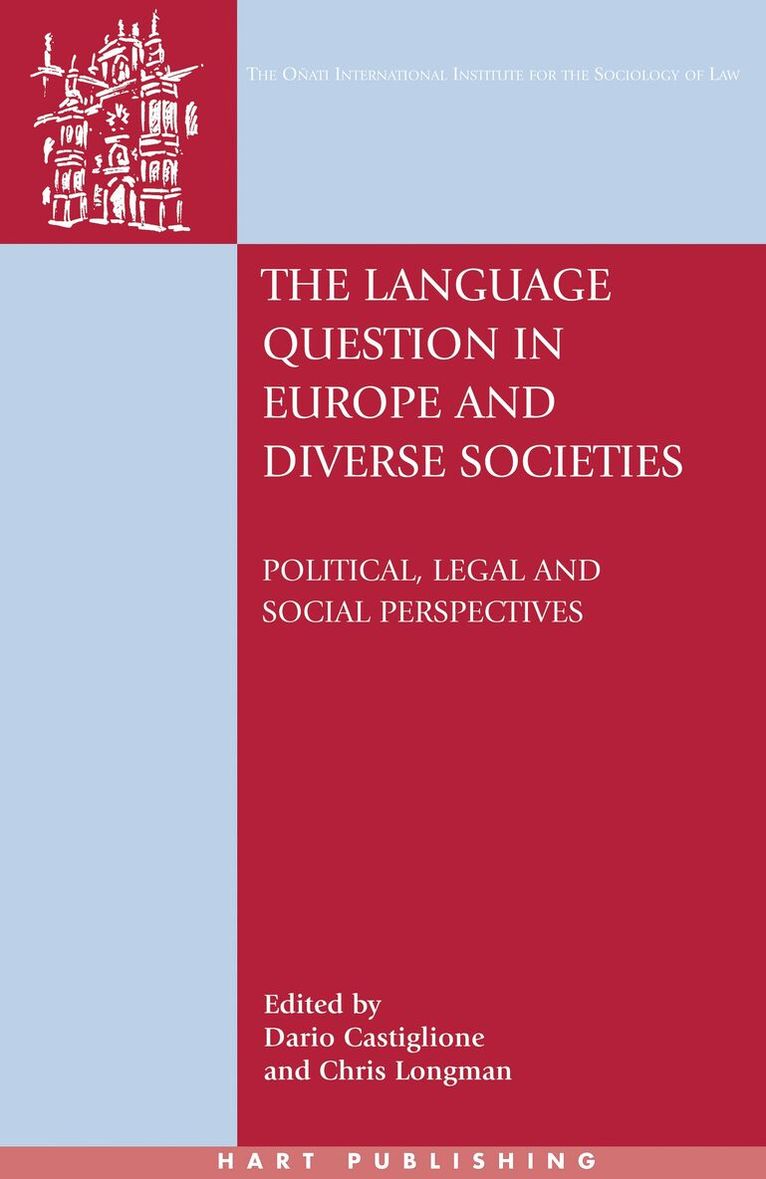
Recent developments in the European integration process have raised, amongst many other things, the issue of linguistic diversity, for some a stumbling block to the creation of a European democratic polity and its legal and social institutions. The solution to the 'question of language', involves an understanding of the role played by natural languages and the consequent design of policies and institutional mechanisms to facilitate inter-linguistic and intercultural communication. This is not an exclusively European problem, and nor is it entirely new, for it is also the problem of linguistic majorities and minorities within unitary nation-states. However, the effects of globalization and the diffusion of multiculturalism within nation-states have given renewed emphasis to the question of language in diverse societies. Facing the question anew involves reconsidering traditional ideas about social communication and the public sphere, about opinion-formation and diffusion, about the protection of cultural and linguistic minorities, and about the role that language plays in the process of formation of political and legal cultures.This volume is intended as a multidisciplinary contribution towards studying and assessing the range of problems that form the 'language question' in Europe and diverse societies.
Häftad, Engelska, 2007
496 kr
Skickas inom 10-15 vardagar
Recent developments in the European integration process have raised, amongst many other things, the issue of linguistic diversity, for some a stumbling block to the creation of a European democratic polity and its legal and social institutions. The solution to the 'question of language', involves an understanding of the role played by natural languages and the consequent design of policies and institutional mechanisms to facilitate inter-linguistic and intercultural communication. This is not an exclusively European problem, and nor is it entirely new, for it is also the problem of linguistic majorities and minorities within unitary nation-states. However, the effects of globalization and the diffusion of multiculturalism within nation-states have given renewed emphasis to the question of language in diverse societies. Facing the question anew involves reconsidering traditional ideas about social communication and the public sphere, about opinion-formation and diffusion, about the protection of cultural and linguistic minorities, and about the role that language plays in the process of formation of political and legal cultures.This volume is intended as a multidisciplinary contribution towards studying and assessing the range of problems that form the 'language question' in Europe and diverse societies.
E-bok
PDF, Engelska, 2007524 kr
Läs direkt efter köp
Recent developments in the European integration process have raised, amongst many other things, the issue of linguistic diversity, for some a stumbling block to the creation of a European democratic polity and its legal and social institutions. The solution to the ''question of language'', involves an understanding of the role played by natural languages and the consequent design of policies and institutional mechanisms to facilitate inter-linguistic and intercultural communication. This is not an exclusively European problem, and nor is it entirely new, for it is also the problem of linguistic majorities and minorities within unitary nation-states. However, the effects of globalization and the diffusion of multiculturalism within nation-states have given renewed emphasis to the question of language in diverse societies. Facing the question anew involves reconsidering traditional ideas about social communication and the public sphere, about opinion-formation and diffusion, about the protection of cultural and linguistic minorities, and about the role that language plays in the process of formation of political and legal cultures. This volume is intended as a multidisciplinary contribution towards studying and assessing the range of problems that form the ''language question'' in Europe and diverse societies.
Häftad, Engelska, 2011
996 kr
Skickas inom 10-15 vardagar
Catriona McKinnon and Dario Castiglione It is not an overstatement to say that toleration is one of the most important issues for the defmition of a moral and political theory with application to modem globalised societies. Toleration is a value which no politician in any liberal democratic society would dare to reject. In the UK, its value is reflected in the learning outcomes of education for citizenship isolated by the Final Report of the Advisory Group on Citizenship (which schools have a statutory responsibility to deliver): children ought to be disposed to the 'practice of toleration', and have the 'ability to tolerate other view points'. In these days of feelings of heightened insecurity prompting suspicion of strangers and departures from the norm, toleration has again taken centre stage as one of the values defmitive of stable and just liberal democratic societies. Toleration is a matter of principled restraint with respect to differences which are opposed, either at the personal or at the political level. With respect to the former level, the tolerant person does not use the power she has over others she dislikes and/or disapproves of to interfere with them. However, the tolerant person does not thereby divest herself of her dislike or disapproval; the tolerant person does not transform her dislike and disapproval into warm feelings, and neither does she simply become indifferent to what she hitherto disliked and disapproved of when she practices toleration.
E-bok
PDF, Engelska, 20131 257 kr
Läs direkt efter köp
Catriona McKinnon and Dario Castiglione It is not an overstatement to say that toleration is one of the most important issues for the defmition of a moral and political theory with application to modem globalised societies. Toleration is a value which no politician in any liberal democratic society would dare to reject. In the UK, its value is reflected in the learning outcomes of education for citizenship isolated by the Final Report of the Advisory Group on Citizenship (which schools have a statutory responsibility to deliver): children ought to be disposed to the ''practice of toleration'', and have the ''ability to tolerate other view points''. In these days of feelings of heightened insecurity prompting suspicion of strangers and departures from the norm, toleration has again taken centre stage as one of the values defmitive of stable and just liberal democratic societies. Toleration is a matter of principled restraint with respect to differences which are opposed, either at the personal or at the political level. With respect to the former level, the tolerant person does not use the power she has over others she dislikes and/or disapproves of to interfere with them. However, the tolerant person does not thereby divest herself of her dislike or disapproval; the tolerant person does not transform her dislike and disapproval into warm feelings, and neither does she simply become indifferent to what she hitherto disliked and disapproved of when she practices toleration.
Inbunden, Engelska, 2018
958 kr
Tillfälligt slut
For at least two centuries, democratic representation has been at the center of debate. Should elected representatives express the views of the majority, or do they have the discretion to interpret their constituents' interests? How can representatives balance the desires of their parties and their electors? What should be done to strengthen the representation of groups that have been excluded from the political system? Representative democracy itself remains frequently contested, regarded as incapable of reflecting the will of the masses, or inadequate for today's global governance. Recently, however, this view of democratic representation has been under attack for its failure to capture the performative and constructive elements of the process of representation, and a new literature more attentive to these aspects of the relationship between representatives and the represented has arisen.In Creating Political Presence, a diverse and international group of scholars explores the implications of such a turn. Two broad, overlapping perspectives emerge. In the first section, the contributions investigate how political representation relates to empowerment, either facilitating or interfering with the capacity of citizens to develop autonomous judgment in collective decision making. Contributions in the second section look at representation from the perspective of inclusion, focusing on how representative relationships and claims articulate the demands of those who are excluded or have no voice. The final section examines political representation from a more systemic perspective, exploring its broader environmental conditions and the way it acquires democratic legitimacy.