Dario Maio - Böcker
Visar alla böcker från författaren Dario Maio. Handla med fri frakt och snabb leverans.
5 produkter
5 produkter
1 786 kr
Skickas inom 10-15 vardagar
A major new professional reference work on fingerprint security systems and technology from leading international researchers in the field. Handbook provides authoritative and comprehensive coverage of all major topics, concepts, and methods for fingerprint security systems. This unique reference work is an absolutely essential resource for all biometric security professionals, researchers, and systems administrators.
1 313 kr
Skickas inom 10-15 vardagar
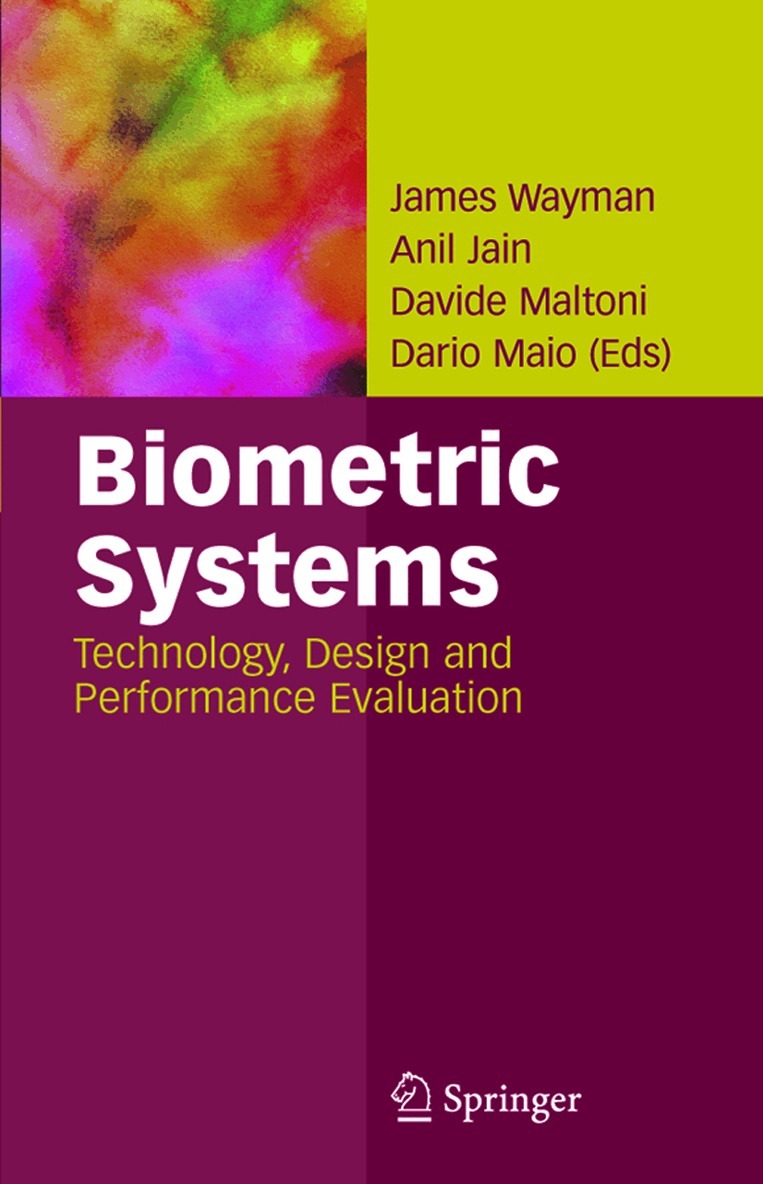
The use of computers to recognize humans from physical and behavioral traits dates back to the digital computer evolution of the 1960s. But even after decades of research and hundreds of major deployments, the field of biometrics remains fresh and exciting as new technologies are developed andoldtechnologiesareimprovedandfieldedinnewapplications.Wor- wide over the past few years,there has been a marked increase in both g- ernment and private sector interest in large-scale biometric deployments for accelerating human–machine processes, efficiently delivering human services, fighting identity fraud and even combating terrorism. The p- pose of this book is to explore the current state of the art in biometrics- tems and it is the system aspect that we have wished to emphasize. By their nature, biometric technologies sit at the exact boundary of the human–machineinterface.Butlikealltechnologies,bythemselvestheycan provide no value until deployed in a system with support hardware, n- work connections, computers, policies and procedures, all tuned together to work withpeople to improve some real business process within a social structure.
1 204 kr
Skickas inom 10-15 vardagar
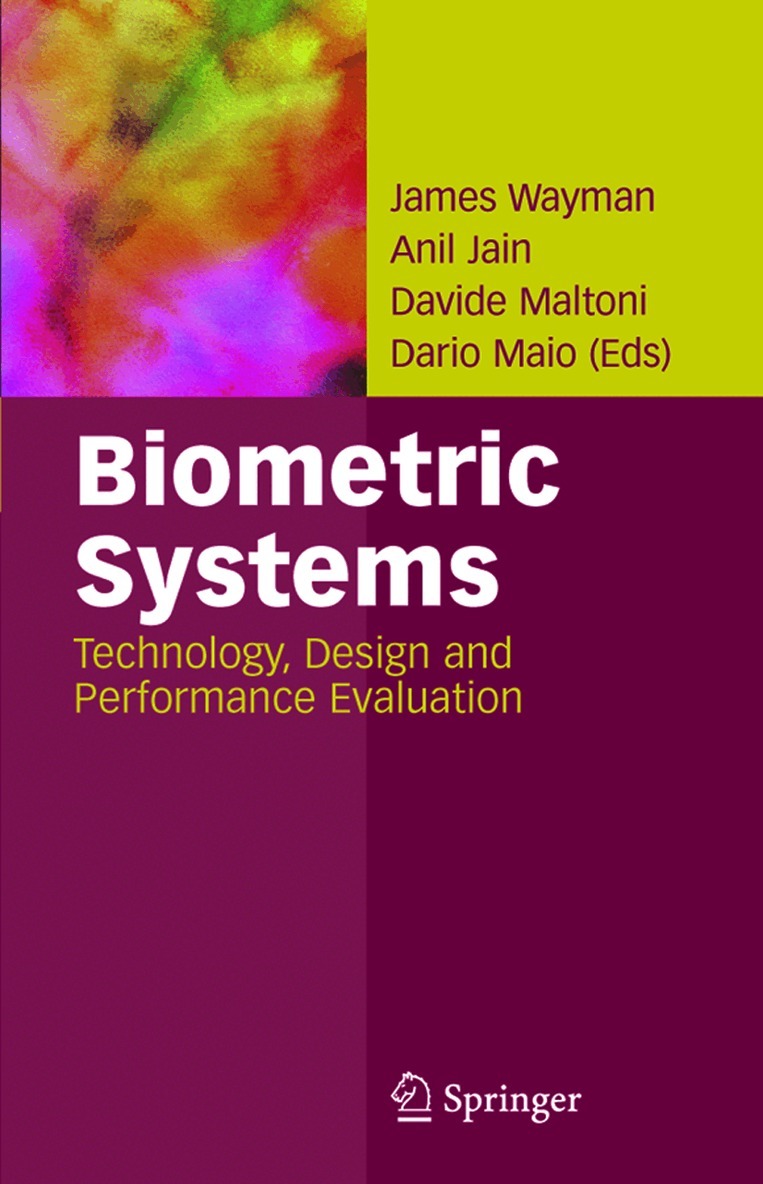
The use of computers to recognize humans from physical and behavioral traits dates back to the digital computer evolution of the 1960s. But even after decades of research and hundreds of major deployments, the field of biometrics remains fresh and exciting as new technologies are developed andoldtechnologiesareimprovedandfieldedinnewapplications.Wor- wide over the past few years,there has been a marked increase in both g- ernment and private sector interest in large-scale biometric deployments for accelerating human–machine processes, efficiently delivering human services, fighting identity fraud and even combating terrorism. The p- pose of this book is to explore the current state of the art in biometrics- tems and it is the system aspect that we have wished to emphasize. By their nature, biometric technologies sit at the exact boundary of the human–machineinterface.Butlikealltechnologies,bythemselvestheycan provide no value until deployed in a system with support hardware, n- work connections, computers, policies and procedures, all tuned together to work withpeople to improve some real business process within a social structure.
2 125 kr
Skickas inom 10-15 vardagar
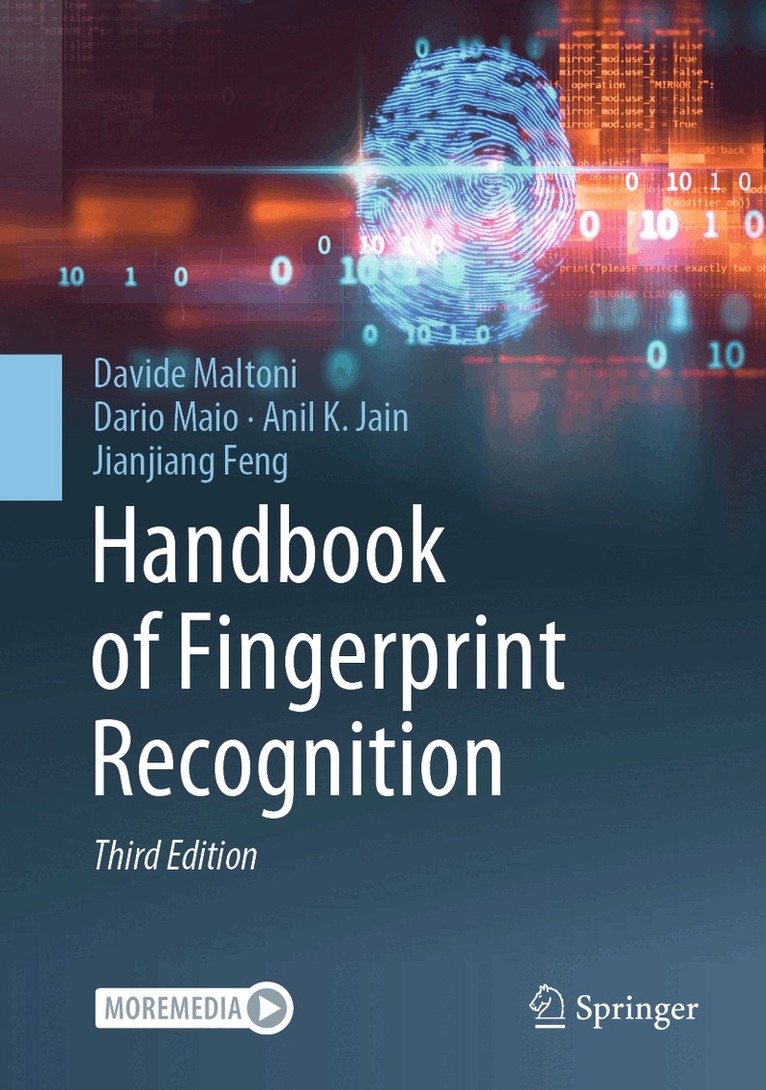
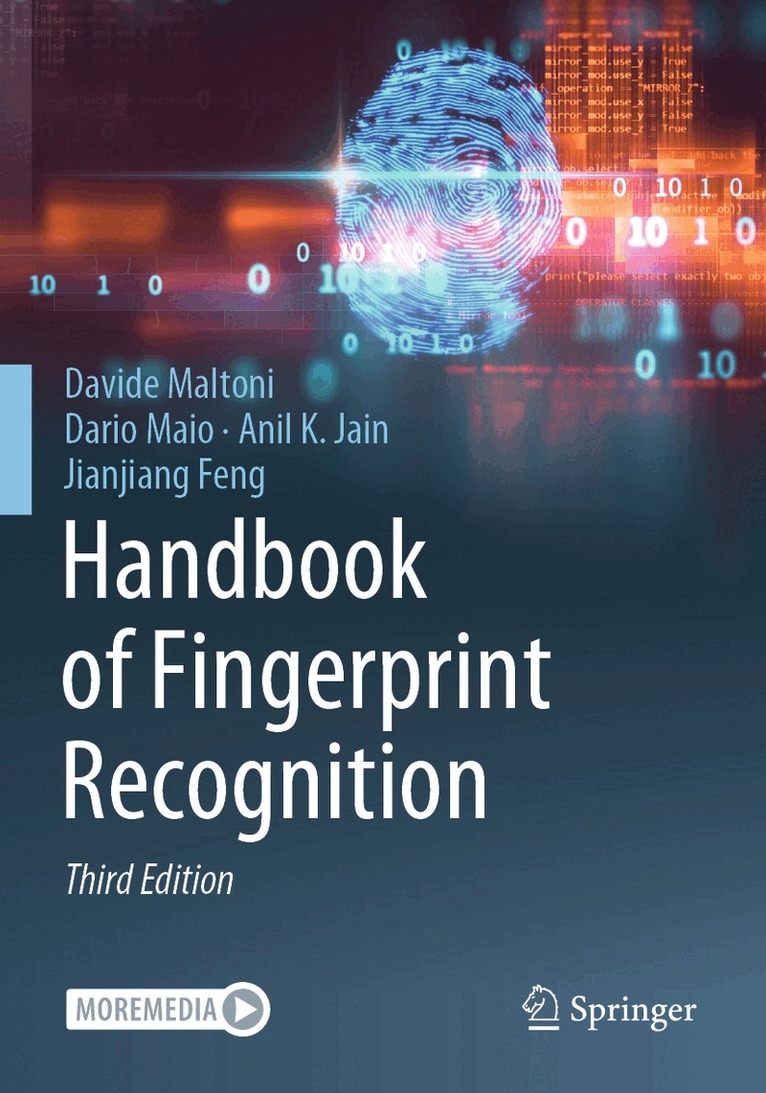
With their distinctiveness and stability over time, fingerprints continue to be the most widely used anatomical characteristic in systems that automatically recognize a person's identity.This fully updated third edition provides in-depth coverage of the state-of-the-art in fingerprint recognition readers, feature extraction, and matching algorithms and applications. Deep learning (resurgence beginning around 2012) has been a game changer for artificial intelligence and, in particular, computer vision and biometrics. Performance improvements (both recognition accuracy and speed) for most biometric modalities can be attributed to the use of deep neural networks along with availability of large training sets and powerful hardware. Fingerprint recognition has also been approached by deep learning, resulting in effective and efficient methods for automated recognition and for learning robust fixed-length representations. However, the tiny ridge details in fingerprints known as minutiae are still competitive with the powerful representations learned by huge neural networks trained on big data.Features & Benefits:Reflects the progress made in automated techniques for fingerprint recognition over the past five decadesReviews the evolution of sensing technology: from bulky optical devices to in-display readers in smartphonesDedicates an entire new chapter to latent fingerprint recognition, which is nowadays feasible in “lights-out” modeIntroduces classical and learning-based techniques for local orientation extraction, enhancement, and minutiae detectionProvides an updated review of presentation-attack-detection techniques and their performance evaluationDiscusses the evolution of minutiae matching from rich local descriptors to Minutiae Cylinder Code Presents the development of feature-based matching: from FingerCode to handcrafted textural features to deep featuresReviews fingerprint synthesis, including recent Generative Adversarial NetworksThe revised edition of this must-read reference, written by leading international researchers, covers all critical aspects of fingerprint security system design and technology. It is an essential resource for all security and biometrics professionals, researchers, practitioners, developers, and systems administrators, and can serve as an easy-to-read reference for an undergraduate or graduate course on biometrics.Davide Maltoni is full professor in the Department of Computer Science (DISI) at the University of Bologna, where he also co-directs the Biometrics Systems Laboratory (BioLab).Dario Maio is full professor in the DISI and a co-director of the BioLab.Anil K. Jain is university distinguished professor in the Department of Computer Science and Engineering at Michigan State University. Jianjiang Feng is associate professor in the Department of Automation at Tsinghua University.
1 547 kr
Skickas inom 10-15 vardagar
With their distinctiveness and stability over time, fingerprints continue to be the most widely used anatomical characteristic in systems that automatically recognize a person's identity.This fully updated third edition provides in-depth coverage of the state-of-the-art in fingerprint recognition readers, feature extraction, and matching algorithms and applications. Deep learning (resurgence beginning around 2012) has been a game changer for artificial intelligence and, in particular, computer vision and biometrics. Performance improvements (both recognition accuracy and speed) for most biometric modalities can be attributed to the use of deep neural networks along with availability of large training sets and powerful hardware. Fingerprint recognition has also been approached by deep learning, resulting in effective and efficient methods for automated recognition and for learning robust fixed-length representations. However, the tiny ridge details in fingerprints known as minutiae are still competitive with the powerful representations learned by huge neural networks trained on big data.Features & Benefits:Reflects the progress made in automated techniques for fingerprint recognition over the past five decadesReviews the evolution of sensing technology: from bulky optical devices to in-display readers in smartphonesDedicates an entire new chapter to latent fingerprint recognition, which is nowadays feasible in “lights-out” modeIntroduces classical and learning-based techniques for local orientation extraction, enhancement, and minutiae detectionProvides an updated review of presentation-attack-detection techniques and their performance evaluationDiscusses the evolution of minutiae matching from rich local descriptors to Minutiae Cylinder Code Presents the development of feature-based matching: from FingerCode to handcrafted textural features to deep featuresReviews fingerprint synthesis, including recent Generative Adversarial NetworksThe revised edition of this must-read reference, written by leading international researchers, covers all critical aspects of fingerprint security system design and technology. It is an essential resource for all security and biometrics professionals, researchers, practitioners, developers, and systems administrators, and can serve as an easy-to-read reference for an undergraduate or graduate course on biometrics.Davide Maltoni is full professor in the Department of Computer Science (DISI) at the University of Bologna, where he also co-directs the Biometrics Systems Laboratory (BioLab).Dario Maio is full professor in the DISI and a co-director of the BioLab.Anil K. Jain is university distinguished professor in the Department of Computer Science and Engineering at Michigan State University. Jianjiang Feng is associate professor in the Department of Automation at Tsinghua University.