Darren Walhof – författare
Visar alla böcker från författaren Darren Walhof. Handla med fri frakt och snabb leverans.
4 produkter
4 produkter
Häftad, Engelska, 2002
375 kr
Skickas inom 5-8 vardagar
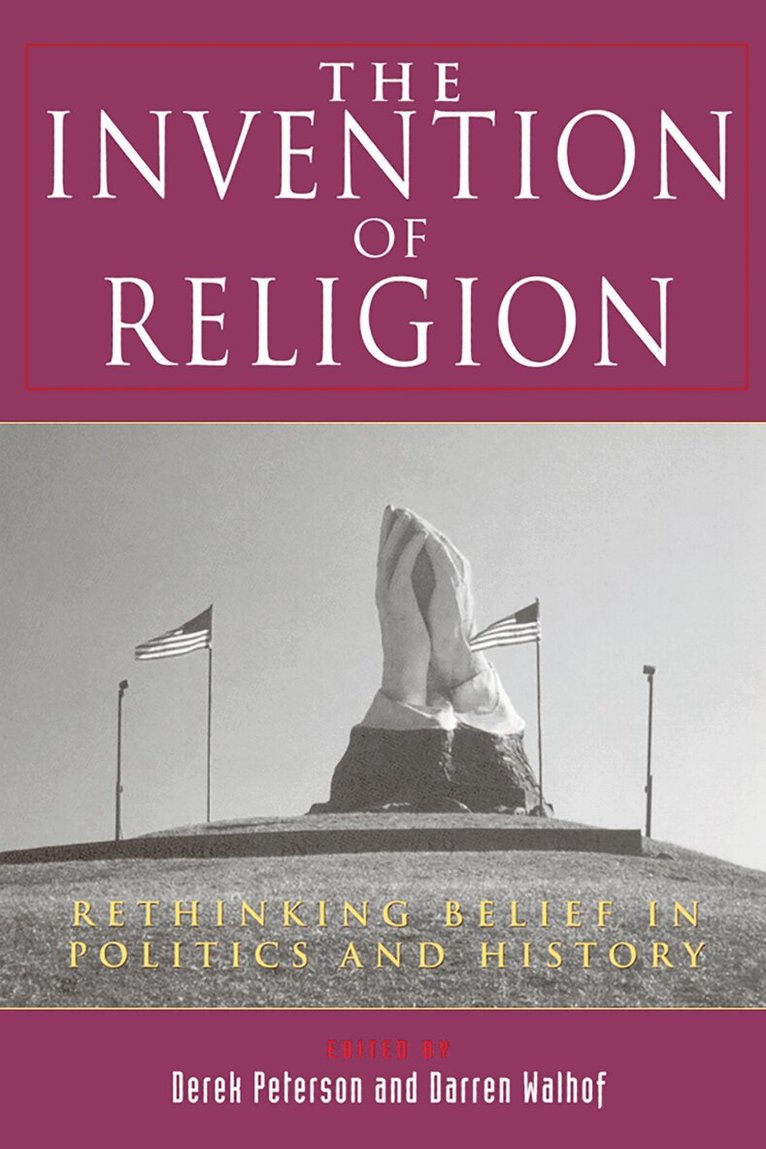
Is religion an obstacle to enlightenment? Popular and scholarly opinion says that it is. In a world gripped in a clash of civilizations, the virtues of tolerance, reason, and freedom seem to be under siege by religious absolutism. This collection of historical essays argues that the conventional wisdom on religion makes sense only as a strategy of intellectual and political control. The authors study how nationalists, state officials, missionaries and scholars in the West and in the colonized world defined and redefined the relationship between the political and the religious. Recasting and representing religious beliefs and practices, the authors show, was for modernizing elites a means of consolidating new political communities.Part 1 of the book examines the political and scholarly stakes involved in defining Buddhism, African traditional religion, and fundamentalist Judaism as subjective and apolitical belief systems. Part 2 takes up the relationship between religious reform and nationalism, asking how the formalization of religious practices in the nineteenth century Ottoman Empire, Japan, and India helped define nationalist ideologies. Part 3 turns to religious exhibits in Turkey and the southern United States, exploring how pilgrims and tourists convert museum displays into objects of religious veneration.By treating religion as a contested social space, this book brings philosophy, theology, history, and political science together to show how struggles over religious practices are bound up with colonial and national politics around the world.
Inbunden, Engelska, 2016
1 199 kr
Skickas inom 10-15 vardagar
This book examines the distinctive contribution that the writings of Hans-Georg Gadamer make to democratic theory. Walhof argues that Gadamer’s hermeneutical philosophy enlarges our perspective by shifting our view away from individual citizens to what exists between citizens, thereby allowing us to envision political realities that are otherwise hard to see. These realities include the disclosure of truth in democratic politics; achieving common ground in democratic dialogue, even amidst significant disagreement and diversity; the public and political nature of the religious traditions that make claims on and shape citizens; and the solidarities that connect us to each other and enable democratic action. The author argues that bringing these dimensions to awareness enriches our theories of democracy and is particularly crucial in an era of hyper-partisanship, accelerating inequality, and social conflicts involving racial, sexual, and religious identities.
E-bok
Engelska, 20161 108 kr
Läs direkt efter köp
This book examines the distinctive contribution that the writings of Hans-Georg Gadamer make to democratic theory. Walhof argues that Gadamer’s hermeneutical philosophy enlarges our perspective by shifting our view away from individual citizens to what exists between citizens, thereby allowing us to envision political realities that are otherwise hard to see. These realities include the disclosure of truth in democratic politics; achieving common ground in democratic dialogue, even amidst significant disagreement and diversity; the public and political nature of the religious traditions that make claims on and shape citizens; and the solidarities that connect us to each other and enable democratic action. The author argues that bringing these dimensions to awareness enriches our theories of democracy and is particularly crucial in an era of hyper-partisanship, accelerating inequality, and social conflicts involving racial, sexual, and religious identities.
Häftad, Engelska, 2018
874 kr
Skickas inom 10-15 vardagar
This book examines the distinctive contribution that the writings of Hans-Georg Gadamer make to democratic theory. Walhof argues that Gadamer’s hermeneutical philosophy enlarges our perspective by shifting our view away from individual citizens to what exists between citizens, thereby allowing us to envision political realities that are otherwise hard to see. These realities include the disclosure of truth in democratic politics; achieving common ground in democratic dialogue, even amidst significant disagreement and diversity; the public and political nature of the religious traditions that make claims on and shape citizens; and the solidarities that connect us to each other and enable democratic action. The author argues that bringing these dimensions to awareness enriches our theories of democracy and is particularly crucial in an era of hyper-partisanship, accelerating inequality, and social conflicts involving racial, sexual, and religious identities.