David A. Wardle – författare
Visar alla böcker från författaren David A. Wardle. Handla med fri frakt och snabb leverans.
4 produkter
Aboveground-Belowground Linkages
Biotic Interactions, Ecosystem Processes, and Global Change
Av David A. Wardle, Richard D. Bardgett
E-bok, 2010
897 kr
Lägg i varukorg
Aboveground-Belowground Linkages provides the most up-to-date and comprehensive synthesis of recent advances in our understanding of the roles that interactions between aboveground and belowground communities play in regulating the structure and function of terrestrial ecosystems, and their …
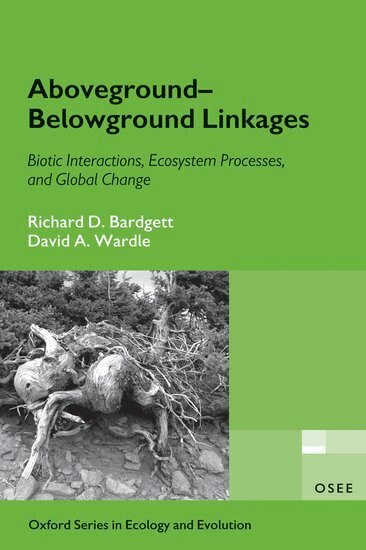
Aboveground-Belowground Linkages
Biotic Interactions, Ecosystem Processes, and Global Change
Av Richard D. Bardgett, David A. Wardle
Häftad, 2010
1056 kr
Lägg i varukorg
Aboveground-Belowground Linkages provides the most up-to-date and comprehensive synthesis of recent advances in our understanding of the roles that interactions between aboveground and belowground communities play in regulating the structure and function of terrestrial ecosystems, and their …
Communities and Ecosystems
Linking the Aboveground and Belowground Components
Häftad, 2002
857 kr
Lägg i varukorg
Most of the earth's terrestrial species live in the soil. These organisms, which include many thousands of species of fungi and nematodes, shape aboveground plant and animal life as well as our climate and atmosphere. Indeed, all terrestrial ecosystems consist of interdependent aboveground and …
Communities and Ecosystems
Linking the Aboveground and Belowground Components
E-bok, 2013
1170 kr
Lägg i varukorg
Most of the earth''s terrestrial species live in the soil. These organisms, which include many thousands of species of fungi and nematodes, shape aboveground plant and animal life as well as our climate and atmosphere. Indeed, all terrestrial ecosystems consist of interdependent aboveground and …