David Bellos - Böcker
Visar alla böcker från författaren David Bellos. Handla med fri frakt och snabb leverans.
16 produkter
16 produkter
133 kr
Skickas
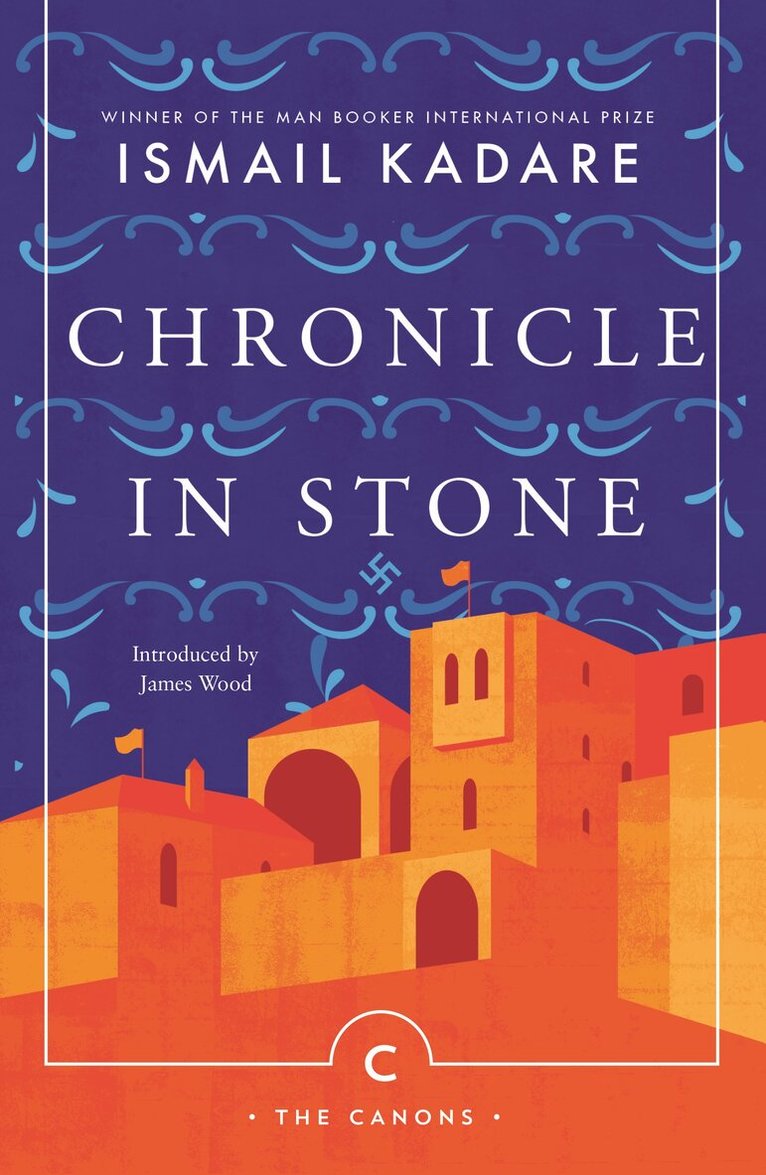
In a seamless mosaic of dreams and games, a young boy reflects on events as his hometown in Albania falls to a series of invaders. Amid floods and bombings, his own innocence and wonder are lost forever in the madness and brutality of the Second World War.A disturbing mix of tragedy and comedy, politics and sexuality, Chronicle in Stone is a fascinating masterpiece about what it means to grow up in a turbulent world.
130 kr
Skickas
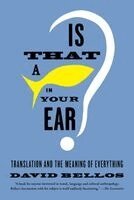
Is That a Fish in Your Ear? by David Bellos asks: how do we really make ourselves understood to other people? This funny, wise and life-affirming language book shows how, from puns to poetry, news bulletins to the Bible, Asterix to Swedish films, translation is at the heart of everything we do - and makes us who we are.Selected by The New York Times as one of the 100 Notable Books of 2011'A wonderful, witty book ... richly original, endlessly fascinating ... for anyone interested in words' Economist, Books of the Year 'A scintillating bouillabaisse ... spiced with good and provocative things' Literary Review'Dazzlingly inventive' The New York Times'Clear and lively ... There is nothing quite like it' Spectator
145 kr
Tillfälligt slut
'Never mind those self-help manuals urging that some classic novel may change your life; in this sparkling study of the birth, growth and afterlife of Hugo's evergreen blockbuster, David Bellos argues that Les Misérables already has' Boyd Tonkin, Economist'Any reader who hasn't yet embarked on Hugo's book might be converted to the idea by this one' Daniel Hahn, SpectatorThe extraordinary story of how a simple tale of love and revolution, the poor and the downtrodden - Victor Hugo's beloved classic Les Misérables - conquered the world.There has never been a book like it. It is the most widely read and frequently adapted story of all time, on stage and on film. But why is Les Misérables the novel of the century? David Bellos's remarkable new book brings to life the extraordinary story of how Hugo managed to write his epic novel despite a revolution, a coup d'état and political exile; how he pulled off the deal of the century to get it published, and set it on course to become the novel that epitomizes the grand sweep of history in the nineteenth century. Packed full of information about the background and design of Les Misérables, this biography of a masterpiece nonetheless insists that the moral and social message of Hugo's ever-popular novel is just as important for our century as it was for its own. The Novel of the Century is a book as rich, remarkable and long-lasting as the novel at its heart.Les Misérables is available as a Penguin Classic, in an acclaimed new translation by Christine Donougher, with an introduction by Robert Tombs.
326 kr
Skickas inom 3-6 vardagar
Del 4 - Cambridge Studies in French
Leo Spitzer
Essays on Seventeenth-Century French Literature
Häftad, Engelska, 2009
493 kr
Skickas inom 7-10 vardagar
The undisputed master of stylistic criticism, Leo Spitzer combined phenomenal learning in historical and comparative linguistics with brilliant and original critical insight. He was born in Vienna in 1887. He studied Romance Philology at the Universities of Vienna and Paris and then taught at Vienna, Bonn, Marburg and Cologne. After escaping from Germany in 1933, he taught briefly at Istanbul and then at The Johns Hopkins University in Baltimore. He died in 1960. He was the author of over 800 books, articles, reviews and notes on the language and literatures of France, Spain, Italy, Portugal, Romania, Germany, England and America from the Middle Ages to the twentieth century. This translation brings together for the first time in any language all of Spitzer's work on the literature of seventeenth-century France, including 'Racine's classical piano' (1928) and 'Saint-Simon's portrait of Louis XIV' (1928). Each of the essays demonstrates in practical rather than theoretical terms the essential unity of literary and linguistic study. David Bellos's introduction sets Spitzer's method of textual and stylistic interpretation in its historical context and sketches out the career of this supremely knowledgeable reader for whom knowledge was less important than understanding.
366 kr
Skickas inom 7-10 vardagar
This up-to-date account of the novel's composition, structure, and achievement provides readers with the literary and historical knowledge needed to make sense of the text. Professor Bellos explains how Balzac challenged prevailing nineteenth-century expectations of what novels should be like.
319 kr
Skickas inom 3-6 vardagar
336 kr
Skickas inom 3-6 vardagar
257 kr
Skickas inom 3-6 vardagar
215 kr
Skickas inom 3-6 vardagar
Copyright is everywhere. Your smartphone incorporates thousands of items of intellectual property. Someone owns the reproduction rights to photographs of your dining table. At this very moment, battles are raging over copyright in the output of artificial intelligence programs. Not only books but wallpaper, computer programs and cuddly toys are now deemed to be intellectual properties - making copyright a labyrinthine construction of laws, covering almost all products of human creativity.Copyright has its roots in eighteenth-century London, where it was first established to limit printers' control of books. Principled arguments against copyright arose from the start and nearly abolished it in the nineteenth century. But a handful of little-noticed changes in the late twentieth century concentrated ownership of immaterial goods into very few hands. Who Owns This Sentence? is an often-humorous and always-enlightening cultural, legal, and global history of the idea that intangible things can be owned, and makes a persuasive case for seeing copyright as an engine of inequality in the twenty-first century.
189 kr
Skickas
The full story of one of France's greatest cinema legends, a clown whose film-making innovation was to turn everyday life into an art form.Jacques Tati's Monsieur Hulot, unmistakable with his pipe, brolly and striped socks, was a creation of slapstick genius that made audiences around the world laugh at the sheer absurdity of life. This biography charts Tati's rise and fall, from his earliest beginnings as a music hall mime during the Depression, to the success of Jour de Fête and Mon Oncle, to Playtime, the grandiose masterpiece that left the once celebrated director bankrupt and begging for equipment to complete his final films. Analysing Tati's singular vision, Bellos reveals the intricate staging of his most famous gags and draws upon hitherto inaccessible archives to produce a unique assessment of his work and its context for film lovers and film students alike.
256 kr
Skickas
'Fascinating' Telegraph'Thorough and engaging' Washington Post'Lively, opinionated, and ultra-timely' New Yorker'[A] robust and readable polemic history' Financial Times'A fascinating new look at the patchwork chaos called copyright ... Not just authors, but artists in many media, scientists, mathematicians and every one of us with our own unique individual faces ... should read this book' SpectatorThis is the story of a relatively simple idea - that authors have rights in the works they create - which through many strange and startling twists and turns has come to frame and to constrain a wide range of things we do, for the benefit not of the many, but of the few.Copyright is everywhere. Your smartphone incorporates thousands of items of intellectual property. Someone owns the reproduction rights to photographs of your dining table. At this very moment, battles are raging over copyright in the output of artificial intelligence programs. Not only books but wallpaper, computer programs and cuddly toys are now deemed to be intellectual properties - making copyright a labyrinthine construction of laws covering almost all products of human creativity.Copyright has its roots in eighteenth-century London, where it was first established to limit printers' control of books. Principled arguments against copyright arose from the start and nearly abolished it in the nineteenth century. But a handful of little-noticed changes in the late twentieth century concentrated ownership of immaterial goods into very few hands.Who Owns This Sentence? is an often-humorous and always-enlightening cultural, legal, and global history of the idea that intangible things can be owned, and makes a persuasive case for seeing copyright as an engine of inequality in the twenty-first century.
189 kr
Skickas inom 7-10 vardagar
'Fascinating' Telegraph'Thorough and engaging' Washington Post'Lively, opinionated, and ultra-timely' New Yorker'[A] robust and readable polemic history' Financial Times'A fascinating new look at the patchwork chaos called copyright ... Not just authors, but artists in many media, scientists, mathematicians and every one of us with our own unique individual faces ... should read this book' SpectatorThis is the story of a relatively simple idea - that authors have rights in the works they create - which through many strange and startling twists and turns has come to frame and to constrain a wide range of things we do, for the benefit not of the many, but of the few.On December 16, 2021, Sony Music Group announced that it had acquired the rights to the work of singer songwriter Bruce Springsteen. The sale price was over half a billion dollars. The reason why a catalogue of songs and recordings can now be sold for the price of a fleet of small aircraft is the whole subject of this book: copyright. Who Owns this Sentence? is a fascinating and comprehensive cultural, legal and global history of how intangible things can be owned, and reveals how copyright is no longer for the benefit of creators but has been transformed into an engine of inequality in the twenty-first century.
155 kr
Skickas
500 kr
Skickas inom 3-6 vardagar
386 kr
Skickas inom 3-6 vardagar