David C. Hammack - Böcker
Visar alla böcker från författaren David C. Hammack. Handla med fri frakt och snabb leverans.
6 produkter
6 produkter
1 007 kr
Skickas inom 7-10 vardagar
Once largely confined to the biggest cities in the mid-Atlantic and Great Lakes states, philanthropic foundations now play a significant role in nearly every state. Wide-ranging and incisive, the essays in American Philanthropic Foundations: Regional Difference and Change examine the origins, development, and accomplishments of philanthropic foundations in key cities and regions of the United States. Each contributor assesses foundation efforts to address social and economic inequalities, and to encourage cultural and creative life in their home regions and elsewhere. This fascinating and timely study of contemporary America's philanthropic foundations vividly illustrates foundations' commonalities and differences as they strive to address pressing public problems.
428 kr
Skickas inom 7-10 vardagar
Once largely confined to the biggest cities in the mid-Atlantic and Great Lakes states, philanthropic foundations now play a significant role in nearly every state. Wide-ranging and incisive, the essays in American Philanthropic Foundations: Regional Difference and Change examine the origins, development, and accomplishments of philanthropic foundations in key cities and regions of the United States. Each contributor assesses foundation efforts to address social and economic inequalities, and to encourage cultural and creative life in their home regions and elsewhere. This fascinating and timely study of contemporary America's philanthropic foundations vividly illustrates foundations' commonalities and differences as they strive to address pressing public problems.
268 kr
Skickas inom 10-15 vardagar
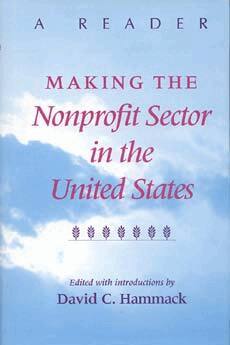
"It is a delight to seen an anthology on nonprofit history done so well."—Barry Karl, John F. Kennedy School of Government, Harvard University"This is a volume that everyone concerned about nonprofits—scholar, practitioner, and citizen—will find useful and illuminating."—Peter Dobkin Hall, Program on Non-Profit OrganizationsYale Divinity School"A remarkable book."—Robert Putnam, John F. Kennedy School of Government, Harvard University[One to come from John Simon, School of Law, Yale University by Jan. 13th and others are being solicited.] Unique among nations, America conducts almost all of its formally organized religious activity, and many cultural, arts, human service, educational, and research activities through private nonprofit organizations. Though partially funded by government, as well as by fees and donations, American nonprofits have pursued their missions with considerable independence. Many have amassed remarkable resources and acquired some of the most impressive hospital, university, performing arts, and museum facilities in the world. While some have amassed large endowments, many that surpass one billion dollars, there are also hundreds of thousands of small nonprofits, most with no tangible resources at all. How did the United States come to rely so heavily on nonprofits? Why has it continued to do so? What purposes do Americans seek to advance through nonprofits? How have Americans sought to control them? How have nonprofits been effected by the growth of government in the twentieth century? These questions suggest the complexity of the history of nonprofits in the United States. To help explore that history, this reader presents some of the classic documents in the development of the nonprofit sector along with important interpretations by recent scholars. The selections can be considered a representative part of a single extended conversation by the men and women who have taken part in the effort to define America and the American dream, even as they shaped what we now call the nonprofit sector. The statements by participants in the growth and development of the nonprofit sector are accompanied by essays written by historians and social scientists that provide concise surveys of important issues and periods. The essays give voice to those whose contributions to the American debate about voluntary associations and private institutions would otherwise be difficult to find or comprehend.The selections can be considered a representative part of a single extended conversation by the men and women who have taken part in the effort to define America and the American dream, even as they shaped what we now call the nonprofit sector. The statements by participants in the growth and development of the nonprofit sector are accompanied by essays written by historians and social scientists that provide concise surveys of important issues and periods. The essays give voice to those whose contributions to the American debate about voluntary associations and private institutions would otherwise be difficult to find or comprehend. Each selection has been chosen to define or illuminate important questions in the development of the nonprofit sector in the United States. Many include criticisms of particular nonprofit efforts, or of nonprofit activity in general. The intention is to provoke thought, not to establish an official list of readings. Though not every point of view could be included, the reader does reflect a general understanding of the nature of the nonprofit sector and its significance in the development of the United States. Philanthropic Studies—Dwight F. Burlingame and David C. Hammack, general editors
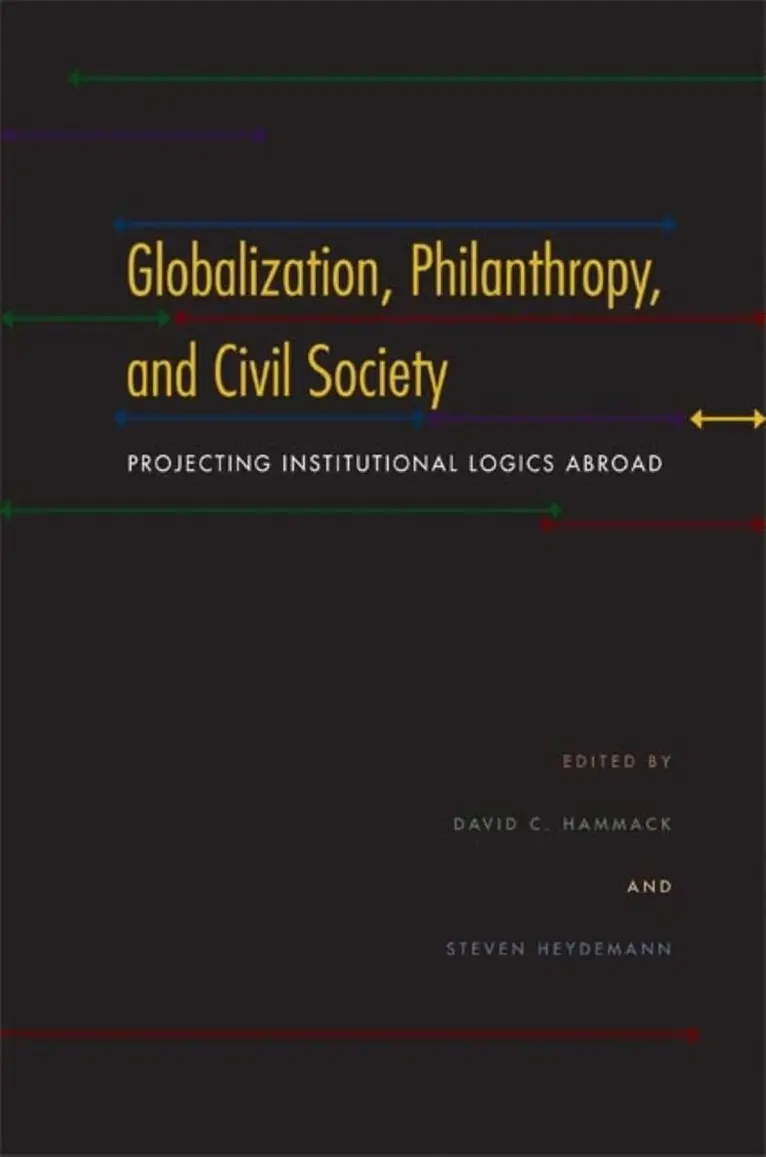
Globalization, Philanthropy, and Civil Society
Projecting Institutional Logics Abroad
Inbunden, Engelska, 2009
487 kr
Skickas inom 10-15 vardagar
The essays in this book reflect pioneering efforts to study the global movement of ideas and institutions. They deal with topics of significant contemporary importance: initiatives to address the AIDS epidemic in East Africa; to protect the peoples and ecosystems of the Amazon; to advance the "truth and reconciliation" process in South Africa and in other areas of great conflict; to promote "civil society" in Eastern Europe and Central Asia; to advocate for environmental protection in the United States, Great Britain, Germany, and Japan; and to spread Rotary Clubs and encourage "social entrepreneurship" throughout the world. These essays highlight a wide range of research, paying close attention to the realities of particular situations and to current thinking about general processes.
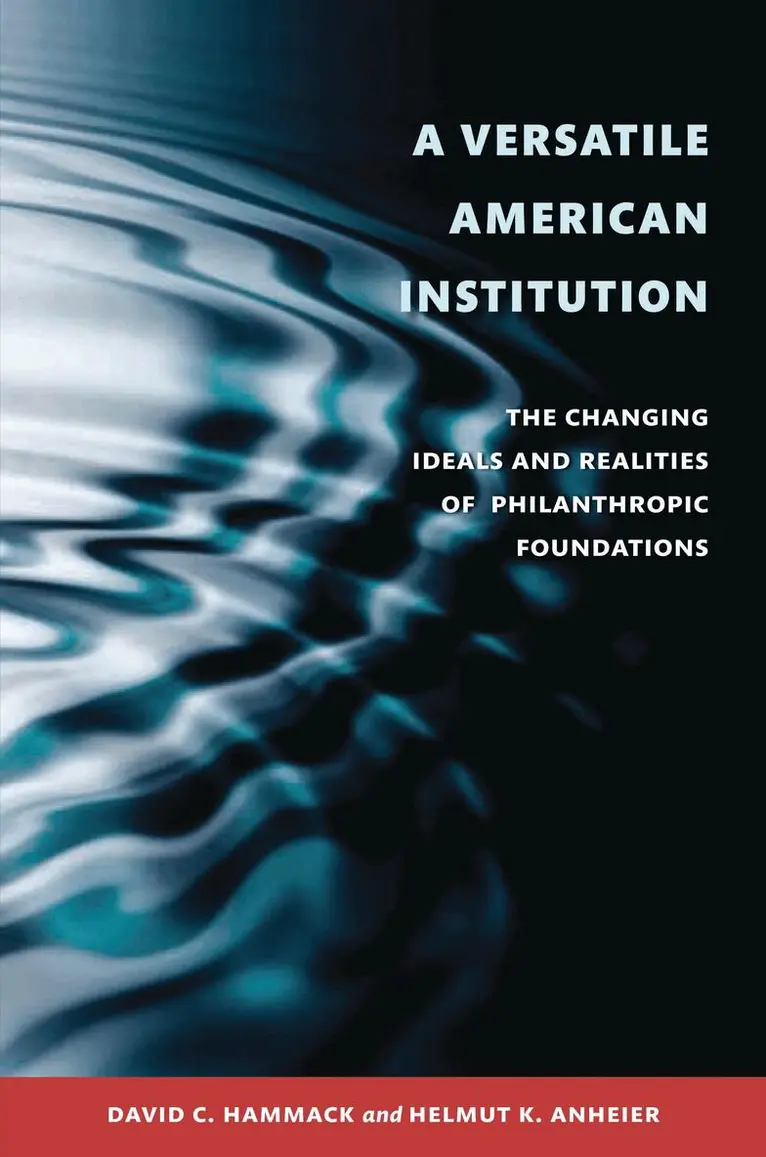
Versatile American Institution
The Changing Ideals and Realities of Philanthropic Foundations
Häftad, Engelska, 2013
354 kr
Skickas inom 10-15 vardagar
America's grantmaking foundations have grown rapidly over the course of recent decades, even in the face of financial and economic crises. Foundations have a great deal of freedom, enjoy widespread legitimacy, and wield considerable influence. In this book, David Hammack and Helmut Anheier follow up their edited volume, American Foundations, with a comprehensive historical account of what American foundations have done with that independence and power.While philanthropic foundations play important roles in other parts of the world, the U.S. sector stands out as exceptional. Nowhere else are they so numerous, prominent, or autonomous. What have been the main contributions of philanthropic foundations to American society? And what might the future hold for them?A Versatile American Institution considers foundations in a new way. Previous accounts typically focused narrowly on their organization, donors, and leaders, and their intentionsbut not on the outcome of philanthropy. Rather than looking at foundations in a vacuum, Hammack and Anheier consider their roles and contributions in the context of their times and their economic and political circumstances.
808 kr
Skickas inom 10-15 vardagar
Foundations play an essential part in the philanthropic activity that defines so much of American life. No other nation provides its foundations with so much autonomy and freedom of action as does the United States. Liberated both from the daily discipline of the market and from direct control by government, American foundations understandably attract great attention. As David Hammack and Helmut Anheier note in this volume, ""Americans have criticized foundations for... their alleged conservatism, liberalism, elitism, radicalism, devotion to religious tradition, hostility to religionin short, for commitments to causes whose significance can be measured, in part, by the controversies they provoke. Americans have also criticized foundations for ineffectiveness and even foolishness.""Their size alone conveys some sense of the significance of American foundations, whose assets amounted to over $530 billion in 2008 despite a dramatic decline of almost 22 percent in the previous year. And in 2008 foundation grants totaled over $45 billion. But what roles have foundations actually played over time, and what distinctive roles do they fill today? How have they shaped American society, how much difference do they make? What roles are foundations likely to play in the future?This comprehensive volume, the product of a three-year project supported by the Aspen Institute's program on the Nonprofit Sector and Philanthropy, provides the most thorough effort ever to assess the impact and significance of the nation's large foundations. In it, leading researchers explore how foundations have shapedor failed to shapeeach of the key fields of foundation work.American Foundations takes the reader on a wide-ranging tour, evaluating foundation efforts in education, scientific and medical research, health care, social welfare, international relations, arts and culture, religion, and social change.