David F. J. Campbell – författare
Visar alla böcker från författaren David F. J. Campbell. Handla med fri frakt och snabb leverans.
15 produkter
15 produkter
Inbunden, Engelska, 2025
1 553 kr
Skickas inom 10-15 vardagar
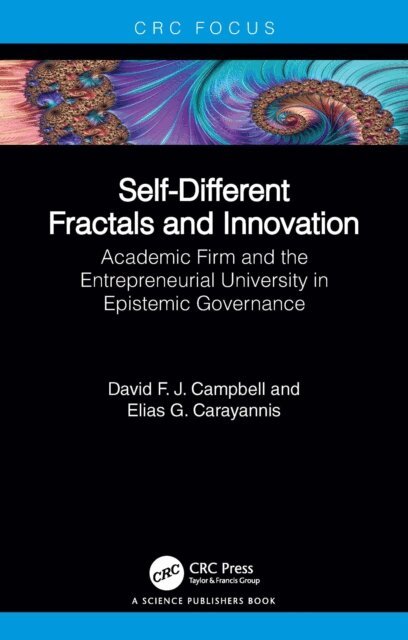
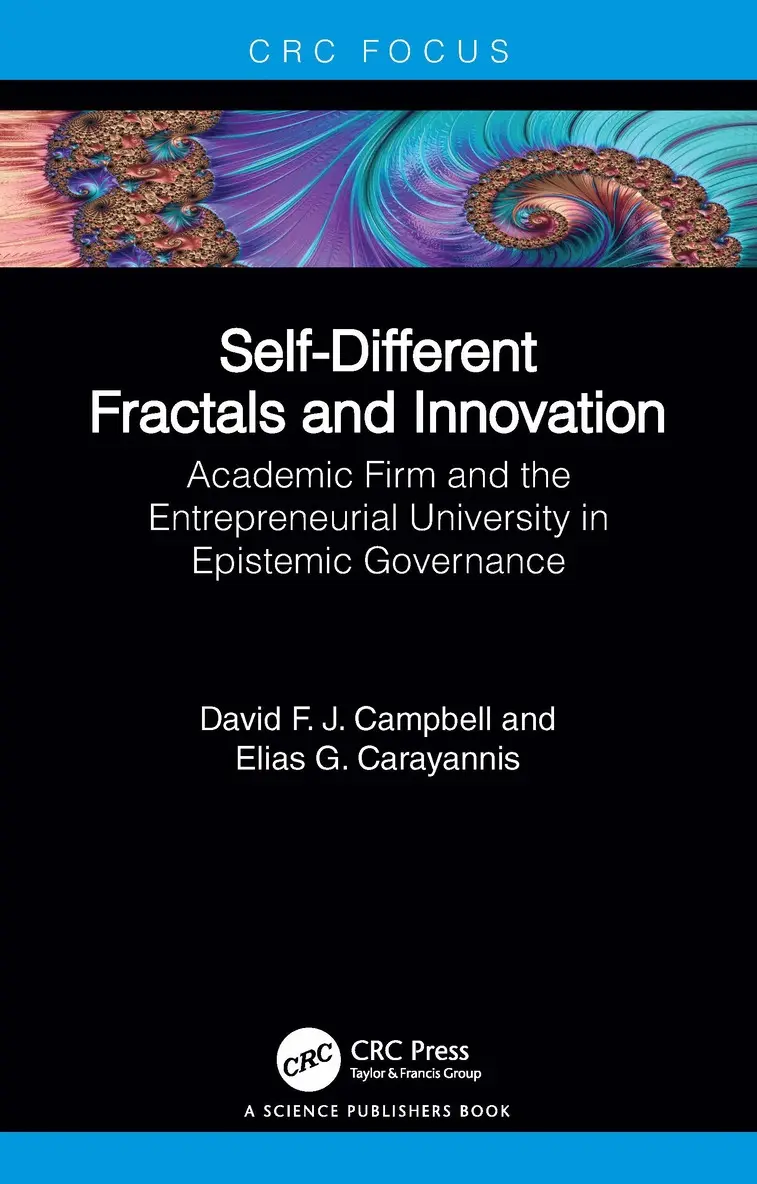
The presented ideas create and shape the vision of a “Manifesto of Higher Education Governance”.Fractals are typically understood as self-similar structures, but this concept is expanded to include “self-different fractals”. These fractals align with a “Philosophy of Dialectics”, where opposing forces (thesis and antithesis) can either create disruption or, when managed effectively, drive creativity, innovation, and development. Because self-different fractal systems operate in multiple modes, they hold greater potential for fostering innovation.This conceptual exploration investigates innovation in higher education through dialectical approaches, presenting the entrepreneurial university as a thesis, the academic firm as an antithesis, and epistemic governance as a synthesis. Epistemic governance plays a key role in motivating innovation by integrating pluralistic knowledge and innovation modes.The concept of “self-different fractal innovation systems”—structures that embody multiple, interacting modalities—enhances innovation potential through their fluid complexity. Good and effective governance of these systems encourages continual knowledge evolution, enabling the development of “next-knowledge”. This process, guided by the dialectics of innovation, forms new, integrated structures and networks.The book emphasizes interdisciplinary and transdisciplinary approaches, with the latter involving collaboration between scholars and user communities for real-world impact. It bridges science and art, suggesting that visual representations of self-different fractals inspire artistic research alongside scientific inquiry. Through examining both linear and non-linear systems, the authors reveal how conflicting principles can generate productive chaos, ultimately driving innovation, societal progress and knowledge democracy.The future of governance is also the future of higher education.
Häftad, Engelska, 2012
529 kr
Skickas inom 10-15 vardagar
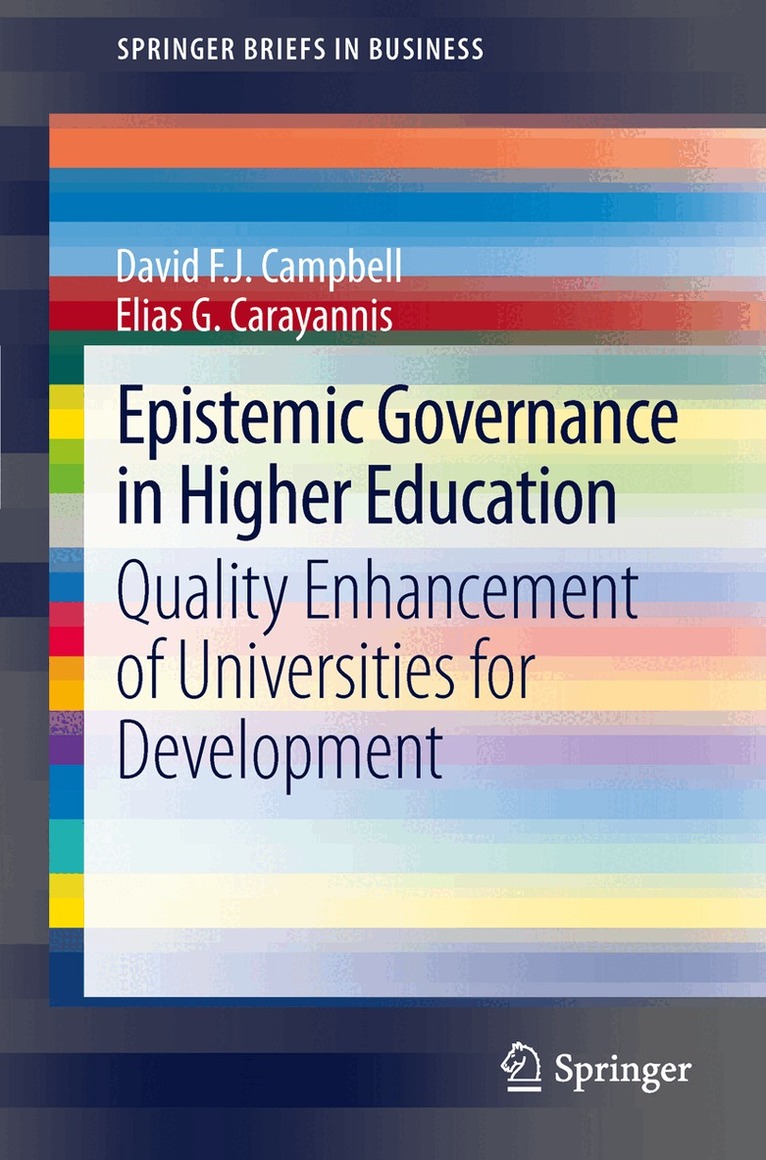
In a comprehensive review of recent literature, they define key terms and concepts, arguing that a good, effective and sustainable governance of higher education is not possible unless the epistemic structure and knowledge paradigms of higher education are addressed directly.
Inbunden, Engelska, 2014
995 kr
Skickas inom 10-15 vardagar
By promoting dissemination and sharing of knowledge, cyber-democracy allows a knowledge conversion of the local into the global (gloCal) and vice versa, resulting in a gloCal platform for communication and knowledge interaction and knowledge enhancement.
Häftad, Engelska, 2016
1 082 kr
Skickas inom 10-15 vardagar
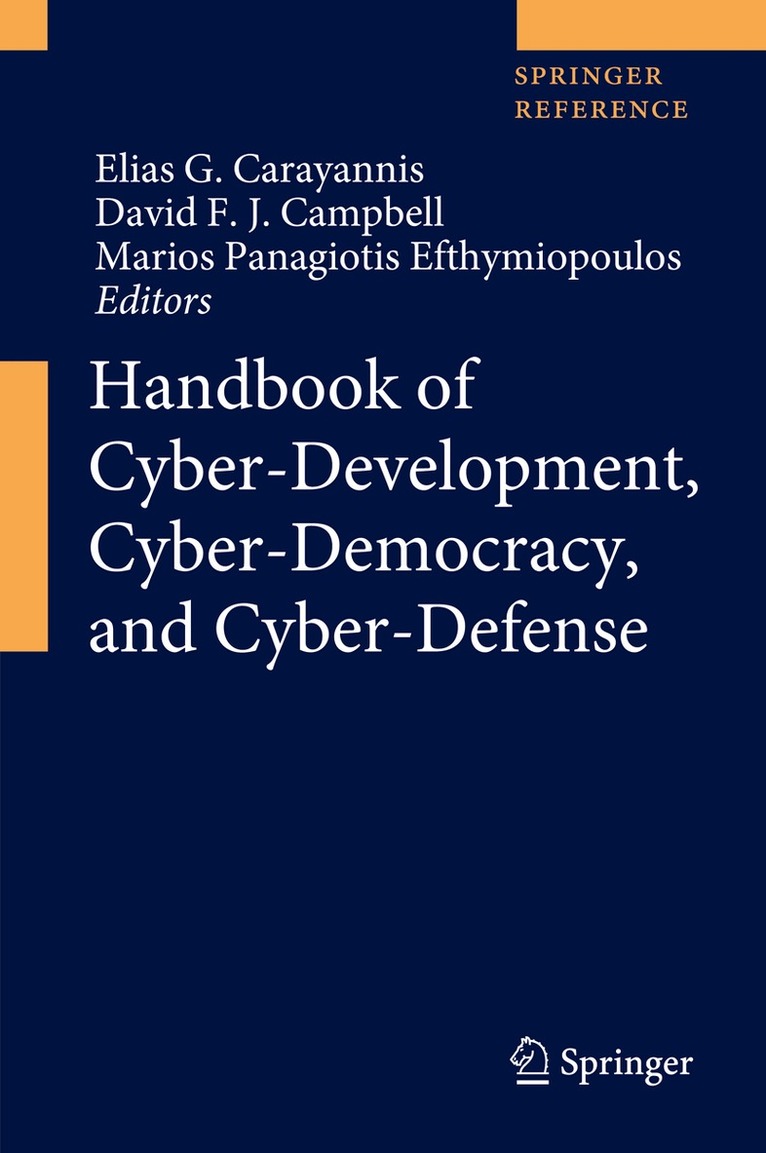
In this volume, contributors from academia, industry, and policy explore the inter-connections among economic development, socio-political democracy and defense and security in the context of a profound transformation, spurred by globalization and supported by the rapid development of information and communication technologies (ICT). This powerful combination of forces is changing the way we live and redefining the way companies conduct business and national governments pursue strategies of innovation, economic growth and diplomacy.Integrating theoretical frameworks, empirical research and case studies, the editors and contributors have organized the chapters into three major sections, focusing on cyber-development, cyber-democracy and cyber-defense.The authors define cyber-development as a set of tools, methodologies and practices that leverage ICT to catalyze and accelerate social, political and economic development, with an emphasis on making the transition to knowledge-based economies. One underlying understanding here is that knowledge, knowledge creation, knowledge production and knowledge application (innovation) behave as crucial drivers for enhancing democracy, society, and the economy. By promoting dissemination and sharing of knowledge, cyber-democracy allows a knowledge conversion of the local into the global (gloCal) and vice versa, resulting in a gloCal platform for communication and knowledge interaction and knowledge enhancement. Meanwhile, technology-enabled interconnectivity increases the need to adopt new methods and actions for protection against existing threats and possible challenges to emerge in the future. The final section contemplates themes of cyber-defense and security, as well as emerging theories and values, legal aspects and trans-continental links (NATO, international organizations and bilateral relations between states). Collectively, the authors present a uniquecollection of insights and perspectives on the challenges and opportunities inspired by connectivity.
Häftad, Engelska, 2018
813 kr
Skickas inom 10-15 vardagar
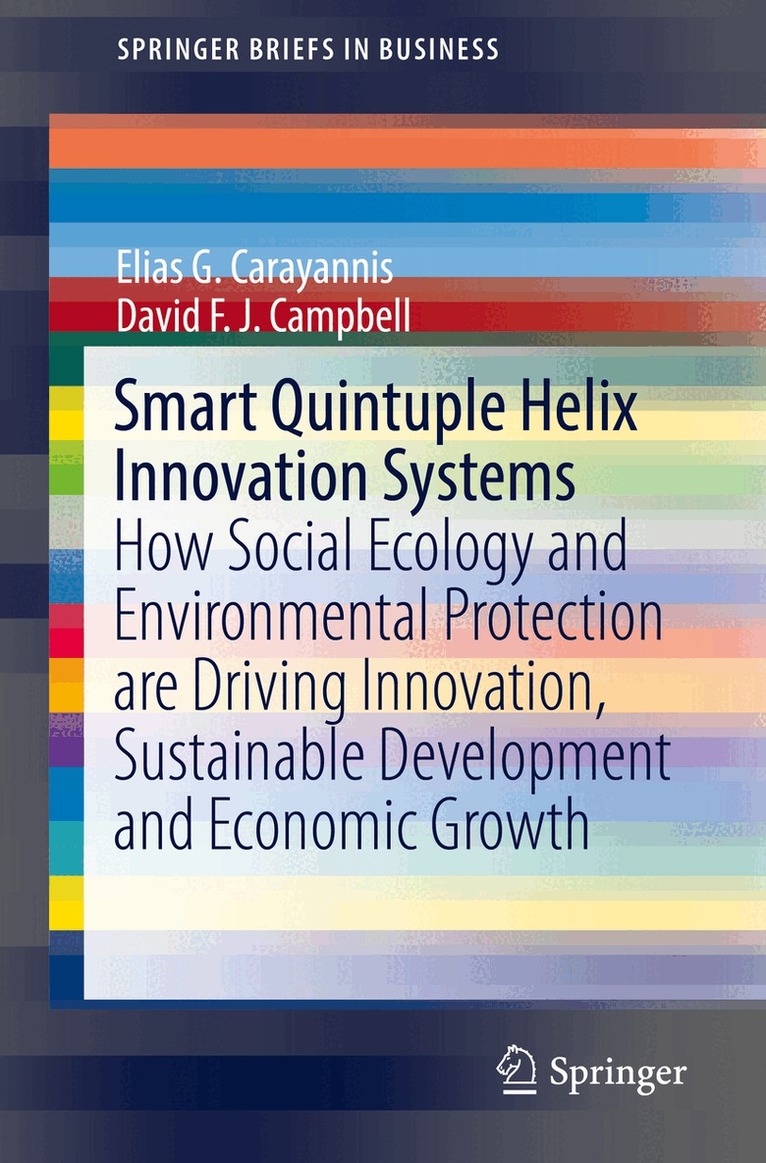
This volume examines the relationships among social ecology, innovation, sustainable development and economic growth.
Häftad, Engelska, 2018
2 156 kr
Skickas inom 10-15 vardagar
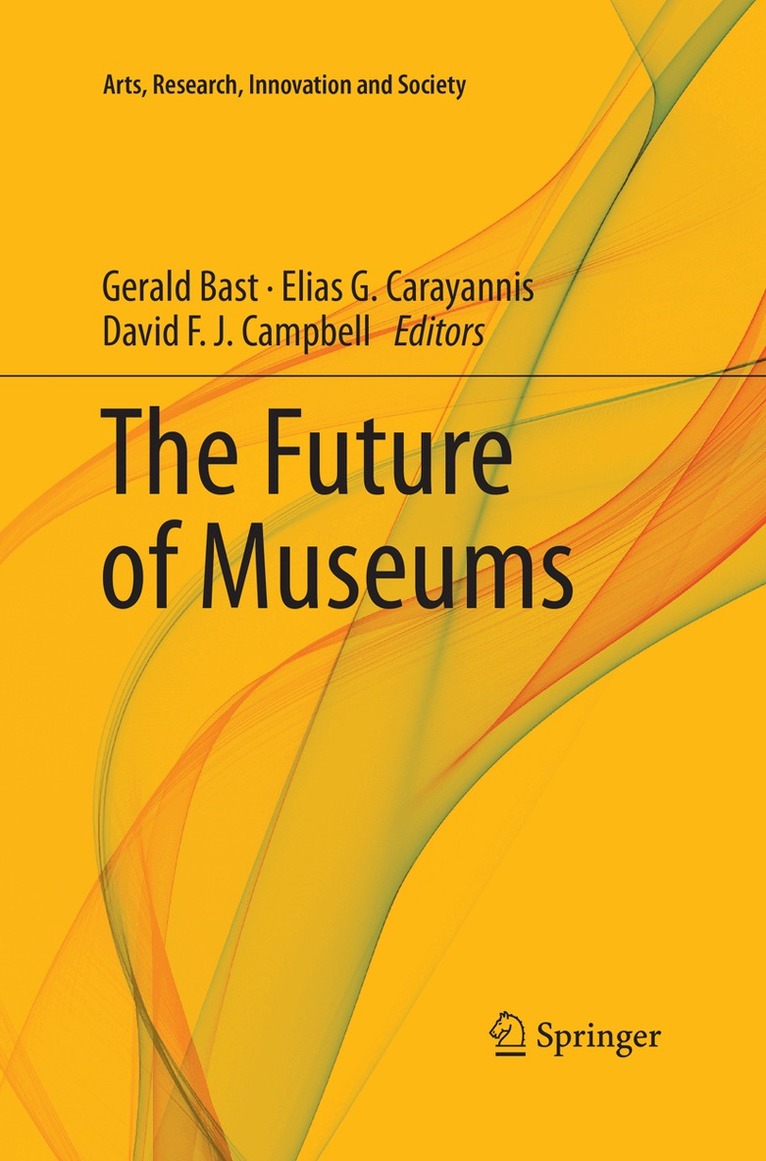
This book explores―at the macro, meso and micro levels and in terms of qualitative as well as quantitative studies―the current and future role of museums for art and society. Given the dynamic developments in art and society, museums need to change in order to remain (and in some ways, regain) relevance. This relevance is in the sense of a power to influence. Additionally museums have challenges that arise in the production of art through the use of permanent and rapidly changing technologies. This book examines how museums deal with the increasing importance of performance art and social interactive art, artistic disciplines which refuse to use classical or digital artistic media in their artistic processes. The book also observes how museums are adapting in the digital age. It addresses such questions as, “How to keep museums in contact with recipients of art in a world in which the patterns of communication and perception have changed dramatically,” and also “Can the art museum,as a real place, be a counterpart in a virtualized and digitalized society or will museums need to virtualize and even globalize themselves virtually?” Chapters also cover topics such as the merits of digital technologies in museums and how visitors perceive these changes and innovations. When you go back to the etymological origin, the Mouseion of Alexandria, it was a place where – supported by the knowledge stored there – art and science were developed: a place of interdisciplinary research and networking, as you would call it today. The word from the Ancient Hellenic language for museum (ΜΟΥΣΕΙΟΝ) means the “house of the muses”: where the arts and sciences find their berth and cradle. With the “Wunderkammer,” the museum was re-invented as a place for amazing for purpose of representation of dynastic power, followed by the establishment of museums as a demonstration of bourgeois self-consciousness. In the twentieth century, the ideal of the museum as an institution for education received a strong boost, before the museum as a tourism infrastructure became more and more the institutional, economic and political role-model. This book is interested in discovering what is next for museums and how these developments will affect art and society. Each of the chapters are written by academics in the field, but also by curators and directors of major museums and art institutions.
Inbunden, Engelska, 2019
1 469 kr
Skickas inom 10-15 vardagar
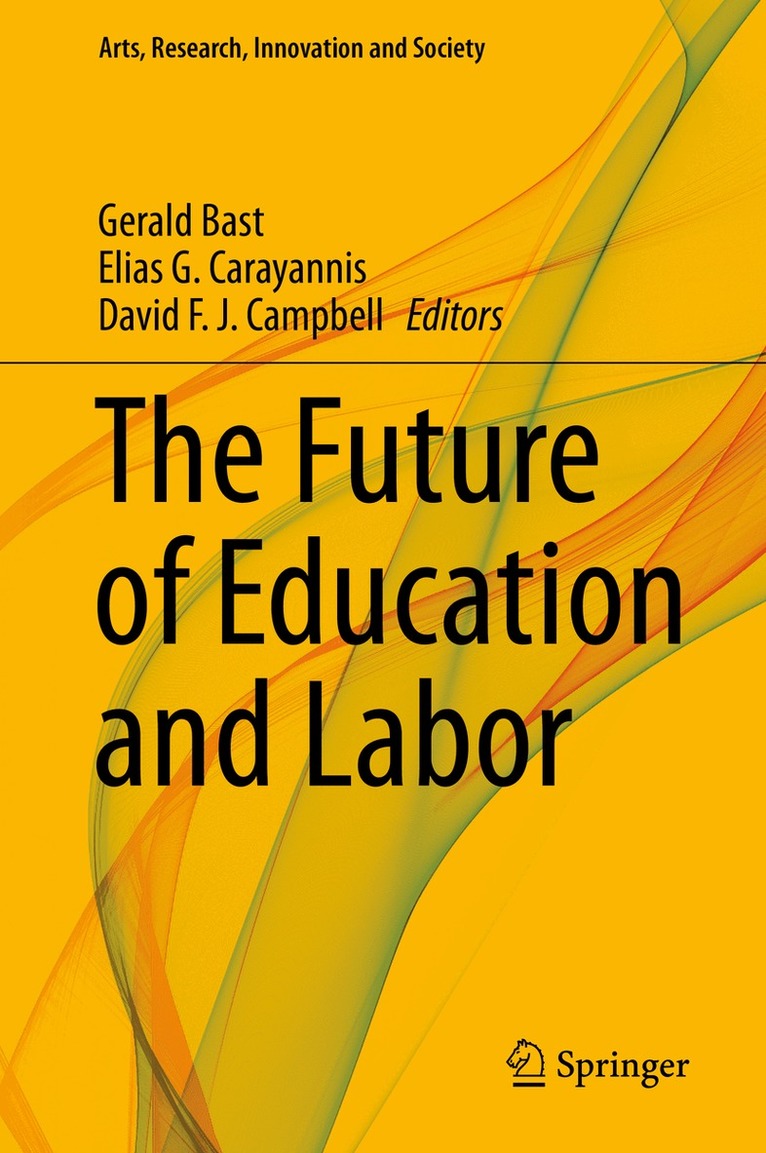
This book explores the ways in which education impacts labor markets. Specifically, the contributions in this book indicate that the future of labor is creative, socially aware and inter-disciplinary while identifying the changes and innovations needed in our educational systems to meet this demand.Due to an increasing automatization (robotic manufacturing), the character of labor and work in general will change dramatically in the near future. This will be the case not only in the western countries, but also in the larger emerging economies in Asia, for example China and India. While societal environments, economy and the character of labor are increasingly in a process of dramatic changes, the educational systems and the leading principles of research about labor and employment are not changing adequately. Cross-disciplinary (inter-disciplinary and trans-disciplinary) thinking and learning is not the main focus of our educational systems. Consequently, the systems of academic research follow and apply disciplinary or even sub-disciplinary strategies, avoiding cross-disciplinary research approaches, and not supporting inter-disciplinary academic career models. This book introduces such strategic models to better prepare the next generation of workers for the new knowledge economy, and the future of democratic societies.
Häftad, Engelska, 2020
1 512 kr
Skickas inom 10-15 vardagar
This book explores the ways in which education impacts labor markets. Specifically, the contributions in this book indicate that the future of labor is creative, socially aware and inter-disciplinary while identifying the changes and innovations needed in our educational systems to meet this demand.Due to an increasing automatization (robotic manufacturing), the character of labor and work in general will change dramatically in the near future. This will be the case not only in the western countries, but also in the larger emerging economies in Asia, for example China and India. While societal environments, economy and the character of labor are increasingly in a process of dramatic changes, the educational systems and the leading principles of research about labor and employment are not changing adequately. Cross-disciplinary (inter-disciplinary and trans-disciplinary) thinking and learning is not the main focus of our educational systems. Consequently, the systems of academic research follow and apply disciplinary or even sub-disciplinary strategies, avoiding cross-disciplinary research approaches, and not supporting inter-disciplinary academic career models. This book introduces such strategic models to better prepare the next generation of workers for the new knowledge economy, and the future of democratic societies.
Inbunden, Engelska, 2018
5 381 kr
Skickas inom 10-15 vardagar
This volume covers a wide spectrum of issues relating to economic and political development enabled by information and communication technology (ICT). Showcasing contributions from researchers, industry leaders and policymakers, this Handbook provides a comprehensive overview of the challenges and opportunities created by technological innovations that are profoundly affecting the dynamics of economic growth, promotion of democratic principles, and the protection of individual, national, and regional rights. Of particular interest is the influence of ICT on the generation and dissemination of knowledge, which, in turn, empowers citizens and accelerates change across all strata of society. Each essay features literature reviews and key references; definition of critical terms and concepts, case examples; implications for practice, policy and theory; and discussion of future directions. Representing such fields as management, political science, economics, law, psychology and education, the authors cover such timely topics as health care, energy and environmental policy, banking and finance, disaster recovery, investment in research and development, homeland security and diplomacy in the context of ICT and its economic, political and social impact.
Inbunden, Engelska, 2014
1 446 kr
Skickas inom 10-15 vardagar
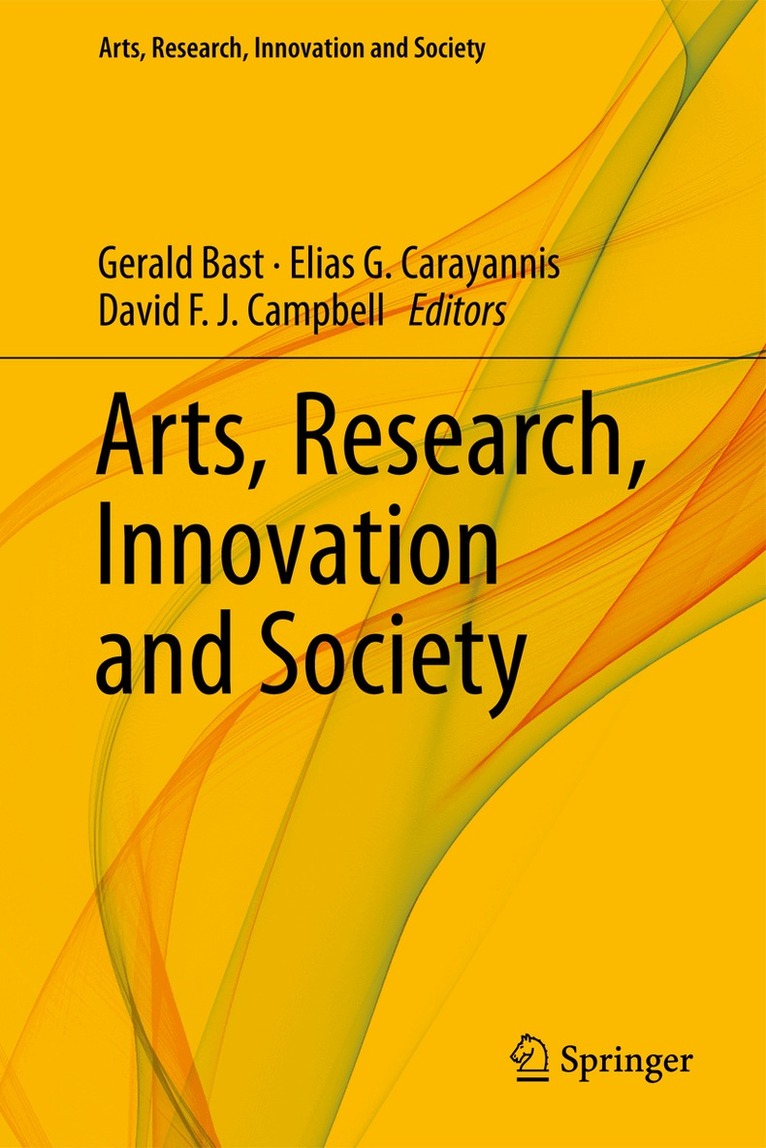
This book explores – at the macro, meso and micro levels and in terms of qualitative as well as quantitative studies – theories, policies and practices about the contributions of artistic research and innovations towards defining new forms of knowledge, knowledge production, as well as knowledge diffusion, absorption and use. Artistic research, artistic innovations and arts-based innovations have been major transformers, as well as disruptors, of the ways in which societies, economies, and political systems perform. Ramifications here refer to the epistemic socio-economic, socio-political and socio-technical base and aesthetic considerations on the one hand, as well as to strategies, policies, and practices on the other, including sustainable enterprise excellence, considerations in the context of knowledge economies, societies and democracies. Creativity in general, and the arts in particular, are increasingly recognized as drivers of cultural, economic, political, social, and scientific innovation and development. This book examines how one could derive and develop insights in these areas from the four vantage points of Arts, Research, Innovation and Society. Among the principal questions that are examined include:- Could and should artists be researchers?- How are the systems of the Arts and Sciences connected and/or disconnected?- What is the impact of the arts in societal development?- How are the Arts interrelated with the mechanisms of generating social, scientific and economic innovation? As the inaugural book in the Arts, Research, Innovation and Society series, this book uses a thematically wide spectrum that serves as a general frame of reference for the entire series of books to come.
Häftad, Engelska, 2016
1 446 kr
Skickas inom 10-15 vardagar
This book explores – at the macro, meso and micro levels and in terms of qualitative as well as quantitative studies – theories, policies and practices about the contributions of artistic research and innovations towards defining new forms of knowledge, knowledge production, as well as knowledge diffusion, absorption and use.
Inbunden, Engelska, 2018
2 156 kr
Skickas inom 10-15 vardagar
This book explores―at the macro, meso and micro levels and in terms of qualitative as well as quantitative studies―the current and future role of museums for art and society. Given the dynamic developments in art and society, museums need to change in order to remain (and in some ways, regain) relevance. This relevance is in the sense of a power to influence. Additionally museums have challenges that arise in the production of art through the use of permanent and rapidly changing technologies. This book examines how museums deal with the increasing importance of performance art and social interactive art, artistic disciplines which refuse to use classical or digital artistic media in their artistic processes. The book also observes how museums are adapting in the digital age. It addresses such questions as, “How to keep museums in contact with recipients of art in a world in which the patterns of communication and perception have changed dramatically,” and also “Can the art museum,as a real place, be a counterpart in a virtualized and digitalized society or will museums need to virtualize and even globalize themselves virtually?” Chapters also cover topics such as the merits of digital technologies in museums and how visitors perceive these changes and innovations. When you go back to the etymological origin, the Mouseion of Alexandria, it was a place where – supported by the knowledge stored there – art and science were developed: a place of interdisciplinary research and networking, as you would call it today. The word from the Ancient Hellenic language for museum (ΜΟΥΣΕΙΟΝ) means the “house of the muses”: where the arts and sciences find their berth and cradle. With the “Wunderkammer,” the museum was re-invented as a place for amazing for purpose of representation of dynastic power, followed by the establishment of museums as a demonstration of bourgeois self-consciousness. In the twentieth century, the ideal of the museum as an institution for education received a strong boost, before the museum as a tourism infrastructure became more and more the institutional, economic and political role-model. This book is interested in discovering what is next for museums and how these developments will affect art and society. Each of the chapters are written by academics in the field, but also by curators and directors of major museums and art institutions.
Häftad, Engelska, 2014
220 kr
Skickas inom 3-6 vardagar
Häftad, Engelska, 2012
285 kr
Skickas inom 3-6 vardagar
Inbunden, Engelska, 2025
1 511 kr
Tillfälligt slut
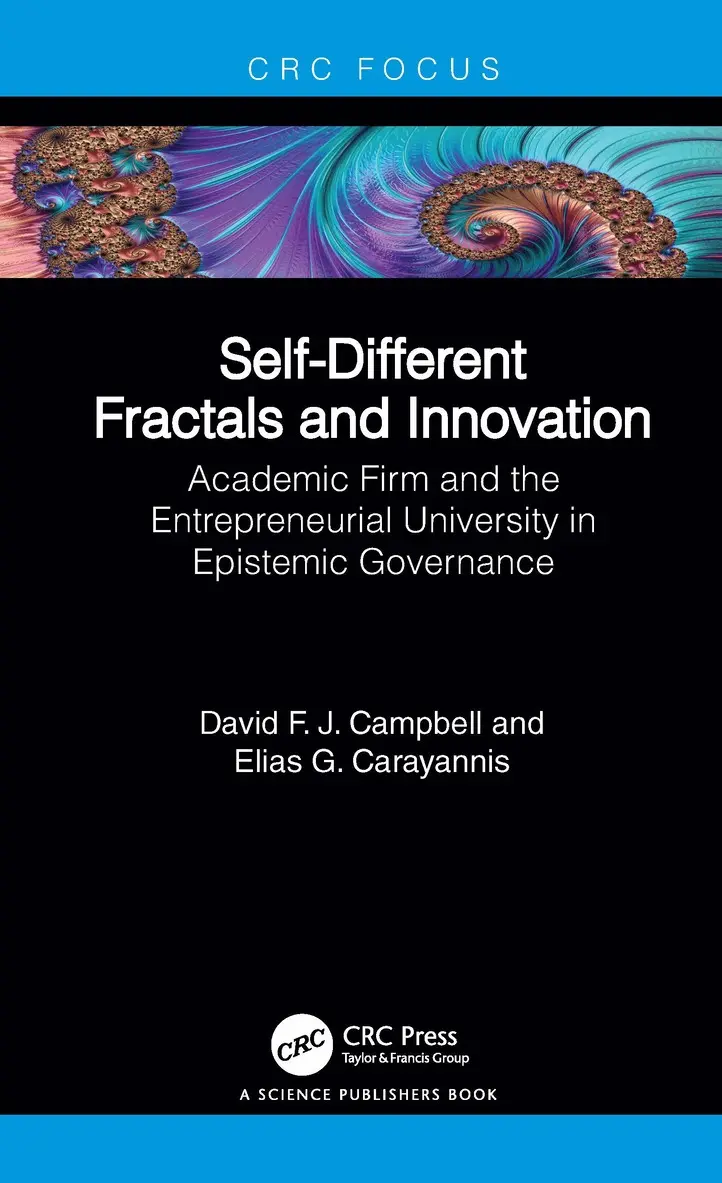
The presented ideas create and shape the vision of a “Manifesto of Higher Education Governance”.Fractals are typically understood as self-similar structures, but this concept is expanded to include “self-different fractals”. These fractals align with a “Philosophy of Dialectics”, where opposing forces (thesis and antithesis) can either create disruption or, when managed effectively, drive creativity, innovation, and development. Because self-different fractal systems operate in multiple modes, they hold greater potential for fostering innovation.This conceptual exploration investigates innovation in higher education through dialectical approaches, presenting the entrepreneurial university as a thesis, the academic firm as an antithesis, and epistemic governance as a synthesis. Epistemic governance plays a key role in motivating innovation by integrating pluralistic knowledge and innovation modes.The concept of “self-different fractal innovation systems”—structures that embody multiple, interacting modalities—enhances innovation potential through their fluid complexity. Good and effective governance of these systems encourages continual knowledge evolution, enabling the development of “next-knowledge”. This process, guided by the dialectics of innovation, forms new, integrated structures and networks.The book emphasizes interdisciplinary and transdisciplinary approaches, with the latter involving collaboration between scholars and user communities for real-world impact. It bridges science and art, suggesting that visual representations of self-different fractals inspire artistic research alongside scientific inquiry. Through examining both linear and non-linear systems, the authors reveal how conflicting principles can generate productive chaos, ultimately driving innovation, societal progress and knowledge democracy.The future of governance is also the future of higher education.