David Fraser – författare
Visar alla böcker från författaren David Fraser. Handla med fri frakt och snabb leverans.
66 produkter
Knight's Cross: Life of Field Marshal Erwin Rommel, a
Av David Fraser
Häftad, 1994
309 kr
Lägg i varukorg
Nazi Antisemitism and Jewish Legal Self-Defense
The Turn to Law in Liberal Democracies, 1932–39
Av David Fraser
Häftad, 2024
671 kr
Lägg i varukorg
One of the first to provide a socio-legal comparative history of under-studied or ignored Jewish attempts in the 1930s "Anglosphere" to counter the rise in fascist and Nazi antisemitism, this book examines the ways in which Jewish individuals and organized communal bodies in the mid-to-late 1930s …
Knight’s Cross
Av David Fraser
Häftad, 2008
198 kr
Lägg i varukorg
Erwin Rommel was the outstanding Axis field commander of the Second World War, respected, even admired, by his opponents. Here it seemed to the Allies, was a supremely professional soldier: chivalrous, decent, largely untainted by the crimes of the Nazi regime, carrying out his duty with often …
Mad Frank and Sons
Tougher than the Krays, Frank and his boys on gangland, crime and doing time
Av David Fraser, Pat Fraser m. fl.
E-bok, 2016
211 kr
Lägg i varukorg
Drawing on exclusive final interviews with Frank, and with unprecedented access to his closest relatives, Mad Frank and Sons follows his rise from a small kid stealing to put food on the table to a feared and respected West End crime lord and head of a legendary gangland family. It includes the …
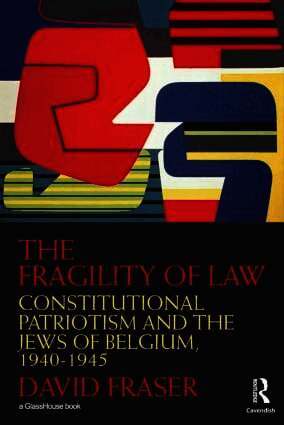
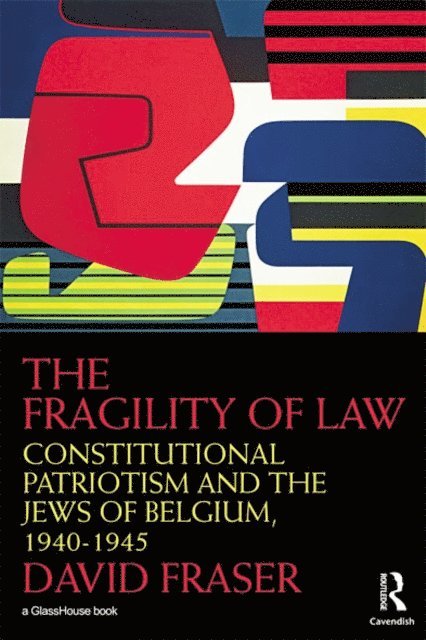
Fragility of Law
Constitutional Patriotism and the Jews of Belgium, 1940–1945
Av David Fraser
Häftad, 2012
746 kr
Lägg i varukorg
The Fragility of Law examines the ways in which, during the Second World War, the Belgian government and judicial structure became implicated in the identification, exclusion and killing of its Jewish residents, and in the theft - through Aryanization - of Jewish property. David Fraser demonstrates …
Cricket and the Law
The Man in White is Always Right
Av David Fraser
Inbunden, 2004
2836 kr
Lägg i varukorg
Cricket, law and the meaning of life ...In a readable, informed and absorbing discussion of cricket’s defining controversies – bodyline, chucking, ball-tampering, sledging, walking and the use of technology, among many others – David Fraser explores the ambiguities of law and social order in …
Cricket and the Law
The Man in White is Always Right
Av David Fraser
Häftad, 2005
855 kr
Lägg i varukorg
Cricket, law and the meaning of life ...In a readable, informed and absorbing discussion of cricket’s defining controversies – bodyline, chucking, ball-tampering, sledging, walking and the use of technology, among many others – David Fraser explores the ambiguities of law and social order in …
Daviborshch's Cart
Narrating the Holocaust in Australian War Crimes Trials
Av David Fraser
Inbunden, 2011
645 kr
Lägg i varukorg
In the spring of 1942, Nazi forces occupying the Ukraine launched a wave of executions targeting the region's remaining Jewish communities. These mass shootings were open, public, and intimate. Although the victims themselves could never testify against their killers, many eyewitnesses could and …
Papers of William Penn, Volume 5
William Penn's Published Writings, 166-1726: an Interpretive Bibliography
Av Edwin B. Bronner, David Fraser
Inbunden, 1986
1236 kr
Lägg i varukorg
A comprehensive, annotated, illustrated bibliography, with essays placing the work in perspective and describing the underground press of the day.
Thinking Through the Body of the Law
Av Pheng Cheah, David Fraser m. fl.
Inbunden, 1996
1334 kr
Lägg i varukorg
The body of the law is an ambiguous phrase. Conventionally, it designates the law as a determinate corpus; legal codes, statutes, and the rulings of common law. But it can also refer to the subjected body that is produced by and is part of the law. This subjected body is necessary for the law's …
Thinking Through the Body of the Law
Av Pheng Cheah, David Fraser m. fl.
Häftad, 1996
452 kr
Lägg i varukorg
The body of the law is an ambiguous phrase. Conventionally, it designates the law as a determinate corpus; legal codes, statutes, and the rulings of common law. But it can also refer to the subjected body that is produced by and is part of the law. This subjected body is necessary for the law's …
Mastery of Leadership
Presence and Practice in Transformational Change
Av David Fraser
Häftad, 2015
171 kr
Lägg i varukorg
Nazi Antisemitism and Jewish Legal Self-Defense
The Turn to Law in Liberal Democracies, 1932–39
Av David Fraser
E-bok, 2023
701 kr
Lägg i varukorg
One of the first to provide a socio-legal comparative history of under-studied or ignored Jewish attempts in the 1930s "Anglosphere" to counter the rise in fascist and Nazi antisemitism, this book examines the ways in which Jewish individuals and organized communal bodies in the mid-to-late 1930s …
Nazi Antisemitism and Jewish Legal Self-Defense
The Turn to Law in Liberal Democracies, 1932–39
Av David Fraser
E-bok, 2023
701 kr
Lägg i varukorg
One of the first to provide a socio-legal comparative history of under-studied or ignored Jewish attempts in the 1930s "Anglosphere" to counter the rise in fascist and Nazi antisemitism, this book examines the ways in which Jewish individuals and organized communal bodies in the mid-to-late 1930s …
Modern Campaign; or, War and Wireless Telegraphy in the Far East
Av David Fraser
Inbunden, 2022
455 kr
Lägg i varukorg
Modern Campaign; or, War and Wireless Telegraphy in the Far East
Av David Fraser
Häftad, 2022
323 kr
Lägg i varukorg
Marches of Hindustan
The Record of a Journey in Thibet, Trans-Himalayan India, Chinese Turkestan, Russian Turkestan and Persia
Av David Fraser
Inbunden, 2023
499 kr
Lägg i varukorg
Marches of Hindustan
The Record of a Journey in Thibet, Trans-Himalayan India, Chinese Turkestan, Russian Turkestan and Persia
Av David Fraser
Häftad, 2023
382 kr
Lägg i varukorg
Nazi Antisemitism and Jewish Legal Self-Defense
The Turn to Law in Liberal Democracies, 1932–39
Av David Fraser
Inbunden, 2023
2601 kr
Lägg i varukorg
One of the first to provide a socio-legal comparative history of under-studied or ignored Jewish attempts in the 1930s "Anglosphere" to counter the rise in fascist and Nazi antisemitism, this book examines the ways in which Jewish individuals and organized communal bodies in the mid-to-late 1930s …
Understanding Animal Welfare
The Science in its Cultural Context
Av David Fraser
E-bok, 2013
1074 kr
Lägg i varukorg
"This is a delightful book, full of interesting aspects of animal welfare. An excellent guide to the academic study of animal welfare science." — Marian Stamp Dawkins , Department of Zoology, University of Oxford Understanding Animal Welfare: The Science in its Cultural Context takes a completely …
Understanding Animal Welfare
The Science in its Cultural Context
Av David Fraser
E-bok, 2023
1100 kr
Lägg i varukorg
The essential text on understanding and improving animal welfare Understanding Animal Welfare, 2 nd Edition is revised and expanded to incorporate new research and developments in animal welfare. Updated with greater accessibility in mind, the reader is guided through animal welfare in its cultural …
Understanding Animal Welfare
The Science in its Cultural Context
Av David Fraser
E-bok, 2023
1124 kr
Lägg i varukorg
The essential text on understanding and improving animal welfare Understanding Animal Welfare, 2 nd Edition is revised and expanded to incorporate new research and developments in animal welfare. Updated with greater accessibility in mind, the reader is guided through animal welfare in its cultural …
Understanding Animal Welfare
The Science in its Cultural Context
Av David Fraser
Häftad, 2023
978 kr
Lägg i varukorg
The essential text on understanding and improving animal welfareUnderstanding Animal Welfare, 2nd Edition is revised and expanded to incorporate new research and developments in animal welfare. Updated with greater accessibility in mind, the reader is guided through animal welfare in its cultural …
Fragility of Law
Constitutional Patriotism and the Jews of Belgium, 1940-1945
Av David Fraser
E-bok, 2009
855 kr
Lägg i varukorg
The Fragility of Law examines the ways in which, during the Second World War, the Belgian government and judicial structure became implicated in the identification, exclusion and killing of its Jewish residents, and in the theft - through Aryanization - of Jewish property. David Fraser demonstrates …
Fragility of Law
Constitutional Patriotism and the Jews of Belgium, 1940-1945
Av David Fraser
E-bok, 2009
874 kr
Lägg i varukorg
The Fragility of Law examines the ways in which, during the Second World War, the Belgian government and judicial structure became implicated in the identification, exclusion and killing of its Jewish residents, and in the theft - through Aryanization - of Jewish property. David Fraser demonstrates …
Cricket and the Law
The Man in White is Always Right
Av David Fraser
E-bok, 2004
1004 kr
Lägg i varukorg
Cricket, law and the meaning of life ... In a readable, informed and absorbing discussion of cricket’s defining controversies – bodyline, chucking, ball-tampering, sledging, walking and the use of technology, among many others – David Fraser explores the ambiguities of law and social order in …
Cricket and the Law
The Man in White is Always Right
Av David Fraser
E-bok, 2004
1004 kr
Lägg i varukorg
Cricket, law and the meaning of life ... In a readable, informed and absorbing discussion of cricket’s defining controversies – bodyline, chucking, ball-tampering, sledging, walking and the use of technology, among many others – David Fraser explores the ambiguities of law and social order in …